
American Express has long been a titan in the world of personal finance, offering premium perks, robust reward structures, and a level of customer service that many competitors struggle to match. However, the financial landscape is dynamic, and a card that served your needs three years ago might no longer align with your current spending habits or financial goals. Whether you are looking to trim down high annual fees, simplify your wallet, or pivot toward a different rewards ecosystem, knowing how to efficiently cancel an Amex card online is an essential skill in modern credit management.
Closing a credit account is more than just a simple administrative task; it is a strategic financial move that requires careful preparation to protect your credit score and preserve the value of your earned rewards. This guide explores the digital pathways to closing your account and the fiscal considerations you must address before clicking the final confirmation button.
Preparing Your Finances Before the Cancellation
Before you initiate the cancellation process through the American Express digital portal, you must conduct a thorough audit of your account. Closing a card abruptly without a plan can lead to the permanent loss of rewards and unexpected dips in your credit rating.
Redeeming Membership Rewards Points
The most critical step for any Amex cardholder is the preservation of Membership Rewards (MR) points. Unlike some cash-back cards where rewards might reside as a statement credit, MR points are tied to your overall account status. If you close your only Membership Rewards-earning card, you will likely forfeit your entire points balance immediately.
To prevent this, you have a few options. If you have another Amex card that earns MR points—such as moving from an Amex Gold to an Amex Everyday—your points balance is generally safe because it is tied to your social security number and overall profile. If you are leaving the Amex ecosystem entirely, you should transfer your points to travel partners (airlines or hotels) or redeem them for gift cards and statement credits before you start the chat with a representative.
Managing Outstanding Balances and Auto-pays
You cannot fully close an account that has a pending balance. While you can initiate the closure, the account will remain in a “pending closure” status until the final bill is settled. Furthermore, many cardholders forget that their Amex card is linked to recurring subscriptions—gym memberships, streaming services, or insurance premiums.
Before canceling, go through your last three months of statements and migrate those automated payments to a different card. This prevents service interruptions and potential “missed payment” marks on your credit report that can occur if a merchant attempts to charge a defunct account.
Assessing the Impact on Your Credit Score
From a personal finance perspective, closing a credit card affects two major components of your FICO score: your credit utilization ratio and the average age of your accounts. If the Amex card you are closing has a high credit limit, your overall available credit will drop. If your spending on other cards remains the same, your utilization percentage will rise, which can negatively impact your score.
Additionally, if the card is one of your oldest accounts, closing it may eventually lower the average age of your credit history. While FICO continues to count closed accounts in good standing for ten years, the loss of that credit limit happens instantly.
The Step-by-Step Guide to Canceling Your Amex Card Online
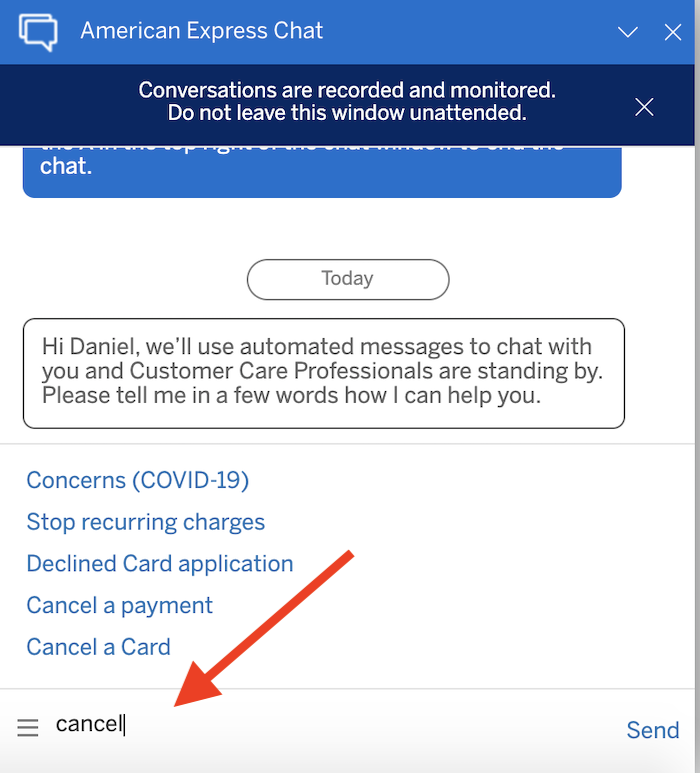
American Express provides a streamlined digital experience that allows users to bypass the traditional phone call. The most effective way to cancel an Amex card online is through the Secure Live Chat feature located within the online banking portal.
Using the Live Chat Feature
To begin the process, log in to your American Express account on a desktop or laptop. Once you are on the main dashboard, look for the “Help” or “Contact Us” icon, usually located at the bottom right of the screen or within the top navigation bar.
When you initiate a chat, you will likely start with an automated bot. Type “Cancel my card” or “Close account.” The system will then route you to a live “Account Specialist.” This is a deliberate move by Amex; they want a human to verify your identity and, more importantly, attempt to retain your business. When speaking with the specialist, be firm but polite. State clearly that you wish to close the account. They are required to read certain disclosures regarding your remaining points and the legalities of the closure.
Navigating the Online Account Portal
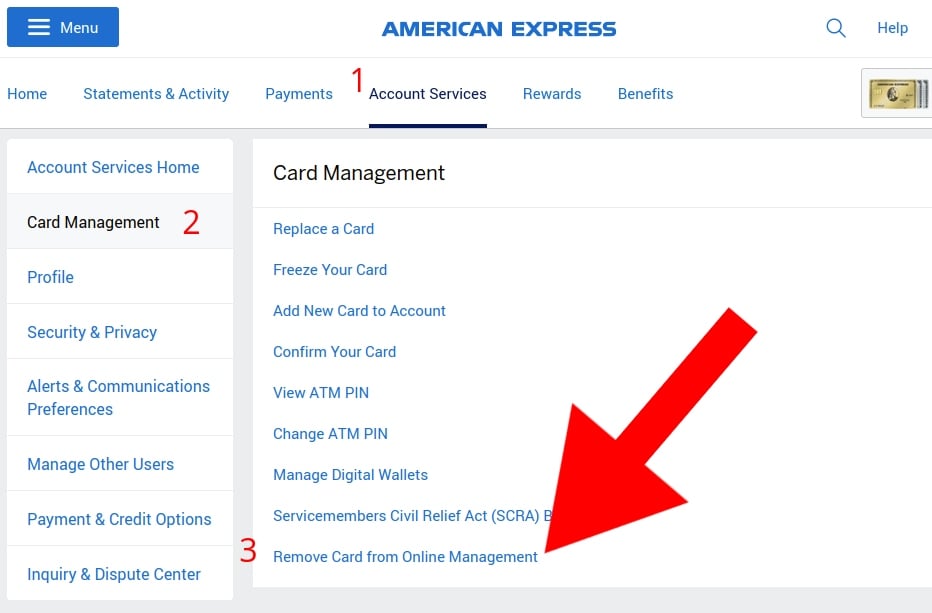
While Live Chat is the standard method, some users may find options within the “Account Services” tab. Under “Card Management,” you can often find a link to “Close Account.” However, in most jurisdictions, this link will eventually redirect you to the Live Chat or provide a specific secure messaging prompt.
The advantage of using the digital portal over a phone call is the paper trail. Once the chat is finished, you can save a transcript of the conversation. This serves as proof that you requested the closure on a specific date, which can be invaluable if the bank accidentally charges you a subsequent annual fee or fails to update the status with credit bureaus.
Mobile App Alternatives
The Amex mobile app also supports the Live Chat function. The process is nearly identical to the desktop version. Open the app, tap the “Account” tab at the bottom, and select “Contact Us.” Choosing the “Chat with us” option will connect you to the same retention specialists who handle web-based requests. This is particularly useful for busy professionals who need to manage their financial portfolio on the go.
Strategic Alternatives to Outright Cancellation
In the world of personal finance, “closing” is not always the best option. Before you finalize the online cancellation, consider if a different strategy might better serve your long-term financial health.
Requesting a Retention Offer
When you tell an Amex representative via chat that you want to cancel, they will often counter with a “retention offer.” This is a financial incentive to keep the card open. It might come in the form of a statement credit that covers the annual fee or a “spend x, get y” points bonus.
If your primary reason for canceling is the annual fee, it is always worth asking: “Are there any retention offers available on my account?” If they offer you $200 to keep a card with a $250 fee, the effective cost of the card drops to $50, which might make the card’s perks worth keeping for another year.
Downgrading to a No-Fee Card (Product Change)
If you want to maintain your credit limit and the age of your account but no longer want to pay a high annual fee, ask for a “product change.” For example, if you have the Amex Blue Cash Preferred (which has an annual fee), you can often “downgrade” to the Amex Blue Cash Everyday (which has no annual fee).
This is a powerful move because it keeps the account active on your credit report, preserves your credit limit (helping your utilization ratio), and stops the recurring fee. Note that you generally cannot cross-grade between different families of cards (e.g., you can’t downgrade a Delta Skymiles card to a standard cash-back card).
Consolidating Credit Lines
If you have multiple American Express cards, you can request to move your credit limit from the card you are closing to a card you are keeping. This is a savvy way to mitigate the impact on your credit utilization. By transferring the “buying power” of the old card to the new one before the closure, your total available credit with American Express remains unchanged, protecting your credit score from the volatility that usually follows an account closure.
What Happens After You Close Your Account?
The work isn’t finished once the chat window closes. Proper financial management requires a post-cancellation follow-up to ensure everything has been processed correctly.
Handling Final Statements
Even after an account is closed, you will still have access to the online portal for a limited time. You should check back 30 days after the cancellation to ensure no “zombie” charges—interest charges or late-applied fees—have appeared. If you had a balance when you closed the card, you are still legally obligated to make monthly payments until the balance is zero. Failure to do so will result in a “charged-off” status, which is devastating to a credit profile.
Secure Disposal of the Physical Card
Modern Amex cards, particularly the Gold and Platinum versions, are made of metal. These cannot simply be shredded in a standard home office shredder. Once the account is closed online, you should dispose of the card securely to prevent identity theft. American Express often provides a prepaid envelope to mail back metal cards for secure destruction, or you can use heavy-duty shears to cut through the chip and the magnetic strip.
Monitoring Your Credit Report
Roughly 30 to 60 days after the online cancellation, check your credit report via a service like AnnualCreditReport.com or a third-party monitoring tool. The account should be listed as “Closed by Consumer.” If it is listed as “Closed by Grantor,” it could imply the bank took the initiative to fire you as a customer, which can look slightly less favorable to future lenders. If there are inaccuracies, use the chat transcript you saved earlier to dispute the entry with the credit bureaus.
By treating the cancellation of an American Express card as a strategic financial project rather than a simple chore, you ensure that your transition is seamless. Managing your credit is an ongoing process of optimization, and knowing how to exit a card relationship is just as important as knowing when to open one.
aViewFromTheCave is a participant in the Amazon Services LLC Associates Program, an affiliate advertising program designed to provide a means for sites to earn advertising fees by advertising and linking to Amazon.com. Amazon, the Amazon logo, AmazonSupply, and the AmazonSupply logo are trademarks of Amazon.com, Inc. or its affiliates. As an Amazon Associate we earn affiliate commissions from qualifying purchases.