
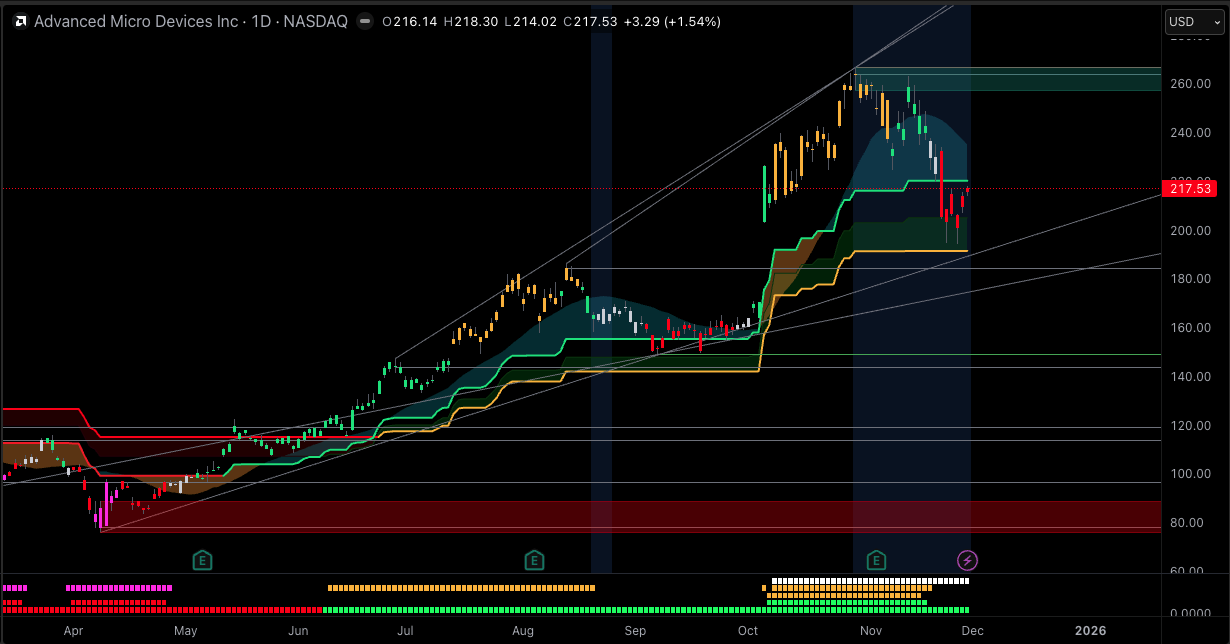
Advanced Micro Devices (AMD) has captivated investors for years with its remarkable resurgence, evolving from an underdog challenging industry giants to a formidable innovator in processors and graphics. However, even high-flying growth stocks like AMD are not immune to the gravitational pull of market corrections and company-specific challenges. When AMD’s stock experiences a notable drop, it sends ripples through the investment community, prompting a crucial question: why? Understanding the multifaceted reasons behind such a decline requires a deep dive into macroeconomic conditions, industry trends, competitive dynamics, and AMD’s own operational performance and investor communication. This article will dissect the primary drivers that can lead to significant downward pressure on AMD’s stock, offering insights for investors navigating the volatile tech and semiconductor landscape.

Understanding AMD’s Market Position and Investor Expectations
To grasp why AMD’s stock might drop, one must first appreciate its standing in the market and the high expectations placed upon it by investors. AMD’s journey has been one of consistent innovation and strategic market penetration, transforming it into a darling of growth-oriented portfolios.
A Brief Overview of AMD’s Business Segments
AMD’s business is diversified across several critical segments, making it susceptible to shifts in various end markets. Its core product categories include:
-
Client Segment: Primarily desktop and notebook CPUs (Ryzen processors) and GPUs (Radeon graphics cards) for consumers and professionals. This segment is highly sensitive to the broader PC market health.
-
Data Center Segment: EPYC server CPUs and Instinct data center GPUs, catering to hyperscalers, enterprises, and high-performance computing (HPC). This is a high-growth, high-margin area crucial for AMD’s long-term valuation.
-
Gaming Segment: Custom chips for popular gaming consoles like Sony PlayStation and Microsoft Xbox, alongside standalone Radeon GPUs. This provides a relatively stable revenue stream but is cyclical with console generations.
-
Embedded Segment: Processors and adaptive SoCs (System-on-Chips) for various embedded applications, including industrial, automotive, and communications, significantly bolstered by the acquisition of Xilinx.
A slowdown or competitive pressure in any of these major segments can directly impact AMD’s revenue and profitability, which subsequently affects its stock price.
The High Stakes of Growth Stocks and Market Sentiment
AMD is generally considered a growth stock, meaning its valuation often reflects future earnings potential more than current profits. Investors are willing to pay a premium for its shares based on the expectation of robust future growth in revenue, market share, and technological leadership. This characteristic makes AMD’s stock particularly sensitive to changes in investor sentiment, economic outlook, and any perceived threats to its growth narrative. A slight deviation from expected growth rates or a hint of slowing momentum can trigger a disproportionately large sell-off as growth investors re-evaluate their positions.
Competition Landscape: Intel, NVIDIA, and Emerging Players
AMD operates in one of the most fiercely competitive industries globally. Its primary rivals are:
-
Intel: The long-time dominant player in CPUs, Intel is AMD’s chief competitor in both client and data center segments. Intel’s resurgence or specific product wins can directly impact AMD’s market share and pricing power.
-
NVIDIA: While AMD competes with NVIDIA in the discrete GPU market, NVIDIA also holds a commanding lead in AI accelerators, a critical growth area for data centers. NVIDIA’s continued innovation and market dominance in AI can indirectly affect investor perception of AMD’s long-term potential in this adjacent space.
-
Emerging Players: The rise of ARM-based solutions in the server and PC markets, as well as new semiconductor startups and in-house chip development by hyperscalers, represents evolving competitive threats that demand constant innovation from AMD.
Any significant competitive move or product launch from rivals that threatens AMD’s leadership or market share can lead to a reassessment of its stock value.
Macroeconomic Headwinds and Industry-Wide Challenges
Beyond company-specific factors, broader macroeconomic conditions and industry-wide trends frequently exert significant pressure on semiconductor stocks like AMD. These external forces are often beyond the company’s control but can profoundly impact its financial performance and investor confidence.
Global Economic Slowdown and its Impact on Tech Spending
A global economic slowdown, characterized by declining GDP growth, rising unemployment, and reduced consumer spending, invariably affects the tech sector. Enterprises might cut back on IT investments, data center build-outs could decelerate, and consumer demand for new PCs and gaming hardware might soften. Since AMD’s revenue is tied to the sale of CPUs and GPUs across these end markets, a contraction in global tech spending directly translates to lower sales volumes and potentially lower average selling prices (ASPs), impacting AMD’s top line.
Inflation, Interest Rates, and Investor Risk Appetite
Rising inflation often prompts central banks to increase interest rates to cool down the economy. Higher interest rates have a multi-pronged negative effect on growth stocks:
-
Discounted Future Earnings: Higher rates increase the discount rate used to value future earnings, making growth stocks, whose valuations are heavily reliant on distant future profits, appear less attractive.
-
Increased Borrowing Costs: For companies that rely on debt for capital expenditures or expansion, higher interest rates mean increased borrowing costs, eating into profit margins.
-
Shift to Safer Assets: In an environment of rising rates and economic uncertainty, investors often rotate out of riskier growth stocks into safer assets or value stocks that offer more immediate returns and less volatility. This shift in capital flows can lead to widespread selling pressure on high-growth tech companies.
Supply Chain Disruptions and Inventory Corrections
The semiconductor industry has been plagued by supply chain volatility in recent years. While sometimes supply constraints can drive up prices, other times, an overcorrection can lead to inventory gluts. If AMD’s customers (e.g., PC manufacturers, console makers) build up too much inventory of AMD chips due to overly optimistic sales forecasts, they will reduce future orders until that inventory is cleared. This “inventory correction” period can lead to a significant drop in AMD’s sales, creating a temporary but impactful hit to revenue and stock price. Geopolitical tensions, natural disasters, or unexpected factory shutdowns can also disrupt supply chains, affecting production capacity and delivery schedules.
Company-Specific Performance and Guidance Misses
Perhaps the most direct and immediate cause of a stock drop is when a company fails to meet its own financial targets or analyst expectations. For AMD, these “misses” are closely scrutinized and can lead to sharp market reactions.
Revenue Shortfalls and Margin Pressures
When AMD reports quarterly earnings, analysts and investors keenly focus on revenue figures. A revenue shortfall – when actual revenue comes in below the company’s guidance or Wall Street’s consensus estimates – signals weaker-than-anticipated demand or execution. Equally critical are profit margins. If gross margins decline due to increased manufacturing costs, aggressive pricing strategies to gain market share, or a shift in product mix towards lower-margin offerings, it signals pressure on profitability even if revenue holds steady. Lower margins directly impact net income and earnings per share (EPS), leading to investor disappointment and a likely stock decline.
Weakening Demand in Key Segments (e.g., PC Market Slump)
As outlined earlier, AMD’s reliance on multiple segments means a significant slowdown in one can drag down overall performance. For instance, a persistent slump in the global personal computer (PC) market, driven by post-pandemic saturation or economic downturns, directly impacts AMD’s client segment. If consumer and enterprise demand for new PCs, laptops, and associated components drops sharply, AMD’s shipments and revenue from Ryzen and Radeon products would inevitably suffer, triggering a negative market reaction. Similarly, a deceleration in data center build-outs or a delay in new console generations could impact those respective segments.
Disappointing Earnings Guidance and Future Outlook
Perhaps even more impactful than missing current quarter earnings is when a company provides a pessimistic outlook for the next quarter or the full year. Forward guidance is a crucial indicator of management’s confidence and expectations for future business performance. If AMD issues guidance that is below analyst consensus for revenue or earnings, it signals that the company anticipates headwinds or a slowdown in the near future. This forward-looking disappointment can lead to an immediate and substantial stock drop, as investors adjust their valuation models to reflect lower expected future earnings. Factors contributing to conservative guidance might include anticipated demand weakness, increased competition, or rising operational costs.
Competitive Pressures and Product Cycle Dynamics
The semiconductor industry is defined by relentless innovation and brutal competition. AMD’s success hinges on its ability to out-innovate and outmaneuver its rivals, making competitive dynamics a constant factor in its stock performance.
Intense Competition from Intel and NVIDIA
AMD’s battle against Intel in CPUs and NVIDIA in GPUs is a zero-sum game for market share.
-
Intel’s Resurgence: If Intel introduces highly competitive CPU architectures, aggressively prices its products, or wins significant market share in the data center or client segments, it directly threatens AMD’s growth trajectory. Investors might worry about AMD’s ability to maintain its recent gains.
-
NVIDIA’s AI Dominance: While AMD has its Instinct accelerators, NVIDIA’s entrenched leadership in AI and machine learning hardware and software (CUDA ecosystem) is a significant competitive barrier. Any news suggesting NVIDIA is widening its lead or further solidifying its ecosystem can dampen enthusiasm for AMD’s long-term AI strategy and its stock.
Impact of New Product Launches and Market Share Shifts
The timing and success of new product launches are critical for semiconductor companies. A delay in bringing a highly anticipated product to market, or a lukewarm reception for a new CPU or GPU generation, can erode investor confidence. Conversely, if a competitor launches a superior product that gains significant market traction, it can lead to market share shifts away from AMD. This perception of losing technological edge or market leadership can swiftly translate into a stock price decline. Market share reports are closely watched, and any indication of AMD losing ground can be a trigger for selling.
Innovation Cycles and Research & Development Costs
Maintaining a competitive edge requires massive and sustained investment in research and development (R&D). AMD continually pours resources into developing next-generation architectures, manufacturing processes, and software ecosystems. While essential for long-term success, these R&D expenses can weigh on current profitability. If investors perceive that AMD is falling behind in key technological areas, or if its R&D spend isn’t yielding the expected competitive advantages, the stock may suffer. The cyclical nature of technology innovation also means there are periods of intense competition and innovation followed by quieter periods; investors might react negatively if AMD is perceived to be in a less favorable part of this cycle.
Investor Reactions and Market Dynamics
Beyond fundamental business performance, the actual mechanisms of the stock market itself can amplify or trigger a decline in AMD’s share price. Investor psychology, analytical assessments, and automated trading all play a role.
Analyst Downgrades and Price Target Revisions
Investment bank analysts play a significant role in influencing market sentiment. If a prominent analyst downgrades AMD’s stock rating (e.g., from “buy” to “hold” or “sell”), lowers their price target, or expresses concerns about the company’s prospects, it can trigger a wave of selling. These downgrades often reflect a new assessment of the company’s fundamentals, competitive landscape, or macroeconomic outlook, and institutional investors frequently act on such recommendations.
Programmatic Trading and Algorithmic Reactions
A substantial portion of modern stock market trading is executed by algorithms and high-frequency trading programs. These programs are designed to react instantly to news, earnings reports, analyst ratings, and market data. A negative headline or a missed earnings estimate can trigger automated sell orders across numerous funds, leading to a rapid and steep decline in share price in a very short period. This programmatic selling can accelerate downward momentum, making drops appear sharper than they might otherwise be based purely on human investor sentiment.
The Role of Short Sellers and Market Speculation
Short sellers are investors who bet on a stock’s price declining. They borrow shares, sell them, and hope to buy them back later at a lower price to return to the lender, profiting from the difference. A high level of short interest in AMD stock indicates that a significant portion of the market believes its price will fall. While short sellers don’t directly cause a drop, their collective conviction can weigh on sentiment. Moreover, during periods of market stress, rumors or speculative news can sometimes trigger selling pressure, even if unsubstantiated, as investors react fearfully to uncertainty.
Conclusion: Navigating Volatility and AMD’s Long-Term Outlook
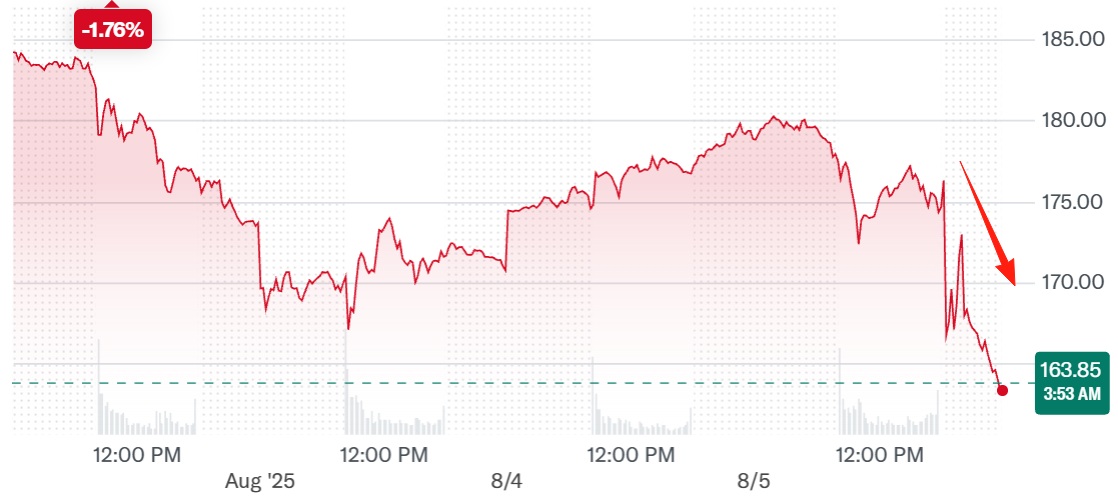
The question “why did AMD stock drop?” rarely has a single, simple answer. Instead, it’s typically a confluence of factors ranging from broad macroeconomic pressures like inflation and interest rate hikes to specific industry downturns such as a PC market slump, intense competitive battles with Intel and NVIDIA, and AMD’s own financial performance, particularly when it misses revenue or earnings guidance. Investor expectations for growth stocks like AMD are exceptionally high, making them prone to significant reactions even to minor disappointments or shifts in sentiment.
For investors, understanding these various drivers is crucial for distinguishing between temporary market noise and fundamental shifts in the company’s long-term prospects. While short-term volatility is an inherent part of investing in dynamic sectors like semiconductors, AMD’s underlying technological innovation, diversified product portfolio, and strategic acquisitions (like Xilinx) generally position it strongly for future growth. A stock drop, while unsettling, often presents an opportunity for long-term investors to reassess the company’s valuation against its fundamental strengths and potentially consider it at a more attractive entry point, provided the core investment thesis remains intact amidst the changing market tides. Navigating such drops requires a professional, insightful perspective that looks beyond the immediate headlines to the underlying financial and operational realities.
aViewFromTheCave is a participant in the Amazon Services LLC Associates Program, an affiliate advertising program designed to provide a means for sites to earn advertising fees by advertising and linking to Amazon.com. Amazon, the Amazon logo, AmazonSupply, and the AmazonSupply logo are trademarks of Amazon.com, Inc. or its affiliates. As an Amazon Associate we earn affiliate commissions from qualifying purchases.