
For investors, analysts, and anyone with a vested interest in the semiconductor industry, understanding the financial pulse of Advanced Micro Devices (AMD) is paramount. Beyond the buzz of new product launches or technological breakthroughs, the company’s quarterly earnings reports offer a crucial window into its operational health, strategic execution, and future prospects. Asking “when is AMD’s earnings?” isn’t just about marking a date on a calendar; it’s about preparing for a pivotal moment that can ripple through individual portfolios, market sectors, and even the broader economic landscape. This article delves into the significance of AMD’s earnings, how to track them, what to look for, and why these financial disclosures are indispensable for informed decision-making within the Money niche.

Understanding AMD’s Earnings Reports: More Than Just Numbers
An earnings report is far more than a dry collection of financial figures; it’s a narrative of a company’s past three months, a projection of its immediate future, and a critical indicator of its long-term viability. For a company as influential as AMD, these reports carry substantial weight, reflecting not only on its own performance but also on the health of the tech ecosystem it helps power.
What Are Earnings Reports and Why Do They Matter?
Earnings reports are mandated quarterly disclosures by publicly traded companies that detail their financial performance over the preceding three months. They typically include revenue, net income, earnings per share (EPS), and various operational metrics. For AMD, these reports are the primary mechanism through which the company communicates its financial standing to shareholders, potential investors, and the public.
Their importance stems from several factors:
-
Transparency and Accountability: They provide a standardized, regular update on the company’s financial health, holding management accountable for their decisions and performance.
-
Investment Decisions: Investors rely heavily on earnings reports to evaluate a company’s profitability, growth potential, and overall investment attractiveness. Positive surprises can lead to stock price surges, while disappointing results can trigger sell-offs.
-
Market Sentiment: AMD’s performance often acts as a barometer for the broader semiconductor industry. Strong results can lift investor confidence across the sector, while weakness can signal headwinds for competitors and suppliers.
-
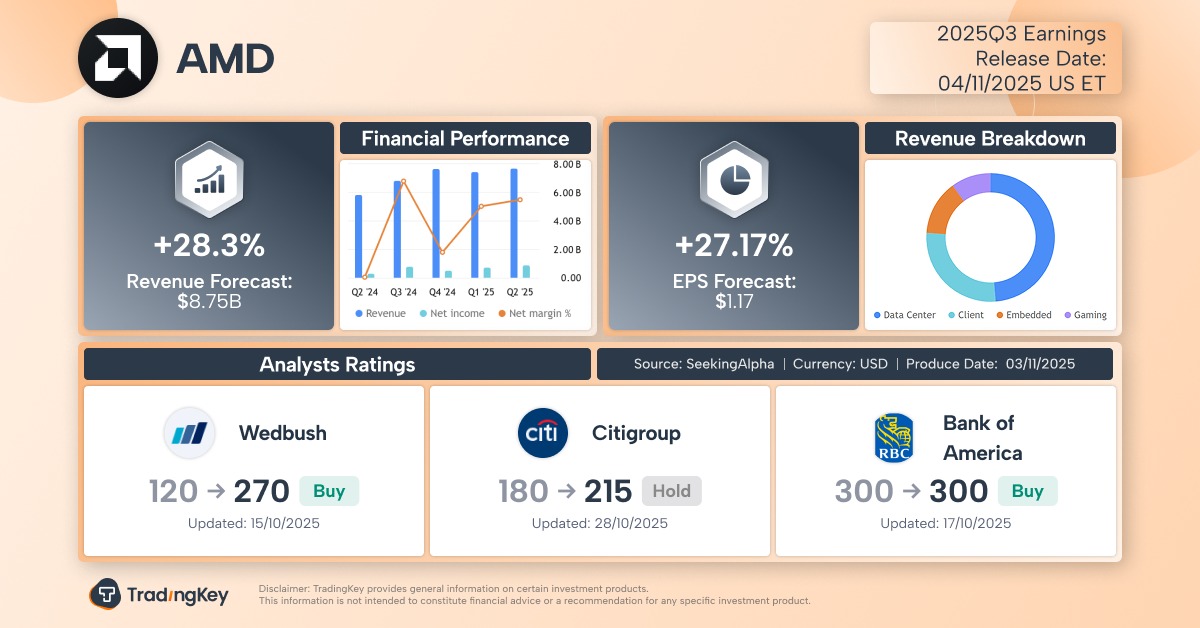
Analyst Projections: These reports are the foundation upon which financial analysts build their models, revise their ratings, and issue price targets, guiding countless investment decisions.
-
Strategic Insights: Beyond the raw numbers, the accompanying management commentary and investor calls provide invaluable insights into strategic initiatives, market trends, competitive positioning, and future plans.
The Significance of AMD’s Financial Health
AMD operates at the cutting edge of critical technologies, providing CPUs and GPUs that power everything from consumer PCs and gaming consoles to advanced data centers and supercomputers. Its financial health, therefore, has far-reaching implications:
-
Innovation and R&D: A strong financial position allows AMD to invest heavily in research and development, fueling the next generation of processors and graphics cards that drive technological progress. Conversely, financial struggles could curtail innovation.
-
Supply Chain Stability: As a major buyer of raw materials and a crucial link in the technology supply chain, AMD’s financial stability affects its partners, suppliers, and even the availability of components for other tech manufacturers.
-
Competitive Landscape: AMD’s performance directly impacts its rivalry with giants like Intel and Nvidia. Sustained growth and profitability enable it to gain market share, challenge incumbents, and foster a more competitive and dynamic industry.
-
Economic Impact: A thriving AMD contributes to job creation, economic growth, and technological leadership within the economies where it operates and sells its products.
Key Metrics to Watch in an AMD Earnings Report
While a full earnings report is comprehensive, certain metrics typically draw the most attention from investors and analysts:
-
Revenue: The total amount of money generated from sales of products and services. Investors look for consistent revenue growth, ideally exceeding analyst expectations.
-
Earnings Per Share (EPS): The portion of a company’s profit allocated to each outstanding share of common stock. Often, this is the most-watched metric, with actual EPS compared against consensus estimates.
-
Net Income/Profitability: The company’s total profit after all expenses, taxes, and interest have been deducted from revenue. Sustained profitability is essential for long-term value creation.
-
Gross Margin: The percentage of revenue left after deducting the cost of goods sold (COGS). A healthy and improving gross margin indicates efficient production and strong pricing power.
-
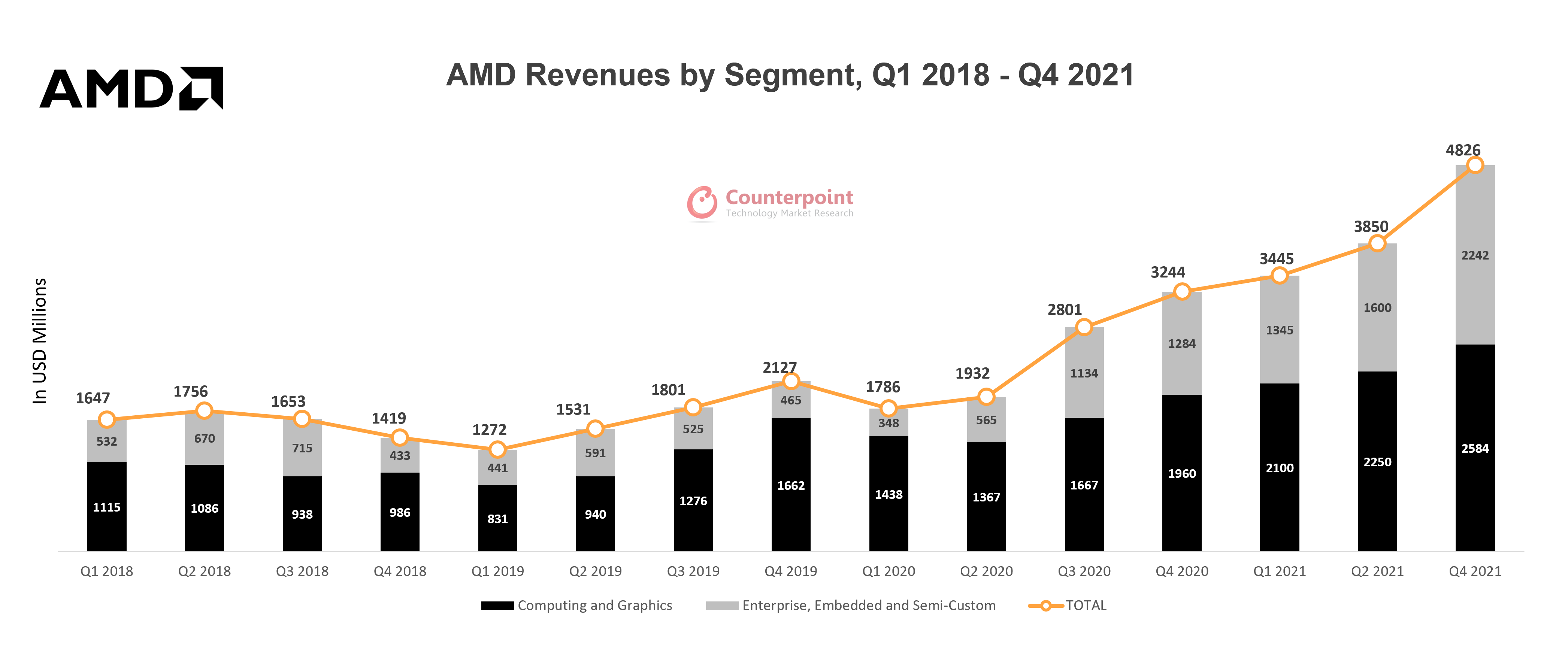
Segment Performance: AMD typically breaks down its revenue by segments such as Data Center, Client (PC), Gaming, and Embedded. Analyzing the growth or decline in each segment provides insights into which parts of the business are thriving or struggling, offering clues about market trends.
-
Guidance: Perhaps the most crucial element, management’s forward-looking statements about expected revenue and EPS for the next quarter or fiscal year. Guidance often has a greater impact on stock price than past performance, as it sets expectations for the future.
-
Cash Flow: Operating cash flow and free cash flow indicate how much cash the company generates from its operations, crucial for investments, debt repayment, and shareholder returns (buybacks, dividends).
Decoding AMD’s Earnings Calendar and How to Track It
Knowing when AMD will release its earnings is the first step in preparing for this significant event. While the exact date shifts slightly each quarter, the overall rhythm is predictable, and reliable sources exist to keep investors informed.
Typical Reporting Cycles: A Quarterly Rhythm
Like most public companies, AMD adheres to a quarterly reporting schedule, corresponding to the fiscal quarters:
-
Q1 Earnings: Typically reported in late April or early May (covering January 1 – March 31).
-
Q2 Earnings: Usually reported in late July or early August (covering April 1 – June 30).
-
Q3 Earnings: Often released in late October or early November (covering July 1 – September 30).
-
Q4 Earnings (and Full Year): Generally reported in late January or early February of the following year (covering October 1 – December 31).
The specific day often falls on a weekday (Tuesday, Wednesday, or Thursday) after the market closes, followed by a conference call with analysts and investors. This timing allows the market to digest the information before trading resumes the next day.
Official Sources for Earnings Dates
Reliability is key when tracking earnings dates. Misinformation can lead to missed opportunities or ill-timed trades. The most accurate sources are:
-
AMD Investor Relations Website: The company’s dedicated IR portal is the definitive source for official earnings dates, press releases, and webcast links for conference calls. Investors can usually find a “Calendar of Events” or “Upcoming Events” section.
-
SEC Filings (Form 8-K): While less user-friendly for immediate updates, AMD files a Form 8-K with the U.S. Securities and Exchange Commission (SEC) to announce material events, including earnings dates. This is the official legal disclosure.
-
Reputable Financial News Platforms: Major financial news outlets (e.g., Bloomberg, Reuters, Wall Street Journal, CNBC, Yahoo Finance, Investing.com) often report earnings dates well in advance. These platforms consolidate information and are generally reliable.
-
Brokerage Platforms: Many online brokerage accounts integrate earnings calendars directly into their dashboards, making it convenient for investors to track their holdings.
Setting Up Alerts and Staying Informed
Given the dynamic nature of market news, proactive measures are essential to ensure you don’t miss an AMD earnings announcement:
-
Email Subscriptions: Sign up for email alerts directly from AMD’s Investor Relations page. This ensures you receive official announcements as they are released.
-
Financial Apps and Websites: Utilize mobile apps (e.g., Yahoo Finance, Investing.com, Robinhood, Fidelity, E*TRADE) that offer customizable alerts for earnings dates, news, and price movements for stocks you follow.
-
Calendar Reminders: Manually add the confirmed earnings date to your personal digital calendar (Google Calendar, Outlook Calendar) with reminders set a few days and hours in advance.
-
RSS Feeds: For more technical users, subscribing to the RSS feed of AMD’s press releases or a financial news aggregator can provide real-time updates.
The Impact of Earnings on AMD Stock (and the broader market)
Few events move a stock’s price as dramatically as an earnings report. The period leading up to and immediately following AMD’s earnings release is often characterized by heightened volatility, offering both significant opportunities and considerable risks for investors and traders.
Pre-Earnings Speculation and Market Volatility
In the days and weeks preceding an earnings release, market activity surrounding AMD stock tends to intensify. This period is driven by:
-
Analyst Estimates and Revisions: Financial analysts constantly update their revenue and EPS estimates based on industry trends, economic data, and company news. These “consensus estimates” become the benchmark against which actual results are measured. Any significant revisions can trigger pre-earnings price movements.
-
Whisper Numbers: Beyond official analyst estimates, “whisper numbers” represent unofficial, often higher, expectations circulating among traders. If AMD beats these whisper numbers, the stock reaction can be even more pronounced.
-
Options Trading: Options contracts become highly popular before earnings. Traders buy calls (betting on a rise) or puts (betting on a fall) in anticipation of a significant move. The implied volatility in options prices often spikes, reflecting the market’s expectation of a large post-earnings swing.
-
Short Interest: A high level of short interest (investors betting the stock will fall) can lead to a “short squeeze” if AMD delivers surprisingly positive results, forcing short sellers to buy back shares to cover their positions, thereby accelerating the stock’s ascent.
-
Rumors and Leaks: While rare and often illegal, rumors and unconfirmed reports can sometimes circulate, adding to pre-earnings jitters or excitement.
Post-Earnings Reaction: The ‘Pop’ or ‘Drop’
The immediate reaction to an earnings report is often swift and decisive, manifesting as a significant “pop” (price increase) or “drop” (price decrease). This reaction is primarily driven by:
-
Earnings Beat or Miss: The most direct impact comes from whether AMD’s actual EPS and revenue figures beat, meet, or miss the consensus analyst estimates. A significant beat usually sends the stock higher, while a miss often sends it lower.
-
Guidance (The Future Outlook): As mentioned earlier, management’s forward-looking guidance for the upcoming quarter or year is often more impactful than past results. Strong guidance signals confidence and future growth, while weak guidance can overshadow even a good past quarter.
-
Conference Call Sentiment: The tone, confidence, and specific details shared by AMD’s CEO and CFO during the post-earnings conference call can sway market sentiment. Key discussions around product roadmaps, market share, competitive dynamics, and macroeconomic headwinds are closely scrutinized.
-
Institutional Reactions: Large institutional investors (mutual funds, hedge funds, pension funds) often react quickly to earnings news, making substantial adjustments to their positions, which can exacerbate initial price movements.
-
Analyst Rating Changes: Following the report, analysts will quickly update their ratings and price targets. Upgrades or downgrades can sustain or reverse initial market reactions.
Long-Term Investor Perspective vs. Short-Term Trading
It’s crucial to differentiate between the short-term market volatility surrounding earnings and AMD’s long-term investment thesis:
-
Short-Term Trading: For swing traders or day traders, earnings present high-risk, high-reward opportunities to profit from rapid price swings. This often involves options strategies or quick entry/exit based on immediate news.
-
Long-Term Investing: For buy-and-hold investors, the immediate post-earnings reaction is often less critical than the underlying fundamentals revealed in the report. They focus on AMD’s sustained revenue growth, profitability trends, strategic execution, market share gains, and long-term guidance, using earnings as a check-in on their fundamental thesis rather than a trigger for impulsive action. A dip after a minor earnings miss might be seen as a buying opportunity if the long-term outlook remains strong.
What to Look For Beyond the Headline Numbers
While EPS and revenue grabs headlines, a deeper dive into AMD’s earnings report and the accompanying commentary provides a more nuanced and accurate picture of the company’s health and future trajectory. Smart investors look beyond the top-line figures.
Management Commentary and Future Guidance
The earnings conference call, where AMD’s executives discuss the results and answer analyst questions, is a goldmine of information.
-
CEO’s Strategic Vision: Listen for the CEO’s overview of strategic priorities, major wins, and challenges. Are they expanding into new markets? Are they successfully integrating recent acquisitions (e.g., Xilinx, Pensando)?
-
CFO’s Financial Health Check: The CFO often provides detailed insights into margins, operational efficiency, capital expenditures, debt levels, and cash flow utilization. Are they managing costs effectively? How are they allocating capital (share buybacks, debt reduction, R&D)?
-
Future Guidance Details: Pay close attention to the specific numbers provided for the next quarter’s revenue and EPS, as well as any updates to full-year guidance. Are they raising or lowering expectations? What are the key assumptions behind their forecasts? This often drives market reactions more than historical results.
-
Qualitative Insights: Listen for comments on demand trends, inventory levels, supply chain improvements or constraints, competitive dynamics, and any emerging technological shifts (e.g., AI adoption, cloud spending patterns).
Segment Performance: The Drivers of Growth
AMD’s business is diversified across several key segments, and understanding which ones are driving growth (or experiencing headwinds) is crucial:
-
Data Center: This segment includes server CPUs (EPYC) and data center GPUs (Instinct). Growth here signals strength in cloud computing, enterprise servers, and AI infrastructure. It’s often high-margin and strategically vital.
-
Client Segment: This covers Ryzen CPUs for desktop and laptop PCs. Performance here reflects the health of the broader PC market and AMD’s market share against Intel. Watch for trends in average selling prices (ASPs) and unit shipments.
-
Gaming: This includes Ryzen CPUs and Radeon GPUs for gaming PCs, as well as custom chips for consoles like PlayStation and Xbox. Console cycles and PC gaming demand dictate this segment’s performance.
-
Embedded Segment: This often includes processors for industrial, automotive, and communications applications, significantly bolstered by the Xilinx acquisition. Steady growth here indicates successful diversification and penetration into new high-growth markets.
Analyzing each segment separately reveals which areas are contributing most to the overall financial performance and where future growth might originate.
Competitive Landscape and Macroeconomic Factors
No company operates in a vacuum. AMD’s performance is intrinsically linked to broader industry trends and economic conditions.
-
Competitive Pressure: AMD is in a fierce battle with Intel for CPU market share and Nvidia for GPU market share. The earnings call often provides clues about how these rivalries are playing out in terms of product competitiveness, pricing strategies, and design wins.
-
Macroeconomic Headwinds/Tailwinds: General economic conditions, such as inflation, interest rates, consumer spending power, and geopolitical events, can significantly impact demand for AMD’s products. A slowing global economy might dampen PC sales, while increased corporate spending could boost data center revenue.
-
Supply Chain Resilience: The semiconductor industry has faced significant supply chain challenges in recent years. Management commentary on manufacturing capacity, component availability, and logistics is vital for assessing AMD’s ability to meet demand.
-
Emerging Technologies (e.g., AI): AMD’s positioning in burgeoning markets like Artificial Intelligence is increasingly important. Look for discussions on AI product roadmaps, customer engagements, and the financial contribution of AI-related sales. This can be a significant long-term growth driver.
By meticulously examining these details beyond just the headline numbers, investors can gain a truly comprehensive understanding of AMD’s financial health, strategic direction, and potential for future value creation. This holistic approach is essential for making informed investment decisions in the dynamic world of money management.
aViewFromTheCave is a participant in the Amazon Services LLC Associates Program, an affiliate advertising program designed to provide a means for sites to earn advertising fees by advertising and linking to Amazon.com. Amazon, the Amazon logo, AmazonSupply, and the AmazonSupply logo are trademarks of Amazon.com, Inc. or its affiliates. As an Amazon Associate we earn affiliate commissions from qualifying purchases.