
Bitcoin has undeniably revolutionized the financial landscape, transitioning from an obscure digital curiosity to a recognized, albeit volatile, asset class. For many, its allure lies in its decentralized nature, limited supply, and potential for significant returns. As interest continues to surge, a common question echoes across the globe: “Where can I buy Bitcoin?” This guide aims to demystify the process, offering a comprehensive overview of the various avenues available to acquire Bitcoin, grounded firmly in the principles of personal finance and investment strategy. Whether you’re a seasoned investor looking to diversify or a newcomer taking your first steps into digital assets, understanding your options is the first crucial step towards a secure and informed purchase.
Understanding Your Options: Centralized vs. Decentralized Pathways
The primary distinction in where you can buy Bitcoin lies between centralized and decentralized platforms. Each offers a unique set of advantages and disadvantages concerning ease of use, security, privacy, and control over your assets. Making an informed choice requires understanding these fundamental differences.
Centralized Exchanges (CEXs): The Most Common Entry Point
Centralized exchanges operate much like traditional financial institutions, acting as intermediaries between buyers and sellers. They are the most popular and often the easiest gateway for individuals looking to convert fiat currency (like USD, EUR, GBP) into Bitcoin.
CEXs typically require users to complete a Know Your Customer (KYC) process, involving identity verification with government-issued IDs, and adhere to Anti-Money Laundering (AML) regulations. While this might seem intrusive, it aligns them with financial regulatory frameworks, providing a layer of accountability and often user protection.
Pros of CEXs:
-
Ease of Use: Designed with user experience in mind, offering intuitive interfaces for trading.
-
High Liquidity: Large trading volumes ensure you can buy or sell Bitcoin quickly at competitive prices.
-
Fiat On-Ramps: Seamless integration with traditional banking systems for deposits and withdrawals.
-
Customer Support: Most offer dedicated support teams to assist with issues.
-
Security Features: Implement robust security measures like two-factor authentication (2FA), cold storage for most assets, and insurance policies in some cases.
Cons of CEXs:
-
Custodial Risk: You don’t directly control your private keys, meaning the exchange holds your Bitcoin on your behalf. This introduces counterparty risk; if the exchange is hacked or fails, your funds could be at risk. (Hence the adage: “Not your keys, not your coins.”)
-
Regulatory Scrutiny: Being centralized, they are subject to government regulations, which can sometimes impact trading options or introduce limitations.
-
Potential for Hacks: Despite security measures, CEXs remain attractive targets for cybercriminals.
-
Transaction Fees: Varying fee structures for trading, deposits, and withdrawals can impact profitability.
Examples: Coinbase, Binance, Kraken, Gemini, Bybit, KuCoin.
Decentralized Exchanges (DEXs): For the Technically Inclined Investor
Decentralized exchanges offer a peer-to-peer trading environment without the need for an intermediary. They operate on blockchain technology, using smart contracts to facilitate trades directly between users. DEXs do not require KYC, offering a higher degree of privacy and self-custody.
While the concept of decentralized Bitcoin trading is evolving, directly purchasing native Bitcoin with fiat on a DEX is not as straightforward or common as with a CEX. Many popular DEXs primarily facilitate the swapping of ERC-20 tokens on Ethereum or other smart contract platforms. For Bitcoin, this often involves “wrapped Bitcoin” (wBTC), an ERC-20 token pegged 1:1 to Bitcoin, which can then be traded on a DEX. However, purchasing actual Bitcoin directly with fiat through a truly decentralized, trustless mechanism is still an area of active development, with protocols like Thorchain making strides in cross-chain swaps.
Pros of DEXs:
-
Self-Custody: You retain full control over your private keys and thus your Bitcoin (or wBTC).
-
Privacy: No KYC requirements mean greater anonymity.
-
Censorship Resistance: Less susceptible to government intervention or platform shutdowns.
-
Wider Range of Tokens: Often list a broader, more experimental array of digital assets.
Cons of DEXs:
-
Complexity: Generally more challenging to navigate for beginners, requiring a solid understanding of wallets, seed phrases, and gas fees.
-
Lower Liquidity: Can result in higher price slippage for large trades, though this is improving.
-
No Fiat On-Ramps: You generally cannot directly deposit fiat currency to buy Bitcoin; you’d typically need to acquire another cryptocurrency first.
-
Higher Risk of User Error: The responsibility of security rests entirely with the user, increasing the risk of irreversible mistakes.
Examples: Uniswap (for wBTC and other tokens), Bisq (a decentralized P2P exchange for native BTC).
Beyond Exchanges: Alternative Avenues for Acquiring Bitcoin
While CEXs and DEXs dominate the landscape, several other methods exist for acquiring Bitcoin, each with its own set of characteristics catering to different needs and preferences.
Peer-to-Peer (P2P) Marketplaces
P2P marketplaces connect buyers and sellers directly, allowing them to negotiate terms and payment methods. These platforms often provide escrow services to secure the Bitcoin until the payment is confirmed, mitigating some of the risks associated with direct peer trading. They offer a high degree of flexibility in payment options, from bank transfers to gift cards and cash.
Pros of P2P Marketplaces:
-
Privacy: Often require less stringent KYC than CEXs, though some may still have verification processes.
-
Flexible Payment Methods: Accommodate a wide range of payment options not typically found on CEXs.
-
Potentially Lower Fees: Sometimes offer more competitive rates depending on the seller.
Cons of P2P Marketplaces:
-
Trust Issues and Scams: Despite escrow services, vigilance is required to avoid fraudulent sellers or buyers.
-
Varying Liquidity: Finding a suitable trade at the desired price can sometimes take longer.
-
Price Volatility: The negotiated price might become unfavorable if Bitcoin’s price changes rapidly during the transaction.
Examples: Paxful, LocalCoinSwap, Bisq (which also functions as a DEX).
Bitcoin ATMs
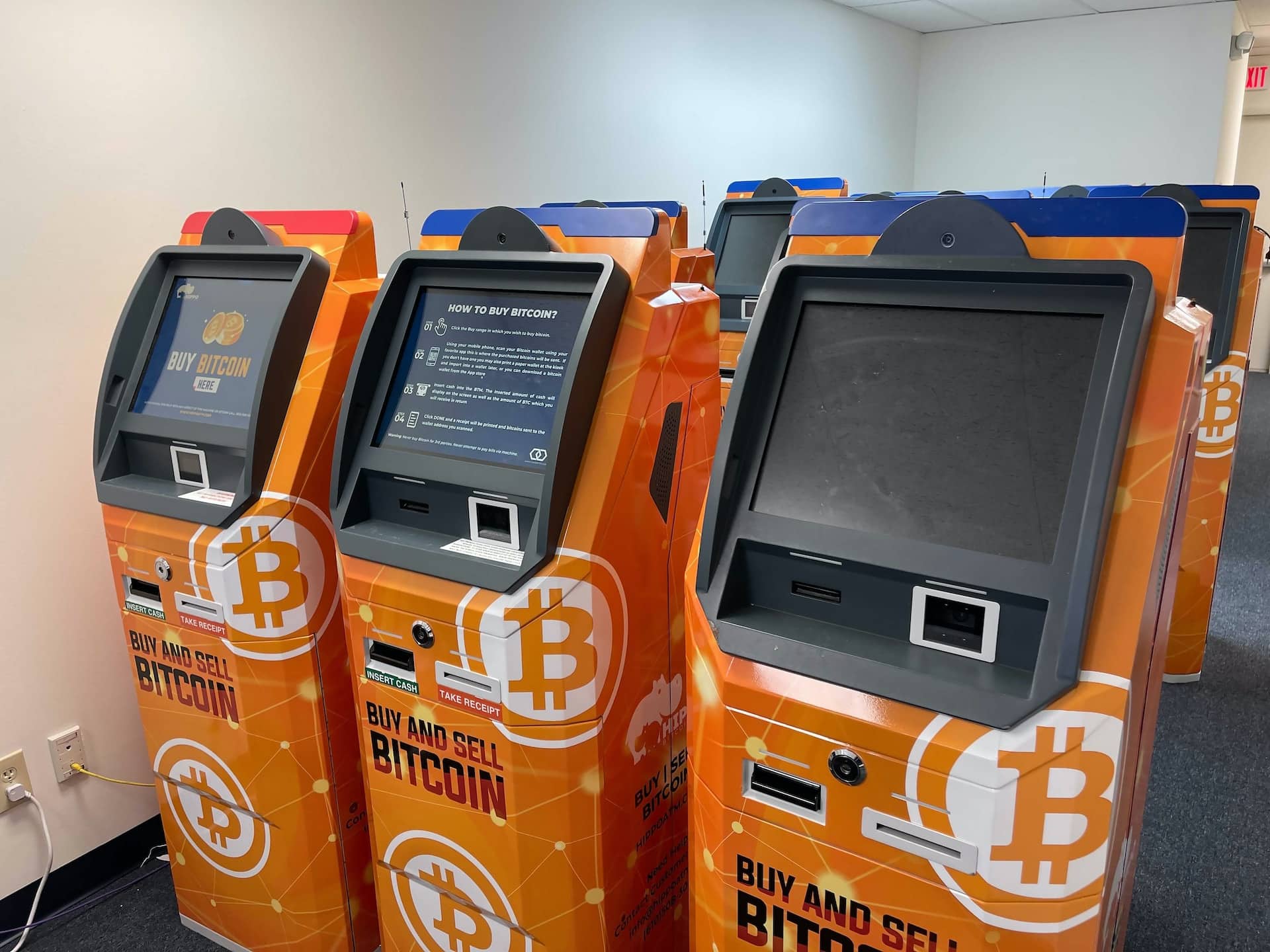
Bitcoin ATMs are physical kiosks that allow you to buy Bitcoin with cash or, in some cases, a debit card. The process typically involves scanning your wallet QR code, inserting cash, and receiving Bitcoin directly into your wallet. Some ATMs also allow selling Bitcoin for cash.
Pros of Bitcoin ATMs:
-
Convenience and Speed: Can be a quick way to acquire Bitcoin, especially if you have cash on hand.
-
Anonymity (to an extent): Some ATMs may only require a phone number verification for smaller transactions, offering more privacy than full KYC exchanges.
Cons of Bitcoin ATMs:
-
High Fees: Transaction fees are significantly higher than online exchanges, often ranging from 5-10% or more.
-
Limited Availability: Not available in all locations, and their presence can be sporadic.
-
Transaction Limits: Often impose daily or per-transaction limits.
Investing via Traditional Financial Platforms (ETFs, Grayscale Trust)
For investors who prefer to gain exposure to Bitcoin without directly holding the asset or managing private keys, traditional financial products offer an indirect route. These options are typically regulated and can be bought through standard brokerage accounts.
-
Spot Bitcoin ETFs (Exchange-Traded Funds): These funds hold actual Bitcoin, and their shares trade on traditional stock exchanges. They offer institutional-grade custody and management, providing a familiar and regulated way for investors to gain exposure to Bitcoin’s price movements without the complexities of direct ownership.
-
Grayscale Bitcoin Trust (GBTC): Historically, this was one of the few avenues for traditional investors to get Bitcoin exposure. It functions as a closed-end fund, meaning its shares can trade at a premium or discount to the underlying Bitcoin’s net asset value (NAV). GBTC has recently converted to a spot ETF in the U.S.
Pros of Traditional Financial Platforms:
-
Familiarity and Convenience: Integrate seamlessly into existing investment portfolios and brokerage accounts.
-
No Self-Custody Required: Eliminates the need to manage wallets or private keys.
-
Regulation: Operate within established financial regulatory frameworks, potentially offering more investor protections.
Cons of Traditional Financial Platforms:
-
Indirect Ownership: You own shares in a fund that holds Bitcoin, not the Bitcoin itself.
-
Management Fees: Funds typically charge annual fees that can eat into returns.
-
Specific Trading Hours: Shares can only be traded during traditional market hours.
-
Premium/Discount to Spot Price: For funds like GBTC before its ETF conversion, shares could trade at a price significantly different from the underlying Bitcoin’s market value.
Earning Bitcoin
While not a direct purchase method, it’s worth noting that Bitcoin can also be acquired through earning. This includes:
-
Accepting Bitcoin as Payment: For businesses or individuals offering goods/services.
-
Mining: Participating in the network to validate transactions and earn new Bitcoin (highly specialized and energy-intensive).
-
Bitcoin Faucets: Websites that distribute small amounts of Bitcoin for completing simple tasks (negligible amounts).
-
Crypto Rewards Programs: Earning Bitcoin back on purchases made with certain credit cards or platforms.
Key Considerations Before Making Your Purchase
Before committing your capital, it’s imperative to approach the purchase of Bitcoin with a clear understanding of the financial and security implications. Diligence here is paramount.
Security: Protecting Your Investment
This is arguably the most critical aspect of investing in Bitcoin.
-
Wallet Types: Understand the difference between hot wallets (online, convenient, less secure for large amounts) and cold wallets (offline, hardware wallets, highly secure for long-term storage). For significant holdings, a hardware wallet is strongly recommended.
-
Two-Factor Authentication (2FA): Always enable 2FA on your exchange accounts, preferably using an authenticator app (like Google Authenticator) rather than SMS.
-
Phishing Awareness: Be extremely wary of suspicious emails, messages, or websites attempting to steal your login credentials or private keys. Always double-check URLs.
-
Seed Phrase Management: If you use a non-custodial wallet, your “seed phrase” (a list of 12-24 words) is the ultimate key to your funds. Store it securely offline, never digitally, and never share it.
Regulatory Compliance and KYC/AML
Be aware of the regulatory landscape in your jurisdiction. Reputable exchanges comply with KYC and AML laws, which require you to verify your identity. This is designed to prevent illicit activities, but it also means your transactions are traceable. Choosing a compliant platform minimizes legal risks for you.
Fees and Pricing
Fees can significantly impact your overall investment.
-
Trading Fees: Exchanges charge various fees (taker/maker fees) for executing trades.
-
Withdrawal Fees: Costs associated with moving Bitcoin from the exchange to your personal wallet.
-
Network Fees (Miner Fees): These are paid to the Bitcoin network for processing your transaction, independent of the exchange.
-
Spread: The difference between the buy and sell price, which can be an implicit cost, especially on user-friendly brokerages.
Payment Methods
Consider which payment method suits you best:
-
Bank Transfers (ACH/SEPA): Generally the cheapest but can take several business days to clear.
-
Debit/Credit Cards: Instant but often incur higher fees (3-5% or more).
-
PayPal/Other Digital Wallets: Fees and availability vary by platform.
Research and Due Diligence
Never rush into a purchase.
-
Reputation of the Platform: Look for well-established exchanges with a strong track record and positive user reviews.
-
Customer Support Quality: Evaluate how responsive and helpful their support team is.
-
Jurisdiction: Understand where the exchange is regulated and what protections that offers.
The Purchase Process: A Step-by-Step Overview
While specific steps may vary slightly between platforms, the general process for buying Bitcoin on a centralized exchange is as follows:
Step 1: Choose a Reputable Platform
Based on your research and considerations (fees, security, ease of use), select a centralized exchange that aligns with your financial goals and risk tolerance. For beginners, user-friendly options like Coinbase or Kraken are often recommended.
Step 2: Create and Verify Your Account
Sign up using your email address and create a strong password. You will then proceed with the KYC process, which typically involves providing personal information (name, address, date of birth) and uploading photos of a government-issued ID (passport, driver’s license). Some platforms may also require a selfie or proof of address.
Step 3: Fund Your Account
Once your account is verified, you’ll need to deposit funds. Navigate to the “Deposit” or “Fund Account” section. Choose your preferred fiat currency and payment method (e.g., bank transfer, debit card, PayPal). Follow the instructions to link your bank account or input your card details. Be mindful of any deposit limits and associated fees.
Step 4: Place Your Order
With funds in your account, go to the “Buy” or “Trade” section.
-
Select Bitcoin (BTC): Specify that you want to buy Bitcoin.
-
Enter Amount: Decide how much Bitcoin you wish to buy, either by specifying a fiat amount (e.g., $100 worth of BTC) or a specific quantity of BTC.
-
Choose Order Type:
-
Market Order: Buys Bitcoin immediately at the current market price. This is the simplest option for beginners.
-
Limit Order: Allows you to set a specific price at which you want to buy Bitcoin. The order will only execute if Bitcoin reaches that price. This offers more control but may take time to fill.
-
-
Review and Confirm: Double-check all details of your order before confirming the purchase.
Step 5: Secure Your Bitcoin
After your purchase is complete, your Bitcoin will be held in your exchange wallet. For long-term holding, it is strongly recommended to withdraw your Bitcoin to a personal, non-custodial wallet (especially a hardware wallet). This removes the custodial risk associated with leaving your assets on an exchange. Remember: “Not your keys, not your coins.” Learning how to use a personal wallet is a vital part of responsible Bitcoin ownership.

Conclusion
The journey to acquiring Bitcoin is multifaceted, offering various pathways tailored to different preferences for ease of use, privacy, security, and control. From the straightforward interfaces of centralized exchanges to the more technically demanding but highly private decentralized options, and even indirect exposure through traditional financial products, the choices are abundant. Regardless of the chosen method, the underlying principles of sound financial management – thorough research, understanding associated risks, and prioritizing the security of your investment – remain paramount. As the digital asset space continues to mature, staying informed and exercising due diligence will be your greatest assets in navigating the exciting, yet volatile, world of Bitcoin investment.
aViewFromTheCave is a participant in the Amazon Services LLC Associates Program, an affiliate advertising program designed to provide a means for sites to earn advertising fees by advertising and linking to Amazon.com. Amazon, the Amazon logo, AmazonSupply, and the AmazonSupply logo are trademarks of Amazon.com, Inc. or its affiliates. As an Amazon Associate we earn affiliate commissions from qualifying purchases.