
In the dynamic world of personal finance, understanding the cost of borrowing is paramount, especially when making significant purchases like a used car. Interest rates on pre-owned vehicles are a complex interplay of macroeconomic forces, individual creditworthiness, and the competitive landscape of lenders. They are not static figures but rather a reflection of the current financial climate, constantly shifting due to a myriad of factors. For consumers looking to finance a used car, staying informed about these rates and the elements that influence them is the first step toward making a financially sound decision. This article will delve into the multifaceted environment of used car interest rates, providing insights into what drives them and how you can position yourself to secure the most favorable terms.

Understanding the Factors Influencing Used Car Interest Rates
Used car interest rates are not determined in a vacuum. They are shaped by a broad spectrum of influences, ranging from global economic policies to the specific characteristics of the vehicle you intend to purchase. A holistic understanding of these factors empowers borrowers to anticipate market movements and negotiate more effectively.
The Federal Reserve and Monetary Policy
At the apex of the financial system, the Federal Reserve (or equivalent central banks globally) plays a pivotal role in setting the stage for all lending rates. By adjusting the federal funds rate – the target rate for overnight lending between banks – the Fed directly influences the cost of borrowing for financial institutions. When the Fed raises rates to combat inflation, for instance, banks’ cost of capital increases, which invariably trickles down to consumers in the form of higher interest rates on everything from mortgages to auto loans. Conversely, a dovish stance by the Fed, often characterized by rate cuts, tends to lower borrowing costs across the board. This benchmark rate acts as a foundational element, dictating the baseline upon which all other lending decisions are made.
Economic Conditions and Inflation
Beyond direct monetary policy, broader economic conditions significantly impact interest rates. A robust economy with low unemployment and strong consumer spending might encourage lenders to offer more competitive rates, as the risk of default is perceived as lower. However, a surging economy can also lead to inflation, prompting central banks to raise rates, as mentioned above, to cool down economic activity. High inflation erodes the purchasing power of money over time, meaning that lenders demand a higher return on their loans to compensate for the diminished value of future repayments. Economic uncertainty, recessions, or even global events can also lead to tighter lending standards and higher rates as lenders become more risk-averse. The interplay between economic growth, inflation, and central bank reactions creates a continuous ebb and flow in interest rate environments.
Vehicle Age, Mileage, and Type
The specific characteristics of the used car itself also contribute to its financing rate. Lenders view older vehicles with higher mileage as inherently riskier assets. They depreciate faster, potentially have more mechanical issues, and their resale value is more volatile. Should a borrower default, the lender’s ability to recoup their losses by repossessing and selling an older, less valuable car is diminished. Consequently, interest rates for financing older or higher-mileage vehicles tend to be higher to offset this increased risk. Similarly, the make and model of the car can play a role; some brands retain their value better than others, which lenders consider when assessing risk.
Personal Creditworthiness: Your Key to Lower Rates
While external economic factors set the overall lending landscape, your personal financial health is arguably the most crucial determinant of the interest rate you’ll ultimately receive. Lenders assess your creditworthiness to gauge your ability and willingness to repay the loan.
The Importance of Your Credit Score
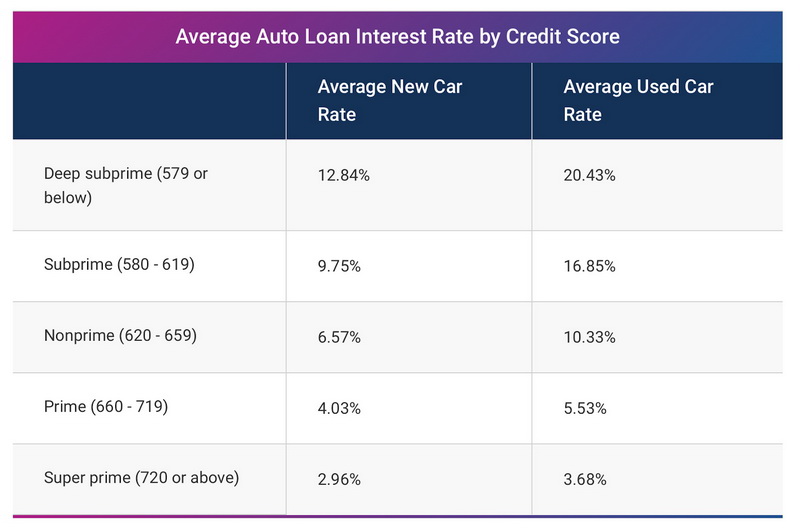
Your credit score, most commonly FICO or VantageScore, is a three-digit numerical summary of your credit risk. It’s generated from your credit report, which details your borrowing history, payment patterns, and outstanding debts. Lenders categorize applicants into tiers based on their scores, with prime borrowers (typically those with scores above 720-740) consistently receiving the lowest interest rates. A strong credit score signals reliability and a history of responsible financial behavior, making you a less risky proposition for lenders. Conversely, a lower credit score indicates a higher risk of default, prompting lenders to charge higher interest rates to compensate for that elevated risk.
Debt-to-Income Ratio and Payment History
Beyond the credit score, lenders also scrutinize your debt-to-income (DTI) ratio. This metric compares your total monthly debt payments to your gross monthly income. A high DTI ratio suggests that a significant portion of your income is already committed to existing debts, potentially limiting your capacity to take on new car payments. Lenders prefer a lower DTI, ideally below 36-40%, as it indicates more disposable income available for loan repayment. Your payment history, which is a major component of your credit score, is also directly examined. A consistent record of on-time payments across all your credit accounts is a powerful indicator of financial discipline and reliability.
Strategies for Improving Your Credit Score
If your credit score isn’t where you want it to be, there are actionable steps you can take to improve it before applying for a used car loan.
-
Pay Bills on Time: This is the most critical factor. Even one missed payment can significantly hurt your score.
-
Reduce Existing Debt: Especially high-interest credit card debt. Lowering your credit utilization ratio (the amount of credit you’re using compared to your available credit) can boost your score.
-
Check Your Credit Report for Errors: Incorrect information can negatively impact your score. Dispute any inaccuracies promptly.
-
Avoid Opening Too Many New Credit Accounts: Multiple credit inquiries in a short period can temporarily lower your score.
-
Maintain a Diverse Credit Mix (Responsibly): A mix of credit cards and installment loans (like student loans) can be beneficial, but only if managed responsibly.
Exploring Financing Options for Used Cars
The marketplace for used car loans is diverse, offering various avenues for financing. Each option comes with its own set of advantages and considerations, and understanding them can help you find the best fit for your financial situation.
Dealership Financing: Convenience vs. Competition
Most car dealerships offer in-house financing, often through relationships with various banks, credit unions, and their own captive finance companies (e.g., Toyota Financial Services, Ford Credit). The primary advantage here is convenience; you can often complete the entire purchase and financing process under one roof. Dealerships can sometimes secure competitive rates, especially for well-qualified buyers or during special promotions. However, it’s crucial to remember that dealerships may mark up interest rates to earn a profit, meaning the rate you’re offered might not be the absolute lowest you could get elsewhere. Always compare their offer with pre-approvals you’ve secured independently.

Banks and Credit Unions: Often Competitive Choices
Traditional banks (e.g., Chase, Bank of America, Wells Fargo) and credit unions are popular and often highly competitive sources for used car loans. Banks typically offer a wide range of loan products, while credit unions, being not-for-profit organizations, are often known for offering slightly lower interest rates and more personalized service to their members. Applying directly to a bank or credit union before visiting a dealership allows you to get pre-approved for a loan. This gives you a clear budget and a firm interest rate in hand, empowering you to negotiate more effectively at the dealership as if you were a cash buyer.
Online Lenders and Marketplaces
The digital age has ushered in a new wave of online lenders and marketplaces that specialize in auto loans. Companies like Capital One Auto Finance, LightStream, and Carvana (which offers its own financing) provide a streamlined, often quick, application process that can be completed entirely online. These platforms frequently leverage technology to offer competitive rates and can be an excellent option for comparing multiple offers from various lenders without leaving your home. They can also be particularly beneficial for individuals with less-than-perfect credit who might struggle to get approved through traditional channels.
Personal Loans: When They Make Sense (and When They Don’t)
While not specifically an auto loan, a personal loan can sometimes be used to finance a used car. These are typically unsecured loans, meaning they don’t use the car as collateral. The main advantage is that the loan isn’t tied to the car, giving you more flexibility. However, because they are unsecured, personal loan interest rates are often higher than secured auto loan rates, especially for individuals with average credit. They generally make sense only if you have excellent credit and can secure a personal loan rate that is comparable to or lower than an auto loan, or if you’re purchasing a very inexpensive car and prefer the simplicity of a personal loan. For most used car purchases, a dedicated auto loan will offer more favorable terms.
Navigating the Application Process and Securing the Best Rate
Securing the best possible interest rate requires more than just good credit; it demands a strategic approach to the application and negotiation process. Being proactive and informed can save you hundreds, if not thousands, of dollars over the life of your loan.
Getting Pre-Approved: Your Negotiating Power
The single most impactful step you can take before stepping foot in a dealership is to get pre-approved for a loan. This involves applying to banks, credit unions, or online lenders to determine the maximum loan amount you qualify for and the interest rate you can expect. Pre-approval serves multiple critical functions:
-
Establishes Your Budget: You’ll know precisely how much car you can afford without being swayed by a salesperson.
-
Provides a Benchmark Rate: You’ll have a concrete interest rate to compare against any offers from the dealership, ensuring you don’t overpay.
-
Empowers You as a Cash Buyer: With pre-approval, you can negotiate the car’s price as if you’re paying cash, separating the car price negotiation from the financing negotiation.
Comparing Loan Offers: Beyond Just the APR
When comparing loan offers, the Annual Percentage Rate (APR) is your most important metric. The APR includes the interest rate plus any fees associated with the loan, giving you the true annual cost of borrowing. However, don’t stop there. Also, consider:
-
Loan Term: A shorter term means higher monthly payments but less interest paid overall. A longer term means lower monthly payments but significantly more interest over time.
-
Fees: Look for origination fees, application fees, or prepayment penalties. While less common with auto loans, they can add to the total cost.
-
Flexibility: Does the lender offer options for payment dates or hardship programs if you face financial difficulties?
Understanding the Fine Print: APR vs. Interest Rate, Loan Term, and Fees
It’s crucial to distinguish between the stated interest rate and the APR. The interest rate is the percentage charged on the principal loan amount. The APR, by law, must include the interest rate and any additional costs or fees wrapped into the loan, making it the more accurate representation of the total cost. Always focus on the APR for comparison. The loan term (e.g., 36, 48, 60, or 72 months) directly impacts your monthly payment and the total interest paid. Longer terms spread payments out but accumulate more interest, while shorter terms are more expensive monthly but cheaper overall. Be wary of hidden fees like document fees, administrative fees, or credit insurance add-ons that can inflate the total cost without adding value.
The Role of a Down Payment
Making a down payment on a used car loan is one of the most effective ways to lower your interest rate and overall borrowing cost. A substantial down payment reduces the amount you need to borrow, thereby decreasing the lender’s risk. Lenders are often willing to offer lower rates when the loan-to-value (LTV) ratio is lower. Additionally, a down payment can help you avoid being “upside down” on your loan (owing more than the car is worth) as the vehicle depreciates. Aim for at least 10-20% if possible.
Current Market Trends and Future Outlook (General Insights)
While precise real-time rates fluctuate hourly, it’s possible to discuss the broader trends impacting the used car financing market and how consumers can prepare.
Current State of the Used Car Market
Over the past few years, the used car market has experienced unprecedented volatility. Supply chain disruptions, particularly in semiconductor manufacturing, impacted new car production, which in turn drove up demand and prices for used vehicles. This elevated demand, coupled with limited supply, meant that even used cars were selling at higher price points, leading to larger loan amounts for consumers. While some stabilization has occurred, prices remain generally higher than pre-pandemic levels. This environment makes competitive interest rates even more critical for affordability.
How Inflation and Interest Rate Hikes Affect Affordability
Recent periods of high inflation have prompted central banks worldwide to implement aggressive interest rate hikes. This directly translates to higher borrowing costs for consumers, including for used car loans. Higher rates, combined with elevated used car prices, create a dual challenge for affordability. Monthly payments increase, and the total cost of financing a vehicle rises significantly. For many, this has meant having to adjust their budget, opt for a less expensive vehicle, or extend loan terms (which carries its own cost implications).
Preparing for Future Rate Changes
The financial market is inherently unpredictable, but consumers can adopt strategies to mitigate the impact of future rate changes:
-
Build Your Credit: As always, a strong credit score is your best defense against high interest rates.
-
Save for a Down Payment: A larger down payment can cushion the blow of rising rates by reducing the principal amount borrowed.
-
Monitor Market Trends: Stay informed about economic forecasts, central bank announcements, and automotive market news to anticipate potential shifts.
-
Consider Shorter Loan Terms: If financially feasible, a shorter loan term will expose you to less interest rate risk over time and generally lead to lower total interest paid.
-
Refinance Options: Keep an eye on interest rate movements even after you’ve secured a loan. If rates drop significantly, you might be able to refinance your existing auto loan to a lower rate, saving money on future payments.
Conclusion: Making an Informed Decision
Understanding “what are used car interest rates right now” is more than just knowing a number; it’s about comprehending the complex financial ecosystem that determines that number. From the Federal Reserve’s monetary policy and broader economic health to your individual credit profile and the specific vehicle you choose, numerous factors converge to shape your borrowing costs. By diligently working on your creditworthiness, exploring all available financing avenues, diligently comparing offers, and being strategic in your application process, you can significantly influence the rate you secure. In a market often characterized by volatility, an informed and proactive approach is your most powerful tool for making a financially astute used car purchase.
aViewFromTheCave is a participant in the Amazon Services LLC Associates Program, an affiliate advertising program designed to provide a means for sites to earn advertising fees by advertising and linking to Amazon.com. Amazon, the Amazon logo, AmazonSupply, and the AmazonSupply logo are trademarks of Amazon.com, Inc. or its affiliates. As an Amazon Associate we earn affiliate commissions from qualifying purchases.