
Buying a vehicle is often the second-largest purchase a consumer will make, surpassed only by the acquisition of a home. While much of the negotiation process at a dealership focuses on the “sticker price” or the monthly payment, the most critical factor in the long-term cost of vehicle ownership is the car interest rate. Understanding what a car interest rate is, how it is calculated, and the variables that influence it can save a borrower thousands of dollars over the life of a loan.
At its core, a car interest rate is the cost you pay to a lender for the privilege of borrowing money to purchase a vehicle. It is expressed as a percentage of the total loan amount. However, in the world of personal finance, the “interest rate” is often used interchangeably with the Annual Percentage Rate (APR), though they represent slightly different concepts. Navigating this landscape requires a deep dive into the mechanics of debt, credit profiles, and the broader economic environment.
Understanding the Basics: How Car Interest Rates Work
When you take out an auto loan, you are essentially entering into a contract where a financial institution pays the car seller on your behalf. In exchange, you agree to pay back that principal amount plus a “service fee” for the use of those funds. This fee is the interest.
Principal vs. Interest
Every monthly car payment is generally split into two parts: the principal and the interest. The principal is the actual balance of the loan used to pay for the car. The interest is the profit the lender makes. In the early stages of a loan, a larger portion of your payment goes toward interest. As the balance decreases, the amount of interest charged each month also drops, allowing more of your payment to be applied to the principal. This process is known as amortization.
Interest Rate vs. APR
While the interest rate is the base percentage charged on the principal, the Annual Percentage Rate (APR) provides a more holistic view of the loan’s cost. The APR includes the interest rate plus any additional fees charged by the lender, such as origination fees, documentation fees, or loan processing charges. When comparing offers from different banks or dealerships, the APR is the most accurate metric to use, as it reflects the true annual cost of the credit.
The Mechanics of Simple Interest
Most modern auto loans utilize “simple interest.” This means the interest is calculated daily based on the remaining balance of the loan. If you pay your bill early or contribute extra toward the principal, you reduce the balance faster, which in turn reduces the amount of interest that can accrue. This is a significant advantage for disciplined borrowers, as it allows them to shorten the loan term and decrease the total interest paid.
Factors That Determine Your Car Interest Rate
Car interest rates are not universal. Two people buying the exact same car at the exact same dealership might receive vastly different rates. Lenders use a risk-based pricing model to determine how much interest to charge, evaluating the likelihood that the borrower will repay the loan in full and on time.
Credit Score and Financial History
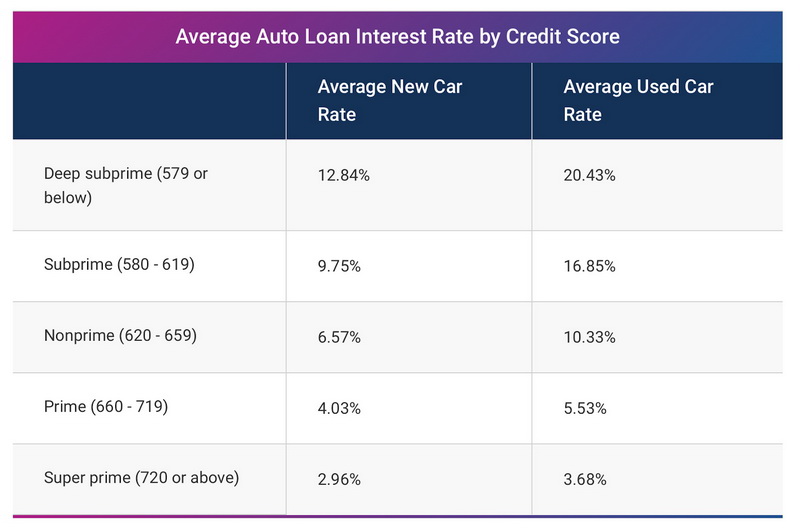
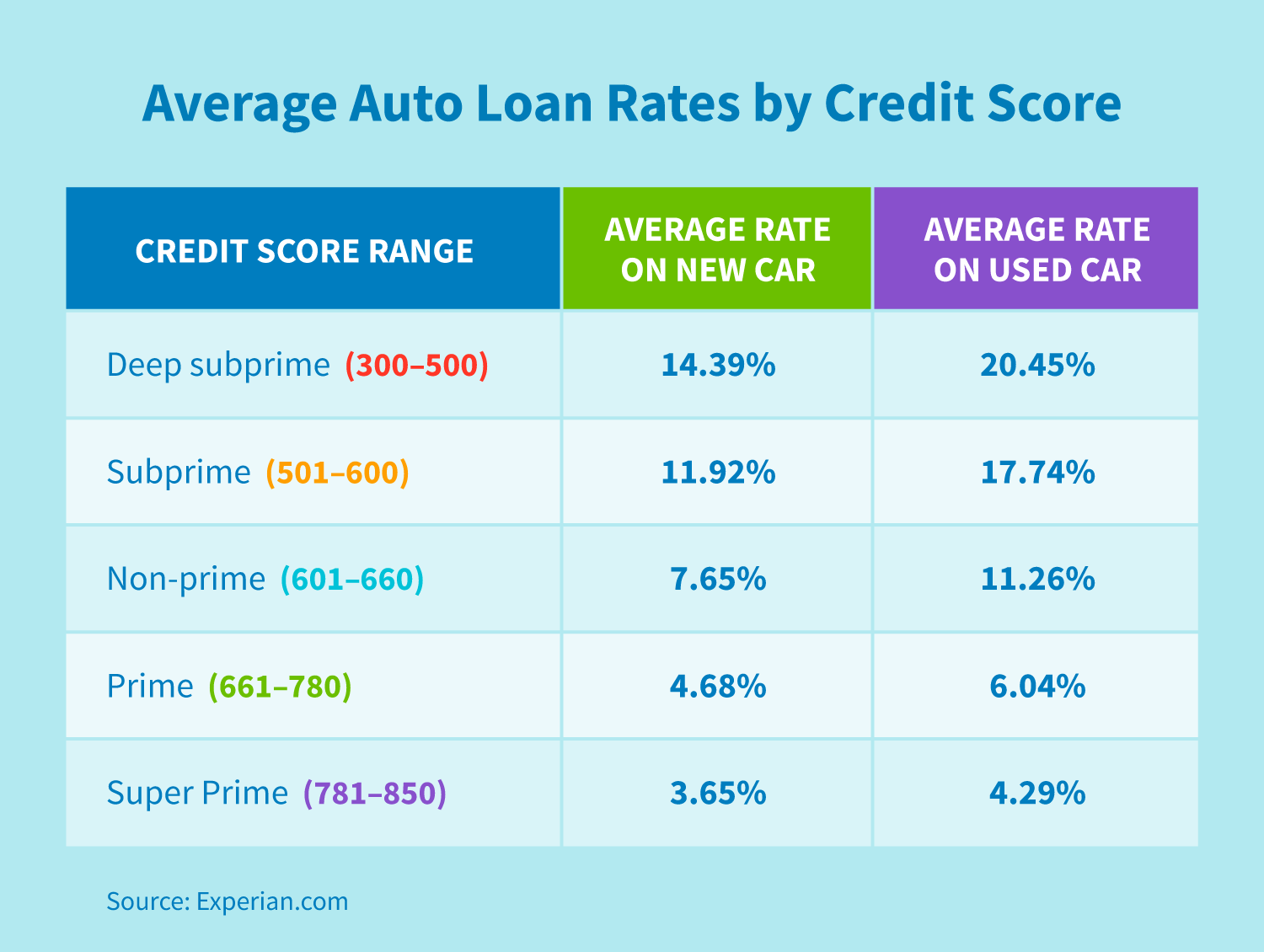
Your credit score is the single most influential factor in determining your interest rate. Lenders typically categorize borrowers into “tiers”:
-
Superprime (780-850): These borrowers receive the lowest possible rates, often benefiting from promotional 0% or 0.9% APR offers from manufacturers.
-
Prime (660-779): These borrowers still receive competitive rates, usually slightly above the national average.
-
Nonprime and Subprime (500-659): Borrowers in this range are considered higher risk and will face significantly higher interest rates, sometimes reaching double digits.
-
Deep Subprime (Below 500): These borrowers may struggle to find traditional financing and often have to rely on “buy here, pay here” lots with predatory interest rates.
The Loan Term Length
The duration of the loan significantly impacts the rate. Traditionally, 36-month or 48-month loans carry lower interest rates than 72-month or 84-month loans. Lenders charge more for longer terms because there is a higher statistical probability that the borrower’s financial situation could change—or that the vehicle’s value will drop below the loan balance—over a longer period.
Vehicle Age and Type
Interest rates are typically lower for new cars than for used cars. This is because new cars have a more predictable resale value and are easier for a lender to repossess and resell if the borrower defaults. Furthermore, many auto manufacturers have “captive” finance arms (like Ford Credit or Toyota Financial Services) that offer subsidized interest rates on new models to move inventory.
The Macroeconomic Environment
Internal factors aren’t the only drivers of car interest rates. External economic conditions, specifically the Federal Funds Rate set by the Federal Reserve, play a massive role. When the Fed raises rates to combat inflation, the cost for banks to borrow money increases. To maintain their margins, banks pass these costs on to consumers in the form of higher APRs on auto loans.
Simple Interest vs. Precomputed Interest
It is vital for any car buyer to identify whether their loan is a simple interest loan or a precomputed interest loan. While precomputed loans are becoming rarer in mainstream finance, they still exist in some subprime markets.
The Pitfalls of Precomputed Interest
In a precomputed interest loan, the total amount of interest you will owe over the life of the loan is calculated at the very beginning and added to the principal. Unlike simple interest, you do not save money by paying the loan off early. Even if you pay the entire balance in the second month, you may still be obligated to pay a large portion of the interest that was “precomputed” at the start.
The Benefits of Simple Interest
Simple interest loans are the gold standard for personal finance. Because interest is calculated based on the balance on the day the payment is received, the borrower has more control. By making bi-weekly payments or adding an extra $50 to each monthly installment, a borrower can significantly reduce the “effective” interest rate they are paying by shrinking the principal balance ahead of schedule.
Strategies to Secure the Lowest Car Interest Rate
Securing a low interest rate is an exercise in preparation and negotiation. You should never walk into a dealership without a clear understanding of your credit profile and the current market rates.
Get Pre-Approved
One of the most common mistakes car buyers make is relying solely on the dealership for financing. Dealerships often act as intermediaries; they take your credit profile, send it to several banks, and then present you with an offer. However, they frequently add a “markup” to the rate the bank offered them. By getting a pre-approval from a local credit union or an online bank, you have a baseline. If the dealer cannot beat your pre-approved rate, you already have your financing secured.
Leverage Your Relationship with Credit Unions
Credit unions are member-owned, non-profit organizations. Because they do not have to answer to shareholders, they can often offer interest rates that are 1% to 2% lower than major national banks. If you have been a member of a credit union for several years, they may also be more willing to look past a minor blemish on your credit report.
Timing Your Purchase
Auto manufacturers often run seasonal promotions, particularly during holiday weekends or at the end of a model year. During these times, “incentivized financing” is common. These are the 0% or 1.9% APR offers you see in commercials. While these rates are usually reserved for those with “Superprime” credit, they represent the absolute lowest cost of borrowing in the automotive market.
The Long-Term Impact of Interest on Your Net Worth
In the realm of personal finance, a car is a depreciating asset. Unlike a home or a stock portfolio, a vehicle loses value the moment it leaves the lot. High interest rates compound this problem, potentially leading to a situation known as being “upside-down” or having “negative equity.”
Avoiding “Upside-Down” Loans
If your interest rate is high and your loan term is long (e.g., 72 or 84 months), the vehicle may depreciate faster than you can pay down the principal. If you decide to sell the car or if it is totaled in an accident, you might find that you owe the bank $25,000 for a car that is only worth $18,000. Low interest rates help prevent this by ensuring that more of your monthly payment goes toward the actual value of the asset rather than the cost of the debt.
Refinancing as a Tool
If you were forced to take a high interest rate due to poor credit at the time of purchase, you are not necessarily stuck with that rate for the next five years. If you make on-time payments for 12 to 18 months, your credit score will likely improve. At that point, you can look into “auto refinancing.” This involves taking out a new loan with a lower interest rate to pay off the old, expensive loan. This simple move can lower your monthly payment and save you thousands in interest over the remaining term.

The Opportunity Cost of High Interest
Every dollar spent on car interest is a dollar that isn’t being invested in a retirement account or a high-yield savings account. For example, the difference between a 4% interest rate and an 8% interest rate on a $35,000 loan over six years is roughly $4,700. If that $4,700 were invested in the stock market with an average return of 7%, it could grow significantly over a few decades. Viewing car interest through the lens of opportunity cost is the key to making smarter financial decisions.
Understanding car interest rates is not just about getting a lower monthly payment; it is about protecting your financial future. By mastering the variables that influence these rates—from credit tiers to simple interest mechanics—you position yourself as a savvy consumer capable of navigating the complex world of auto finance with confidence.
aViewFromTheCave is a participant in the Amazon Services LLC Associates Program, an affiliate advertising program designed to provide a means for sites to earn advertising fees by advertising and linking to Amazon.com. Amazon, the Amazon logo, AmazonSupply, and the AmazonSupply logo are trademarks of Amazon.com, Inc. or its affiliates. As an Amazon Associate we earn affiliate commissions from qualifying purchases.