
In the modern financial landscape, few topics have generated as much discourse, wealth, and confusion as the rise of digital assets. For many newcomers to the world of personal finance and investing, the terms “Bitcoin” and “cryptocurrency” are often used interchangeably. However, to an investor, these terms represent two very different layers of the financial ecosystem. Understanding the distinction between the two is not merely an academic exercise; it is a fundamental requirement for anyone looking to navigate the risks and rewards of the 21st-century digital economy.
At its simplest, the relationship is one of category versus specific asset. All Bitcoin is cryptocurrency, but not all cryptocurrency is Bitcoin. This distinction is analogous to the relationship between gold and precious metals, or the S&P 500 and the stock market. Bitcoin is the pioneer, the reserve currency of the digital age, and the benchmark against which all other digital assets are measured. Cryptocurrency, meanwhile, is the overarching umbrella that encompasses thousands of different digital tokens, each with its own economic model, utility, and risk profile.
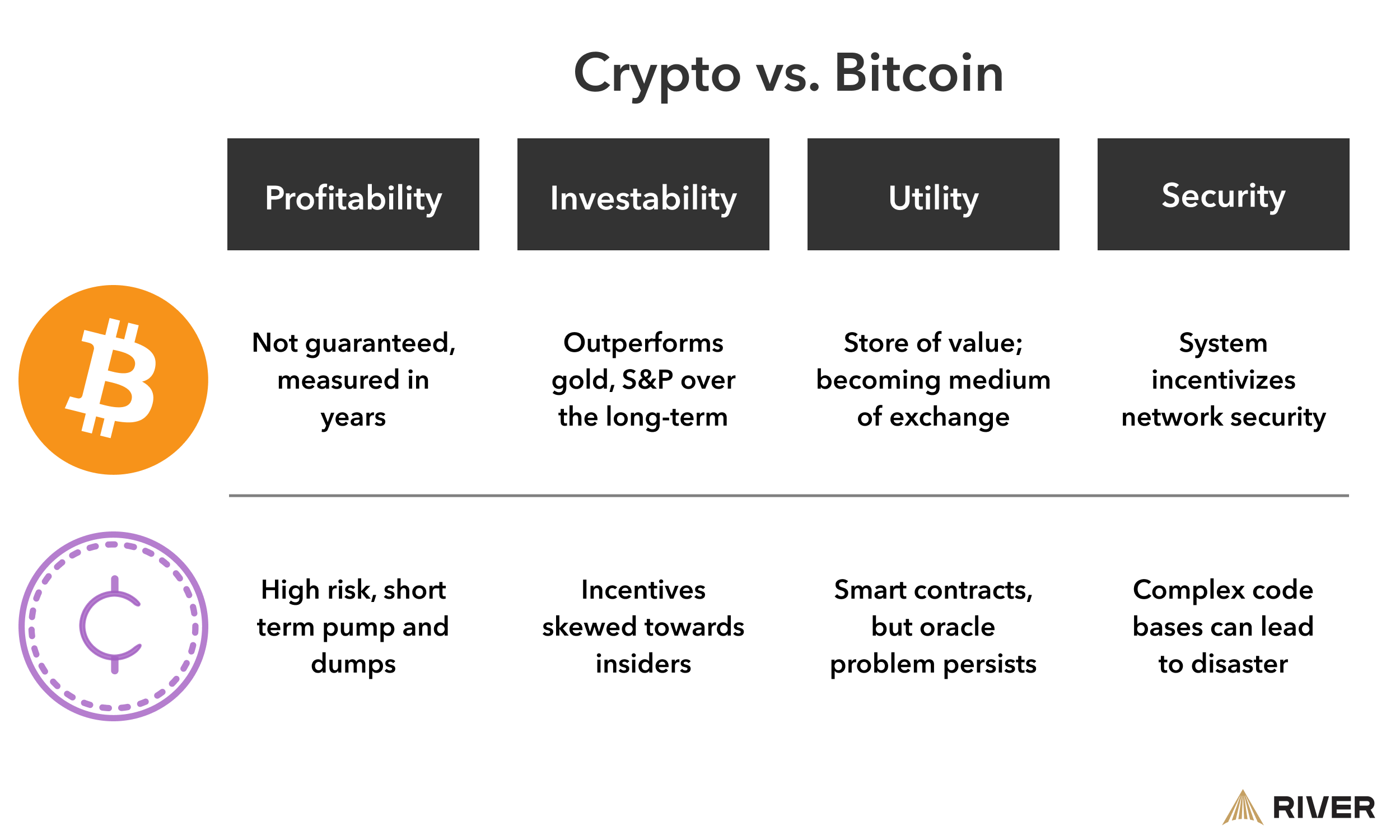
Understanding the Financial Hierarchy: The Genesis Asset vs. the Broader Market
To understand the difference from a financial perspective, we must first look at the hierarchy of the digital asset market. Bitcoin was the first successful implementation of a decentralized digital currency, emerging in 2009 as a response to the global financial crisis. Its primary goal was to create a peer-to-peer electronic cash system that functioned without the need for centralized intermediaries like banks or governments.
The Definition of Cryptocurrency
A cryptocurrency is a digital or virtual currency that uses cryptography for security. Unlike traditional fiat currencies—such as the US Dollar or the Euro—cryptocurrencies operate on decentralized networks based on blockchain technology. From an investment standpoint, cryptocurrencies represent a new asset class characterized by 24/7 market uptime, high volatility, and programmatic monetary policies.
Within the “cryptocurrency” umbrella, there are several sub-categories. These include “Altcoins” (any cryptocurrency that is not Bitcoin), “Stablecoins” (assets pegged to the value of fiat currency), and “Utility Tokens” (assets used to access specific services within a blockchain ecosystem). While they all share the underlying technology of a distributed ledger, their financial objectives vary wildly.
Bitcoin: The Genesis Asset
Bitcoin occupies a unique position in the market. Because it was the first, it enjoys the greatest brand recognition, the highest market capitalization, and the most significant institutional adoption. In the eyes of many institutional investors and hedge fund managers, Bitcoin is viewed as a “commodity” rather than a “security.”
The financial structure of Bitcoin is defined by its scarcity. Only 21 million Bitcoins will ever exist, a limit hard-coded into its protocol. This creates a deflationary or disinflationary economic model that stands in stark contrast to the inflationary nature of modern fiat currencies. For an investor, Bitcoin serves as the “anchor” of a digital portfolio, often exhibiting lower volatility relative to smaller, more speculative cryptocurrencies.
Financial Roles and Utility: Store of Value vs. Functional Assets
The primary difference between Bitcoin and the broader cryptocurrency market lies in their intended financial utility. While Bitcoin has evolved into a specific type of asset, other cryptocurrencies have been designed to solve different financial or technological problems.
Bitcoin as Digital Gold
In the world of personal finance, Bitcoin is increasingly categorized as “Digital Gold.” This comparison stems from several shared characteristics with physical gold: scarcity, durability, divisibility, and portability. Unlike physical gold, however, Bitcoin can be sent across the globe in minutes and is easily verifiable without a third party.
From an investment strategy perspective, Bitcoin is used primarily as a “Store of Value” (SoV) and a hedge against the debasement of fiat currency. Investors buy Bitcoin not necessarily to use it to buy coffee, but to preserve purchasing power over long horizons. Its role is defensive and foundational.
Altcoins and Programmable Money
The vast majority of other cryptocurrencies—often led by Ethereum—aim to be more than just a store of value. They are often described as “Programmable Money.” For example, Ethereum introduced the concept of “Smart Contracts,” which allow financial transactions to execute automatically when certain conditions are met.
In this context, the difference is profound. If Bitcoin is digital gold, Ethereum and similar cryptocurrencies (like Solana or Cardano) are digital “oil” or “electricity.” They power a new financial infrastructure known as Decentralized Finance (DeFi). Investors in these cryptocurrencies are often betting on the growth of the underlying network’s utility rather than just its scarcity. These assets typically carry higher risk but offer the potential for higher returns due to their technological applications.
Stablecoins and Financial Infrastructure
Another significant branch of the cryptocurrency tree is stablecoins (such as USDT or USDC). These are designed to maintain a stable value, usually $1.00. While they are technically cryptocurrencies, their financial function is the polar opposite of Bitcoin’s. They are not meant to appreciate in value; they are used as a medium of exchange, a way to move “cash” quickly within the digital ecosystem, or a way to earn yield through decentralized lending protocols.
Market Dynamics and Investment Implications
For the individual looking at their portfolio, the difference between Bitcoin and “crypto” is most visible in how they behave in the market.

Volatility Profiles and Market Dominance
Bitcoin generally leads the market. When Bitcoin’s price moves significantly, the rest of the cryptocurrency market usually follows. However, the magnitude of these moves is different. Bitcoin is often described as a “large-cap” asset. While it is volatile compared to the stock market, it is significantly more stable than smaller cryptocurrencies.
“Bitcoin Dominance” is a key financial metric that measures Bitcoin’s market cap as a percentage of the total cryptocurrency market cap. When dominance is high, it suggests that investors are moving toward safety. When dominance falls, it often indicates an “Altseason,” where investors are moving into more speculative, high-growth cryptocurrencies.
The Bitcoin Halving vs. Tokenomics
The economic cycles of Bitcoin are driven by a specific event called the “Halving,” which occurs every four years and reduces the rate at which new Bitcoins are created. This predictable supply shock has historically led to major bull markets.
In contrast, other cryptocurrencies have diverse “tokenomics.” Some have infinite supplies; others have “burn” mechanisms where tokens are destroyed to create scarcity. Some give holders the right to vote on the project’s future (governance), while others pay out a portion of the network’s fees (yield). Analyzing a cryptocurrency requires a deep dive into these individual economic structures, whereas Bitcoin’s economics are fixed and transparent.
Correlation and Diversification
From a portfolio management perspective, the difference lies in correlation. Bitcoin has historically shown a growing correlation with traditional “risk-on” assets like tech stocks. Many other cryptocurrencies, particularly those in the DeFi or gaming sectors, may decouple from Bitcoin based on their specific project milestones or adoption rates. However, in times of market stress, the correlation across the entire cryptocurrency sector tends to tighten, with Bitcoin usually holding its value better than the broader market.
Security, Governance, and Economic Policy
A fundamental difference that often goes overlooked by casual investors is how these assets are governed and secured.
Scarcity vs. Inflationary Models
Bitcoin’s monetary policy is set in stone. There is no CEO, no board of directors, and no central bank that can change the 21-million-coin limit. This “absolute scarcity” is its primary value proposition in a world of increasing debt and money printing.
Many cryptocurrencies, however, operate more like private companies or early-stage startups. They may have foundations or founding teams that can influence the supply of the token or change the roadmap of the project. This introduces “key person risk,” which does not exist with Bitcoin. When investing in the broader crypto market, you are often investing in the execution capabilities of a team, whereas investing in Bitcoin is an investment in a mathematical protocol.
Decentralization Levels
Bitcoin is the most decentralized financial network in existence. Its security is maintained by a global network of miners (Proof of Work). Many newer cryptocurrencies use a system called Proof of Stake, which is more energy-efficient and allows for faster transactions but can lead to greater centralization of wealth and influence. For a conservative investor, the decentralized nature of Bitcoin offers a level of censorship resistance and security that most other cryptocurrencies cannot yet match.
Choosing Your Financial Path: Building a Crypto Portfolio
Understanding the difference between Bitcoin and cryptocurrency allows an investor to build a balanced approach to the digital asset space.
Risk Assessment
If your goal is wealth preservation and a hedge against systemic financial risk, Bitcoin is likely the primary focus. It is the “blue chip” of the digital world. If your goal is high-growth speculation or participation in the future of decentralized banking, then the broader cryptocurrency market offers those opportunities.
The risk profile of “crypto” is a spectrum. On one end, you have Bitcoin, which is now an institutional-grade asset. On the other end, you have “memecoins” or micro-cap tokens that can lose 99% of their value in a single day. Mixing these categories requires a clear understanding of your own risk tolerance.

The Institutional Shift
The arrival of Spot Bitcoin ETFs in major financial markets marked a turning point. Bitcoin is now being integrated into traditional 401(k)s and pension funds as a distinct asset class. The broader cryptocurrency market is still largely in the “venture capital” stage of its evolution.
In conclusion, while Bitcoin and cryptocurrency share the same technological DNA, they serve different masters in the world of finance. Bitcoin is the digital answer to the sovereign currency and the gold bar—a macro-hedge and a base layer of value. Cryptocurrency is the playground of innovation, a vast field of digital assets that function as software, services, and experimental financial instruments. For the modern investor, success lies in recognizing that Bitcoin is the standard, while the rest of the cryptocurrency market represents the diverse, high-stakes evolution of the financial system itself.
aViewFromTheCave is a participant in the Amazon Services LLC Associates Program, an affiliate advertising program designed to provide a means for sites to earn advertising fees by advertising and linking to Amazon.com. Amazon, the Amazon logo, AmazonSupply, and the AmazonSupply logo are trademarks of Amazon.com, Inc. or its affiliates. As an Amazon Associate we earn affiliate commissions from qualifying purchases.