
In the dynamic world of cryptocurrency, the journey often begins with an acquisition and culminates in a liquidation – the act of converting your digital assets back into traditional fiat currency. “Cashing in” Bitcoin, while seemingly straightforward, involves a nuanced understanding of financial mechanisms, market dynamics, and regulatory considerations. Whether you’ve seen substantial gains, need to cover an unexpected expense, or are simply rebalancing your financial portfolio, knowing how to effectively and securely convert your Bitcoin into usable funds is an essential financial skill.
This guide will navigate the intricate landscape of liquidating Bitcoin, providing a professional and insightful overview of the methods, financial implications, and best practices involved. It’s not just about selling; it’s about smart financial execution to maximize your returns and minimize risks.

Understanding the Financial Landscape of Cashing Out Bitcoin
Before initiating any transaction, it’s crucial to grasp the financial context surrounding the liquidation of your Bitcoin holdings. This involves understanding your motivations, potential tax liabilities, and the inherent volatility of the crypto market. Approaching this process with a clear financial strategy is paramount.
Why Liquidate? Common Financial Triggers
People decide to cash in their Bitcoin for a variety of personal finance reasons, each driven by specific financial goals or needs:
-
Profit Realization: The most common reason. After a period of appreciation, investors convert Bitcoin to fiat to lock in gains and secure their investment returns. This aligns with standard investment portfolio management.
-
Covering Expenses: Bitcoin holdings can serve as a liquidity source for major purchases, unexpected bills, or daily living expenses, especially for those who have allocated a portion of their net worth to crypto.
-
Portfolio Rebalancing: As part of a broader investment strategy, an investor might sell a portion of their Bitcoin to rebalance their portfolio, reducing exposure to volatile assets and diversifying into others.
-
Risk Management: In anticipation of a market downturn or to reduce overall financial risk, an investor might choose to de-risk by converting some Bitcoin into more stable assets or fiat.
-
Emergency Funds: For some, crypto holdings might represent a portion of their emergency savings, requiring conversion in times of crisis.
Tax Implications and Financial Planning
One of the most critical aspects of cashing in Bitcoin is understanding its tax implications. In many jurisdictions, Bitcoin is treated as property for tax purposes, meaning that selling it (or using it to purchase goods and services) can trigger a capital gains tax event.
-
Capital Gains Tax: If you sell Bitcoin for more than you bought it for, the difference is considered a capital gain and may be subject to taxation. The rate often depends on how long you held the asset (short-term vs. long-term gains).
-
Record-Keeping: Meticulous record-keeping is vital. You’ll need to document purchase dates, prices, sale dates, prices, and any associated fees. This information is indispensable for accurate tax reporting.
-
Consult a Financial Advisor: For substantial amounts or complex situations, consulting a qualified tax professional or financial advisor specializing in cryptocurrency can help you understand your obligations, optimize your tax strategy, and ensure compliance. Ignoring tax responsibilities can lead to significant financial penalties.
Volatility and Timing Your Exit
Bitcoin’s notorious price volatility adds another layer of financial consideration when cashing out. The market can fluctuate wildly in short periods, impacting the fiat value of your holdings at the moment of sale.
-
Market Research: While impossible to perfectly time the market, staying informed about broader market trends, economic indicators, and cryptocurrency news can help in making more informed decisions.
-
Set Financial Goals: Define your financial objectives (e.g., target profit margin, specific fiat amount needed) before you sell. This can help you avoid emotional decisions driven by market fluctuations.
-
Dollar-Cost Averaging Out: Just as some invest by dollar-cost averaging in, you can strategically dollar-cost average out by selling smaller portions of your Bitcoin over time. This can help mitigate the risk of selling all your holdings at an unfavorable price point, smoothing out your average selling price.
Primary Methods for Converting Bitcoin to Fiat
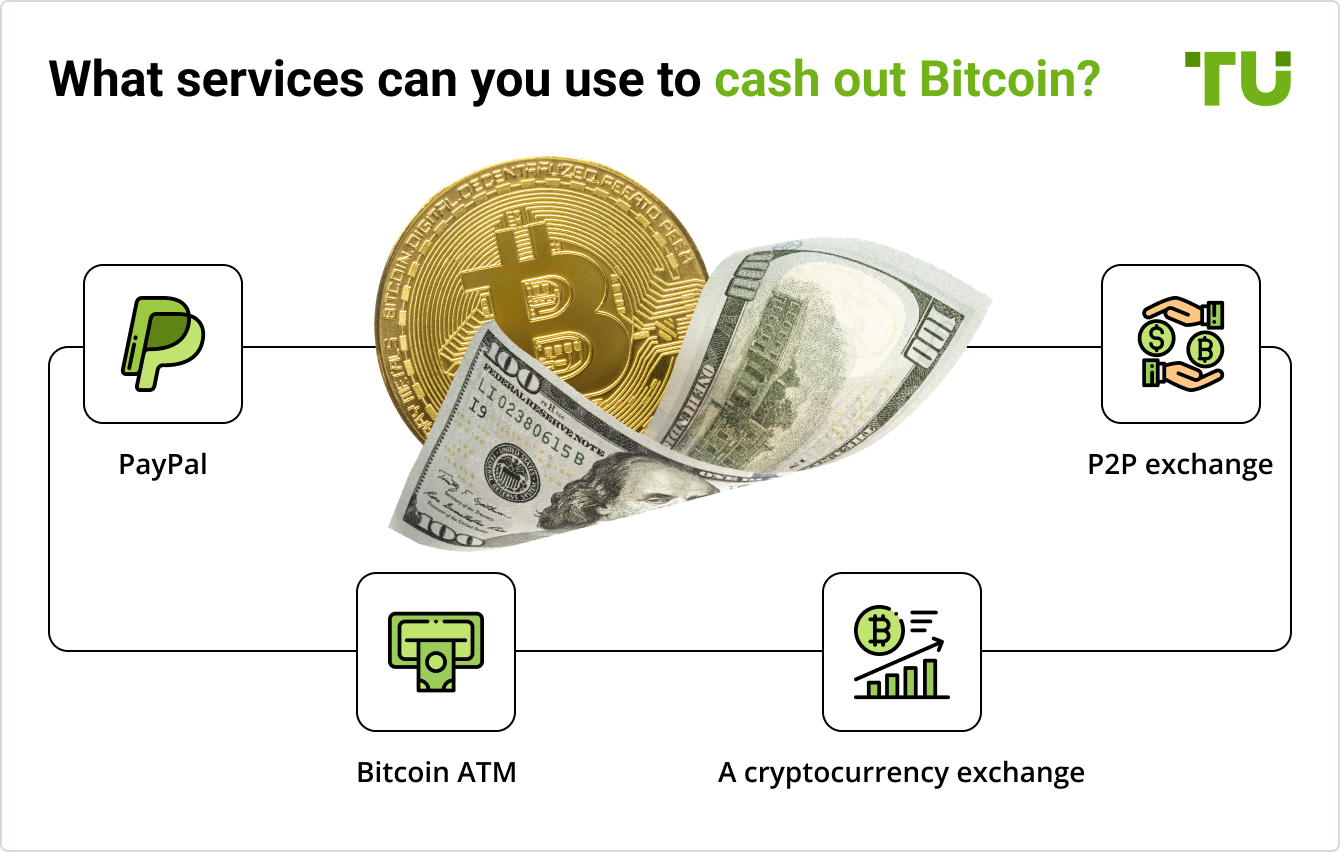
Several avenues exist for converting your Bitcoin into traditional currency, each with its own set of advantages, fees, and operational nuances. The choice often depends on the amount you wish to convert, your comfort with various platforms, and your need for speed or privacy.
Centralized Cryptocurrency Exchanges (CEXs)
Centralized exchanges are the most popular and often the most liquid platforms for cashing out Bitcoin. They function much like traditional stock exchanges, facilitating trades between buyers and sellers.
-
Process: Users deposit Bitcoin into their exchange wallet, place a sell order (e.g., selling BTC for USD or EUR), and then initiate a fiat withdrawal to their linked bank account or payment processor.
-
Pros: High liquidity ensures you can sell large amounts without significantly impacting the market price. They offer competitive rates, various withdrawal options (bank transfer, PayPal, debit card), and often robust security measures.
-
Cons: Require extensive Know Your Customer (KYC) and Anti-Money Laundering (AML) verification, which involves submitting personal identification. They also charge transaction and withdrawal fees, and some users may find the process less private. Examples include Coinbase, Binance, Kraken, and Gemini.
Peer-to-Peer (P2P) Platforms
P2P platforms connect individual buyers and sellers directly, allowing for more flexible payment methods and sometimes better rates. The platform typically acts as an escrow service to secure the transaction.
-
Process: You list your Bitcoin for sale, specifying your desired price and accepted payment methods (e.g., bank transfer, cash deposit). A buyer responds, and once both parties confirm the transaction and payment, the Bitcoin is released from escrow.
-
Pros: Can offer more diverse payment options and potentially lower fees than CEXs, with some platforms allowing for a degree of anonymity depending on the payment method.
-
Cons: Higher risk of fraud if not using a reputable platform with strong escrow. Transactions can be slower and finding a suitable buyer at your desired price might take time. Examples include Paxful.
Bitcoin ATMs
Bitcoin ATMs offer a quick and convenient way to convert small amounts of Bitcoin into cash. These machines are increasingly found in urban centers, much like traditional bank ATMs.
-
Process: You send Bitcoin from your wallet to a QR code displayed on the ATM screen, and in return, the machine dispenses local fiat currency.
-
Pros: Instant cash, simple to use for smaller amounts.
-
Cons: Significantly higher fees (often 7-10% or more) compared to exchanges. They also typically have lower daily withdrawal limits and require phone number verification or ID for larger transactions.
Over-the-Counter (OTC) Desks
OTC desks cater to high-net-worth individuals, institutions, and businesses looking to buy or sell very large volumes of cryptocurrency without impacting public exchange prices.
-
Process: These are private, brokered transactions where a dedicated desk or broker facilitates the sale, often negotiating a fixed price.
-
Pros: Personalized service, better pricing for large trades due to direct negotiation, and the ability to execute large orders without affecting market liquidity.
-
Cons: Not suitable for small retail investors. Often requires a minimum transaction amount, sometimes in the six or seven figures.
Step-by-Step Guide to Cashing Out Through an Exchange

For most users, a centralized cryptocurrency exchange offers the most balanced approach in terms of security, liquidity, and ease of use. Here’s a typical financial workflow:
Account Setup and Verification (KYC/AML)
If you don’t already have one, sign up for an account on a reputable exchange (e.g., Coinbase, Binance, Kraken). Crucially, you will need to complete the Know Your Customer (KYC) and Anti-Money Laundering (AML) verification process. This typically involves:
-
Providing personal details (name, address, date of birth).
-
Uploading identification documents (passport, driver’s license).
-
Completing facial recognition or a selfie to confirm identity.
This step is mandatory for financial regulatory compliance and to enable fiat withdrawals. Without it, you cannot legally cash out to a bank account.
Depositing Bitcoin (If Not Already on Exchange)
If your Bitcoin is held in a personal wallet (hardware, software, or paper), you’ll need to transfer it to your exchange wallet.
-
Navigate to the “Deposit” section for Bitcoin on your chosen exchange.
-
Generate a unique Bitcoin deposit address.
-
From your personal wallet, initiate a transfer to this address.
-
Double-check the address meticulously to prevent loss of funds.
-
Be aware of network transaction fees (miner fees) associated with moving Bitcoin, which will reduce the net amount received.
Placing a Sell Order
Once your Bitcoin is in your exchange wallet, you can sell it for your desired fiat currency.
-
Go to the “Trade” or “Convert” section of the exchange.
-
Select the BTC/USD (or your local currency) trading pair.
-
Choose between a “Market Order” (sell immediately at the current market price) or a “Limit Order” (set a specific price at which you want to sell). A limit order gives you more control over the selling price but might not execute immediately if the market doesn’t reach your specified price.
-
Enter the amount of Bitcoin you wish to sell.
-
Review the estimated proceeds and any exchange trading fees before confirming the sell order.
Withdrawing Fiat Currency
After your Bitcoin has been successfully sold into fiat currency, you can withdraw these funds to your external bank account or other payment methods.
-
Navigate to the “Withdraw” section of the exchange.
-
Select the fiat currency you wish to withdraw (e.g., USD, EUR).
-
Choose your preferred withdrawal method:
-
Bank Transfer (ACH/Wire): Standard method, usually takes 1-5 business days depending on your bank and region.
-
PayPal/Other Payment Processors: If supported by the exchange, often quicker but may have higher fees.
-
Debit Card Withdrawal: Some exchanges allow instant withdrawals to linked debit cards, typically for a fee.
-
-
Enter the amount you wish to withdraw and confirm your bank account or payment details.
-
Review any withdrawal fees and estimated processing times before finalizing the transaction.
Navigating Risks and Maximizing Your Financial Return
Cashing in Bitcoin, like any significant financial transaction, comes with potential pitfalls. Understanding and mitigating these risks while optimizing for financial gain is key.
Security Best Practices for Your Funds
While not strictly a “money” aspect, securing your assets throughout the process directly impacts your financial well-being.
-
Two-Factor Authentication (2FA): Always enable 2FA on your exchange account using an authenticator app (e.g., Google Authenticator) rather than SMS, which is less secure.
-
Strong, Unique Passwords: Use complex, unique passwords for your exchange and email accounts, and store them securely.
-
Phishing Awareness: Be vigilant against phishing attempts. Always verify the URL of the exchange website and never click suspicious links.
-
Secure Internet Connection: Avoid public Wi-Fi when accessing financial accounts.
Understanding Fees and Exchange Rates
Fees can significantly erode your profits if not managed carefully.
-
Transaction Fees: Exchanges charge a small percentage on each trade. These vary by platform and sometimes by your trading volume.
-
Withdrawal Fees: Fiat withdrawals often incur a fee, especially for wire transfers or instant debit card withdrawals.
-
Spread: On some platforms, especially those offering “instant buy/sell” features, you might encounter a “spread” – the difference between the buy and sell price – which acts as an indirect fee.
-
Comparison: Always compare fees across different exchanges and withdrawal methods to find the most cost-effective option for your specific transaction size and urgency.
Regulatory Compliance and Reporting
Staying compliant with financial regulations is non-negotiable.
-
Accurate Tax Reporting: As discussed, maintain meticulous records of all crypto transactions for tax purposes. This includes the cost basis, sale price, and dates.
-
Large Transaction Reporting: Be aware that exchanges may be required to report large transactions to financial authorities, depending on local regulations. Your bank may also query significant incoming transfers.
-
Source of Funds: In some cases, exchanges or banks might ask for proof of your source of funds for large withdrawals as part of AML regulations. Be prepared to provide documentation if requested.
Seeking Professional Financial Advice
For substantial Bitcoin holdings or complex financial situations, the value of professional advice cannot be overstated.
-
Tax Experts: A tax professional with expertise in cryptocurrency can help you minimize your tax burden legally and ensure compliance.
-
Financial Planners: A financial planner can integrate your crypto liquidation into your broader financial plan, helping you decide how to best utilize the proceeds for wealth management, retirement planning, or other investment goals.
Conclusion
Cashing in Bitcoin is a crucial step in managing your cryptocurrency investments, transforming digital assets into tangible financial resources. It’s a process that demands careful planning, an understanding of market dynamics, an awareness of tax obligations, and adherence to security best practices. By choosing the right method, diligently managing fees, and prioritizing financial compliance, you can navigate the liquidation process efficiently and effectively, securing your profits and integrating them seamlessly into your personal financial landscape. Always conduct your due diligence, stay informed, and consider professional advice to ensure a smooth and financially rewarding experience.
aViewFromTheCave is a participant in the Amazon Services LLC Associates Program, an affiliate advertising program designed to provide a means for sites to earn advertising fees by advertising and linking to Amazon.com. Amazon, the Amazon logo, AmazonSupply, and the AmazonSupply logo are trademarks of Amazon.com, Inc. or its affiliates. As an Amazon Associate we earn affiliate commissions from qualifying purchases.