
In the dynamic world of cryptocurrency, understanding the value of even the smallest fractions of a digital asset like Bitcoin can be crucial for investors, enthusiasts, and those simply curious about the burgeoning financial landscape. The question “how much is 0.0001 Bitcoin” might seem specific, but it opens a broader discussion about Bitcoin’s valuation, its market drivers, and its role within personal finance and investment strategies. This article delves into the precise valuation of this seemingly minuscule amount, exploring the factors that influence it and its practical implications within a robust financial framework.
Deconstructing Bitcoin’s Value: Understanding the Smallest Units
At its core, determining the value of 0.0001 Bitcoin is a straightforward calculation, yet its significance extends far beyond a simple multiplication. Bitcoin’s price is notoriously volatile, fluctuating minute by minute based on a myriad of global factors.

The Dynamic Nature of Bitcoin Pricing
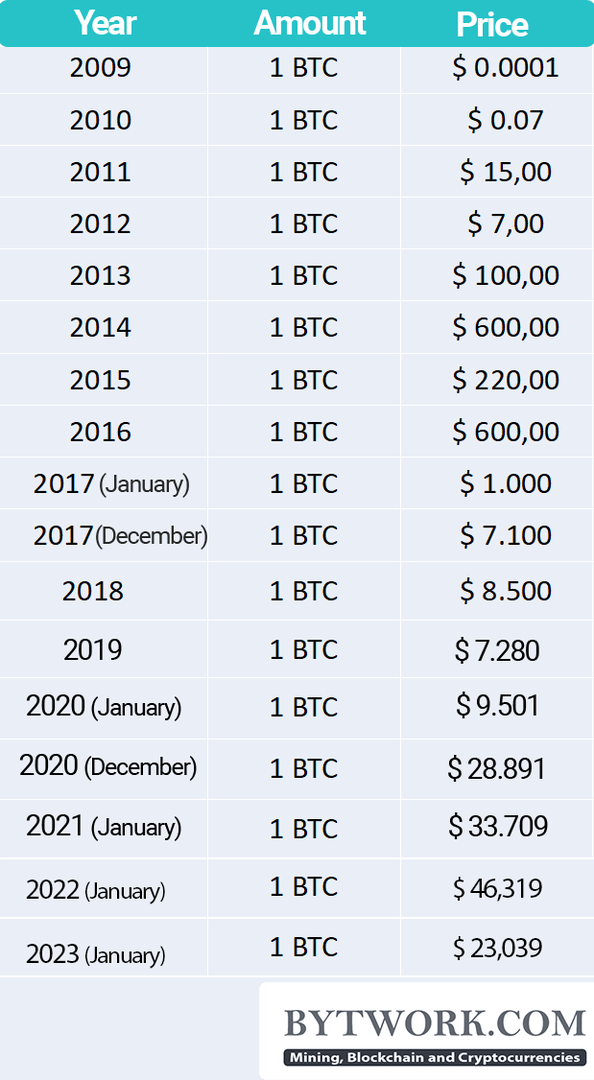
Bitcoin’s price is not fixed; it is determined by supply and demand on various global cryptocurrency exchanges. This means the value of 0.0001 Bitcoin changes constantly. To ascertain its current worth, one must consult a reliable crypto price tracker or exchange at the exact moment of inquiry. For instance, if Bitcoin is trading at $60,000, then 0.0001 Bitcoin would be worth $6.00. If it climbs to $70,000, that same fraction becomes $7.00. This constant flux underscores the speculative nature of Bitcoin as an investment asset and highlights the importance of real-time data for accurate valuation.
The price discovery mechanism for Bitcoin is global and decentralized. Major exchanges like Binance, Coinbase, Kraken, and others aggregate buy and sell orders, forming a continuous market. This liquidity ensures that even small fractions like 0.0001 BTC can be traded, albeit often with transaction fees that might, for very small amounts, represent a significant percentage of the trade value.
Understanding Satoshis: Bitcoin’s Smallest Denomination
To truly grasp the concept of owning 0.0001 Bitcoin, it’s essential to understand its smallest unit: the Satoshi (Sats). Named after Bitcoin’s pseudonymous creator, Satoshi Nakamoto, one Satoshi is equivalent to 0.00000001 Bitcoin. This means that 1 Bitcoin equals 100,000,000 Satoshis.
When we consider 0.0001 Bitcoin, we are actually talking about 10,000 Satoshis (0.0001 BTC * 100,000,000 Sats/BTC = 10,000 Sats). Framing Bitcoin in Satoshis often makes small amounts seem more substantial and accessible, particularly for those new to cryptocurrency or operating with micro-investments. It democratizes the idea of owning Bitcoin, emphasizing that one doesn’t need to buy a whole coin to participate. This perspective is increasingly relevant as Bitcoin’s price continues to appreciate, making whole coins unattainable for many individual investors.
Real-time Valuation Methods
For immediate and accurate valuation, several tools are available:
-
Cryptocurrency Exchanges: Most exchanges display real-time prices and offer conversion tools.
-
Crypto Price Trackers: Websites like CoinMarketCap, CoinGecko, and TradingView provide live market data, charts, and often offer a calculator function where you can input a Bitcoin amount to see its fiat equivalent.
-
Financial News Outlets: Many reputable financial news sites have dedicated crypto sections with live price feeds.
These resources are invaluable for any investor, allowing them to track their holdings, identify market trends, and make informed decisions.
Factors Influencing Bitcoin’s Price Volatility
The valuation of 0.0001 Bitcoin is directly tied to the overall market price of Bitcoin. Understanding the underlying forces that drive this price is fundamental for anyone engaging with this asset.
Supply and Demand Dynamics
Like any commodity, Bitcoin’s price is primarily governed by the fundamental economic principles of supply and demand.
-
Limited Supply: Bitcoin has a hard cap of 21 million coins that will ever be mined, making it a scarce asset. This fixed supply, combined with increasing demand, inherently drives up its value over the long term.
-
Halving Events: Approximately every four years, the reward for mining new Bitcoin is cut in half – an event known as “halving.” This further restricts the new supply entering the market, historically leading to significant price surges following each halving.
-
Mining Costs: The energy and computational power required to mine Bitcoin represent a significant cost floor. Miners need to sell their coins at a price that covers their operational expenses, influencing the overall market supply.
Market Sentiment and Adoption
Public perception, media coverage, and institutional interest play a crucial role in Bitcoin’s price movements.
-
News and Media: Positive news (e.g., adoption by major companies, favorable regulatory developments) can spark rallies, while negative news (e.g., security breaches, regulatory crackdowns) can trigger sell-offs.
-
Institutional Adoption: Growing interest from large financial institutions, hedge funds, and corporate treasuries provides significant capital inflows and lends credibility to Bitcoin as a legitimate asset class, pushing up demand.
-
Retail vs. Institutional Demand: While retail investors have always been a part of the Bitcoin story, institutional entry has added a new layer of stability and capital, although retail sentiment can still drive significant short-term swings.
Macroeconomic Influences
Bitcoin’s perception as “digital gold” or an inflation hedge links its performance to broader macroeconomic trends.
-
Inflation Concerns: When traditional fiat currencies show signs of inflation, investors often seek alternative stores of value, with Bitcoin sometimes benefiting from this flight to quality.
-
Interest Rates: Changes in central bank interest rates can influence investors’ appetite for risk assets like Bitcoin. Higher rates can make traditional savings more attractive, potentially drawing capital away from crypto.
-
Global Economic Stability: During times of geopolitical uncertainty or economic instability, Bitcoin can be seen either as a safe haven or a high-risk asset, depending on the prevailing narrative and investor sentiment.
Technological Developments and Network Health

The underlying technology and ongoing development of the Bitcoin network also contribute to its perceived value and security.
-
Network Upgrades: Improvements to scalability (e.g., Lightning Network), security, or privacy can enhance Bitcoin’s utility and appeal.
-
Hash Rate and Security: A strong and growing hash rate (the total computational power used for mining) indicates a robust and secure network, reassuring investors of its resilience.
-
Developer Activity: A vibrant developer community constantly improving the protocol ensures its long-term viability and adaptability.
Practical Implications of Owning 0.0001 Bitcoin
While 0.0001 Bitcoin might seem like a trivial amount, its ownership carries specific practical implications, particularly for those exploring micro-investing or accumulating assets over time.
Is It a Significant Investment?
On its own, 0.0001 Bitcoin might not constitute a “significant” investment in terms of immediate financial impact. At a Bitcoin price of $65,000, it’s roughly $6.50. However, its significance is relative. For someone just starting their investment journey, it’s a tangible entry point into a new asset class.
-
Gateway to Crypto: It allows individuals to gain hands-on experience with buying, holding, and potentially transacting with Bitcoin without committing substantial capital.
-
Potential for Appreciation: Given Bitcoin’s historical growth trajectory, even small amounts can appreciate significantly over long periods. While past performance is not indicative of future results, the potential for growth is a key driver for holding any amount of Bitcoin.
Micro-transactions and Everyday Use Cases
Currently, using 0.0001 Bitcoin for everyday micro-transactions is somewhat limited due to transaction fees and network congestion on the main Bitcoin blockchain. A fee of a few dollars could easily consume a significant portion of this small amount, making it uneconomical for small purchases.
However, the development of the Lightning Network, a layer-2 scaling solution for Bitcoin, aims to make instant, low-cost micro-transactions viable. On the Lightning Network, 10,000 Satoshis could potentially be used for very small purchases, tipping, or small transfers. As Lightning adoption grows, the practical utility of even tiny Bitcoin amounts is likely to increase dramatically, fulfilling Bitcoin’s original vision of becoming “peer-to-peer electronic cash.”
The Power of Dollar-Cost Averaging (DCA)
Purchasing small, consistent amounts of Bitcoin, such as 0.0001 BTC regularly, is an excellent example of Dollar-Cost Averaging (DCA). DCA is an investment strategy where an investor divides the total amount to be invested across periodic purchases over a set period. This strategy aims to reduce the impact of volatility by smoothing out the average purchase price, rather than trying to time the market.
For an investor committing to buying 0.0001 Bitcoin every week or month, they would accumulate a more substantial holding over time. This approach mitigates the risk of buying at a market peak and provides a disciplined way to build an asset position without emotional decision-making. Over several years, consistently buying even small fractions can lead to a significant accumulation, benefiting from Bitcoin’s long-term upward trend, if it continues.
Integrating Bitcoin into Your Financial Strategy
Understanding how 0.0001 Bitcoin fits into a broader financial strategy requires careful consideration of risk, diversification, and long-term planning.
Risk Assessment and Diversification
Bitcoin, including small fractions of it, remains a volatile asset. Its value can swing wildly, presenting both opportunities and risks.
-
High Risk, High Reward: Investors should only allocate capital they can afford to lose. While Bitcoin has shown immense growth, it is not without significant downside risk.
-
Diversification is Key: Holding 0.0001 Bitcoin should ideally be part of a diversified investment portfolio, complementing traditional assets like stocks, bonds, and real estate, rather than dominating it. This approach reduces overall portfolio risk and balances potential gains across different asset classes.
Long-Term vs. Short-Term Holdings (HODLing)
The common crypto term “HODL” (often interpreted as “Hold On for Dear Life”) reflects a long-term investment philosophy. Many Bitcoin investors buy and hold their assets for years, believing in its long-term potential as a store of value and a hedge against inflation. For 0.0001 Bitcoin, a long-term holding strategy is generally more pragmatic than attempting short-term trading, given potential transaction costs relative to the asset’s value. The idea is that these small fractions, accumulated over time, could become significantly more valuable in the future.
Secure Storage for Small Amounts
Regardless of the amount, securing your Bitcoin is paramount.
-
Digital Wallets: For small amounts like 0.0001 Bitcoin, a reputable software wallet (hot wallet) on your smartphone or computer, or keeping it on a trusted exchange (though generally not recommended for long-term storage due to security risks), might suffice.
-
Hardware Wallets: For larger accumulations (even if built up from small regular purchases), a hardware wallet (cold storage) offers the highest level of security by keeping your private keys offline.
Always follow best practices for digital security: use strong, unique passwords, enable two-factor authentication (2FA), and be wary of phishing attempts. The security of your digital assets is your sole responsibility.
Conclusion
The question “how much is 0.0001 Bitcoin” transcends a simple numerical answer. It serves as an entry point into understanding the nuanced dynamics of Bitcoin’s valuation, the practical utility of its smallest units (Satoshis), and its potential role within a personal finance strategy. While the exact fiat value of 0.0001 Bitcoin fluctuates constantly with market forces, its significance lies in its accessibility as a fractional asset, offering a tangible way for individuals to participate in the cryptocurrency ecosystem.
Whether as a micro-investment, a component of a dollar-cost averaging strategy, or simply a curiosity, owning even a sliver of Bitcoin places one at the intersection of technological innovation and evolving financial paradigms. As the digital economy matures, understanding and engaging with these fractional assets will become increasingly relevant for savvy investors navigating the future of money.
aViewFromTheCave is a participant in the Amazon Services LLC Associates Program, an affiliate advertising program designed to provide a means for sites to earn advertising fees by advertising and linking to Amazon.com. Amazon, the Amazon logo, AmazonSupply, and the AmazonSupply logo are trademarks of Amazon.com, Inc. or its affiliates. As an Amazon Associate we earn affiliate commissions from qualifying purchases.