
The landscape of home entertainment has undergone a seismic shift over the last decade, moving away from the rigid infrastructure of coaxial cables and satellite dishes toward the fluid, data-driven world of Internet Protocol Television (IPTV). At the forefront of this digital revolution is YouTube TV, Google’s premier live-streaming service. For consumers looking to “cut the cord,” the primary question often isn’t just about price, but about variety and technical reliability: How many channels does YouTube TV actually offer, and how does the software deliver that content to the modern household?
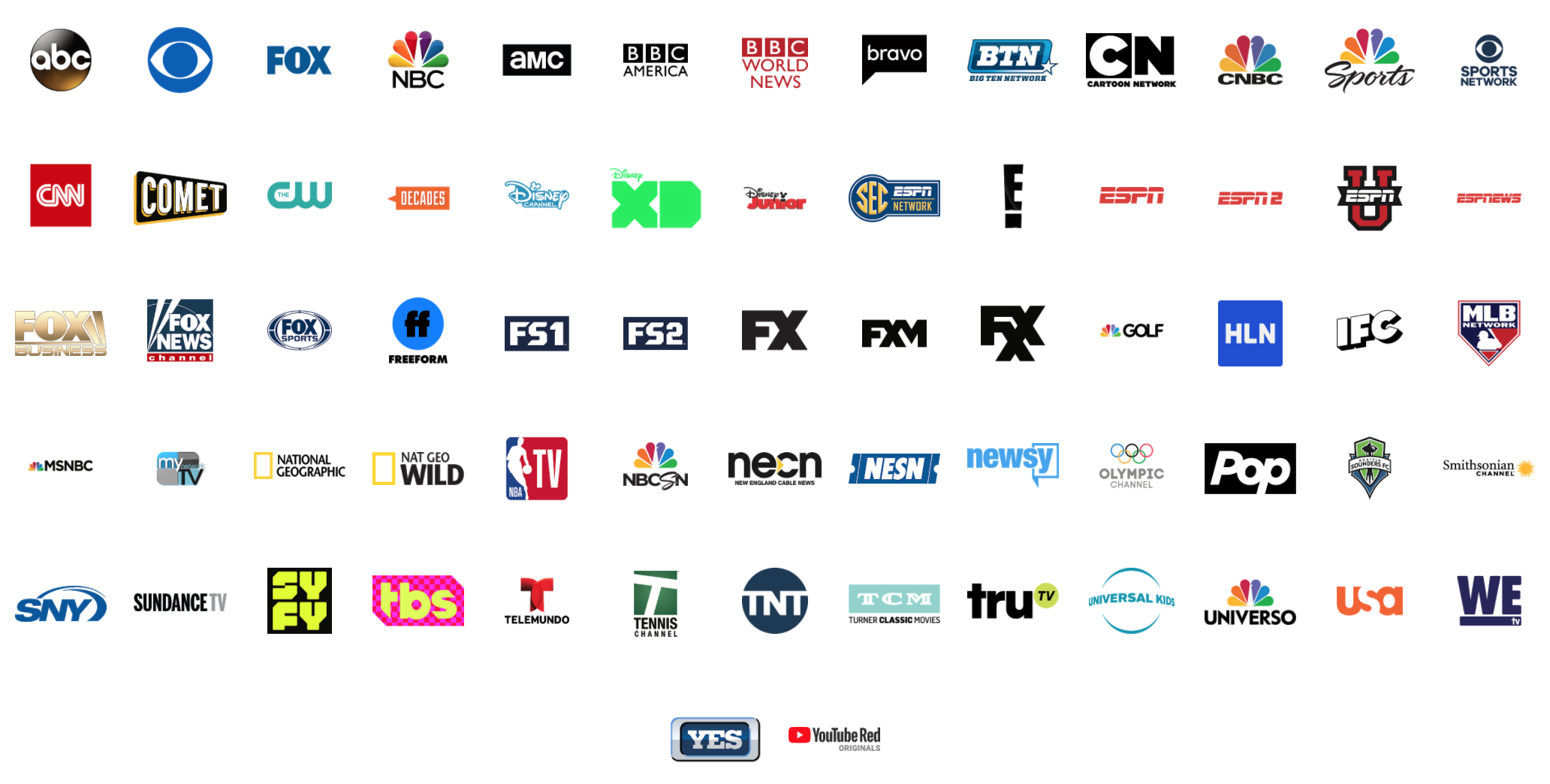
As of current market standards, the YouTube TV Base Plan provides access to over 100 channels. However, the raw number is only one part of the story. The service leverages Google’s massive data infrastructure to provide a seamless, high-definition viewing experience that integrates local broadcasts, national news, sports, and specialized entertainment. Understanding the composition of this lineup requires looking at the interplay between broadcast rights, regional localization, and the technological architecture that allows a single app to replace a legacy set-top box.
Understanding the Core YouTube TV Lineup
The “Base Plan” is the foundation of the YouTube TV experience. While the marketing materials consistently highlight the “100+ channels” figure, the specific count can fluctuate based on your geographic location. This is because YouTube TV uses sophisticated IP-based geolocation to determine which local affiliate feeds—such as ABC, CBS, FOX, and NBC—should be delivered to your device.
Local Broadcast and National Networks
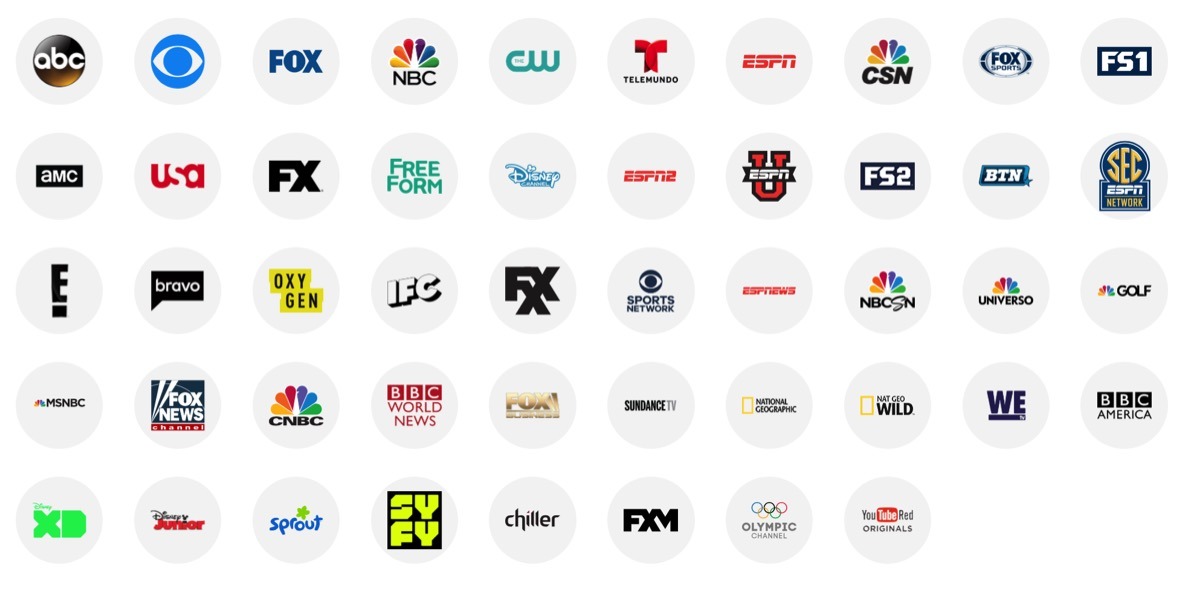
One of the most significant technological hurdles for streaming services is the negotiation and delivery of local broadcast signals. Unlike traditional cable, which uses physical infrastructure to route local signals, YouTube TV utilizes cloud-based regionalization. This ensures that when a user in New York opens the app, they receive WABC-TV, while a user in Los Angeles receives KABC-TV. This local integration includes not just the major “Big Four” networks, but often includes The CW, Univision, and Telemundo, making it a comprehensive replacement for an over-the-air antenna.
Beyond local feeds, the base lineup is anchored by heavy-hitting national networks. In the realm of news and information, subscribers have access to CNN, MSNBC, FOX News, BBC World News, and HLN. For general entertainment and lifestyle, the service includes high-traffic channels such as AMC, Bravo, FX, HGTV, Food Network, and TNT. The inclusion of these networks via a software-based interface allows for features like “start from the beginning” on live broadcasts, a feat of buffer management and cloud synchronization that traditional tuners often struggle to match.
Sports and Family Programming
For many tech-savvy viewers, live sports are the final anchor keeping them tied to legacy systems. YouTube TV has addressed this by securing a robust sports lineup in its base package. This includes ESPN, ESPN2, FS1, FS2, the Big Ten Network, and the SEC Network. Perhaps most notably, YouTube TV became the exclusive home of the NFL Sunday Ticket, a massive technical undertaking that requires the service to handle millions of concurrent streams with minimal latency—a true test of Google’s server-side capabilities.
Family and children’s programming are also well-represented, with Disney Channel, Nickelodeon, Cartoon Network, and PBS Kids included in the standard count. The integration of these channels into a single UI allows parents to utilize robust software filters and “Kid Profiles,” ensuring that the 100+ channel library remains safe and navigable for younger users.
Expanding Your Horizons: Add-ons and Premium Networks
While the base 100+ channels satisfy the average viewer, the YouTube TV software architecture is designed for modularity. Through the “Add-on” system, users can significantly expand their channel count, often pushing the total number of available streams well past 150. These add-ons are integrated directly into the Live Guide, eliminating the need to switch between different apps.
The Sports Plus and 4K Plus Packages
For the power user, the Sports Plus pack is a common addition. This adds over 10 additional channels including NFL RedZone, BeIN Sports, and Fox Soccer Plus. From a technical standpoint, these channels benefit from the same high-bitrate encoding as the base lineup, ensuring that fast-motion sports remain fluid.
Furthermore, the “4K Plus” add-on represents a major tech upgrade. While it doesn’t necessarily add a massive quantity of new channels, it unlocks 4K Ultra High Definition (UHD) streams for select live content and provides the ability to download recordings for offline viewing on mobile devices. It also enables unlimited simultaneous streams at home, showcasing the scalability of the service’s underlying software license management.
Premium Cinematic Integrations
YouTube TV acts as a centralized hub for premium networks that were historically sold as standalone subscriptions. Users can add Max (formerly HBO Max), Showtime, STARZ, and MGM+ directly to their interface. The technological advantage here is unified billing and unified search. When a user searches for a movie in the YouTube TV search bar, the software crawls both the live TV listings and the on-demand libraries of these premium add-ons, providing a frictionless discovery experience that fragmented apps cannot replicate.

The Technology Behind the Channel Count: Cloud DVR and Interface
A high channel count is meaningless if the content is difficult to find or impossible to save. YouTube TV’s most disruptive feature is not the number of channels it offers, but how its software manages the content coming from those channels.
Unlimited Storage and Metadata Management
The standout technical feature of YouTube TV is its “Unlimited Cloud DVR.” Traditional cable boxes are limited by physical hard drive space, often forcing users to delete old recordings to make room for new ones. YouTube TV leverages Google’s vast storage arrays to offer every user unlimited space.
When you “add” a show to your library, the software doesn’t just record a single instance; it creates a pointer to that content in the cloud. This allows for sophisticated metadata management, where the service can automatically group episodes by season, track which ones you have viewed, and even alert you when a “new” episode is airing on any of the 100+ channels. This use of cloud-native architecture effectively turns a live TV service into a personalized on-demand library.
Multi-View and Algorithmic Curation
With over 100 channels to choose from, “channel surfing” can become overwhelming. YouTube TV addresses this through algorithmic curation. The “Home” tab uses machine learning to analyze your viewing habits, surfacing the channels and shows you are most likely to watch at that specific time of day.
Additionally, the “Multi-View” feature—a favorite for sports fans—allows users to watch up to four different channels simultaneously on one screen. This is a significant technical achievement in terms of stream decoding. Instead of requiring the user’s device to decode four separate video feeds (which would overwhelm most smart TV processors), YouTube TV’s servers do the heavy lifting. The servers pre-combine the four streams into a single feed and send it to the device, allowing even entry-level streaming sticks to display four live games at once without lag.
Comparative Analysis: YouTube TV vs. Traditional Cable and Competitors
To understand the value of YouTube TV’s channel count, it is helpful to compare it to both legacy systems and its direct digital competitors like Hulu + Live TV, Fubo, and Sling TV.
Cost-Efficiency and App Performance
While cable providers may boast 200 or 300 channels, a large portion of those are often “music-only” channels or duplicate standard-definition feeds. YouTube TV’s 100+ channels are almost exclusively high-definition, providing a higher “utility-per-channel” ratio. Furthermore, the absence of hardware rental fees—which can plague cable bills—makes the tech-heavy approach of YouTube TV more cost-efficient over time.
When compared to Hulu + Live TV, the channel counts are similar, but the user experience (UX) differs. YouTube TV is often praised for its “snappier” interface and faster channel switching. This is due to Google’s expertise in low-latency video delivery and efficient app coding. Fubo, meanwhile, offers more niche sports channels but often lacks some of the key entertainment networks found in YouTube TV’s base plan.
Device Compatibility and Software Updates
As a software-first product, YouTube TV is agnostic when it comes to hardware. It runs on Android TV, Google TV, Roku, Apple TV, Amazon Fire TV, and most major smart TV brands (Samsung, LG, Vizio). This wide-ranging compatibility is maintained through frequent software updates that optimize performance for different chipsets. Unlike a cable box that might remain unchanged for five years, the YouTube TV app evolves monthly, adding new features and refining the channel-switching logic to reduce “spinning wheel” buffering.
The Future of YouTube TV’s Channel Expansion
The question of “how many channels” is a moving target. As digital rights management (DRM) and internet speeds evolve, the potential for YouTube TV to expand its lineup further is high. We are already seeing the integration of “FAST” (Free Ad-supported Streaming Television) channels into the interface, which could eventually bring hundreds of additional specialized streams into the ecosystem at no extra cost.
Furthermore, the integration of Artificial Intelligence (AI) into the YouTube TV platform is the next logical step. Imagine an AI-powered assistant that can not only tell you how many channels are showing news right now but can summarize the topics being discussed across all 100+ channels simultaneously.
YouTube TV has successfully transitioned the concept of a “channel” from a physical frequency to a digital stream. With a base of over 100 channels, an array of premium add-ons, and a technical infrastructure that supports unlimited recording and multi-viewing, it represents the current pinnacle of streaming technology. For the modern viewer, it is not just about having a lot of channels; it is about having a smart, responsive, and high-performance gateway to the world’s most popular content.
aViewFromTheCave is a participant in the Amazon Services LLC Associates Program, an affiliate advertising program designed to provide a means for sites to earn advertising fees by advertising and linking to Amazon.com. Amazon, the Amazon logo, AmazonSupply, and the AmazonSupply logo are trademarks of Amazon.com, Inc. or its affiliates. As an Amazon Associate we earn affiliate commissions from qualifying purchases.