
The history of American finance is inextricably linked with the expansion of the western frontier, the rush for gold, and the evolution of reliable commerce. At the heart of this narrative lies one of the most recognizable names in global banking: Wells Fargo. To answer the fundamental question—when was Wells Fargo bank founded?—we must look back to March 18, 1852. However, the date of its founding is merely the starting point of a story that mirrors the development of the United States’ modern financial infrastructure.

Understanding the origins of Wells Fargo provides essential insights into how institutional stability is built, how financial services adapt to technological shifts, and how a regional express company transformed into a cornerstone of the global banking system.
The Birth of a Legend: 1852 and the Gold Rush Roots
The mid-19th century was a period of unprecedented economic upheaval and opportunity in America. The discovery of gold at Sutter’s Mill in 1848 triggered a massive migration westward. By the early 1850s, California was the epicenter of global wealth creation, yet it lacked a formal, reliable banking system to manage the flow of capital back to the East Coast and Europe.
Henry Wells and William G. Fargo: The Men Behind the Name
In 1852, Henry Wells and William G. Fargo, two experienced expressmen who had already co-founded American Express, saw a distinct opportunity. While American Express focused on the eastern United States, Wells and Fargo envisioned a company that would bridge the gap between the Atlantic and Pacific oceans. On March 18, 1852, they organized Wells, Fargo & Company in New York City to provide “express” and “banking” services to California.
This dual-purpose model was revolutionary. At the time, “express” meant the physical transportation of goods, mail, and—most importantly—gold. “Banking” meant the buying and selling of gold dust, the issuance of paper drafts, and the safekeeping of assets. By combining these two services, the founders created a closed-loop system of financial security that was vital for the miners and merchants of the Wild West.
Express and Banking: The Dual Origins
Unlike modern banks that operate primarily through digital ledgers, the early Wells Fargo was a physical business. When the company opened its first offices in San Francisco and Sacramento in July 1852, it was entering a volatile market. The banking sector in California was largely unregulated, and panics were frequent.
Wells Fargo distinguished itself through its “express” reliability. Because the company controlled the transportation of the physical assets it managed, it could guarantee delivery and security in a way that traditional banks could not. This integration of logistics and finance became the company’s competitive advantage, allowing it to survive the financial panic of 1855, which wiped out many of its competitors.
Navigating the Frontier: The Stagecoach as a Financial Tool
While the founding date of 1852 established the corporate entity, the subsequent decades defined the company’s role in American business finance. The image of the stagecoach is now a corporate icon, but in the 1860s and 1870s, it was a high-tech financial tool.
Security and Trust in the Wild West
The stagecoach was the primary mechanism for moving wealth across vast, dangerous distances. Wells Fargo’s reputation was built on the “Green Box”—the heavy iron treasure boxes tucked under the driver’s seat. These boxes carried the lifeblood of the western economy: gold bullion, jewelry, and legal documents.
To protect these assets, Wells Fargo employed “shotgun messengers,” a precursor to modern armored car guards. This commitment to security was not just about physical safety; it was about protecting the integrity of the financial system. For an investor in New York or a merchant in London, the Wells Fargo name became a proxy for “trust.” In an era before federal deposit insurance, a bank’s reputation was its most valuable asset.
The Iconography of Reliability
As the transcontinental railroad began to replace the stagecoach in the late 1860s, Wells Fargo adapted. The company moved its express business to the rails, ensuring it remained the dominant force in logistics. However, the stagecoach remained the symbol of the bank. From a business finance perspective, this is a masterclass in institutional branding. The stagecoach represented the company’s ability to navigate any terrain—physical or economic—to deliver on its financial promises.
The Evolution of Modern Banking: From Gold Dust to Digital Assets
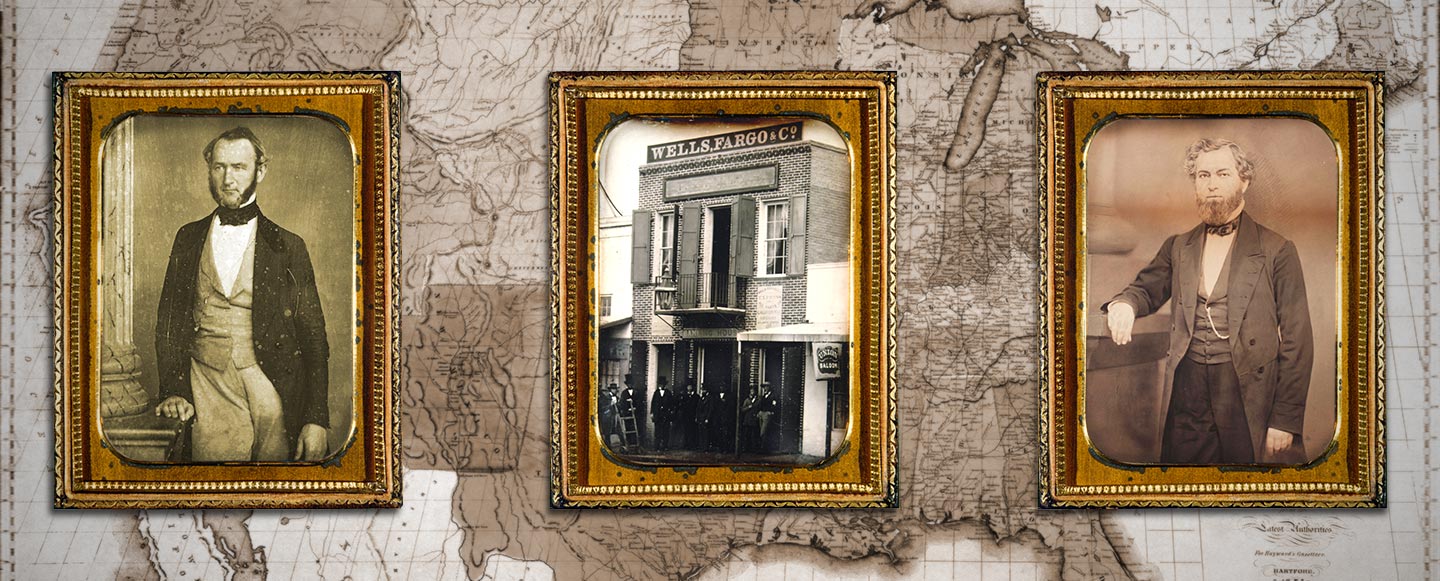
As the American frontier closed, Wells Fargo underwent a series of transformations that transitioned it from a frontier express company to a modern commercial bank. The 20th century required a shift from moving physical gold to managing complex financial instruments.
Surviving the Great Depression and Industry Consolidations
One of the most critical tests for any financial institution founded in the 19th century was the Great Depression of the 1930s. Wells Fargo, then headquartered in San Francisco, maintained a conservative lending posture and a high level of liquidity. While thousands of banks across the country shuttered their doors, Wells Fargo remained solvent.
This period marked the bank’s transition into a more traditional commercial banking role. The express business had been spun off into a separate entity (the predecessor of modern-day delivery services) during World War I due to government mandates. This allowed the banking arm to focus exclusively on capital management, commercial lending, and personal finance.
The Merger with Norwest and National Expansion
For much of the 20th century, Wells Fargo was primarily a West Coast powerhouse. The most significant turning point in its modern history occurred in 1998, when Wells Fargo merged with Norwest Corporation, a Minneapolis-based bank. Although the transaction was technically an acquisition by Norwest, the combined company kept the Wells Fargo name because of its legendary status and historical weight.
This merger was a pivotal moment in American business finance. It combined Wells Fargo’s strong brand and California footprint with Norwest’s diversified financial services and aggressive sales culture. The result was a truly national bank, one that could compete for retail deposits, corporate debt, and investment management on a global scale.
Wells Fargo Today: Financial Services in the 21st Century
In the contemporary landscape, Wells Fargo is recognized as one of the “Big Four” banks in the United States. Its operations span virtually every sector of the financial world, from mortgage lending to wealth management and digital banking.
Diversification of Personal and Corporate Finance
Today’s Wells Fargo is a diversified financial services company. For the individual consumer, it offers a suite of products designed for wealth accumulation, including high-yield savings accounts, brokerage services through Wells Fargo Advisors, and sophisticated mobile banking tools.
For the corporate sector, the bank provides essential liquidity, capital markets services, and treasury management. The scale of the institution allows it to participate in massive syndications and infrastructure projects that drive the national economy. The “express” spirit of 1852 lives on in the bank’s emphasis on the speed and efficiency of electronic fund transfers and real-time payments.
The Role of Longevity in Consumer Trust
In the volatile world of finance, longevity is often equated with stability. When customers ask, “When was Wells Fargo founded?” they are often seeking reassurance that the institution has the historical depth to weather economic cycles. Surviving the Civil War, the 1906 San Francisco earthquake, two World Wars, and the Great Recession provides a track record that newer fintech companies cannot yet match.
However, modern banking requires more than just history. Wells Fargo has had to invest billions in digital transformation to meet the needs of a generation that prefers smartphones to stagecoaches. The challenge for the bank has been maintaining its “frontier” spirit of innovation while operating within the rigorous regulatory framework of the post-2008 financial world.
Lessons in Longevity for the Modern Investor
For those interested in personal finance and investing, the story of Wells Fargo’s founding and growth offers several timeless lessons. The bank’s journey from a two-room office in 1852 to a trillion-dollar institution illustrates the power of compounding growth and the importance of adapting to market shifts.
The Importance of Diversification
From its inception, Wells Fargo was diversified. It wasn’t just a bank; it was an express company. It didn’t just store wealth; it moved it. This diversification allowed it to pivot when the gold rush ended and when the railroad arrived. For the modern investor, this underscores the necessity of having multiple revenue streams and a diversified portfolio to protect against sectoral downturns.

Evaluating Institutional Stability
When evaluating where to place one’s capital, the history of an institution matters. A bank that was founded in 1852 has survived every major American economic crisis. This historical context is a vital metric for risk management. While past performance is never a guarantee of future results, a century and a half of institutional survival suggests a robust internal culture of risk mitigation and capital preservation.
In conclusion, Wells Fargo was founded on March 18, 1852, as a response to a specific economic need: the safe movement and management of wealth during the California Gold Rush. Over the subsequent 170-plus years, it has evolved from a regional express company into a global financial leader. Its story is a testament to the enduring importance of trust, security, and adaptation in the world of money. Whether through a stagecoach in the 1850s or a mobile app in the 2020s, the core mission of providing reliable financial services remains the foundation of its legacy.
aViewFromTheCave is a participant in the Amazon Services LLC Associates Program, an affiliate advertising program designed to provide a means for sites to earn advertising fees by advertising and linking to Amazon.com. Amazon, the Amazon logo, AmazonSupply, and the AmazonSupply logo are trademarks of Amazon.com, Inc. or its affiliates. As an Amazon Associate we earn affiliate commissions from qualifying purchases.