
In the landscape of personal finance, your choice of banking institution is one of the most fundamental decisions you make. It dictates your access to capital, the growth of your savings through interest rates, and the ease with which you manage daily transactions. However, as your financial goals evolve, you may find that your current banking relationship no longer serves your best interests. Whether you are looking to avoid monthly maintenance fees, seeking higher annual percentage yields (APY) at a digital bank, or consolidating accounts for better oversight, knowing how to properly close a Wells Fargo account is a vital skill in financial management.

Closing a bank account is not as simple as withdrawing your cash and walking away. It requires a strategic approach to ensure that automated payments are not disrupted, credit scores remain unaffected, and no “zombie” charges reactivate the account. This guide provides a detailed roadmap for closing your Wells Fargo account while optimizing your broader financial health.
Preparing Your Finances for a Smooth Transition
Before you initiate contact with Wells Fargo to close your account, you must conduct a thorough audit of your current financial ecosystem. A premature closure can lead to bounced checks, missed bill payments, and potential hits to your credit if a recurring loan payment fails.
Auditing Your Automated Transactions
Most modern consumers have their banking accounts deeply integrated with their lifestyle through automated clearing house (ACH) transfers and recurring debit card charges. To begin, review your bank statements from the last twelve months. This long-term view is essential because it captures annual subscriptions—such as insurance premiums or professional memberships—that you might miss if you only look at the previous month’s activity.
List every recurring transaction, including:
-
Direct deposits from employers or government agencies.
-
Utility payments (electric, water, internet).
-
Subscription services (streaming, gym memberships, software).
-
Automatic transfers to investment accounts or external savings.
-
Internal transfers to Wells Fargo credit cards or loans.
Once identified, systematically move these transactions to your new financial institution. It is recommended to keep your new account active for at least one full billing cycle before closing the old one to ensure all links are successfully updated.
Managing Outstanding Checks and Pending Deposits
A common pitfall in account closure is the “floating check.” If you have written a physical check that has not yet been cashed, closing the account will cause that check to bounce when the recipient eventually deposits it. This can result in non-sufficient funds (NSF) fees and damage your reputation with the payee.
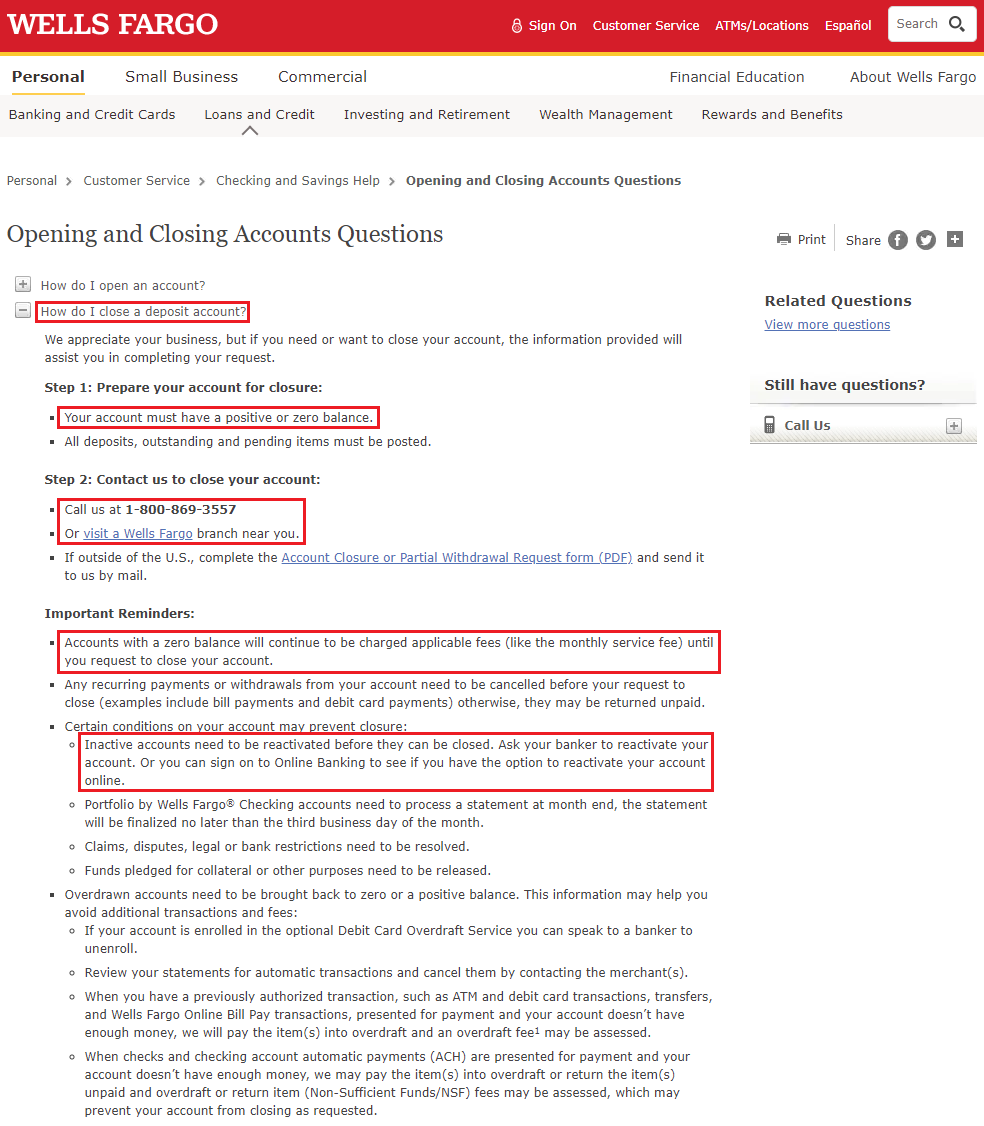
Review your checkbook register to confirm that every check issued has cleared. Similarly, ensure that any pending deposits—such as a tax refund or a venmo transfer—have fully settled in the account. Wells Fargo typically requires the account balance to be at a specific state (usually zero or positive) before they will process a closure request.
The Importance of a “Transition Fund”
When moving your primary banking relationship, liquidity is key. Do not transfer every cent to your new bank immediately. Leave a small buffer—often referred to as a “transition fund”—in the Wells Fargo account to cover any forgotten automated charges that might hit during the switching process. This prevents the account from falling into a negative balance, which could trigger overdraft fees and complicate the closure process. Once you are certain all activity has migrated, you can perform the final transfer.
The Step-by-Step Process of Closing Your Wells Fargo Account
Wells Fargo offers several avenues for account closure, ranging from in-person visits to digital requests. The method you choose may depend on your proximity to a branch and the complexity of your account (e.g., individual vs. joint accounts).
Option 1: Closing Your Account In-Person
For many, visiting a physical branch is the most definitive way to close an account. Speaking with a personal banker allows you to handle the final disbursement of funds immediately and receive a printed confirmation of the closure.
When visiting a branch, bring:
-
A valid government-issued photo ID (driver’s license or passport).
-
Your account number or debit card.
-
Any joint account holders (if applicable), as most banks require all parties to sign off on the closure of a shared account.
During the meeting, the banker will check for any “held” funds or pending transactions. If the account is clear, they will issue you a cashier’s check or cash for the remaining balance. Always request a “Closure Confirmation Letter” before leaving the premises.
Option 2: Canceling via Phone or Mail

If you have moved to a state without Wells Fargo branches or simply prefer a remote option, you can close your account via the customer service line. You will need to verify your identity through a series of security questions or by using the “Access Code” feature found in the Wells Fargo mobile app.
For those who prefer a paper trail, you can send a notarized letter to Wells Fargo’s account closure department. This letter should include your account number, a clear request to close the account, and instructions on where to send the remaining balance. While this is the slowest method, it provides a legal record of your request, which can be useful if disputes arise later.
Requirements for a Zero Balance
Wells Fargo generally requires that an account be at a $0.00 balance to be closed. However, if you have a positive balance, the bank will often facilitate the final transfer as part of the closure process. Conversely, if your account is overdrawn, you must bring the balance to zero by depositing funds before the bank will allow you to close it. Ignoring a negative balance is not a solution; the bank may eventually send the debt to a collection agency and report the delinquency to ChexSystems, which can make it difficult for you to open bank accounts at other institutions in the future.
Navigating Post-Closure Requirements and Documentation
The work does not end the moment the banker clicks “submit” on your closure request. Proactive monitoring is required to ensure the account remains closed and your financial data stays secure.
Obtaining Written Confirmation
Never assume an account is closed based on a verbal agreement alone. Technical glitches or “zombie” transactions can sometimes cause an account to remain in a “pending closure” state. Always secure a formal letter or email from Wells Fargo stating that the account is closed and that the balance is zero. Store this document in your permanent financial records for at least seven years.
Monitoring Your Credit Report and Security
While closing a checking or savings account does not directly impact your FICO score (unlike closing a credit card), the collateral effects can. For instance, if a forgotten subscription attempts to charge the closed account and the bank rejects it, the service provider might report the missed payment to credit bureaus.
Furthermore, once the account is closed, you should physically destroy your debit cards and any remaining checks. Shredding these items prevents “dumpster diving” identity theft, where bad actors attempt to use your old account information to commit fraud.
Retaining Historical Statements for Tax Purposes
Once your account is closed, your access to the Wells Fargo online banking portal will likely be terminated or severely restricted. Before you close the account, download the last two years of bank statements and any relevant tax forms (such as 1099-INT forms for interest earned). You will need these for tax filing and potentially for future loan applications, such as a mortgage, where lenders often require several months of banking history.
Evaluating Your Next Move: Choosing the Right Financial Institution
Closing an account is often a strategic move toward better financial optimization. As you exit your relationship with a traditional “Big Four” bank like Wells Fargo, it is worth evaluating where your capital will work hardest for you.
High-Yield Savings Accounts vs. Traditional Checking
One of the primary reasons investors leave traditional banks is the discrepancy in interest rates. While many national banks offer nominal interest rates (often as low as 0.01%), many online-only banks and fintech platforms offer high-yield savings accounts (HYSA) with rates significantly higher. Moving $10,000 from a standard savings account to a high-yield account can mean the difference between earning $1 a year versus $400 or more.
Credit Unions and Community Banks
If you value personalized service and lower fee structures, a credit union may be the ideal alternative. Because credit unions are member-owned cooperatives, they often return profits to members in the form of lower interest rates on loans and fewer “nuisance” fees, such as monthly maintenance or ATM fees. For many individuals, the community-centric model of a credit union provides a more ethical and cost-effective banking experience.
Neo-banks and Digital Financial Tools
For the tech-savvy consumer, neo-banks offer streamlined mobile experiences, early direct deposit features, and advanced budgeting tools that traditional institutions often lack. These platforms are designed for the digital age, prioritizing user experience and transparency. However, ensure that any digital bank you choose is FDIC-insured (or NCUA-insured for credit unions) to guarantee that your deposits are protected up to $250,000.
Ultimately, canceling a Wells Fargo account is an act of financial agency. It is an assertion that you are in control of your money and that you demand the best possible terms for your hard-earned capital. By following a structured approach to closure—auditing your transactions, choosing the right closure method, and securing your documentation—you ensure that your transition to a new financial partner is seamless, secure, and strategically sound.
aViewFromTheCave is a participant in the Amazon Services LLC Associates Program, an affiliate advertising program designed to provide a means for sites to earn advertising fees by advertising and linking to Amazon.com. Amazon, the Amazon logo, AmazonSupply, and the AmazonSupply logo are trademarks of Amazon.com, Inc. or its affiliates. As an Amazon Associate we earn affiliate commissions from qualifying purchases.