
In the modern financial landscape, the speed of capital movement has become a commodity. Peer-to-peer (P2P) payment platforms have transitioned from simple tools for splitting dinner bills to essential components of the gig economy and personal cash flow management. Venmo, a dominant player in this space owned by PayPal, offers a seamless bridge between digital balances and traditional bank accounts. However, that bridge often comes with a toll. For users asking “how much does Venmo take for instant transfer,” the answer is a specific percentage that represents a broader trend in the monetization of financial convenience.
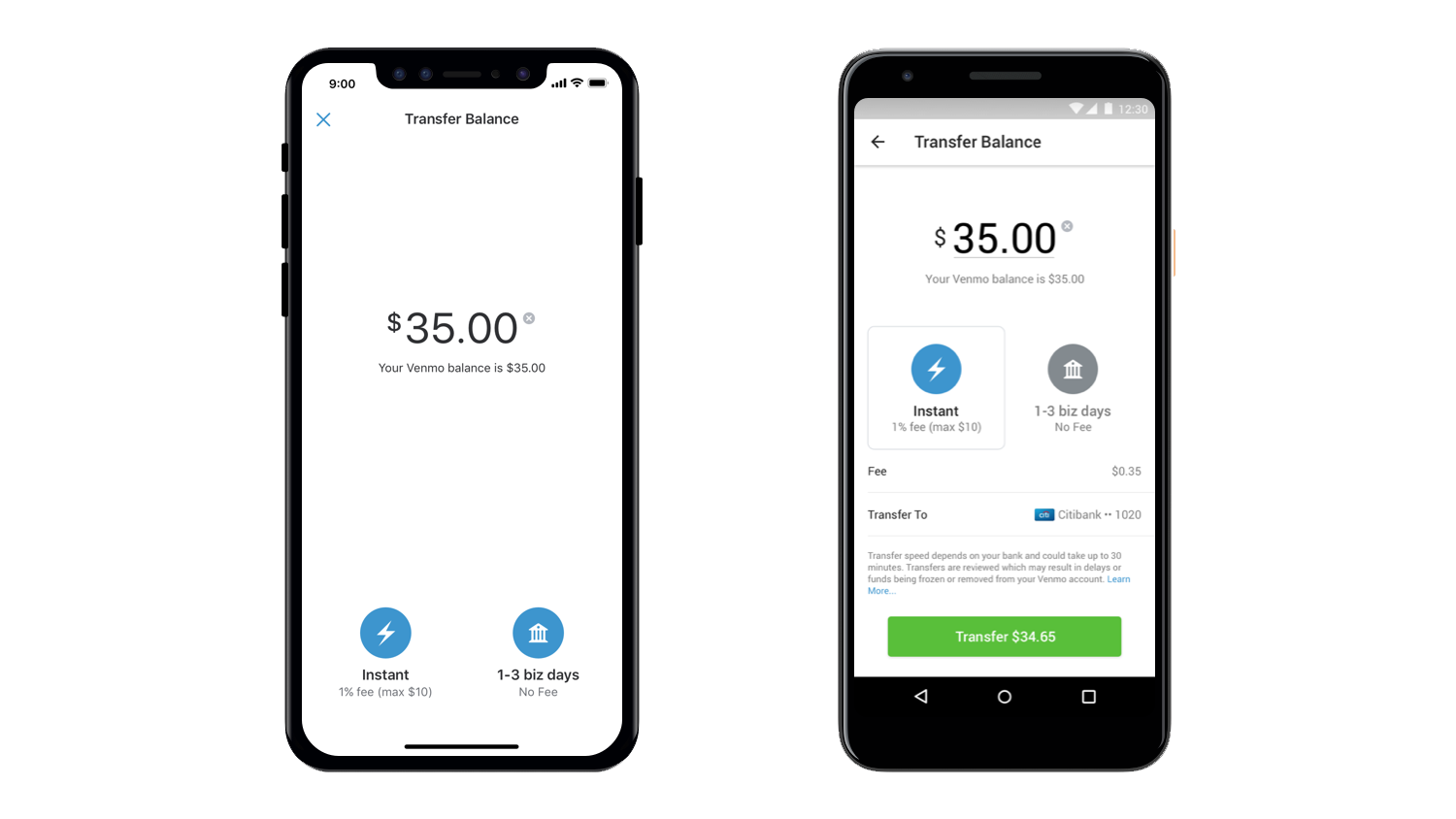
As of the most recent updates, Venmo charges a fee of 1.75% for its Instant Transfer service. While this may seem like a marginal deduction, the nuances of the fee structure—including minimums and maximums—can significantly impact your bottom line depending on the frequency and volume of your transfers. Understanding these costs is critical for anyone looking to optimize their personal or business finances in an increasingly cashless society.
The Mechanics of Venmo Instant Transfer Fees
To understand the cost of an instant transfer, one must first distinguish it from the standard withdrawal method. Venmo offers two primary ways to move money from your Venmo balance to your linked bank account or debit card. The “Standard” transfer is free and typically takes one to three business days. The “Instant” transfer, however, utilizes the Real-Time Payments (RTP) network or push-to-card technology to move funds within minutes.
The 1.75% Fee Structure
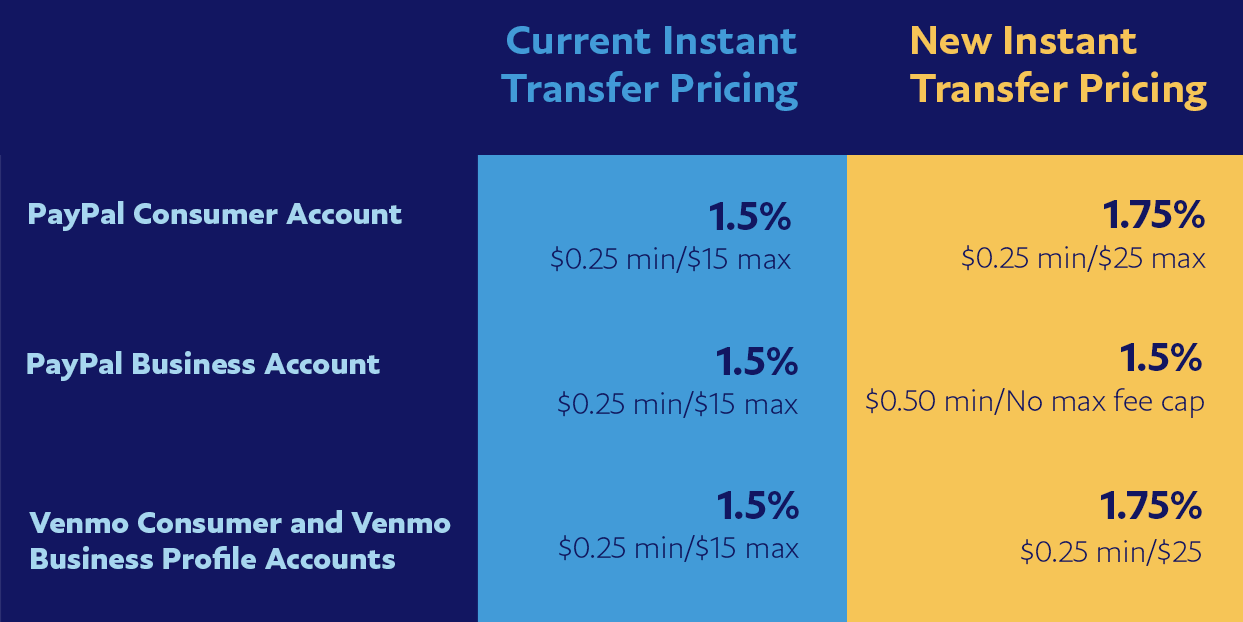
The current fee for an Instant Transfer is 1.75% of the total transfer amount. This fee was increased from 1.5% in 2022, reflecting a broader industry shift where payment processors are seeking to capture more value from high-velocity transactions.
For a transfer of $100, the fee is $1.75. For a transfer of $1,000, the fee jumps to $17.50. While the percentage remains constant, Venmo has implemented “guardrails” in the form of minimums and maximums to ensure the service remains profitable for the company while staying accessible for the user:
-
The Minimum Fee: Venmo charges a minimum of $0.25. If you are transferring a very small amount, such as $5.00, the 1.75% math would suggest a fee of roughly $0.09. However, the $0.25 minimum override kicks in, meaning you are effectively paying a 5% fee on that $5.00 transfer.
-
The Maximum Fee: On the opposite end of the spectrum, the fee is capped at $25.00. This is a crucial detail for high-volume users or small business owners. If you transfer $5,000 via Instant Transfer, the calculated 1.75% would be $87.50. Because of the $25 cap, you save significantly on larger transfers, making the service more economical as the dollar amount increases.
Transaction Limits and Eligibility
It is important to note that not all transfers are eligible for the “Instant” tag. Users must have a compatible Visa or Mastercard debit card or a bank account that supports the RTP network. Furthermore, Venmo imposes rolling limits on how much can be transferred. For most users, after identity verification, the limit for transfers to a bank account is often around $19,999.99 per week, though individual instant transfers are usually limited to $5,000.
Cost-Benefit Analysis: When is the Fee Worth It?
In financial planning, every expense should be measured against its utility. Paying a 1.75% fee to access your own money might seem counterintuitive, but there are several scenarios where the cost is justified by the immediate liquidity it provides.
Avoiding Late Fees and Overdrafts
The most common justification for the Instant Transfer fee is the prevention of larger financial penalties. If an individual has a utility bill or a credit card payment due today and their bank account is empty, but their Venmo balance has sufficient funds, paying the 1.75% fee is a strategic move. For a $500 transfer, the fee is $8.75. If that $8.75 prevents a $35.00 late fee or a $30.00 bank overdraft fee, the user has effectively saved over $20.00. In this context, the Venmo fee acts as a form of “short-term insurance” against larger fiscal mishaps.
The Opportunity Cost of Time
For gig workers, freelancers, and small business owners, cash flow is the lifeblood of operations. If a contractor needs to purchase materials for a job that starts tomorrow, waiting three business days for a standard transfer could mean losing the job entirely. In this scenario, the Instant Transfer fee is not just a convenience charge; it is a business expense that enables revenue generation. When the speed of capital allows for a higher turnover of projects, the 1.75% fee becomes a negligible factor in the broader profit margin.
The Psychology of “Small Wins”
Conversely, for small, non-urgent transfers, the fee is often a drain on wealth. Transferring $20 just to see the balance in a primary bank account results in a $0.35 loss (due to the minimum). While 35 cents seems trivial, a habit of multiple small instant transfers per month can quietly erode a personal budget. This is where financial discipline—waiting the 1-3 days for a standard transfer—pays off in the long run.
Venmo for Business vs. Personal Finance
The fee landscape becomes more complex when moving from personal use to a “Venmo for Business” profile. It is a common misconception that the 1.75% transfer fee is the only cost associated with using Venmo for professional services.
Understanding the Seller Fee
When you have a business profile, Venmo charges a “Seller Fee” on every payment you receive. This is currently 1.9% plus $0.10. It is vital to understand that this fee is deducted when the money is received into your Venmo balance. If you then choose to move that money to your bank account via Instant Transfer, you are hit with the additional 1.75%.
For example, if a client pays a business $1,000:
-
Venmo takes the Seller Fee ($19.00 + $0.10 = $19.10).
-
The remaining balance is $980.90.
-
If the business owner uses Instant Transfer, Venmo takes 1.75% of $980.90 ($17.17).
-
The total cost to access that money instantly is $36.27.
For business owners, this cumulative cost of roughly 3.6% must be factored into pricing strategies to ensure that the convenience of Venmo does not eat too deeply into profit margins.
Managing Cash Flow as a Merchant
Successful business users of Venmo often mitigate these costs by utilizing the Venmo Debit Card. By spending directly from the Venmo balance, they bypass the 1.75% Instant Transfer fee entirely. This allows the business to maintain liquidity for daily expenses (like gas or supplies) without paying the “toll” to move funds to a traditional bank.
Strategic Alternatives to the Instant Transfer Fee
Financial literacy involves knowing how to circumvent unnecessary fees. While Venmo is a powerful tool, it is not the only way to move money, and certainly not always the cheapest.
The Standard Transfer: The Power of Patience
The most obvious alternative is the standard transfer. By planning your finances three days in advance, you keep the 1.75% in your own pocket. For someone transferring $2,000 a month in side-hustle income, this equates to a $35.00 monthly saving, or $420.00 a year—enough to fund a modest emergency fund or a small investment.
Utilizing Zelle for Real-Time Transfers
Zelle is often the strongest competitor to Venmo’s Instant Transfer service because it is frequently free. Since Zelle is integrated directly into the apps of most major American banks, it moves money from bank account to bank account almost instantly without a fee. If your payer is willing to use Zelle instead of Venmo, you can achieve the same “instant” result while retaining 100% of your funds.
The Venmo Debit Card and Direct Spending
As mentioned previously, the Venmo Debit Card (a Mastercard) allows you to spend your balance anywhere Mastercard is accepted. This effectively makes your Venmo balance “liquid” without the need for a transfer. If you use Venmo funds for your grocery shopping or fuel, you are using that money at its full value. Furthermore, the card offers “Venmo Rewards” at certain merchants, which can actually earn you money back, offsetting any previous fees incurred.
The Future of Digital Liquidity and Peer-to-Peer Finance
The 1.75% fee is a reflection of the current state of the U.S. banking system, which historically has moved slowly. The standard 1-3 day ACH (Automated Clearing House) transfer is an aging protocol. As the United States continues to roll out the FedNow service—a federal instant payment infrastructure—we may see a shift in how companies like Venmo price their services.
As instant payments become the baseline expectation rather than a premium feature, the “instant transfer fee” may eventually face downward pressure. However, for the time being, Venmo and its parent company PayPal rely on these fees as a significant revenue stream. They are effectively “renting” you the speed of their internal ledger and their access to the RTP network.
For the savvy consumer, the key is intentionality. Venmo’s 1.75% fee is a tool—a premium service for a premium speed. By understanding the math of the $0.25 minimum and the $25.00 maximum, and by weighing the fee against potential late charges or business opportunities, you can make an informed decision that protects your financial health while embracing the convenience of the digital age. Money, after all, is not just about how much you earn, but how much you keep after the “toll collectors” of the digital economy have had their say.
aViewFromTheCave is a participant in the Amazon Services LLC Associates Program, an affiliate advertising program designed to provide a means for sites to earn advertising fees by advertising and linking to Amazon.com. Amazon, the Amazon logo, AmazonSupply, and the AmazonSupply logo are trademarks of Amazon.com, Inc. or its affiliates. As an Amazon Associate we earn affiliate commissions from qualifying purchases.