
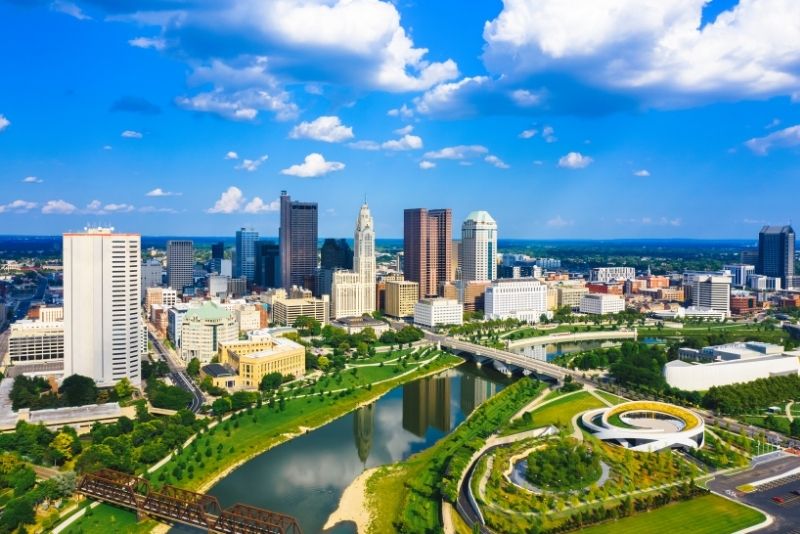
For decades, the narrative surrounding the American Midwest—the “Rust Belt”—revolved around the decline of heavy industry and the migration of talent toward the coasts. However, today in Columbus, Ohio, that narrative has been completely rewritten. Columbus is currently undergoing one of the most significant technological transformations in the United States, earning it the moniker “The Silicon Heartland.” From massive semiconductor manufacturing projects to a burgeoning ecosystem of software startups and artificial intelligence research, the city has become a focal point for global tech investment.
What is happening in Columbus today is not merely a local growth spurt; it is a foundational shift in the geography of American innovation. As Silicon Valley faces saturation and rising costs, Columbus offers a strategic mix of academic excellence, infrastructure, and investment capital that is drawing the world’s most advanced technology firms to its doorstep.

The Intel Transformation and the Semiconductor Renaissance
The most visible driver of the technological surge in the Columbus metropolitan area is Intel’s massive investment in New Albany. Often cited as the largest single private-sector investment in Ohio’s history, the construction of two leading-edge semiconductor “fabs” (fabrication plants) is fundamentally altering the region’s tech landscape.
The New Albany Expansion
Intel’s $20 billion commitment—which has the potential to grow to $100 billion over the next decade—is about more than just manufacturing. It represents a pivot toward domestic hardware production and high-end engineering. Today, the site is a hive of activity, but the implications extend far beyond the physical structures. The presence of Intel is attracting a secondary layer of suppliers and specialized tech firms, creating a “cluster effect” similar to what transformed Austin, Texas, or the Research Triangle in North Carolina.
This development is forcing a rapid evolution in local hardware engineering and materials science. Companies that specialize in high-purity chemicals, precision machinery, and vacuum systems are establishing a presence in Central Ohio to support the semiconductor ecosystem. This creates a feedback loop of technical expertise that elevates the entire region’s technological standing.
Data Center Dominance: AWS, Google, and Meta
While the Intel project captures the headlines, a quieter but equally massive expansion is occurring in the data sector. Columbus has emerged as one of the primary data center hubs in the world. Google, Amazon Web Services (AWS), and Meta have all invested billions in sprawling campuses across the region.
The geographical advantage of Columbus—located within a one-day drive of 60% of the U.S. and Canadian population—makes it an ideal node for low-latency cloud computing. These facilities are not just warehouses for servers; they are the backbones of the modern internet. Today, these companies are integrating liquid cooling technologies and advanced AI-optimized hardware into their Columbus facilities to meet the massive processing demands of generative artificial intelligence and large language models (LLMs).
A Thriving Startup Ecosystem: From InsurTech to AI
Beyond the multinational giants, the Columbus tech scene is defined by a robust and mature startup ecosystem. Unlike other Midwestern cities that struggle to retain talent, Columbus has successfully built a “flywheel” of entrepreneurship where successful founders become the venture capitalists and mentors for the next generation.
The Legacy of Fintech and InsurTech
Columbus has long been a leader in the insurance and financial sectors, hosting giants like Nationwide and JPMorgan Chase. This corporate density provided the perfect fertile ground for the rise of “InsurTech.” Companies like Root Insurance, which utilizes telematics and mobile technology to personalize car insurance, paved the way for a new wave of tech-first financial services.
Today, the focus has shifted toward refining these models using machine learning and predictive analytics. Local startups are leveraging the city’s deep pool of actuarial talent and combining it with modern software engineering to disrupt everything from commercial lending to personal wealth management. The presence of Drive Capital—a venture firm founded by former Sequoia Capital partners—has been instrumental in providing the “Midwest-sized” capital necessary to scale these startups into global competitors.
Next-Gen AI and Software Solutions
The current “AI gold rush” has found a unique home in Columbus. Rather than focusing solely on consumer-facing AI gadgets, the Columbus startup scene is heavily concentrated on B2B (business-to-business) software and enterprise AI solutions. Local firms are developing tools that automate complex logistics, optimize supply chains for the manufacturing sector, and enhance cybersecurity for healthcare providers.
The focus here is on “Applied AI”—taking the theoretical capabilities of machine learning and integrating them into legacy industries. This pragmatic approach to technology is a hallmark of the Columbus tech scene, prioritizing scalability and real-world utility over purely speculative ventures.
The Academic Catalyst: Ohio State and Tech Innovation
No discussion of the technological landscape in Columbus is complete without acknowledging The Ohio State University (OSU). As one of the largest research universities in the country, OSU serves as the primary engine for the city’s intellectual capital and research and development (R&D) efforts.
Research and Development in Robotics and Mobility
OSU is home to the Center for Automotive Research (CAR) and the Transportation Research Center (TRC), which are at the forefront of autonomous vehicle (AV) technology and smart mobility. Today, Columbus serves as a living laboratory for these technologies. Researchers are testing V2I (Vehicle-to-Infrastructure) communications systems that allow cars to “talk” to traffic lights and road sensors to optimize flow and safety.
Furthermore, the university’s focus on robotics extends into the medical and agricultural fields. By combining software engineering with hardware prototyping, OSU-affiliated labs are developing surgical robots and autonomous farming equipment that are being commercialized by local tech spin-offs.
Cultivating the Next-Generation Tech Workforce
The integration between industry and academia in Columbus is exceptionally tight. Intel, for example, has partnered with OSU and local community colleges to design curricula specifically for semiconductor manufacturing and VLSI (Very Large Scale Integration) design. This ensures that the local workforce is not just prepared for the jobs of today, but is leading the innovation of tomorrow.
The influx of tech-focused graduates from OSU, coupled with the “boomerang” effect of mid-career professionals returning to Ohio from the coasts, has created a talent pool that is both deep and diverse. This concentration of talent is the primary reason why tech firms are choosing Columbus over traditional tech hubs.
Digital Infrastructure and Smart City Initiatives
Columbus was the winner of the original U.S. Department of Transportation “Smart City Challenge,” and the legacy of that win continues to shape the city’s digital infrastructure today. The “Smart Columbus” initiative has evolved from a government project into a collaborative ecosystem involving public and private sectors.
5G Implementation and Connectivity
The rollout of 5G across the Columbus metro area has been one of the most aggressive in the country. This high-speed, low-latency connectivity is essential for the internet of things (IoT) devices that power modern smart cities. From intelligent street lighting that adjusts based on pedestrian traffic to sensors that monitor air quality and utility usage in real-time, Columbus is becoming a truly “connected” city.
This infrastructure also provides a playground for software developers. Companies in the city are building applications that leverage this 5G mesh to provide real-time data analytics for retailers and logistics companies, proving that a city’s physical infrastructure is just as important as its digital code.
Cybersecurity and Digital Security
As a hub for finance, healthcare, and state government, Columbus has a heightened focus on digital security. The city has become a center for cybersecurity expertise, with both private firms and public institutions investing heavily in defensive tech.
The focus today is on “Zero Trust” architecture and AI-driven threat detection. With the increasing sophistication of cyber-attacks, Columbus-based tech firms are leading the way in developing resilient systems that protect sensitive consumer data and critical infrastructure. The presence of the Ohio Cyber Range—a virtual environment for cybersecurity training and testing—further solidifies the region’s position as a leader in digital defense.

The Future Outlook: A Global Tech Destination
What is happening in Columbus today is the crystallization of a long-term strategy to pivot the regional economy toward the digital future. The combination of massive infrastructure projects like the Intel fabs, a world-class research university, and a pragmatic, B2B-focused startup culture has created a unique tech environment.
Unlike the “boom and bust” cycles of other tech-heavy regions, the growth in Columbus is built on a foundation of diversified industries and tangible innovation. The city is not just building apps; it is building the chips those apps run on, the data centers that host them, and the security systems that protect them.
As we look toward the next decade, Columbus is positioned to be a primary driver of the American technological landscape. The “Silicon Heartland” is no longer a marketing slogan; it is a reality being built every day through code, silicon, and a relentless commitment to innovation. For anyone watching the tech industry, the message is clear: what happens in Columbus today will define the technological standards of tomorrow.
aViewFromTheCave is a participant in the Amazon Services LLC Associates Program, an affiliate advertising program designed to provide a means for sites to earn advertising fees by advertising and linking to Amazon.com. Amazon, the Amazon logo, AmazonSupply, and the AmazonSupply logo are trademarks of Amazon.com, Inc. or its affiliates. As an Amazon Associate we earn affiliate commissions from qualifying purchases.