
For decades, Columbus, Ohio, was often characterized as a quintessential “test market”—a representative slice of Middle America where brands would trial new products before a national rollout. Today, that narrative has undergone a radical transformation. From a financial and investment perspective, the question of “what is there to do in Columbus” has shifted from leisure and tourism to wealth generation and strategic capital allocation. Known increasingly as the “Silicon Heartland,” Columbus has emerged as one of the most compelling hubs for real estate investors, venture capitalists, and entrepreneurs in the United States.
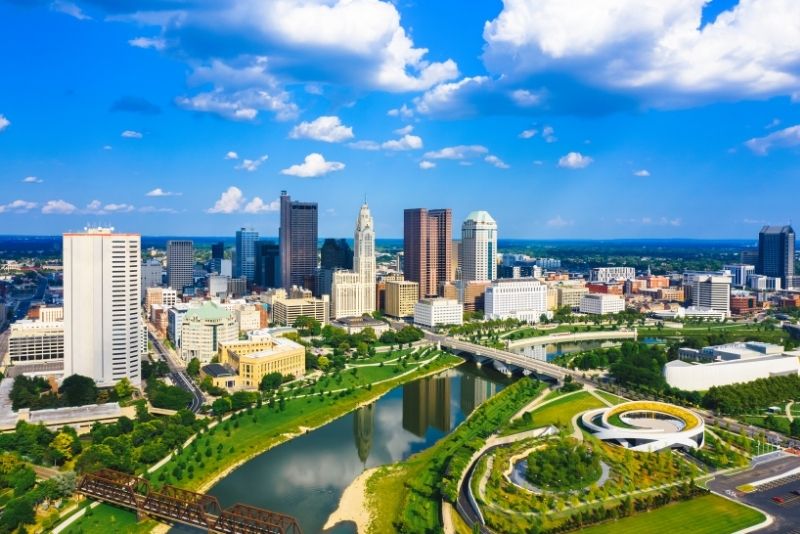
The city’s economic resilience, anchored by a diverse mix of government, education, insurance, and technology, provides a stable foundation that few other Midwestern cities can match. For those looking to deploy capital, the opportunities in Columbus are no longer a best-kept secret; they are a central component of a diversified modern portfolio.
The Macroeconomic Engine: Understanding the Columbus Growth Story
To understand the financial potential of Columbus, one must first look at the massive influx of industrial and technological capital currently reshaping the region. Unlike many “Rust Belt” neighbors, Columbus has seen consistent population growth for decades, a trend that is accelerating as coastal talent and capital migrate toward more sustainable cost-of-living environments.
The “Intel Effect” and Industrial Expansion
The most significant catalyst for recent economic optimism is Intel’s commitment to build a $20 billion semiconductor manufacturing complex in the Columbus metro area. This is not merely a single-factory project; it is an ecosystem-defining event. Economists estimate that for every one job created at the Intel facility, several more are generated within the supply chain and service sectors.
For investors, this represents a generational “buy” signal. The ripple effects on local infrastructure, vendor businesses, and logistics companies are creating a high-velocity environment for business finance. This massive industrial pivot is attracting secondary and tertiary players in the tech hardware space, turning Central Ohio into a critical node in the global supply chain.
Corporate Stability and Professional Services
Beyond the recent tech surge, Columbus remains a fortress of corporate stability. It is home to the headquarters of several Fortune 500 companies, including Nationwide Insurance, Cardinal Health, and American Electric Power. The presence of Ohio State University, one of the nation’s largest research institutions, ensures a constant pipeline of high-skilled labor. From a money management perspective, this creates a reliable “floor” for the economy. The city’s GDP is not tied to a single volatile industry, making it an ideal location for conservative long-term equity investments and commercial debt financing.
Real Estate Investment: Navigating the Most Competitive Market in the Midwest
For those asking what there is to do in Columbus from a personal finance or real estate perspective, the answer lies in the city’s residential and commercial property markets. Columbus has consistently ranked as one of the hottest real estate markets in the country, often outpacing coastal cities in terms of price appreciation and “days on market” metrics.
Residential Markets: Rental Yields and Appreciation
The housing shortage in Columbus is a significant challenge for residents but a clear opportunity for real estate investors. With the influx of thousands of high-earning tech employees, the demand for “class A” rental housing and luxury condominiums has skyrocketed.
-
The Short North and German Village: These historic and trendy districts represent the peak of rental demand. Investors focusing on short-term rentals or high-end urban living find high occupancy rates here, driven by young professionals and business travelers.
-
The Suburban Perimeter: Towns like New Albany, Westerville, and Dublin are seeing unprecedented appreciation. These areas are direct beneficiaries of the Intel expansion and the growing preference for suburban life with urban amenities.
-
The Franklinton Opportunity: For value-add investors, neighborhoods like Franklinton offer a “ground floor” opportunity. Significant revitalization efforts have turned this formerly industrial area into a burgeoning arts and tech corridor, providing high potential for capital gains over a five-to-ten-year horizon.
Commercial and Industrial Real Estate
The “Amazon effect” is palpable in Columbus. Due to its geographical location—within a one-day drive of nearly 50% of the U.S. and Canadian populations—Columbus has become a premier logistics hub. This has led to a massive demand for warehousing and distribution centers. Real estate investment trusts (REITs) and private equity firms are increasingly targeting the Rickenbacker International Airport area for industrial development. For the sophisticated investor, participating in industrial syndications in Central Ohio currently offers some of the most attractive risk-adjusted returns in the commercial sector.
Entrepreneurship and the Venture Capital Ecosystem
If your interest in Columbus is rooted in business finance and startups, the city offers a surprisingly robust infrastructure for scaling companies. The local venture capital (VC) scene has matured significantly, moving past seed-stage funding into major growth-round capabilities.
The Rise of Drive Capital and High-Growth Startups
Columbus is the headquarters of Drive Capital, a firm founded by former Sequoia Capital partners who recognized early on that the next billion-dollar companies would be built in the “flyover states.” The success of companies like Root Insurance, Beam Benefits, and Olive has proven that Columbus can support unicorns—startups valued at over $1 billion.
What this means for the entrepreneur is a supportive ecosystem of incubators, accelerators, and angel investor networks. The “Rev1 Ventures” incubator consistently ranks as one of the most active seed investors in the nation. For those looking to start an online business or a tech-enabled service, the “Columbus advantage” includes lower overhead costs, a loyal talent pool, and access to a massive corporate client base for B2B ventures.
Side Hustles and the Gig Economy in a Growing Metro
The economic boom has also created a fertile ground for high-income side hustles. As the city expands, there is a growing demand for specialized consulting, specialized trade services, and digital marketing for local businesses trying to modernize. The wealth being generated in the tech and medical sectors is circulating through the local economy, creating a high “velocity of money” that benefits small business owners and freelancers alike.
Financial Planning: Cost of Living and Wealth Preservation
One of the most profound things to “do” in Columbus is to perform a geographical arbitrage of your personal finances. For professionals moving from New York, San Francisco, or Chicago, the transition to Columbus often results in an immediate and significant increase in discretionary income.
Maximizing After-Tax Income
Ohio’s tax environment, combined with the relatively low cost of living in Columbus compared to other major metros, allows for aggressive wealth-building strategies. When housing costs represent 20% of your income instead of 50%, the surplus can be diverted into high-yield savings, brokerage accounts, or local business investments.
Furthermore, the city offers various tax abatement programs for property owners who renovate historic structures or build in designated opportunity zones. Leveraging these incentives is a key tactic for local investors to increase their internal rate of return (IRR) on property developments.
Building a Localized Investment Portfolio
A strategic approach to Columbus involves not just living in the city, but owning a piece of it. This includes:
-
Local Equity: Investing in local startups or small businesses through equity crowdfunding or private placements.
-
Municipal Bonds: Participating in the financing of the city’s rapid infrastructure expansion through municipal bond offerings, which often provide tax-advantaged income.
-
Network Capital: Building relationships within the Columbus business community. In a city of this size, the “proximity to power” is much higher than in larger metros, allowing investors to get in on deals that would be inaccessible in more saturated markets.

The Future Outlook: Columbus as a Top-Tier Financial Hub
Looking ahead, the trajectory of Columbus is firmly upward. As the “Silicon Heartland” moniker becomes more than just a marketing slogan, the city is poised to transition from a regional leader to a national economic powerhouse.
The convergence of massive federal investment in domestic manufacturing, a booming tech sector, and a stable corporate foundation creates a unique environment for capital growth. Whether you are a retail investor looking for a stable rental property, a venture capitalist hunting for the next big SaaS platform, or an individual looking to optimize their personal balance sheet, Columbus offers a diversity of financial activities that few other cities can match.
In conclusion, “what there is to do” in Columbus is, quite literally, to build wealth. By aligning your financial strategy with the city’s growth vectors—tech, logistics, and residential demand—you can participate in one of the most significant economic transformations in the modern American landscape. The city is no longer just a place to test ideas; it is the place where those ideas are being funded, scaled, and brought to the global market.
aViewFromTheCave is a participant in the Amazon Services LLC Associates Program, an affiliate advertising program designed to provide a means for sites to earn advertising fees by advertising and linking to Amazon.com. Amazon, the Amazon logo, AmazonSupply, and the AmazonSupply logo are trademarks of Amazon.com, Inc. or its affiliates. As an Amazon Associate we earn affiliate commissions from qualifying purchases.