
At its most fundamental level, a tax return is a formal document submitted to a government taxing authority that reports income, expenses, and other pertinent financial information. For many, the annual ritual of filing a tax return is viewed through the lens of obligation or the anticipation of a refund. However, from a professional financial perspective, the tax return is one of the most critical documents in an individual’s or business’s financial portfolio. It serves as a comprehensive snapshot of economic health, a tool for wealth preservation, and a mandatory bridge between private earnings and public responsibility.

Understanding what a tax return represents—and how to navigate its complexities—is essential for anyone looking to master their personal finances or manage a successful business. It is not merely a summary of what you earned; it is a calculated statement of your financial standing after accounting for the various incentives, exemptions, and obligations defined by the prevailing tax code.
The Mechanics of a Tax Return: Components and Purpose
A tax return is designed to perform three primary functions: report income, calculate tax liability, and reconcile payments. While the specific forms vary significantly depending on the jurisdiction and the nature of the filer, the underlying logic remains consistent across the board.
Identifying Taxable Income
The process begins with the reporting of gross income. This includes wages and salaries, but it also encompasses a wide array of other financial inflows. Investment dividends, interest from savings accounts, capital gains from the sale of assets, rental income, and even royalties must be meticulously documented. For the high-net-worth individual or the active investor, this section of the tax return serves as a detailed ledger of the year’s wealth-building activities.
Deductions and Credits: The Key to Savings
Perhaps the most strategically significant part of a tax return involves the transition from gross income to taxable income. This is achieved through deductions and credits.
Deductions represent specific expenses that the government allows you to subtract from your gross income, thereby lowering the base upon which you are taxed. For instance, contributions to retirement accounts (like a 401(k) or IRA), interest paid on student loans, or business-related expenses for the self-employed are common deductions.
Tax credits, on the other hand, are even more powerful. While a deduction reduces the income you are taxed on, a credit provides a dollar-for-dollar reduction in the actual tax you owe. Understanding the distinction between these two is the cornerstone of effective tax planning and personal finance management.
The Calculation Process: Liability vs. Refund
Once income is adjusted by deductions and the tax rate is applied, the final figure represents the total tax liability for the year. This liability is then compared against the taxes already paid through employer withholding or estimated quarterly payments. If you have paid more than you owe, the result is a tax refund. If you have paid less, you are required to pay the balance.
Types of Tax Returns for Individuals and Businesses
Tax returns are not one-size-fits-all. The structure of the return depends heavily on the legal and financial status of the entity filing it. Choosing the correct filing status and form is the first step in ensuring compliance and maximizing financial efficiency.
Standard Individual Filing
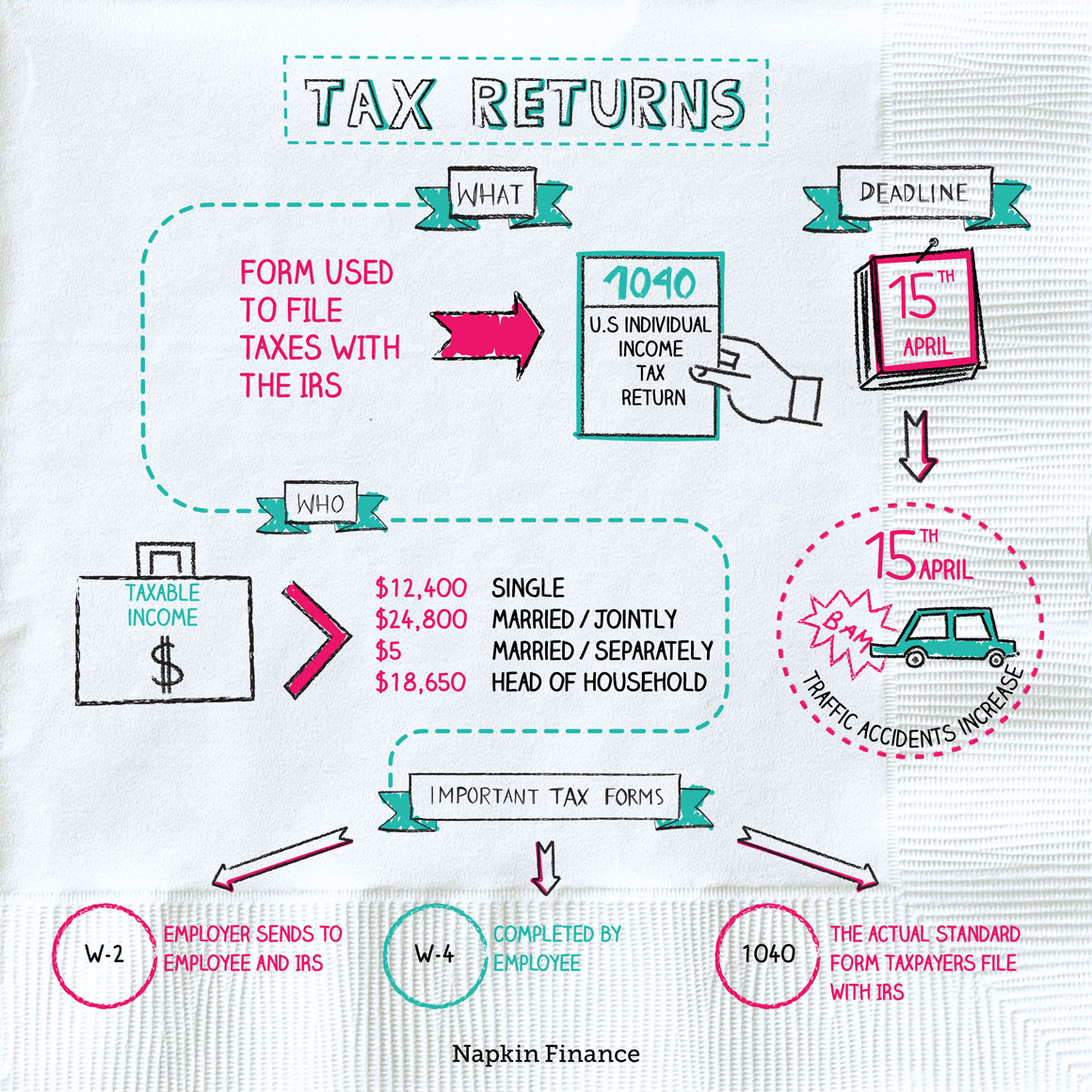
For most people, the individual tax return is the primary interaction with the tax system. This return covers personal earnings and household financial data. Even within this category, complexity varies. A single person with a single source of income may have a straightforward filing, whereas a married couple with multiple properties, foreign investments, and diverse income streams will require a much more robust reporting structure.

Business Entity Filings
Business finance introduces a higher level of complexity. The type of tax return a business files is dictated by its corporate structure:
-
Sole Proprietorships: These are typically handled via a schedule attached to the owner’s individual tax return.
-
Partnerships and S-Corps: These are “pass-through” entities. The business files an information return to report income and expenses, but the tax liability “passes through” to the individual partners or shareholders.
-
C-Corporations: These are treated as separate legal entities and must file their own corporate tax returns. They are subject to corporate income tax rates, and dividends paid to shareholders may be taxed again at the individual level, a concept known as double taxation.
Specialized Returns
Beyond income tax, there are other types of returns that serve specific financial purposes. Estate tax returns are filed upon the death of an individual to settle the tax on their transferred assets. Gift tax returns are required when a person transfers significant wealth to another without receiving fair market value in return. Each of these documents plays a role in long-term wealth transfer and legacy planning.
The Financial Strategy of Tax Compliance
While many view the tax return as a retrospective look at the previous year, savvy financial actors view it as a prospective tool. The data gathered for a tax return provides a roadmap for future financial decisions.
Tax Planning vs. Tax Preparation
It is a mistake to conflate tax preparation with tax planning. Tax preparation is the act of filling out forms and submitting them by the deadline. Tax planning, however, is a year-round strategy aimed at arranging your financial affairs to minimize tax liability. This includes timing the sale of assets to take advantage of capital gains rates, maximizing contributions to tax-advantaged accounts, and structuring business transactions in a way that aligns with the most favorable tax treatments.
Record-Keeping and Documentation
A tax return is only as strong as the documentation supporting it. In the world of finance, if an expense cannot be proven, it essentially does not exist for tax purposes. Professional financial management requires a rigorous system for tracking receipts, bank statements, investment reports, and invoices. This discipline not only makes the annual filing process smoother but also provides a vital layer of protection in the event of a government audit.
Avoiding Common Filing Errors
Errors on a tax return—whether intentional or accidental—can be costly. Simple mathematical mistakes, failing to report a small source of income, or claiming a deduction for which one is ineligible can result in penalties, interest, and increased scrutiny from tax authorities. Engaging with the tax return as a precise financial instrument, rather than a chore to be rushed through, is essential for maintaining a clean financial record.
Understanding Your Tax Refund or Liability
The outcome of a tax return—whether you owe money or receive a refund—is often misunderstood. From a financial optimization standpoint, neither a massive refund nor a massive tax bill is ideal.
Managing Withholding and Estimated Payments
A large tax refund is often celebrated, but in the world of personal finance, it is essentially an interest-free loan that you have provided to the government. That money could have been invested in the market, used to pay down high-interest debt, or placed in a high-yield savings account throughout the year.
Conversely, a large tax bill at the end of the year can create a liquidity crisis, forcing individuals to liquidate assets at inopportune times to cover the debt. The goal of sophisticated financial management is to reach a “break-even” point, where withholdings and estimated payments closely match the actual tax liability, allowing the individual to maintain maximum control over their cash flow.
Long-Term Wealth Implications
The information contained within your tax returns over several years can reveal patterns in your financial life. Are your investment returns consistently being eaten away by high-tax-drag assets? Are you failing to utilize available business deductions? By analyzing the “effective tax rate” (the actual percentage of your income that goes to taxes) rather than just looking at your “marginal tax bracket,” you can gain a deeper understanding of how taxes are impacting your ability to build wealth over time.
Ultimately, a tax return is much more than a bureaucratic requirement. It is a fundamental document of economic identity. For the individual, it is a yearly accounting of progress toward financial goals. For the business, it is a statement of operational efficiency and legal standing. By moving beyond a basic understanding of “what is a tax return” and embracing the strategic potential of the filing process, you can transform a mandatory obligation into a powerful lever for financial growth and stability.
aViewFromTheCave is a participant in the Amazon Services LLC Associates Program, an affiliate advertising program designed to provide a means for sites to earn advertising fees by advertising and linking to Amazon.com. Amazon, the Amazon logo, AmazonSupply, and the AmazonSupply logo are trademarks of Amazon.com, Inc. or its affiliates. As an Amazon Associate we earn affiliate commissions from qualifying purchases.