
In the world of personal finance, few documents carry as much weight, complexity, and importance as the tax return. Often viewed with a mix of dread and confusion, a tax return document is, at its core, a formal declaration of your financial activities over the course of a single calendar year. It is the primary vehicle through which individuals and businesses report their income, calculate their tax liabilities, and claim various deductions or credits to which they are entitled under the law.
Far from being a mere administrative hurdle, the tax return serves as a definitive financial snapshot. It provides a structured overview of your earnings, investments, and expenses, acting as a critical record that impacts everything from mortgage applications to retirement planning. Understanding the nuances of this document is essential for anyone looking to master their personal finances and ensure long-term wealth stability.

The Core Components of the Tax Return
A tax return is not a single piece of paper but rather a collection of forms and schedules that work together to provide a complete picture of your financial year. While the specific forms may vary depending on your jurisdiction, the fundamental structure remains consistent across most modern economies.
Income Reporting
The foundation of any tax return is the reporting of income. This includes every dollar earned from traditional employment (typically reported on a W-2 in the United States), as well as income from various other sources. For the savvy investor or the side-hustle enthusiast, this section is particularly detailed. It encompasses interest earned on savings accounts, dividends from stock portfolios, capital gains from the sale of assets, and income generated from rental properties or freelance projects. The goal is to establish a “Gross Income” figure that represents the total sum of your economic gains before any adjustments.
Adjusted Gross Income (AGI) and Taxable Income
Once the gross income is established, the process of “adjustments” begins. These are often referred to as “above-the-line” deductions. They might include contributions to certain retirement accounts, student loan interest payments, or health savings account (HSA) contributions. Subtracting these from your gross income results in your Adjusted Gross Income (AGI).
The AGI is perhaps the most significant number on your tax return document. It is frequently used by lenders and government agencies to determine eligibility for various programs and financial products. From this figure, taxpayers then subtract either a standard deduction or itemized deductions to arrive at their “Taxable Income.” This is the final amount upon which your actual tax rate is applied.
Deductions and Credits
Understanding the difference between a deduction and a credit is vital for effective financial management. A deduction reduces the amount of income that is subject to taxation. For example, if you are in a 22% tax bracket, a $1,000 deduction saves you $220. A tax credit, however, is a dollar-for-dollar reduction of the actual tax you owe. A $1,000 credit reduces your tax bill by a full $1,000. Common credits include those for child care, energy-efficient home improvements, or education expenses. The final section of the tax return document calculates these figures to determine if you have overpaid (resulting in a refund) or underpaid (resulting in a balance due).
The Role of Tax Returns in Financial Planning and Credit
While the primary purpose of a tax return is to satisfy the requirements of the government, its utility extends far beyond the realm of the IRS or national revenue services. In the broader ecosystem of personal and business finance, the tax return document is a vital tool for verifying economic health.
Mortgage and Loan Applications
When you apply for a significant loan—such as a mortgage or a business expansion loan—lenders rarely rely solely on your credit score. They require proof of stable, recurring income. The tax return is the “gold standard” of income verification. Lenders typically look at the last two years of tax returns to look for consistency, growth, and the ability to service debt. For the self-employed, who may not have a traditional salary, the tax return is the primary evidence used to justify their creditworthiness.
Wealth Building and Investment Strategy
Reviewing your tax return document annually allows you to evaluate the efficiency of your investment strategy. For instance, if you notice a high tax liability on your dividends or short-term capital gains, it may signal that you need to shift toward more tax-advantaged accounts like a 401(k), IRA, or municipal bonds. By analyzing the “Money” flow documented on your return, you can identify leakages—places where your wealth is being eroded by avoidable taxes—and adjust your portfolio accordingly for the coming year.
Retirement and Estate Planning
Tax returns play a pivotal role in long-term planning. They track your contributions to retirement vehicles and help you manage your “tax bracket” throughout your life. By understanding your historical tax data, you can make informed decisions about when to take distributions or when to convert traditional assets into Roth accounts. In estate planning, your history of tax returns provides the documentation necessary for heirs to understand the basis of inherited assets, which can significantly impact their own future tax obligations.
Understanding Different Types of Tax Return Forms

The phrase “tax return document” can refer to several different forms depending on the taxpayer’s situation. Navigating these variations is key to accurate filing and avoiding penalties.
The Individual Tax Return (Form 1040)
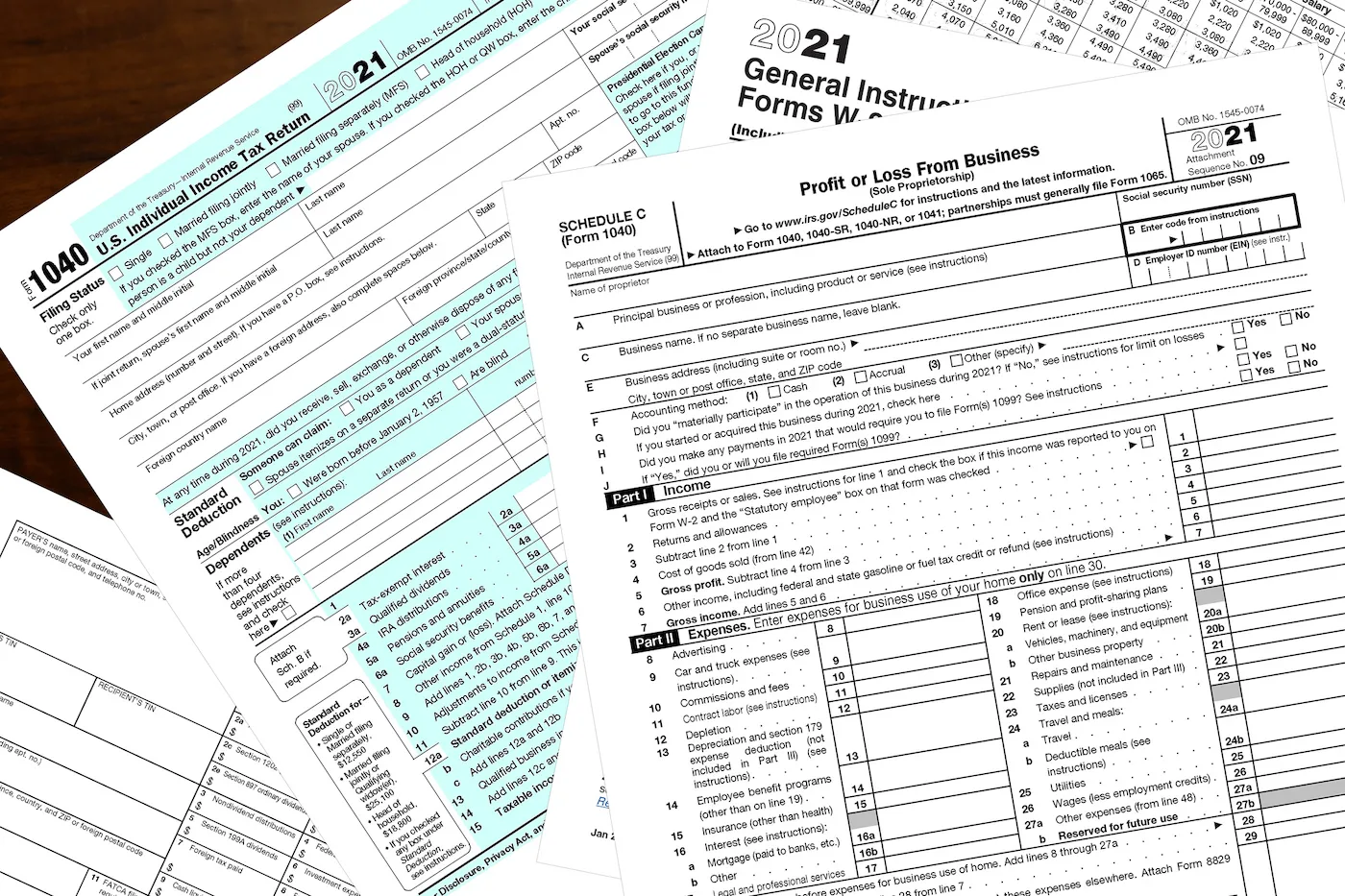
In the U.S., the Form 1040 is the standard individual income tax return. It has evolved over the years to become more modular, with various “Schedules” attached to it to handle specific types of income or deductions. Even if you are an employee with a simple financial life, understanding the 1040 is the first step toward financial literacy.
Business and Corporate Returns
For entrepreneurs, the tax return becomes more complex. If you operate as a sole proprietor, your business income is often reported on a Schedule C attached to your personal return. However, if your business is structured as a Corporation or a Partnership, you must file separate tax return documents (such as Form 1120 or 1065). These documents track business revenues, cost of goods sold, employee wages, and depreciation of assets. These returns are critical for demonstrating the profitability and valuation of a business to potential investors or buyers.
Specialized Schedules
-
Schedule A: Used for itemizing deductions like mortgage interest, state and local taxes, and charitable contributions.
-
Schedule B: Used for reporting interest and ordinary dividends exceeding a certain threshold.
-
Schedule D: Used to report capital gains and losses from the sale of stocks, bonds, or real estate.
-
Schedule E: Essential for those with passive income, such as rental properties or royalties.
Best Practices for Documentation and Record Keeping
A tax return document is only as accurate as the data behind it. Effective financial management requires a proactive approach to record-keeping that spans the entire year, rather than a frantic scramble every April.
Digital Organization
In the modern era, physical shoeboxes full of receipts are a relic of the past. Using financial software or dedicated apps to track expenses in real-time is essential. Digital records of business expenses, medical bills, and charitable donations should be categorized as they occur. Most tax return documents are now filed electronically, and maintaining a digital trail ensures that you can back up every claim made on your return in the event of an audit.
The Statute of Limitations and Retention
How long should you keep your tax return document? While the general rule of thumb is three years, many financial experts recommend keeping copies of the actual returns indefinitely and supporting documents for at least seven years. This is because the IRS can audit returns much further back if they suspect a substantial error or fraud. Having a historical archive of your returns is also useful for tracking your financial trajectory over decades, providing a motivational tool as you watch your net worth and income levels grow.
Avoiding Common Errors
Accuracy is paramount. Simple mistakes—such as transposed Social Security numbers, incorrect bank routing numbers for refunds, or failing to sign the document—can lead to significant delays and potential penalties. Furthermore, failing to report all income documented on 1099s or W-2s is an immediate red flag for automated government systems. Always reconcile your personal records against the official documents provided by your employers and financial institutions before finalizing your return.
Navigating the Filing Process: From Preparation to Submission
The final stage of dealing with a tax return document is the filing process itself. In recent years, technology has dramatically shifted how this is handled, making it more accessible but also introducing new considerations for security and strategy.
Self-Preparation vs. Professional Assistance
For individuals with straightforward income (a single job and a standard deduction), tax software has made the preparation process relatively simple. These programs use interview-style questions to guide the user through the document. However, as your wealth grows and your financial life becomes more complex—incorporating rental properties, international investments, or business ownership—the value of a Certified Public Accountant (CPA) or tax professional increases. A professional can provide strategic advice that software cannot, identifying opportunities for tax avoidance (legal) that can save thousands of dollars over time.
The Importance of E-Filing
Electronic filing (e-filing) is now the standard for submitting tax return documents. It is faster, more secure, and provides immediate confirmation that your return has been received. Furthermore, if you are owed a refund, e-filing combined with direct deposit is the quickest way to receive your funds. From a financial management perspective, getting your refund back quickly allows you to put that money to work in investments or debt repayment sooner, rather than waiting for a paper check in the mail.
Handling a Balance Due
If your tax return document reveals that you owe money, it is a prompt for immediate financial action. While the goal of many is to receive a large refund, a small balance due actually indicates that you had use of your money throughout the year rather than giving the government an interest-free loan. However, if the balance is significant, it may be necessary to adjust your withholdings or make quarterly estimated payments in the future. Facing a tax bill requires liquidity management, and the tax return provides the exact figure needed to balance your budget.
In conclusion, the tax return document is the ultimate ledger of your financial life. It is a record of where your money came from, how you spent or invested it, and what you owe to society. By treating the tax return as a strategic tool rather than a burdensome requirement, you can gain deeper insights into your financial health, protect your assets, and build a more secure future. Proper documentation, a clear understanding of the forms, and a proactive approach to filing are the hallmarks of a sophisticated approach to personal and business finance.
aViewFromTheCave is a participant in the Amazon Services LLC Associates Program, an affiliate advertising program designed to provide a means for sites to earn advertising fees by advertising and linking to Amazon.com. Amazon, the Amazon logo, AmazonSupply, and the AmazonSupply logo are trademarks of Amazon.com, Inc. or its affiliates. As an Amazon Associate we earn affiliate commissions from qualifying purchases.