
For most Americans, tax season is a period of significant financial anxiety. The Internal Revenue Code is thousands of pages long, filled with intricate regulations, sunset clauses, and evolving credits that can make or break a household budget. In this landscape, TurboTax has positioned itself as the premier solution for DIY tax preparation. However, as taxpayers move from simple W-2 filings to complex portfolios involving freelance income, rental properties, and crypto assets, a critical question emerges: How accurate is TurboTax, and can it truly replace a human financial professional?
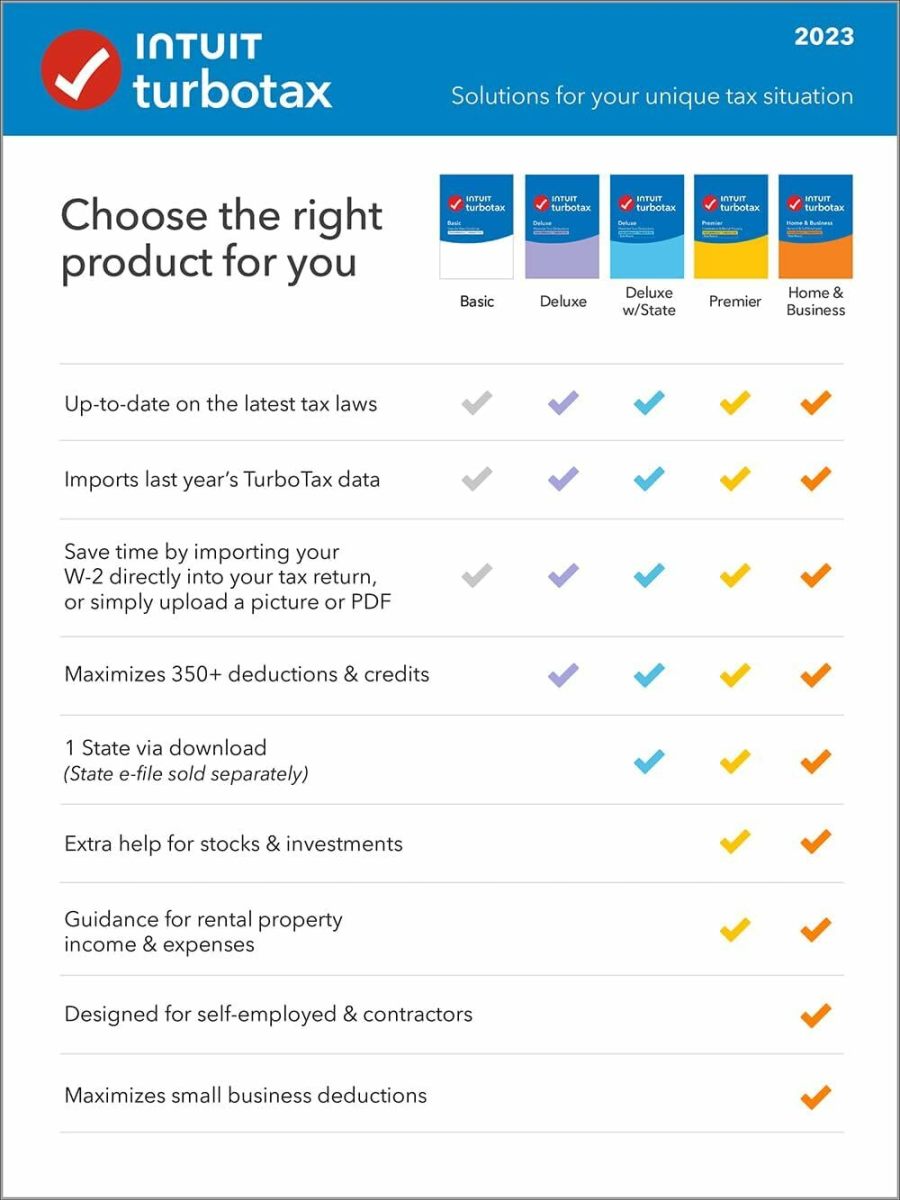
Accuracy in the world of personal finance isn’t just about getting the math right; it’s about compliance, liability management, and maximizing the net benefit of every dollar earned. To understand the accuracy of this software, one must look beyond the user interface and into the financial logic, data integration, and the inherent risks of automated tax preparation.
The Financial Stakes of Tax Preparation Accuracy
The primary concern for any taxpayer is the financial consequence of an error. Accuracy in tax filing is measured by two metrics: the avoidance of IRS audits and penalties, and the optimization of one’s tax liability.
The Cost of Errors: Penalties and Interest
The IRS does not typically accept “software error” as a valid excuse for underpayment. If a tax return is filed incorrectly, the financial repercussions can be severe. Underpayment penalties usually start at 0.5% of the unpaid taxes for each month the tax remains unpaid, up to 25%. When you add interest—which fluctuates based on federal rates—a small oversight can blossom into a significant financial burden. TurboTax claims a high degree of mathematical accuracy, backed by a guarantee to pay IRS penalties and interest if their software makes a calculation error. However, this guarantee rarely covers errors stemming from incorrect user input or misinterpreted financial data.
Maximizing the Refund vs. Minimizing Liability
A common marketing angle for tax software is the “maximum refund.” From a personal finance perspective, a massive refund isn’t always the goal; it often represents an interest-free loan to the government. True accuracy means calculating exactly what is owed—no more, no less. TurboTax utilizes “LifeSizer” technology and various questionnaires to find deductions that a layperson might miss, such as the Earned Income Tax Credit (EITC) or specific education credits. The accuracy of these deductions depends heavily on the software’s ability to map a user’s life events to the specific requirements of the tax code.
How TurboTax Processes Financial Data
At its core, TurboTax is a sophisticated logic engine. Its accuracy is built on the foundation of the tax laws provided by the IRS and state departments of revenue.
The Logic Behind the Calculations
The software operates on an “If-Then” logic system. When you answer a question about your home office, the software triggers a cascade of calculations based on Section 280A of the tax code. The mathematical accuracy of the software itself is nearly flawless. Computers do not make the transposition errors or basic addition mistakes that human filers often do. The internal programming is updated annually to reflect changes in tax brackets, standard deduction amounts, and phase-out limits for credits.
Integration with Financial Institutions
One of the most significant advancements in tax accuracy is the direct import feature. TurboTax integrates with thousands of financial institutions, including banks, brokerage firms, and payroll providers. By importing data directly from a 1099-INT, 1099-DIV, or W-2, the software eliminates manual entry errors. This “digital handshake” ensures that the numbers on the tax return match exactly what has been reported to the IRS by the institutions. For investors with hundreds of stock trades or complex dividend structures, this feature is the single most important factor in ensuring a return is accurate and audit-proof.
The Human Element: Where Software Accuracy Meets User Input

Despite the sophistication of the software, the leading cause of inaccuracy in tax filing is the “Human Element.” In the world of data science, this is known as “Garbage In, Garbage Out.”
The Risk of User Misinterpretation
Tax terminology can be opaque. When TurboTax asks if a specific expense is “ordinary and necessary” for a business, a user’s subjective interpretation may differ from the IRS’s legal definition. For example, a freelancer might claim a home office deduction for a space that is not used “regularly and exclusively” for business. The software will perform the math accurately based on the number provided, but the underlying claim may be legally inaccurate. This is the “accuracy gap” where software cannot fully protect a user from their own misunderstanding of tax law.
Professional Oversight: TurboTax Live and CPA Reviews
Recognizing the limitations of pure automation, Intuit (the maker of TurboTax) introduced the “Live” feature. This allows users to have their returns reviewed by a certified public accountant (CPA) or Enrolled Agent (EA) before filing. This hybrid model significantly boosts the functional accuracy of the return. A professional can spot “red flags”—such as a high ratio of business expenses to income—that the software might process mathematically but which might trigger an IRS flag for an audit. From a financial planning perspective, this human oversight provides an extra layer of security that pure software cannot offer.
Comparing TurboTax to Traditional Financial Services
For many high-net-worth individuals or small business owners, the choice between software and a dedicated accountant is a matter of ROI.
Cost-Benefit Analysis of DIY Software vs. Accountants
A professional CPA might charge anywhere from $500 to $2,000+ for a complex return, whereas TurboTax costs a fraction of that. The “accuracy” of the software is sufficient for many, but the software lacks the proactive tax planning advice a human provides. An accountant might suggest shifting assets into a different type of trust or changing a business structure from an LLC to an S-Corp to save money in future years. TurboTax is reactive—it looks at what happened in the past year. While it is accurate in reporting history, it is not always the most “accurate” tool for long-term wealth preservation.
Audit Support and Financial Guarantees
One area where TurboTax excels in providing peace of mind is its audit support. While the software is designed to prevent audits through “Audit Risk” meters, it also offers services to help users if they are contacted by the IRS. However, it is important to distinguish between “Audit Support” (providing guidance) and “Audit Defense” (having a professional represent you). For those with complex financial lives, the accuracy of a return is often validated only when it survives an inquiry. TurboTax’s accuracy guarantees are strong, but they generally apply to the software’s performance, not the validity of the user’s claims.

Long-term Financial Planning and Tax Efficiency
The ultimate measure of tax accuracy is how well a filing aligns with a broader financial strategy. Accuracy is not just a seasonal requirement; it is a component of net worth growth.
Tax laws are increasingly being used by the government to incentivize certain financial behaviors—such as investing in green energy or contributing to retirement accounts. An accurate tax tool should not only record these actions but highlight the missed opportunities. TurboTax does this to an extent by prompting users about IRA contributions before the April deadline.
However, for those involved in complex financial maneuvers—such as tax-loss harvesting, 1031 exchanges in real estate, or managing Qualified Small Business Stock (QSBS)—the software’s accuracy is tested. While the forms exist within the software, the strategic nuances of when and how to file them often require a deeper level of financial literacy than a standard questionnaire provides.
In conclusion, TurboTax is exceptionally accurate as a mathematical and clerical tool. It is updated rigorously to reflect the current state of the law and excels at importing data to reduce human error. For the vast majority of American taxpayers, the software is more than accurate enough to ensure compliance and maximize standard financial benefits. However, the software is only as accurate as the user’s understanding of their own financial life. As financial portfolios grow in complexity, the definition of “accuracy” shifts from simple math to strategic interpretation—a realm where the combination of software and professional human advice remains the gold standard for personal finance management.
aViewFromTheCave is a participant in the Amazon Services LLC Associates Program, an affiliate advertising program designed to provide a means for sites to earn advertising fees by advertising and linking to Amazon.com. Amazon, the Amazon logo, AmazonSupply, and the AmazonSupply logo are trademarks of Amazon.com, Inc. or its affiliates. As an Amazon Associate we earn affiliate commissions from qualifying purchases.