
In the rapidly evolving landscape of electric vehicles (EVs), Tesla remains the primary benchmark for innovation, software integration, and manufacturing efficiency. For those asking “what is the newest Tesla model,” the answer is multifaceted, depending on whether one refers to the most recent mass-market delivery, the latest engineering overhaul of an existing platform, or the most recently unveiled prototype poised to redefine autonomous transport. As of late 2024, the Tesla lineup has seen a massive influx of new hardware, specifically with the widespread rollout of the Cybertruck, the comprehensive “Highland” refresh of the Model 3, and the official unveiling of the Cybercab.

The Engineering Marvel: Understanding the Cybertruck’s Disruptive Technology
While the Cybertruck was first announced years ago, its presence on public roads as a production vehicle marks it as the most significant “new” hardware release in Tesla’s recent history. The Cybertruck is not merely a pickup truck; it is a rolling showcase of Tesla’s most advanced engineering to date, featuring several industry-first technologies that depart from traditional automotive standards.
48-Volt Architecture and Steer-by-Wire
Perhaps the most significant technical achievement within the Cybertruck is the transition to a 48-volt electrical system. For decades, the automotive industry has relied on a 12-volt standard. By quadrupling the voltage, Tesla has been able to reduce the current required for various components, allowing for significantly thinner wiring throughout the vehicle. This reduction in copper not only lowers the vehicle’s overall weight but also increases manufacturing efficiency and reduces heat loss.
Complementing this electrical overhaul is the implementation of a full steer-by-wire system. Unlike traditional vehicles, there is no physical mechanical link between the steering wheel and the front tires. Instead, redundant motors and sensors relay input electronically. This allows the vehicle to vary the steering ratio dynamically—at low speeds, a small turn of the yoke provides a large wheel angle for easy maneuvering, while at high speeds, the sensitivity decreases for stability.
The Exoskeleton and Stainless Steel Alloy
The Cybertruck’s “Ultra-Hard 30X Cold-Rolled Stainless-Steel” exoskeleton is a departure from the body-on-frame or unibody construction of typical vehicles. This alloy was specifically developed by Tesla’s materials science team to resist dents, damage, and long-term corrosion without the need for traditional paint. This eliminates one of the most toxic and expensive parts of the automotive manufacturing process: the paint shop.
The New Standard: Unpacking the Refreshed Model 3 ‘Highland’
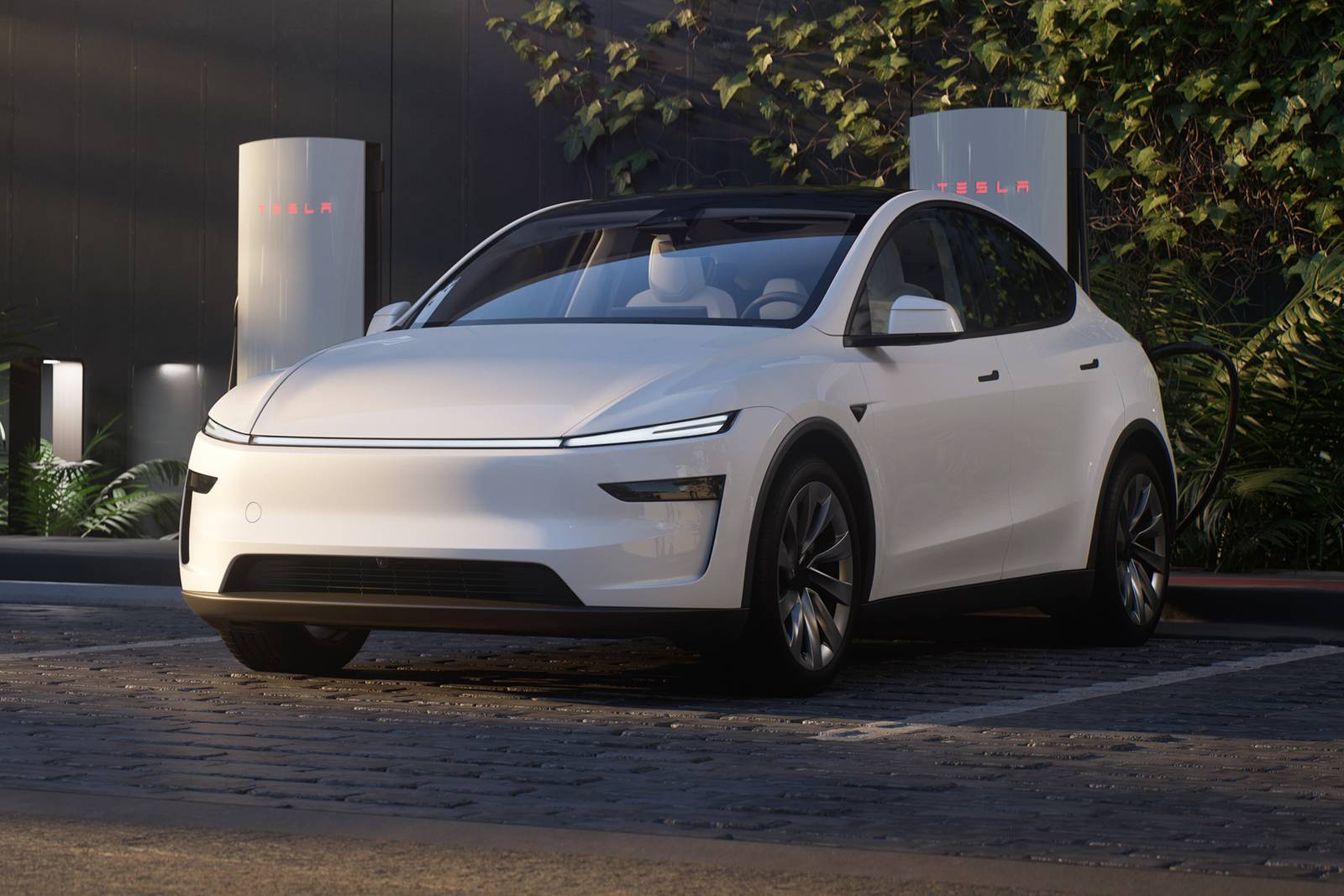
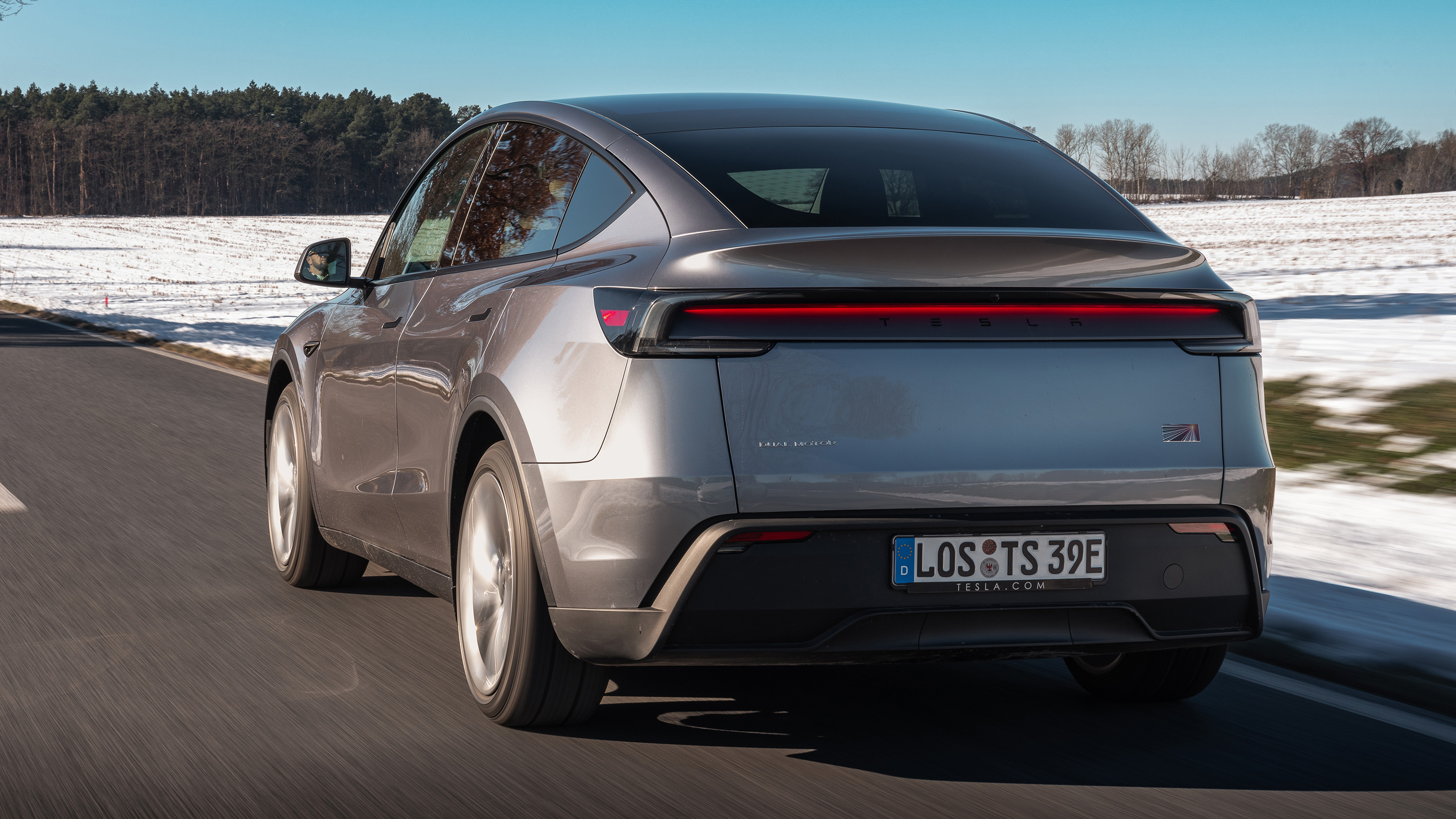
For the mass market, the newest Tesla available is the significantly updated Model 3, internally and colloquially known as “Project Highland.” This is more than a simple facelift; it is a total optimization of the vehicle’s aerodynamics, thermal management, and user interface.
Aerodynamics and Efficiency
The refreshed Model 3 features a sharper, more streamlined front-end design that reduces the drag coefficient to a remarkably low 0.219 Cd. In the world of EVs, aerodynamics is the most cost-effective way to increase range. By smoothing out the airflow, Tesla has squeezed more miles out of the same battery pack compared to the previous generation. This focus on efficiency is paired with new “frequency-selective” frequency-dependent damping, which improves ride quality without the complexity of an active air suspension.
Interior Tech and Acoustic Silencing
Inside the new Model 3, Tesla has doubled down on its “minimalist-tech” philosophy. The most controversial and forward-thinking change is the removal of physical stalks. Shifting gears is now handled through the touchscreen or an overhead console, and turn signals are integrated into the steering wheel.
To improve the premium feel, Tesla introduced 360-degree acoustic glass, which significantly reduces wind and road noise—one of the primary complaints of the original Model 3. Furthermore, the inclusion of an 8-inch rear touchscreen allows passengers in the back to control climate settings and stream entertainment, mirroring the high-end features found in the Model S and Model X.
The Future of Autonomy: The Cybercab and the ‘Unboxed’ Vision
In October 2024, Tesla officially unveiled the Cybercab, which currently holds the title of the newest model in terms of design and conceptual engineering. This vehicle represents the ultimate realization of Tesla’s transition from a car manufacturer to an AI and robotics company.
A Vehicle Without Controls
The Cybercab is designed strictly for autonomy. It lacks a steering wheel, pedals, and side mirrors. The interior is essentially a mobile lounge featuring two seats and a massive central display. The removal of traditional driving controls allowed Tesla to optimize the cabin space and reduce the complexity of the vehicle’s interior assembly.
Inductive Charging and NACS Replacement
One of the most radical technological shifts introduced with the Cybercab is the absence of a charging port. While the North American Charging Standard (NACS) has become the industry benchmark, the Cybercab moves toward a fully automated future using inductive (wireless) charging. By parking over a charging pad, the vehicle can replenish its battery without human intervention, which is essential for a fleet of autonomous robotaxis that must operate 24/7.
The ‘Unboxed’ Manufacturing Process
The Cybercab is expected to be the first vehicle built using Tesla’s “Unboxed” manufacturing process. Traditional car assembly involves moving a single body shell down a long line where parts are bolted on. The Unboxed method involves assembling distinct sub-sections of the car (the front, the rear, the floor) simultaneously in separate areas, and then joining them together at the final stage. This technique is projected to reduce the factory footprint by 40% and lower production costs by up to 50%, potentially enabling a sub-$30,000 price point.
Under the Hood: Hardware 4.0 and the AI-Driven Ecosystem
Regardless of the specific model—be it the Cybertruck or the newest Model 3—the “brain” of the vehicle is where Tesla’s newest technology truly shines. The transition to Hardware 4.0 (HW4) represents a massive leap in processing power and sensor resolution.
High-Resolution Vision and Neural Networks
Tesla has moved entirely away from radar and ultrasonic sensors in its newest models, opting for a “Vision-Only” approach. HW4 utilizes higher-resolution cameras with increased dynamic range, allowing the vehicle to perceive distant objects and low-light environments with much greater clarity.
These cameras feed data into the Full Self-Driving (FSD) Supervised software, which has recently shifted to “end-to-end neural networks.” In previous versions, the car’s behavior was governed by hundreds of thousands of lines of human-written code (e.g., “if red light, then stop”). The newest iterations (V12 and beyond) are trained on millions of miles of human driving video, allowing the AI to “learn” how to navigate complex scenarios through imitation and reinforcement, rather than hard-coded rules.
The Role of Dojo and AI Training
Supporting this hardware is the Dojo supercomputer, a custom-built AI training cluster designed by Tesla. By processing the petabytes of data collected from the global fleet, Dojo trains the neural networks that are eventually pushed out to the vehicles via over-the-air (OTA) updates. This creates a feedback loop where every new Tesla on the road contributes to the intelligence of every other Tesla, a technological moat that remains difficult for competitors to replicate.
Conclusion: A Paradigm Shift in Transportation Technology
When evaluating “what is the newest Tesla model,” it is clear that the company is no longer focused on simple incremental updates. The Cybertruck introduced the 48V revolution and steer-by-wire; the Model 3 Highland perfected the balance between luxury and aerodynamic efficiency; and the Cybercab has set the stage for a world without drivers.
The “newest” Tesla is more than just a car; it is a node in a decentralized AI network. As the company prepares to launch its next-generation platform—often referred to as the “Model 2” or “Redwood”—the focus is shifting from high-end performance to extreme manufacturing efficiency. By leveraging the AI breakthroughs of FSD and the structural innovations of the Cybertruck, Tesla’s newest models are designed to transform the automobile from a depreciating asset into a functional robot, fundamentally changing the relationship between technology and personal mobility. For the consumer, this means that the “newest” version of their vehicle is often delivered not at the dealership, but through a software update that enhances the capabilities of the hardware overnight.
aViewFromTheCave is a participant in the Amazon Services LLC Associates Program, an affiliate advertising program designed to provide a means for sites to earn advertising fees by advertising and linking to Amazon.com. Amazon, the Amazon logo, AmazonSupply, and the AmazonSupply logo are trademarks of Amazon.com, Inc. or its affiliates. As an Amazon Associate we earn affiliate commissions from qualifying purchases.