
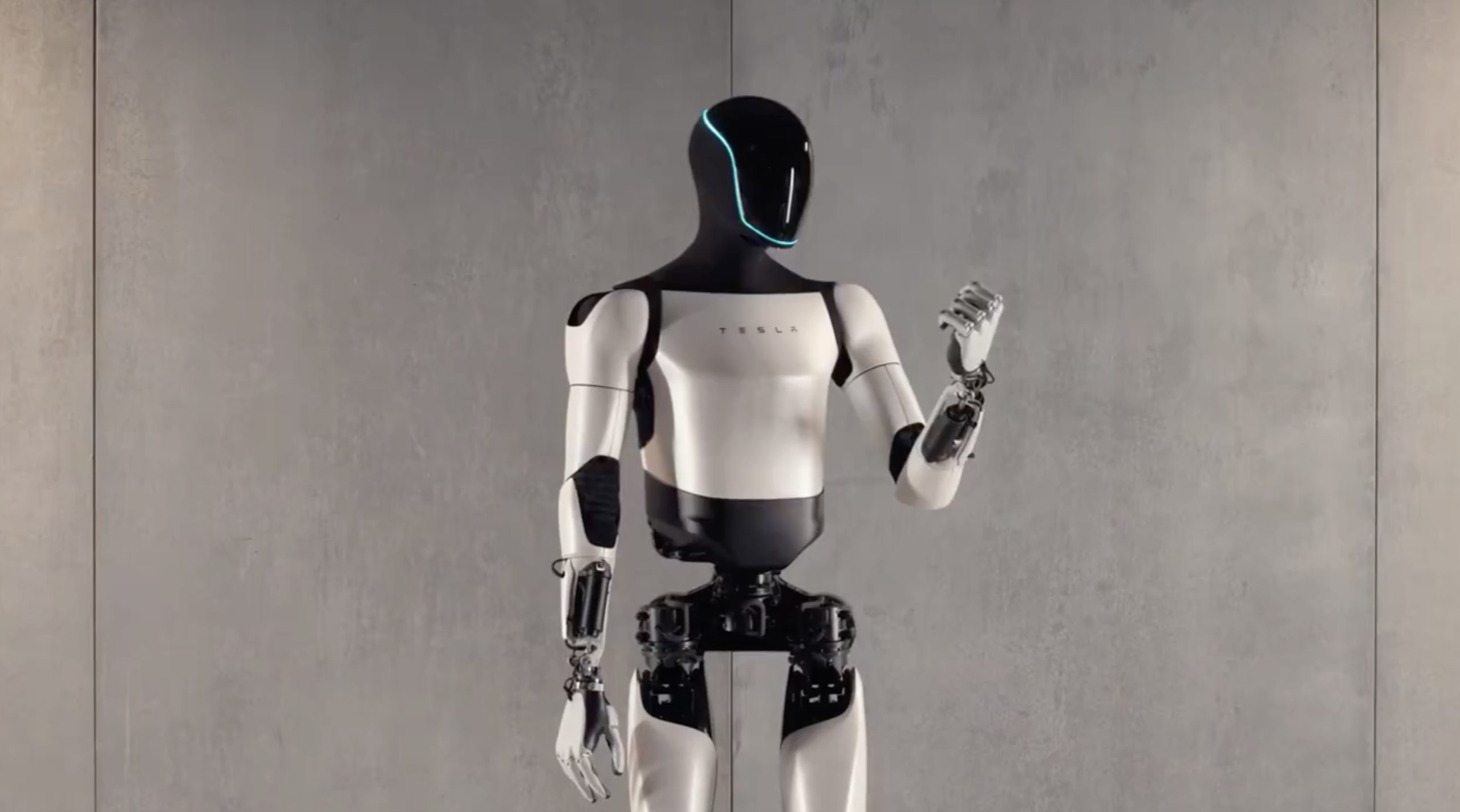
The landscape of humanoid robotics has shifted from the realm of science fiction into a tangible technological race, spearheaded by Tesla’s ambitious project: Optimus. When Elon Musk first introduced the concept of a Tesla Bot during the company’s AI Day in 2021—famously represented by a human performer in a spandex suit—skepticism was the prevailing sentiment. However, the rapid iteration from the “Bumblebee” prototype to the sophisticated Optimus Gen 2 has forced the tech industry to take the project seriously. Central to the conversation surrounding this humanoid is not just its capability, but its accessibility. The question of “how much does the Tesla robot cost” is not merely about a retail price tag; it is about the fundamental economics of AI-driven labor and the democratization of advanced robotics hardware.
The Targeted Price Point: Aiming for the $20,000 Threshold
Elon Musk has frequently stated that the long-term goal for the Tesla Optimus is to bring the cost down to significantly less than a car—specifically targeting a price point between $20,000 and $30,000. To put this into perspective, the average cost of a new electric vehicle in the United States currently sits well above $45,000. By positioning a highly sophisticated, multi-purpose humanoid robot at a price lower than its entry-level vehicles, Tesla is signaling a shift in how it views its role as a technology company.
Mass Production and the “Machine that Builds the Machine”
The primary reason Tesla believes it can achieve such a disruptive price point is its existing expertise in manufacturing at scale. Unlike boutique robotics firms that produce a handful of units per year for research institutions, Tesla is leveraging its global supply chain and automated gigafactories. The “cost” of the robot is inextricably linked to the efficiency of its production. By using the same casting, battery technology, and power electronics developed for the Model 3 and Model Y, Tesla avoids the “bespoke hardware” trap that has kept industrial robots priced in the hundreds of thousands of dollars.
Economies of Scale in Component Sourcing
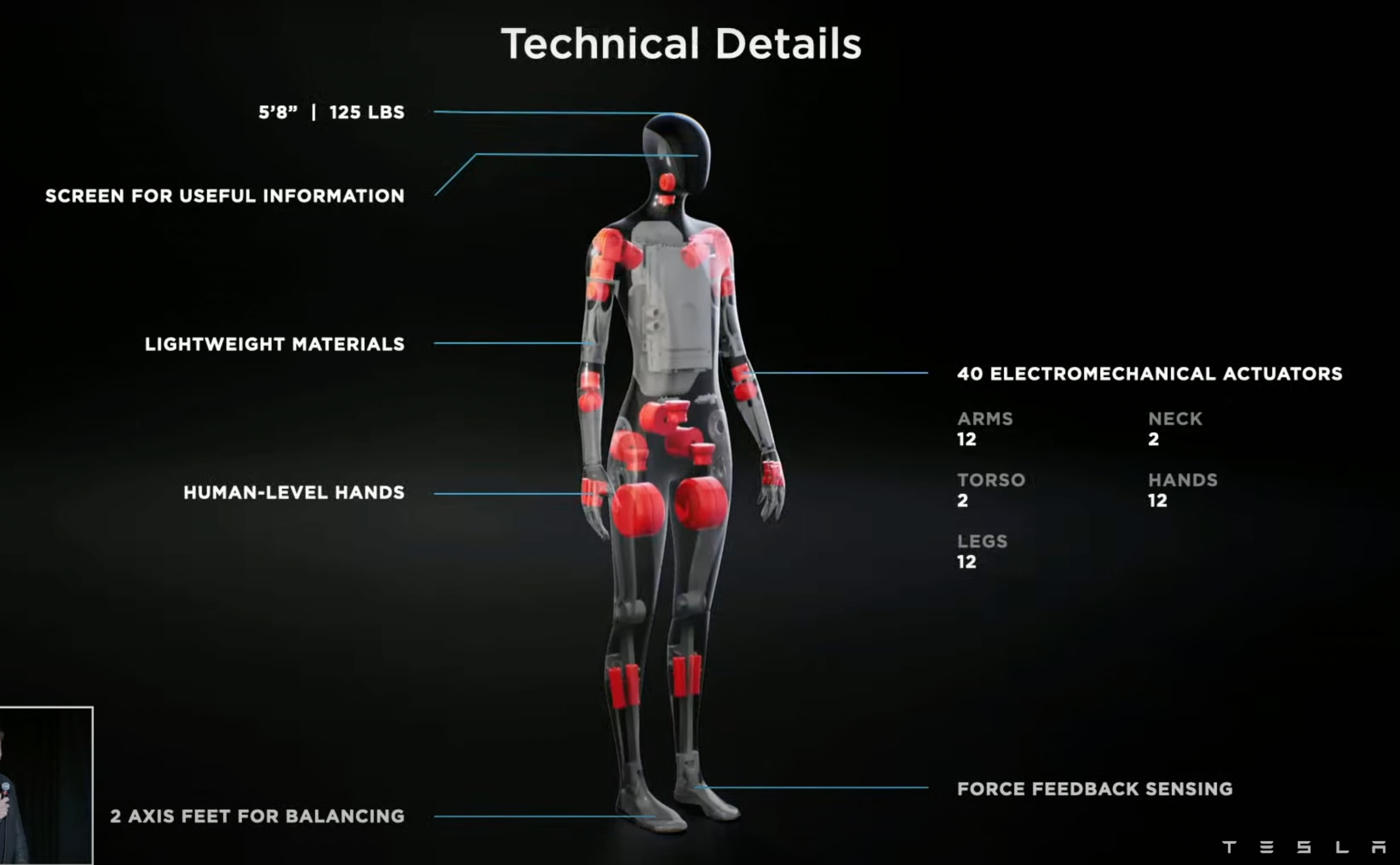
A significant portion of a robot’s cost traditionally comes from actuators and sensors. Tesla’s strategy involves designing these components in-house. By creating custom-designed actuators specifically for Optimus—rather than buying off-the-shelf parts from third-party suppliers—Tesla minimizes the middleman markup and optimizes the design for high-volume manufacturing. This vertical integration is the same strategy that allowed Tesla to lower the cost of EV battery packs, and it is the linchpin of the $20,000 price target.
The Technology Behind the Price Tag: What is Inside Optimus?
To understand why the Tesla robot costs what it does, one must examine the high-density technology packed into its frame. The Optimus Gen 2 is a masterclass in modern engineering, integrating advanced materials with cutting-edge artificial intelligence.
Advanced Actuators and Kinetic Design
The human body has over 200 degrees of freedom, and while a robot doesn’t necessarily need that many to be useful, it requires enough to navigate a human-centric world. The Optimus Gen 2 features 28 structural actuators in its body and a newly designed set of hands with 11 degrees of freedom. These hands are equipped with tactile sensors, allowing the robot to handle delicate objects—like an egg—without breaking them. These components are expensive to produce, but by simplifying the mechanical design and focusing on software-based control, Tesla aims to reduce the physical complexity that drives up costs in traditional robotics.
The AI Brain: FSD and Neural Networks
One of the most valuable “components” of the Tesla robot isn’t physical at all; it is the software. Optimus runs on the same AI chips and neural network architecture used in Tesla’s Full Self-Driving (FSD) system. This synergy means the R&D costs for the robot’s “brain” are shared across the company’s entire fleet of vehicles. The robot utilizes vision-based neural networks to perceive its environment, meaning it doesn’t rely on expensive LiDAR systems. This reliance on cameras and computer vision—technologies that are relatively cheap and easy to mass-produce—is a major factor in keeping the estimated cost low.
Power Management and Battery Density
The robot is powered by a 2.3kWh battery pack integrated into its torso. This pack is designed to provide enough energy for a full day of work. Because Tesla is already a world leader in battery density and thermal management, the cost of the energy storage system in Optimus is likely a fraction of what a competitor would pay to source a similar high-performance power unit.
Comparing the Robotics Landscape: Tesla vs. the Competition

To truly grasp the significance of a $20,000 to $30,000 humanoid, one must look at the existing market. For decades, the gold standard in humanoid robotics was Boston Dynamics’ Atlas. While Atlas is a feat of engineering capable of backflips and parkour, it was—until recently—a hydraulic-based research platform costing millions of dollars per unit.
The Shift from Research to Commercialization
The robotics industry is currently undergoing a pivot from “research labs” to “factory floors.” Companies like Figure AI, Sanctuary AI, and Apptronik are all racing to develop general-purpose humanoids. However, many of these competitors are currently targeting the enterprise market with lease-based models or price tags that exceed $100,000. Tesla’s entry into the space changes the dynamic by focusing on a “consumer-ready” price point from the outset.
Hydraulic vs. Electric Systems
A major technological differentiator that affects cost is the move away from hydraulics. Older humanoid models relied on complex, high-maintenance hydraulic systems. Tesla’s Optimus is fully electric. Electric motors are cheaper to manufacture, easier to repair, and more energy-efficient than their hydraulic counterparts. This technological choice is fundamental to the price strategy; you cannot have a $20,000 robot that requires a team of specialized engineers and expensive hydraulic fluid to maintain.
The Value Proposition: Beyond the Initial Purchase Price
When discussing the cost of the Tesla robot, the conversation inevitably moves toward Return on Investment (ROI). For a business or an individual, the “cost” is weighed against the labor value the robot provides.
Labor Displacement and Economic Utility
If a robot costs $25,000 and can work for five years, its hourly cost is significantly lower than the minimum wage in any developed nation. In a warehouse or manufacturing setting, the Optimus robot can perform repetitive, dangerous, or mundane tasks. Unlike specialized industrial arms that are bolted to the floor and cost tens of thousands to reprogram, a general-purpose humanoid like Optimus can theoretically be moved from a packing station to a cleaning station with a software update. This versatility effectively lowers the “cost of ownership” by spreading the investment across multiple use cases.
The Software-as-a-Service (SaaS) Component
While the hardware might cost $20,000, it is highly likely that Tesla will implement a subscription model for the AI software updates, similar to how FSD is sold. This would mean that while the upfront hardware cost is low, there would be an ongoing operational cost to keep the robot’s “brain” updated with the latest capabilities. This model allows Tesla to keep the initial barrier to entry low while ensuring a continuous revenue stream to fund further AI development.
The Road Ahead: Timeline for Mass Availability
While the $20,000 price tag is the target, it is important to note that the earliest units will likely be much more expensive or kept for internal use at Tesla’s Gigafactories. Musk has indicated that the robot will likely begin performing useful tasks in Tesla factories by the end of 2024, with potential external sales beginning in 2025 or 2026.
Scaling the Technology Curve
Like any new technology, the first generation of Optimus available for purchase will likely carry a “pioneer premium.” However, as production ramps up and the hardware design stabilizes, the cost is expected to follow a curve similar to that of the flat-screen television or the smartphone. In the tech world, the first version is always the most expensive and the least capable.
The Long-Term Vision for Home Use
The ultimate goal of the Tesla robot project is to move from the factory floor into the home. Musk envisions a future where Optimus can mow the lawn, pick up groceries, or care for the elderly. For this to happen, the cost must be comparable to a household appliance or a used car. The current tech trajectory suggests that while we are not there yet, the foundational hardware and AI are converging at a point where a $20,000 general-purpose robot is a mathematical probability rather than a fantasy.
In conclusion, the cost of the Tesla robot is a reflection of a broader trend in technology: the commoditization of hardware through the intelligence of software. By leveraging the scale of its automotive business, designing its own actuators, and utilizing a vision-based AI system, Tesla is positioning Optimus to be the first humanoid robot that is financially accessible to the middle market. Whether the price hits the $20,000 mark in 2025 or 2030, the shift toward affordable, high-utility robotics is now an irreversible trend in the global tech ecosystem.
aViewFromTheCave is a participant in the Amazon Services LLC Associates Program, an affiliate advertising program designed to provide a means for sites to earn advertising fees by advertising and linking to Amazon.com. Amazon, the Amazon logo, AmazonSupply, and the AmazonSupply logo are trademarks of Amazon.com, Inc. or its affiliates. As an Amazon Associate we earn affiliate commissions from qualifying purchases.