
The act of tipping, once a discretionary gesture of appreciation, has evolved into a complex financial mechanism that sits at the intersection of labor law, personal finance, and federal tax policy. For decades, the question of “who started taxing tips” has lingered in the minds of service industry workers and business owners alike. To understand the current landscape of tip taxation, one must look beyond a single point in history and instead examine a series of legislative shifts that transformed gratuities from informal “gifts” into a strictly regulated form of taxable compensation.

The taxation of tips in the United States did not happen overnight. It was the result of the federal government’s increasing need to capture a massive segment of the “underground” economy and the desire to integrate service workers into the social safety net. From the early 20th-century anti-tipping movements to the landmark Tax Equity and Fiscal Responsibility Act (TEFRA) of 1982, the financial journey of the tip has been one of increasing oversight and rigorous reporting requirements.
The Historical Origins: From Voluntary Gratuity to Taxable Compensation
In the early years of the United States, tipping was actually viewed by many as “un-American.” Critics argued it created a class-based hierarchy that mirrored European aristocratic customs. However, by the early 1900s, the practice became entrenched in the hospitality and transportation sectors. During this era, tips were largely considered personal gifts from the patron to the server, existing entirely outside the purview of the Internal Revenue Service (IRS).
The Post-Prohibition Shift and Income Definition
As the federal income tax became a more significant part of the American economic structure following the ratification of the 16th Amendment in 1913, the IRS began to look more closely at diverse income streams. However, it wasn’t until the mid-20th century that the government formalized the definition of tips as “remuneration for services rendered.”
The foundational shift occurred when the IRS clarified that tips were not, in fact, gifts. Under tax law, a gift is generally given out of “detached and disinterested generosity.” Because a tip is given in the context of a commercial transaction for a service provided, the IRS argued that it constitutes earned income. This distinction is the bedrock of tip taxation: if you have to work to receive it, the government wants its share.
The 1960s and the Social Security Expansion
A pivotal moment in the history of tip taxation arrived with the Social Security Amendments of 1965. Before this time, while tips were technically taxable as income, they were not counted toward a worker’s Social Security benefits. This created a significant gap in the personal finance security of service workers; they might earn a decent living through tips, but their retirement benefits remained at the floor because their “official” wages were so low.
The 1965 amendments required employees to report cash tips of $20 or more per month to their employers. This allowed those tips to be treated as wages for Social Security and Medicare tax purposes (FICA). This was a double-edged sword: it increased the tax burden on the worker in the short term but theoretically increased their financial stability in the long term through higher retirement credits.
The Landmark Legislation of 1982: TEFRA and the Modern Reporting Era
If there is a single piece of legislation that defines the modern era of tip taxation, it is the Tax Equity and Fiscal Responsibility Act of 1982 (TEFRA). Prior to TEFRA, tip reporting was largely based on the honor system, and the IRS estimated that as much as 84% of tip income went unreported. To close this “tax gap,” the Reagan administration and Congress implemented aggressive new reporting requirements for the hospitality industry.
The 8% Allocation Rule
TEFRA introduced a controversial mechanism known as “tip allocation.” Under this rule, large food and beverage establishments (those with more than 10 employees where tipping is customary) are required to ensure that the total tips reported by their staff equal at least 8% of the establishment’s gross receipts.
If the employees as a group report less than 8%, the employer is required to “allocate” the difference among the employees and report that amount to the IRS. This was a revolutionary shift in business finance. It essentially created a baseline expectation of income, making it much harder for workers to underreport their earnings without triggering an audit or an automatic tax adjustment.
Employer Liability and FICA Taxes
TEFRA also solidified the employer’s role as a tax collector. Businesses became responsible for withholding federal income tax, as well as the employee’s share of Social Security and Medicare taxes, based on the reported tips. Furthermore, the employer became responsible for paying the employer’s share of FICA taxes on those tips.
This created a significant financial strain on restaurant owners, who were suddenly paying taxes on income they never actually touched. To mitigate this, later legislation introduced the Section 45B Credit, a business tax credit that allows employers to claim a credit for the FICA taxes they pay on employee tips that exceed the federal minimum wage. This remains a vital tool in modern business finance for the hospitality sector.
The Impact on Personal Finance and Business Operations
The taxation of tips has profound implications for the personal finance strategies of service workers and the operational budgets of service-based businesses. It transformed the service industry from a “cash-and-carry” environment into a highly documented financial sector.
The “Tip Credit” Mechanism
Central to the discussion of tip taxation is the “tip credit” under the Fair Labor Standards Act (FLSA). Federal law allows employers to pay tipped employees as little as $2.13 per hour, provided that their tips bring their total compensation up to the standard minimum wage.
From a personal finance perspective, this means that a server’s “paycheck” from the employer is often zero dollars or “void,” as the entire hourly wage is consumed by tax withholdings for the tips they took home in cash. This requires service workers to be highly disciplined with their cash flow, as they must manually set aside funds for their own savings and expenses since their paper checks rarely cover their tax liabilities.
The Administrative Burden on Small Businesses
For business owners, the requirement to track and report tips adds a layer of administrative complexity. Modern payroll systems must be able to handle “imputed income” and “allocated tips.” If a business fails to report accurately, they face significant penalties from the IRS.
Furthermore, the IRS uses a “Section 3121(q) Notice and Demand,” which allows the agency to assess the employer’s share of FICA taxes on unreported tips based on an estimate of the total tips earned across the entire establishment. This has led to high-stakes legal battles between the industry and the government, most notably the Supreme Court case United States v. Fior D’Italia, Inc. (2002), which upheld the IRS’s right to use aggregate estimates to tax employers.
Digital Tipping and the Future of Gratuity Taxation
As we move deeper into the 21st century, the landscape of tipping is changing again, driven by technology and shifting political winds. The move toward a cashless society has made tip taxation almost unavoidable, as digital transactions leave a perfect paper trail for the IRS.
The Rise of Point-of-Sale (POS) Systems
With the ubiquity of POS systems like Square, Toast, and Clover, the era of the “unreported cash tip” is rapidly coming to an end. These systems automatically prompt for tips and record them directly into the business’s financial records. While this simplifies reporting and ensures compliance, it also means that service workers are seeing a higher percentage of their gross income taxed than ever before. For many workers, this has led to a “tax shock” where their effective tax rate appears much higher because all of their “under the table” income is now “on the books.”

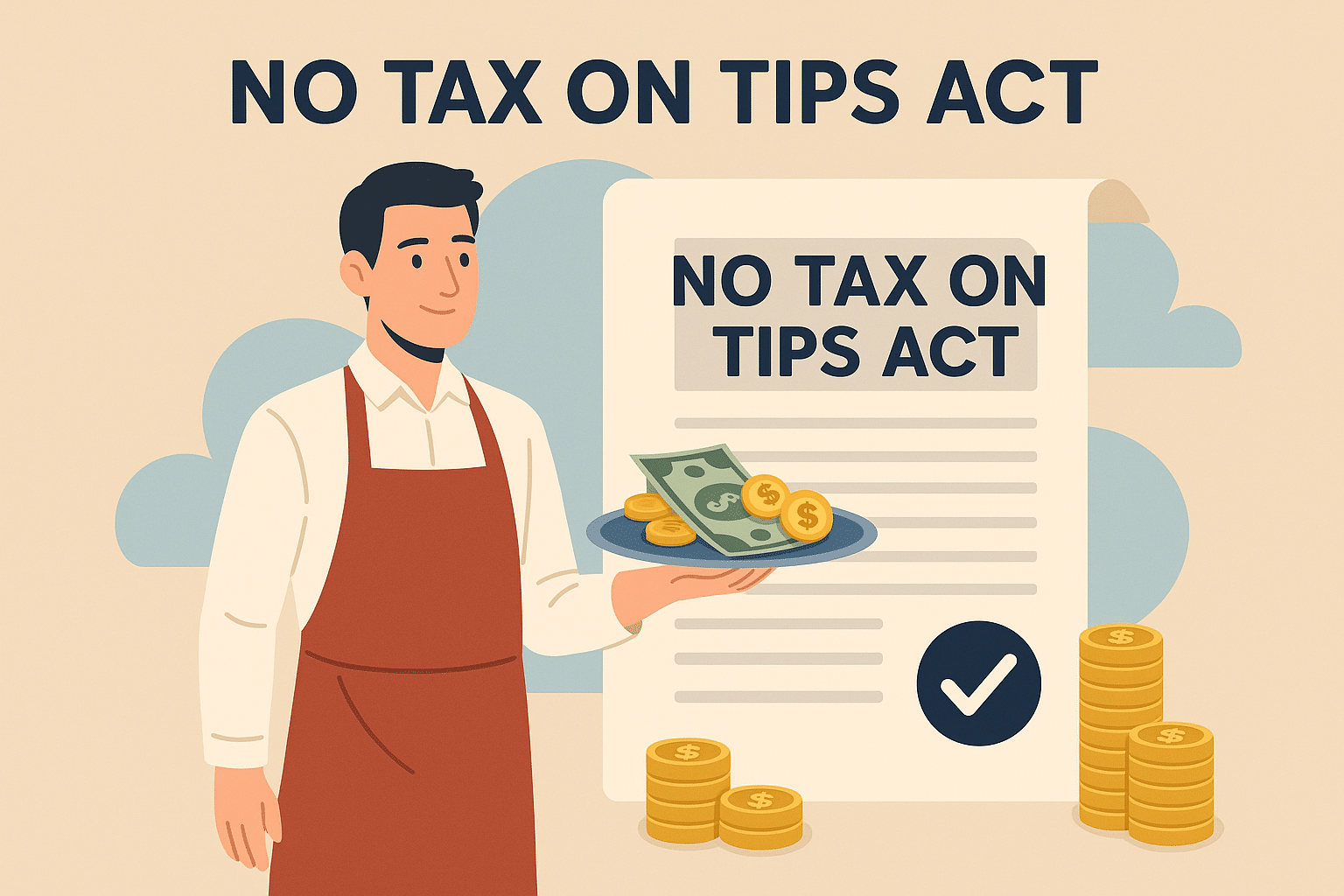
Contemporary Debates: Is “No Tax on Tips” a Viable Reality?
In recent political cycles, the idea of eliminating federal income tax on tips has gained traction across the political spectrum. Proponents argue that it would provide an immediate financial boost to millions of low-to-middle-income workers. However, from a business finance and policy perspective, the proposal is fraught with complications.
Critics point out that “untaxing” tips could lead to “wage recharacterization,” where high-earning professionals (like lawyers or consultants) might attempt to rebrand their fees as “tips” to avoid taxation. Furthermore, the loss of tax revenue would be significant, potentially reaching hundreds of billions of dollars over a decade. From a personal finance standpoint, if tips are not taxed as income, there is also the question of whether they would still count toward Social Security credits. If they don’t, a short-term increase in take-home pay could lead to long-term financial instability in retirement.
The history of taxing tips is a story of the government’s evolving relationship with the service economy. What started as an informal custom has become a pillar of federal tax revenue and a defining factor in the financial lives of millions of Americans. Whether through 1960s social reforms, 1980s crackdowns, or modern digital tracking, the IRS has ensured that the “gratuity” is treated with the same financial weight as any other form of professional income. For the service worker, understanding this history isn’t just about trivia; it is essential for navigating the complexities of their own personal wealth and tax liability in an increasingly transparent financial world.
aViewFromTheCave is a participant in the Amazon Services LLC Associates Program, an affiliate advertising program designed to provide a means for sites to earn advertising fees by advertising and linking to Amazon.com. Amazon, the Amazon logo, AmazonSupply, and the AmazonSupply logo are trademarks of Amazon.com, Inc. or its affiliates. As an Amazon Associate we earn affiliate commissions from qualifying purchases.