
For over a century, the Dow Jones Industrial Average (DJIA) has served as the primary barometer for the health of the United States equity markets. Whether you are watching the evening news or scrolling through a financial app, the “Dow” is often the first number mentioned to describe whether the market is up or down. For novice and seasoned investors alike, understanding the mechanics of this index is fundamental to grasping broader economic trends. However, the most basic question—how many stocks are in the Dow—reveals a complex narrative about selection, weighting, and the evolution of the American economy.

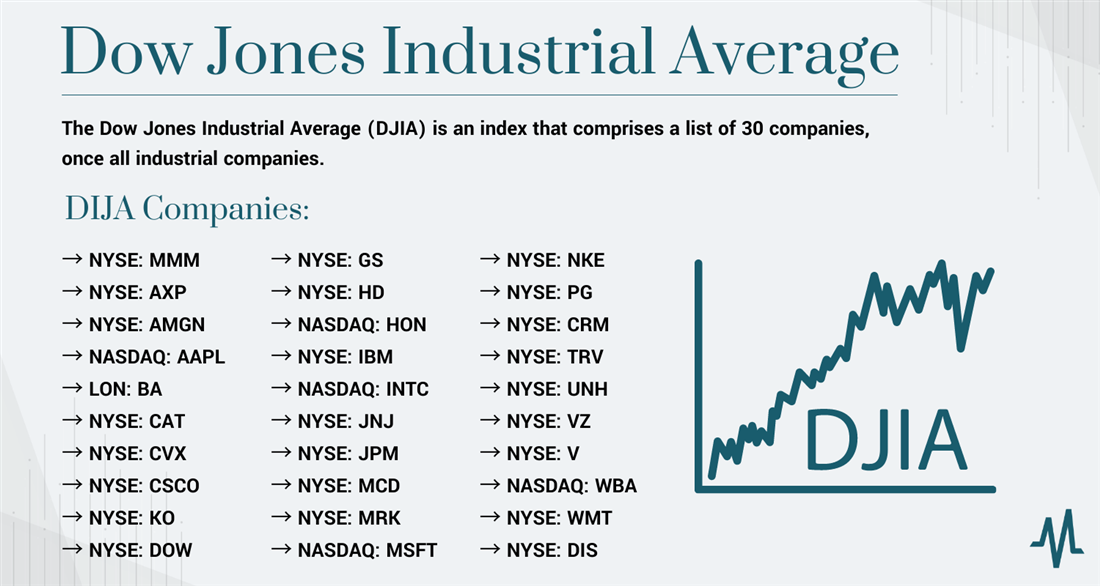
The Dow Jones Industrial Average consists of exactly 30 stocks. These are not just any companies; they are “blue-chip” firms, widely considered to be leaders in their respective industries with long-standing reputations for stability and profitability. While 30 might seem like a small sample size compared to the S&P 500 or the Nasdaq Composite, the Dow’s concentrated nature is a deliberate design choice that has persisted for decades.
Understanding the Structure and Selection of the 30 Stocks
The Dow is unique among major indices because of its narrow focus. While the S&P 500 offers a broad-market view and the Nasdaq tracks technology and growth, the Dow is intended to represent the “industrial” heart of the U.S. economy. However, the term “industrial” is largely vestigial. Today, the 30 stocks in the Dow span across healthcare, technology, financial services, consumer goods, and entertainment.
The Averages Committee and Selection Criteria
Unlike indices that use a purely quantitative approach based on market capitalization, the components of the Dow are selected by a committee. The Averages Committee, composed of representatives from S&P Dow Jones Indices and The Wall Street Journal, oversees the selection process. There are no rigid rules for inclusion, but the committee generally looks for companies that meet specific qualitative benchmarks:
-
Excellent Reputation: The company must be a household name with a history of sustainable growth.
-
Investor Interest: The stock must be widely followed and traded by both retail and institutional investors.
-
Sector Representation: The committee aims to maintain a balance that reflects the current state of the U.S. economy. For example, as the economy shifted from manufacturing to services and technology, the Dow’s composition shifted accordingly.
-
U.S. Incorporation: While these companies are global powerhouses, they must be incorporated and headquartered in the United States, with a significant portion of their revenue derived from domestic operations.
Why Only 30 Stocks?
The decision to limit the index to 30 stocks is rooted in history. When Charles Dow created the index in 1896, it contained only 12 companies. It expanded to 20 in 1916 and finally to 30 in 1928. In an era before computers, calculating a price-weighted average for hundreds of stocks would have been a logistical nightmare. Today, while the computational limits no longer exist, the number 30 remains a hallmark of the index. Proponents argue that 30 stocks are sufficient to provide a statistically significant snapshot of the market’s direction, while critics suggest it is too narrow to capture the volatility of the modern digital economy.
The Evolution of the Dow: From Smoke Stacks to Silicon
The history of the Dow is a history of American capitalism. In the early 20th century, the index was dominated by railroads, sugar, and oil. Names like American Cotton Oil and Distilling & Cattle Feeding Co. were the giants of their day. As the 20th century progressed, these were replaced by the titans of the industrial age: steel, automobiles, and chemicals.
The Exit of the “Originals”
One of the most significant moments in the Dow’s history occurred in 2018 when General Electric (GE) was removed from the index. GE was the last remaining member of the original 12 stocks from 1896. Its removal signaled a definitive end to the traditional industrial era and a pivot toward more modern sectors like healthcare and technology. This evolution ensures that the “30 stocks” remain relevant to the current investment landscape.
Recent Changes and Modern Titans
The committee frequently updates the components to ensure the index remains a “living” representation of the market. In recent years, we have seen the inclusion of companies like Amazon, which replaced Walgreens Boots Alliance to better reflect the dominance of e-commerce. Similarly, the addition of Salesforce and Apple reflects the shift from hardware-centric business models to software and services.
When a stock is added or removed, it is often a major news event in the financial world. Being added to the Dow is seen as a “seal of approval,” signifying that a company has reached the pinnacle of corporate success. Conversely, removal can signify a decline in industry relevance or a shift in the broader economic winds.
The Price-Weighted Mechanism: How the Index is Calculated
Perhaps the most misunderstood aspect of the Dow is how it is calculated. Unlike most modern indices that are “market-cap weighted” (where larger companies have more influence), the Dow is “price-weighted.” This means that stocks with higher share prices have a greater impact on the index’s daily movement than stocks with lower share prices, regardless of the company’s total valuation.
The Role of the Dow Divisor
If you simply added the prices of the 30 stocks and divided by 30, the index would be disrupted every time a company performed a stock split or paid a special dividend. To prevent this, the Dow uses a mathematical constant known as the “Dow Divisor.”
The Divisor is a number that is adjusted whenever a corporate action occurs. For example, if a Dow component stock splits 2-for-1, its price drops by half. Without an adjustment, the Dow would appear to “crash.” The Divisor is adjusted downward to ensure that the index value remains consistent before and after the split. As of recent years, the Divisor is a small fraction (less than 1), which means that a $1 move in any of the 30 stocks actually translates to several points of movement in the Dow total.
Critiques of Price-Weighting
The price-weighting methodology is often criticized by financial theorists. In a price-weighted index, a $100 stock that moves 1% has exactly the same impact as a $10 stock that moves 10%. Furthermore, a company with a massive market capitalization but a low share price (due to many shares outstanding) might have very little influence on the Dow. This quirk is why companies like Apple or Amazon often wait for specific share price ranges before being added, or why they might perform stock splits to remain compatible with the index’s structure.
Is the Dow Still Relevant for Modern Investors?
Given its narrow scope of 30 stocks and its unusual weighting system, many professional investors prefer the S&P 500 or the Total Stock Market Index for benchmarking their portfolios. However, the Dow remains incredibly relevant for several reasons.
A Barometer of Sentiment
The Dow stocks are among the most liquid and widely held securities in the world. When the Dow moves significantly, it reflects the sentiment of the world’s largest institutional investors. Because these 30 companies are so deeply integrated into the global economy, their collective performance serves as a leading indicator for consumer spending, industrial production, and corporate health.
Psychological Impact on Retail Investing
For the general public, “the market” is the Dow. When people discuss the market’s performance at the dinner table, they are usually referring to the Dow’s point total. This psychological weight makes it a self-fulfilling prophecy in some ways; if the Dow drops 1,000 points, it triggers a level of public concern that broader indices might not, potentially influencing consumer behavior and confidence.
Performance Comparison
Interestingly, despite its methodology differences, the Dow tends to track the S&P 500 fairly closely over long periods. While there are years of divergence—particularly when tech stocks are booming or crashing—the 30 blue-chip stocks in the Dow are usually enough to capture the general trend of the U.S. economy. For an investor focused on “quality” and “value,” the Dow often represents a lower-volatility alternative to more tech-heavy benchmarks.
How to Invest in the 30 Stocks of the Dow
For individual investors looking to capitalize on the stability of these 30 companies, there are several ways to gain exposure. You do not need to buy all 30 stocks individually, which would require significant capital and constant rebalancing.
Exchange-Traded Funds (ETFs)
The most popular way to track the Dow is through the SPDR Dow Jones Industrial Average ETF Trust, known by its ticker symbol DIA (often referred to as “Diamonds”). This ETF holds all 30 stocks in the same proportions as the index. It is highly liquid, offers a monthly dividend, and allows investors to trade the entire Dow as easily as a single stock.
Index Funds and Mutual Funds
Many brokerage firms offer index mutual funds that track the Dow. These are ideal for long-term investors who want to automate their contributions through a 401(k) or IRA. While ETFs are better for active trading, index funds are often preferred for their simplicity in “set it and forget it” strategies.

Direct Indexing
For high-net-worth individuals, direct indexing involves buying the underlying 30 stocks to allow for tax-loss harvesting. Since the Dow only has 30 components, this is much easier to manage than trying to replicate the S&P 500. This strategy allows investors to customize their holdings—for instance, by removing a specific Dow stock they may already have heavy exposure to through their employer.
In conclusion, while the number of stocks in the Dow—30—may seem small, the influence of these companies is massive. They represent the pillars of the American economy, and their collective performance continues to tell the story of global commerce. Whether you view it as a relic of the past or a vital tool for the present, understanding the 30 stocks of the Dow is an essential step in any investor’s journey toward financial literacy.
aViewFromTheCave is a participant in the Amazon Services LLC Associates Program, an affiliate advertising program designed to provide a means for sites to earn advertising fees by advertising and linking to Amazon.com. Amazon, the Amazon logo, AmazonSupply, and the AmazonSupply logo are trademarks of Amazon.com, Inc. or its affiliates. As an Amazon Associate we earn affiliate commissions from qualifying purchases.