
For decades, Intel was the undisputed gold standard of the semiconductor industry. It was a cornerstone of the “Wintel” duopoly that powered the personal computing revolution, a staple of the Dow Jones Industrial Average, and a blue-chip darling for value and income investors alike. However, the last few years have told a different story—one of missed opportunities, manufacturing delays, and a dramatic erosion of market capitalization. For investors and business analysts, the question of “what happened to Intel” is not just a technological inquiry, but a cautionary tale of capital allocation, competitive disruption, and the high cost of losing a leadership position in a capital-intensive industry.

The Erosion of Market Dominance and Revenue Streams
Intel’s primary struggle stems from the simultaneous decline of its core markets and its failure to capture new, high-growth segments. Historically, Intel’s financial engine was driven by its dominance in the Client Computing Group (PC chips) and the Data Center Group (server chips). At its peak, Intel enjoyed gross margins exceeding 60%, a figure that signaled massive pricing power and an insurmountable technological lead.
The Rise of Competitive Pressure
The most immediate blow to Intel’s bottom line came from its long-time rival, AMD. Under the leadership of Lisa Su, AMD utilized a “fabless” model, outsourcing its manufacturing to TSMC. This allowed AMD to leapfrog Intel in transistor density and power efficiency. As AMD’s Ryzen and EPYC processors gained market share, Intel was forced to compete on price, which initiated a painful contraction in gross margins. For the first time in twenty years, Intel was no longer the default choice for high-performance computing, leading to a steady migration of enterprise customers toward more efficient alternatives.
The Mobile and AI Missed Opportunities
From a strategic finance perspective, Intel’s most expensive mistakes were the markets it failed to enter. The company famously passed on producing the chip for the original iPhone, a decision that essentially locked them out of the mobile revolution. While companies like Qualcomm and Apple flourished by designing ARM-based architectures, Intel’s attempts to force its x86 architecture into smartphones resulted in billions of dollars in “contra-revenue” subsidies that ultimately failed.
More recently, the explosion of Generative AI has highlighted a massive gap in Intel’s portfolio. While NVIDIA’s market cap soared into the trillions on the back of its H100 GPUs, Intel found itself scrambling to catch up. The shift in data center spending from general-purpose CPUs (Intel’s bread and butter) to specialized AI accelerators (NVIDIA’s domain) has resulted in “budget cannibalization,” where cloud service providers divert their capital expenditures away from Intel products to fund AI infrastructure.
The Manufacturing Bottleneck and the Capital Expenditure Trap
The semiconductor industry is notoriously capital-intensive, requiring tens of billions of dollars in research and development and physical infrastructure. Intel’s unique “Integrated Device Manufacturing” (IDM) model—where it both designs and manufactures its own chips—was once its greatest competitive advantage. Today, that same model has become a financial burden.
The Failure of the 10nm and 7nm Nodes
Intel’s financial woes are inextricably linked to its manufacturing delays. The company’s transition to the 10nm and 7nm (now branded as Intel 4) nodes was plagued by years of setbacks. In the semiconductor world, a delay in manufacturing is not just a technical hiccup; it is a financial catastrophe. Each delay meant that Intel’s products were less power-efficient and more expensive to produce than those of competitors using TSMC’s cutting-edge processes.
This technological stagnation led to a “yield” problem. In semiconductor manufacturing, the percentage of functioning chips per wafer determines the profitability of a product line. Low yields meant Intel was essentially throwing away billions of dollars in silicon, further compressing its margins and making it difficult to justify its massive overhead.
The “IDM 2.0” Strategy and Foundry Ambitions
Under CEO Pat Gelsinger, Intel has pivoted to a strategy known as IDM 2.0. This involves opening up Intel’s factories to produce chips for other companies, effectively competing with TSMC as a “foundry.” While this is a logical long-term move to increase factory utilization, it requires an unprecedented amount of capital.
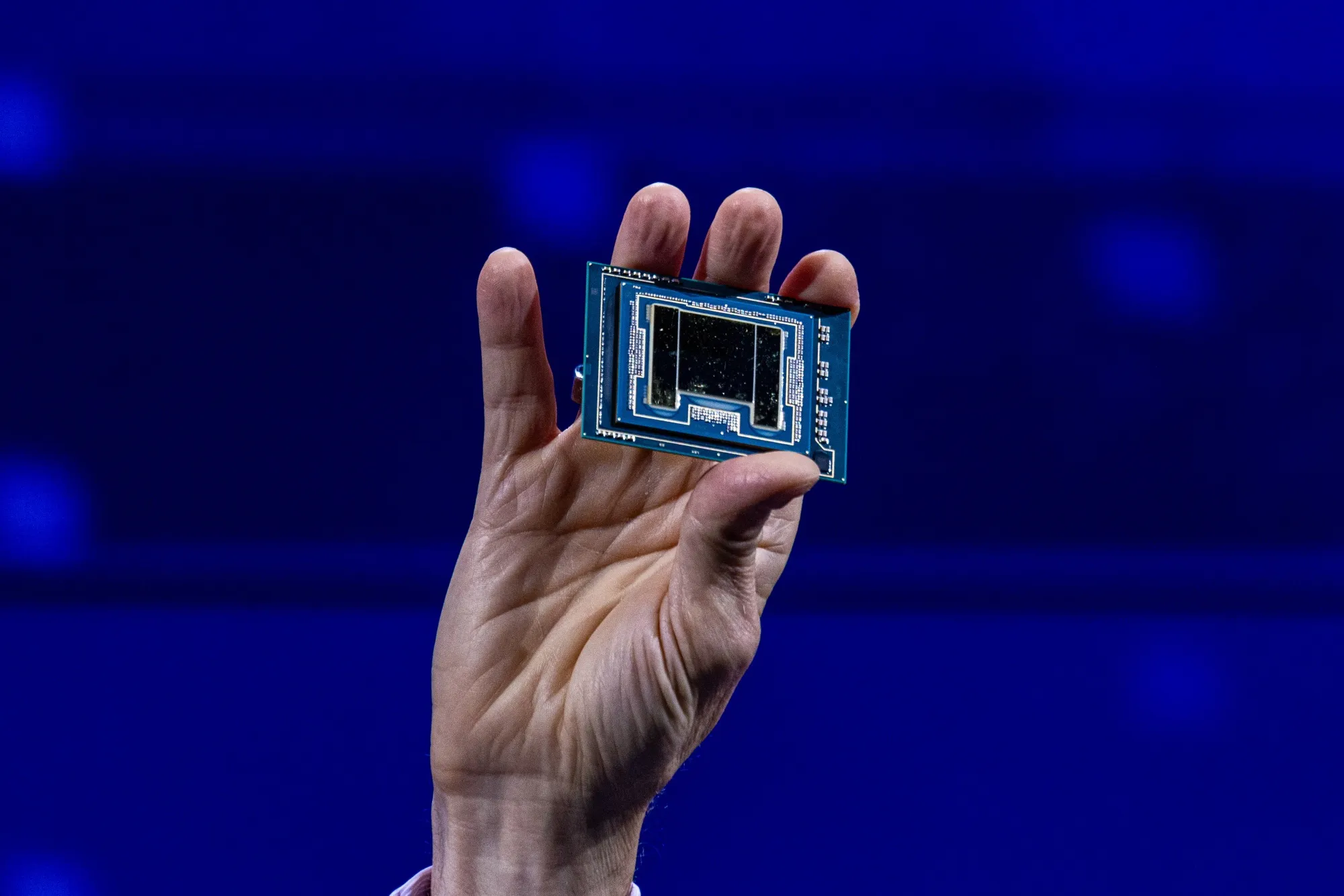
Intel is currently in the middle of a massive building cycle, constructing new “fabs” in Ohio, Arizona, and Germany. The price tag for these facilities is staggering, often exceeding $20 billion per site. For investors, this creates a “J-curve” problem: Intel must spend massive amounts of cash today in the hope of generating revenue five to ten years from now. This has turned Intel from a cash-flow machine into a company that is burning through reserves, necessitating government subsidies and creative financing partnerships with firms like Apollo Global Management and Brookfield Infrastructure Partners.
Financial Red Flags: Dividends, Cash Flow, and Stock Performance
For many years, Intel was a “widows and orphans” stock—a safe, dividend-paying investment that provided steady returns. That thesis has completely shattered. The financial metrics of the last twenty-four months reveal a company in a state of deep restructuring, struggling to maintain its investment-grade status.
The Dividend Suspension and Investor Exodus
One of the most significant turning points in Intel’s recent history was the decision to first slash and then eventually suspend its dividend. For a company that had consistently paid and raised its dividend for decades, this was a clear admission of financial distress. The suspension was necessary to preserve cash for the aforementioned “fab” build-outs, but it led to a massive sell-off by institutional investors and income-focused funds. Without a dividend to floor the stock price, Intel’s valuation became untethered, dropping to levels not seen in over a decade.
Operating Losses and the 15% Workforce Reduction
In 2024, Intel reported significant operating losses, particularly within its Intel Foundry division. The company’s financial reports revealed that the foundry business was losing billions as it scaled up. To mitigate these losses, Intel announced a drastic cost-cutting plan, including the layoff of approximately 15,000 employees—roughly 15% of its workforce.
From a business finance perspective, these cuts are a double-edged sword. While they help stabilize the balance sheet in the short term, they risk hollowing out the very engineering talent needed to reclaim the “Process Leadership” crown. Intel’s R&D spending must remain high to catch up to TSMC, yet its falling revenue makes sustaining that spend difficult. This is the “Innovation Trap”: needing to spend more precisely when you are earning less.
The Path Forward: Can the Turnaround Be Monetized?
Despite the current gloom, Intel is not a spent force. The company remains a critical asset for Western economic and national security. The path to a financial recovery lies in three specific areas: the CHIPS Act, the 18A process node, and the separation of its business units.
The Role of Government Subsidies
Intel is the primary beneficiary of the U.S. CHIPS and Science Act, receiving billions in direct grants and loans. This government support is a vital “cushion” that allows Intel to continue its capital expenditures despite poor quarterly earnings. For investors, the CHIPS Act represents a de-risking of Intel’s domestic manufacturing expansion. However, subsidies alone cannot fix a broken business model; they only provide the runway for the company to fix itself.
The “18A” Make-or-Break Moment
Intel’s financial future hinges almost entirely on its “18A” manufacturing node, scheduled for high-volume production in 2025. If 18A succeeds, Intel will have regained parity with TSMC. This would allow Intel to win back high-margin server contracts and attract external foundry customers like Microsoft or Amazon. If 18A fails or is significantly delayed, Intel may be forced to consider more radical options, such as a full spin-off of its manufacturing arm or a significant sale of its internal assets (like its stake in Altera or Mobileye).

Rebuilding Shareholder Value
To regain its status as a viable investment, Intel must prove it can generate free cash flow in a post-PC, AI-centric world. The company is moving toward a model where its product design teams and its manufacturing teams operate as separate financial entities. This transparency is intended to force efficiency and allow the “Foundry” side to eventually compete for business on the open market.
In conclusion, “what happened to Intel” is a result of a multi-year lag in manufacturing innovation combined with a massive shift in how the world consumes computing power. The company is currently in the most precarious financial position of its fifty-year history. While the roadmap for a recovery exists, it requires a perfect execution of its manufacturing goals and a disciplined management of its strained balance sheet. For the modern investor, Intel is no longer a safe-haven dividend stock; it is a high-stakes turnaround play on the future of American manufacturing.
aViewFromTheCave is a participant in the Amazon Services LLC Associates Program, an affiliate advertising program designed to provide a means for sites to earn advertising fees by advertising and linking to Amazon.com. Amazon, the Amazon logo, AmazonSupply, and the AmazonSupply logo are trademarks of Amazon.com, Inc. or its affiliates. As an Amazon Associate we earn affiliate commissions from qualifying purchases.