
In the modern financial landscape, characterized by instant transactions, subscription models, and the constant lure of consumerism, the concept of a budget is often misunderstood. For many, the word “budget” evokes a sense of restriction, deprivation, and tedious mathematical record-keeping. However, in the world of personal and business finance, a budget is anything but restrictive. It is, in fact, the ultimate tool for liberation. A budget is not a set of handcuffs; it is a roadmap that provides the clarity, control, and confidence necessary to navigate toward long-term wealth and stability.
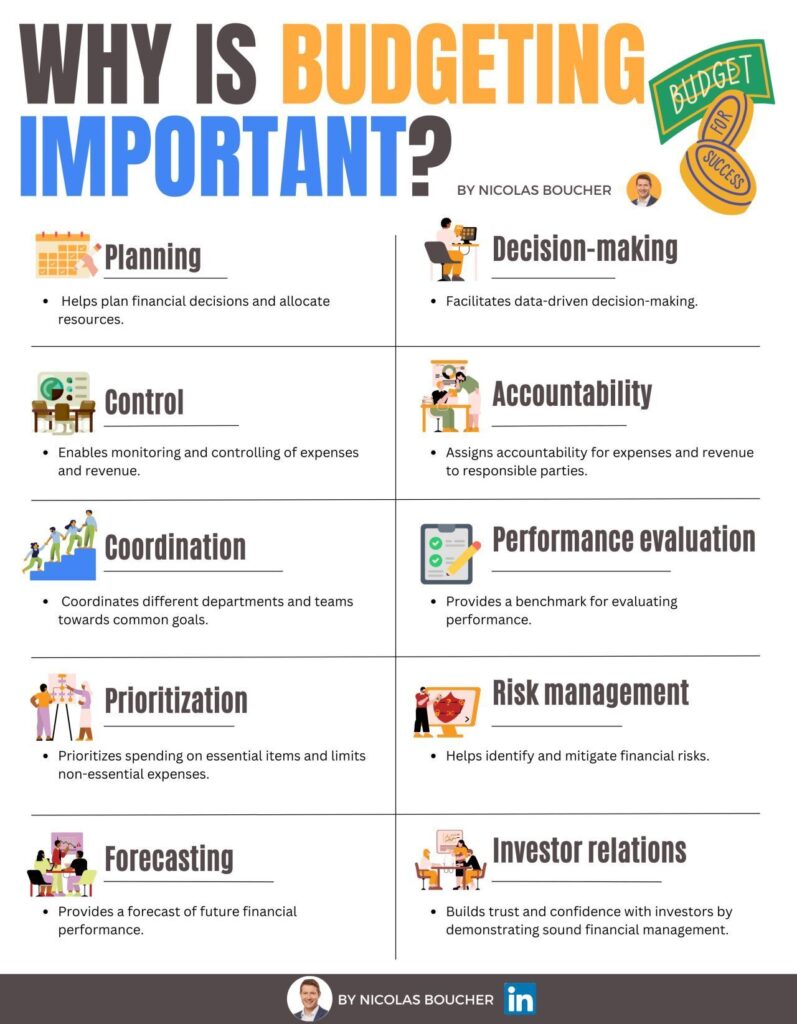
Understanding why a budget is important requires a shift in perspective. It is the practice of intentionality applied to one’s resources. Without a structured plan, even a high income can evaporate into a series of invisible leaks—small, recurring expenses and impulsive decisions that aggregate into missed opportunities. By establishing a budget, individuals and entrepreneurs transform from passive observers of their bank accounts into active architects of their financial futures.
The Psychological Shift: From Reactive Spending to Proactive Directing
The most immediate benefit of a budget is the psychological peace it provides. Most financial stress stems from uncertainty. When you do not know exactly where your money is going, every unexpected bill or market fluctuation feels like a potential catastrophe. A budget eliminates this ambiguity by creating a comprehensive overview of your financial health.
Overcoming the Restrictive Mindset
The primary reason people avoid budgeting is the fear of being told “no.” They view a budget as a barrier to enjoying their hard-earned money. In reality, a budget is a permission slip. When you allocate a specific amount for entertainment, dining out, or hobbies, you can spend that money without the nagging guilt that often accompanies unplanned purchases. You are no longer wondering if you can afford a luxury; you know exactly how it fits into the broader context of your financial goals. This shift from “I can’t afford this” to “This is not in my plan for this month” is a powerful psychological tool that fosters discipline and reduces impulse-driven regret.
Intentionality in Every Dollar
Budgeting forces a confrontation with personal values. Every dollar you spend is a vote for the kind of life you want to lead. When you track your expenses, you may find that you are spending hundreds of dollars a month on services you rarely use, while your savings for a dream home remain stagnant. A budget highlights these misalignments. It allows you to redirect funds toward the things that truly matter—whether that is early retirement, traveling, or investing in a new business venture. This intentionality is the cornerstone of building a life of purpose rather than one of financial reaction.
Strategic Resource Allocation and Debt Management
Beyond the psychological benefits, a budget serves as a strategic manual for managing debt and building a safety net. In an era where consumer debt is at record highs, a budget is the only reliable weapon for reclaiming one’s income from creditors.
Prioritizing High-Interest Liabilities
Debt is the greatest thief of future wealth. High-interest credit cards and personal loans can trap individuals in a cycle where they are paying for their past at the expense of their future. A budget allows for the implementation of systematic debt-reduction strategies, such as the “Debt Snowball” or “Debt Avalanche” methods. By identifying exactly how much surplus income is available each month, you can aggressively target high-interest balances. Without a budget, extra cash is often absorbed by lifestyle creep; with a budget, that cash is weaponized to eliminate interest payments and free up cash flow for investing.
Building an Emergency Buffer
One of the most critical functions of a budget is the creation of an emergency fund. Life is inherently unpredictable—medical emergencies, car repairs, or sudden job losses are not a matter of “if” but “when.” A budget ensures that a portion of every paycheck is dedicated to a liquidity reserve. Financial experts generally recommend three to six months of living expenses. Having this buffer changes your relationship with risk. It provides the security to make bold career moves or investment decisions because you are not living one paycheck away from insolvency. The peace of mind that comes from knowing you are prepared for a crisis is perhaps the most valuable dividend a budget pays.
Bridging the Gap Between Income and Long-Term Wealth

There is a common misconception that budgeting is only for those who are struggling financially. On the contrary, the wealthiest individuals and most successful corporations are the most diligent budgeters. They understand that wealth is not built solely on what you earn, but on what you keep and how you grow it.
Automating Your Savings and Investments
A budget provides the framework for automation. Once you have identified your necessary expenses and your financial goals, you can set up automatic transfers to savings, brokerage accounts, and retirement funds. This “pay yourself first” mentality is the most effective way to build wealth. By treating your savings as a non-negotiable bill that must be paid every month, you ensure that your future self is prioritized. Budgeting allows you to determine the exact percentage of your income that can be safely funneled into assets that appreciate over time, such as stocks, real estate, or retirement accounts.
Capitalizing on Compound Interest
The importance of a budget is magnified when you consider the power of compound interest. Even small amounts of money, when invested consistently over decades, can grow into significant sums. However, consistency is the key. A budget provides the structure necessary to maintain that consistency. By trimming unnecessary expenses—often referred to as “the latte factor” or “subscription rot”—and redirecting those funds into the market, a budgeter can potentially add hundreds of thousands of dollars to their net worth over a lifetime. It is the tool that transforms modest earners into millionaires through the discipline of long-term planning.
Enhancing Business Viability and Side Hustle Growth
For entrepreneurs, freelancers, and those involved in the gig economy, a budget is the difference between a hobby and a sustainable business. Business finance requires an even higher level of scrutiny than personal finance because the stakes involve payroll, taxes, and scalability.
Managing Cash Flow in the Gig Economy
Incomes for those with side hustles or freelance careers are often volatile. Some months bring a windfall, while others are lean. A budget acts as a stabilizer. By calculating an “average” monthly income and budgeting based on a conservative estimate, entrepreneurs can avoid the trap of overspending during high-revenue months. Furthermore, a budget ensures that a portion of every payment is set aside for taxes, preventing a common pitfall where business owners find themselves owing thousands to the government with no liquid cash to cover the bill.
Scalability Through Financial Oversight
Every successful business needs to understand its “burn rate” and its “return on investment” (ROI). A budget allows a business owner to see which expenses are generating revenue and which are simply overhead. This clarity is essential for scaling. If you know that every dollar spent on a specific marketing channel yields three dollars in profit, your budget tells you exactly where to reinvest your capital. Without this financial oversight, growth is based on guesswork, which is a high-risk strategy that often leads to business failure.
Leveraging Modern Tools for Financial Clarity
The methodology of budgeting has evolved significantly from the days of pen-and-paper ledgers. Today, a variety of financial tools and philosophies exist to make the process more efficient and data-driven.
The Role of Fintech in Modern Budgeting
We are currently in a golden age of financial technology (Fintech). Apps and software can now link directly to bank accounts, categorize spending automatically, and provide real-time visualizations of financial progress. Whether it is a zero-based budgeting app that requires every dollar to have a “job,” or a simple tracking tool that monitors net worth, these technologies lower the barrier to entry for budgeting. They provide the data needed to make informed decisions without the manual labor that once made budgeting a chore.

Data-Driven Decision Making
A budget provides a historical record of your financial behavior. Over time, this data becomes an invaluable resource. You can look back at the previous year to identify trends, such as seasonal spending spikes or areas where costs have consistently risen. This historical perspective allows for more accurate forecasting. It enables you to plan for the future with a level of precision that is impossible without a recorded budget. Whether you are planning a wedding, buying a home, or launching a startup, having a budget based on historical data ensures that your projections are grounded in reality.
In conclusion, the importance of a budget cannot be overstated. It is the foundational practice upon which all financial success is built. It offers psychological security, facilitates debt repayment, enables wealth creation, and provides the necessary oversight for business growth. By taking control of your resources through a budget, you stop wondering where your money went and start telling it where to go. It is the definitive blueprint for achieving financial freedom and ensuring that your money serves your life’s greatest ambitions.
aViewFromTheCave is a participant in the Amazon Services LLC Associates Program, an affiliate advertising program designed to provide a means for sites to earn advertising fees by advertising and linking to Amazon.com. Amazon, the Amazon logo, AmazonSupply, and the AmazonSupply logo are trademarks of Amazon.com, Inc. or its affiliates. As an Amazon Associate we earn affiliate commissions from qualifying purchases.