
Budgeting is often perceived as a practice of restriction—a financial straitjacket designed to prevent you from enjoying your hard-earned money. In reality, the opposite is true. A budget is a strategic roadmap that grants you permission to spend while ensuring your long-term financial goals are met. It is the process of prioritizing your values over your impulses. When you ask, “How do you do a budget?” you are essentially asking how to take control of your future.
Effective budgeting is not a one-size-fits-all endeavor. It requires a blend of psychological awareness, mathematical accuracy, and consistent discipline. Whether you are looking to climb out of debt, save for a down payment on a home, or invest for early retirement, the mechanics of budgeting remain the foundational pillar of wealth creation.
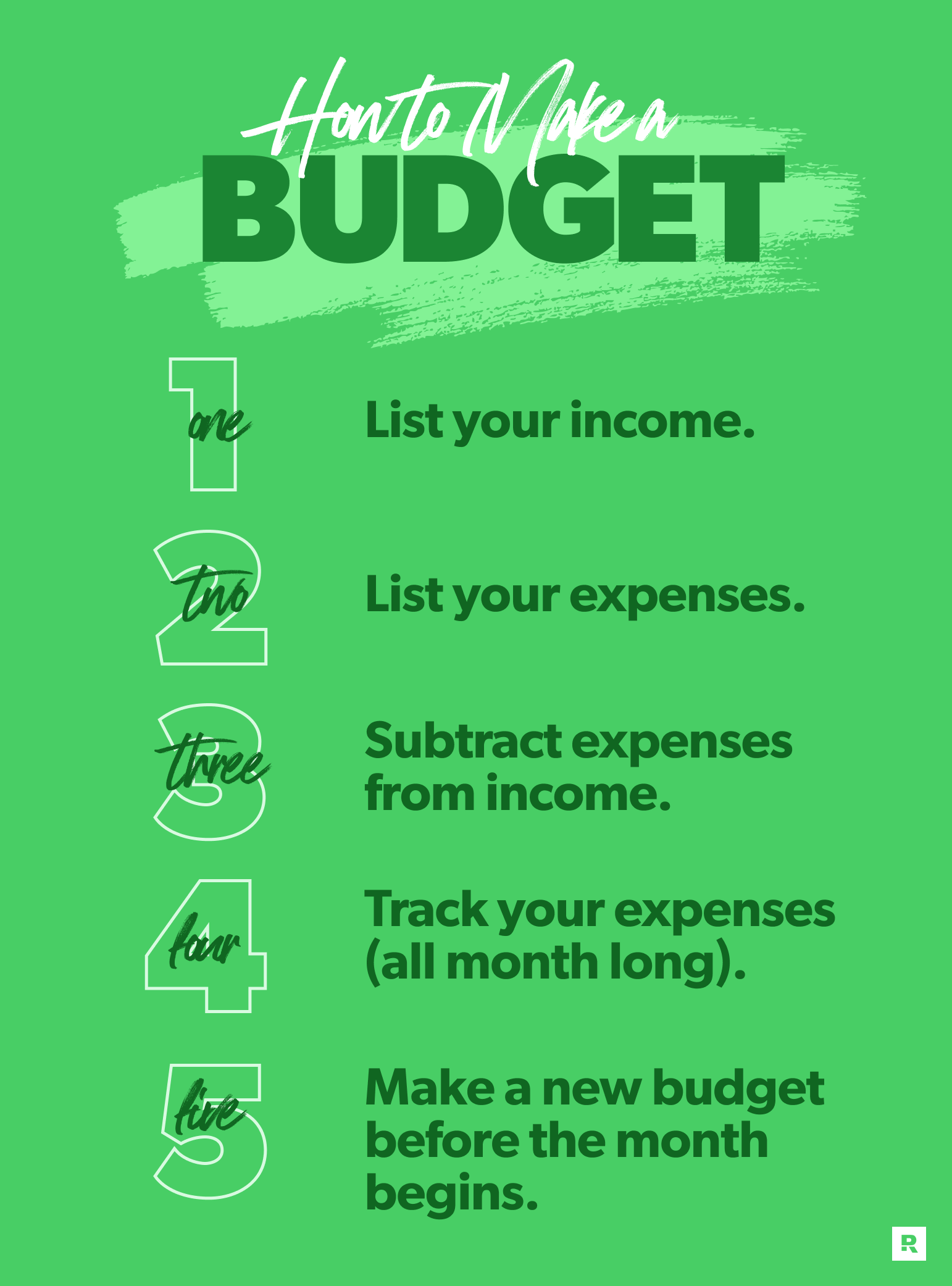
The Foundation: Understanding the “Why” and the “How” of Cash Flow
Before diving into spreadsheets and apps, it is critical to understand the underlying philosophy of cash flow management. Budgeting is the act of reconciling your current reality with your future aspirations.
The Psychology of Money Management
Most financial failures are not the result of poor math, but rather a lack of emotional alignment. To build a sustainable budget, you must identify your financial “North Star.” Are you motivated by security, freedom, or the ability to provide for others? When you view a budget as a tool for liberation rather than a set of rules, you are far more likely to stick with it. This psychological shift moves you from reactive spending—where you wonder where your money went—to proactive allocation, where you tell your money where to go.
Auditing Your Financial Starting Point
You cannot map a route to a destination if you do not know your current coordinates. The first practical step in budgeting is a comprehensive audit of the last three to six months of spending. This involves gathering bank statements, credit card bills, and digital payment receipts.
During this audit, look for “phantom expenses”—the subscriptions you forgot to cancel, the excessive convenience fees, and the small, daily purchases that aggregate into significant monthly outflows. Categorizing these historical expenses provides a realistic baseline for what your life actually costs, which is often very different from what you imagine it costs.
Choosing Your Framework: Popular Budgeting Methods
There is no single “correct” way to budget. The best method is the one that aligns with your personality and financial complexity. Here are the most effective frameworks used by financial professionals and successful savers.
The 50/30/20 Rule
Popularized by Senator Elizabeth Warren, the 50/30/20 rule is an excellent starting point for those who prefer simplicity over granular tracking. Under this model, your after-tax income is divided into three buckets:
-
50% for Needs: This covers essential living expenses such as housing, utilities, groceries, insurance, and minimum debt payments.
-
30% for Wants: This is your lifestyle fund. It includes dining out, travel, hobbies, and streaming services.
-
20% for Financial Goals: This portion is strictly for debt overpayments, emergency fund contributions, and retirement investments.
The beauty of this system is its flexibility. It forces a cap on lifestyle spending while ensuring that savings are prioritized.
Zero-Based Budgeting
Zero-based budgeting is the gold standard for those who want absolute control. The core principle is simple: Income minus Expenses equals Zero. Every single dollar you earn is assigned a specific job before the month begins. If you have $5,000 in monthly income, you allocate every cent until $0 remains.
This does not mean you spend all your money; rather, it means that “Savings” or “Investment” are treated as line-item expenses. This method eliminates “leakage”—that mysterious $200 that usually disappears from your checking account by the end of the month. It is highly effective for high-earners who find themselves “broke” despite a large salary.
The “Pay Yourself First” Method
Also known as reverse budgeting, this strategy prioritizes your future self above all else. Instead of calculating what is left over at the end of the month to save, you decide on a savings goal first (e.g., $1,000 a month). As soon as your paycheck hits your account, that $1,000 is moved to a brokerage or savings account. You then live on whatever remains. This method is ideal for disciplined individuals who find traditional tracking too tedious but want to guarantee wealth accumulation.
The Envelope System and Digital Cash Stuffing
For those who struggle with overspending in specific categories like groceries or entertainment, the envelope system is a tactile solution. You withdraw cash for these categories and place it in physical envelopes. Once the envelope is empty, spending in that category stops for the month. In the modern era, many use “digital envelopes” through banking apps that allow you to create sub-accounts for specific purposes, providing the same psychological barrier without the need for physical cash.
Step-by-Step: Building and Executing Your Budget

Once you have selected a framework, it is time to build the actual budget. This process requires precision and an honest assessment of your lifestyle.
Categorizing Spending: Fixed vs. Variable
A successful budget distinguishes between fixed and variable costs. Fixed costs are predictable and recurring, such as rent, car payments, and gym memberships. Variable costs fluctuate, such as utility bills, gas, and groceries.
When building your budget, always over-estimate your variable costs slightly. If you usually spend $400 on groceries, budget $450. This creates a “buffer” that prevents a slightly more expensive week from deailing your entire financial plan.
Factoring in Sinking Funds
One of the most common reasons budgets fail is the “unexpected” expense that was actually predictable. These are not emergencies; they are irregular expenses. Examples include annual car registration, holiday gifts, quarterly insurance premiums, or home maintenance.
To handle these, you use “sinking funds.” Calculate the total annual cost of these items, divide by 12, and include that amount as a monthly “expense” in your budget. By saving $50 a month for “Car Maintenance,” you will have $600 ready when you eventually need new tires, preventing you from reaching for a credit card.
The Role of the Emergency Fund
A budget cannot survive without an emergency fund. This is a liquid cash reserve—typically three to six months of essential living expenses—held in a high-yield savings account. The emergency fund acts as the “insurance policy” for your budget. When the water heater breaks or a medical bill arrives, you use the emergency fund rather than disrupting your monthly budget or retirement contributions.
Optimizing Your Cash Flow: Tools and Automation
In the digital age, manual tracking is rarely the most efficient way to manage money. Leveraging technology can reduce friction and increase the likelihood of long-term success.
Tracking Apps vs. Professional Spreadsheets
The choice of tool often depends on your level of desired engagement.
-
Budgeting Software: Platforms like YNAB (You Need A Budget) or Empower offer real-time syncing with bank accounts. They categorize transactions automatically and provide visual data on your spending habits. These are excellent for those who want a high-level view with minimal manual entry.
-
Custom Spreadsheets: For the data-driven individual, a custom Excel or Google Sheets template offers unparalleled flexibility. Spreadsheets allow you to run “what-if” scenarios, such as calculating how much sooner you could retire if you increased your savings rate by 5%.
The Power of Automation
Decision fatigue is the enemy of financial discipline. The most successful budgeters automate as many decisions as possible. This includes:
-
Direct Deposit: Splitting your paycheck so a portion goes directly into a savings account before it ever touches your checking account.
-
Automated Bill Pay: Ensuring fixed expenses are paid on time to avoid late fees and protect your credit score.
-
Recurring Contributions: Setting up automatic transfers to IRA or 401(k) accounts.
By automating the “must-dos,” you leave your limited willpower for the “want-tos,” such as deciding whether to buy a new pair of shoes or go out to dinner.
Maintaining the Momentum: Adjusting for Life
A budget is a living document, not a static monument. As your life changes—through career advancements, marriage, children, or relocation—your budget must evolve accordingly.
Dealing with Variable Income
Budgeting is significantly more challenging for freelancers, contractors, or those with commission-based pay. The solution is the “Hill and Valley” method. During “Hill” months (high income), you live on a base salary and park the surplus in a separate “Business Buffer” account. During “Valley” months (low income), you draw from that buffer to pay yourself the same base salary. This stabilizes your personal budget regardless of business fluctuations.
Managing Lifestyle Creep
As your income increases, there is a natural tendency to increase your standard of living—a phenomenon known as lifestyle creep. While it is appropriate to enjoy the fruits of your labor, the key to building wealth is to ensure your savings rate increases at a faster pace than your spending. If you receive a $500 monthly raise, consider allocating $350 to investments and $150 to lifestyle improvements.
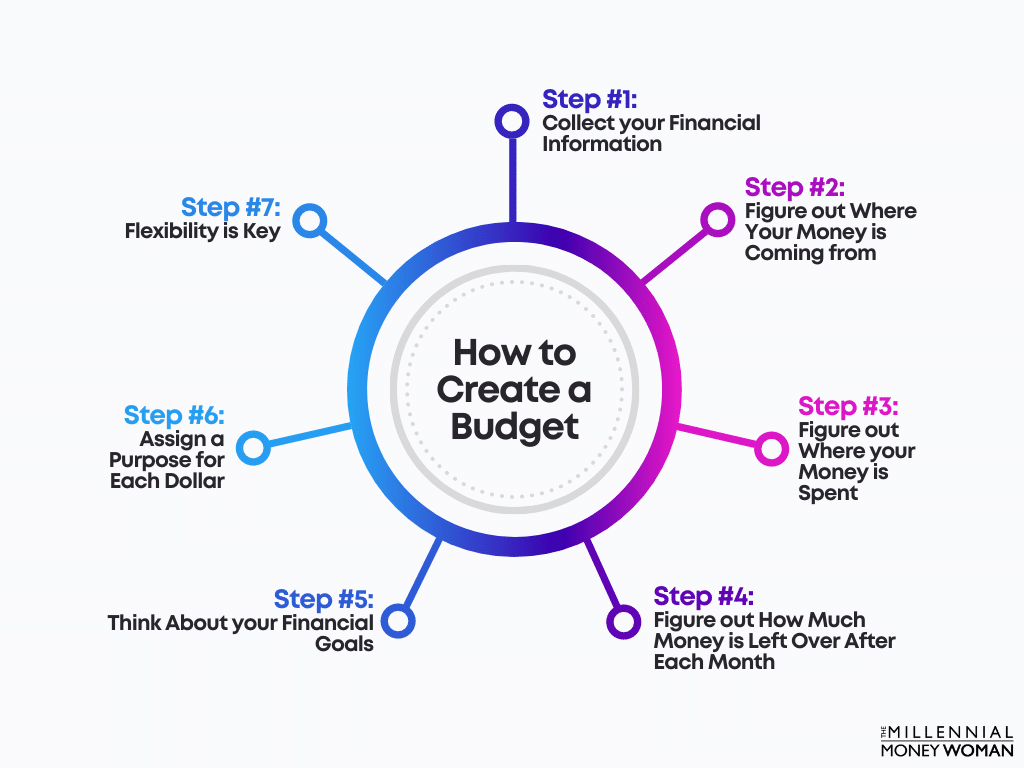
The Monthly Review
Set a recurring “money date” once a month to review your progress. Compare your actual spending against your budgeted amounts. If you consistently overspend in one area, don’t beat yourself up; instead, adjust the budget to be more realistic. The goal is not perfection, but progress.
By mastering the art of budgeting, you move from a state of financial stress to a state of financial agency. You stop being a passenger in your financial life and start being the pilot. How you do a budget is ultimately how you design your life—one intentional dollar at a time.
aViewFromTheCave is a participant in the Amazon Services LLC Associates Program, an affiliate advertising program designed to provide a means for sites to earn advertising fees by advertising and linking to Amazon.com. Amazon, the Amazon logo, AmazonSupply, and the AmazonSupply logo are trademarks of Amazon.com, Inc. or its affiliates. As an Amazon Associate we earn affiliate commissions from qualifying purchases.