
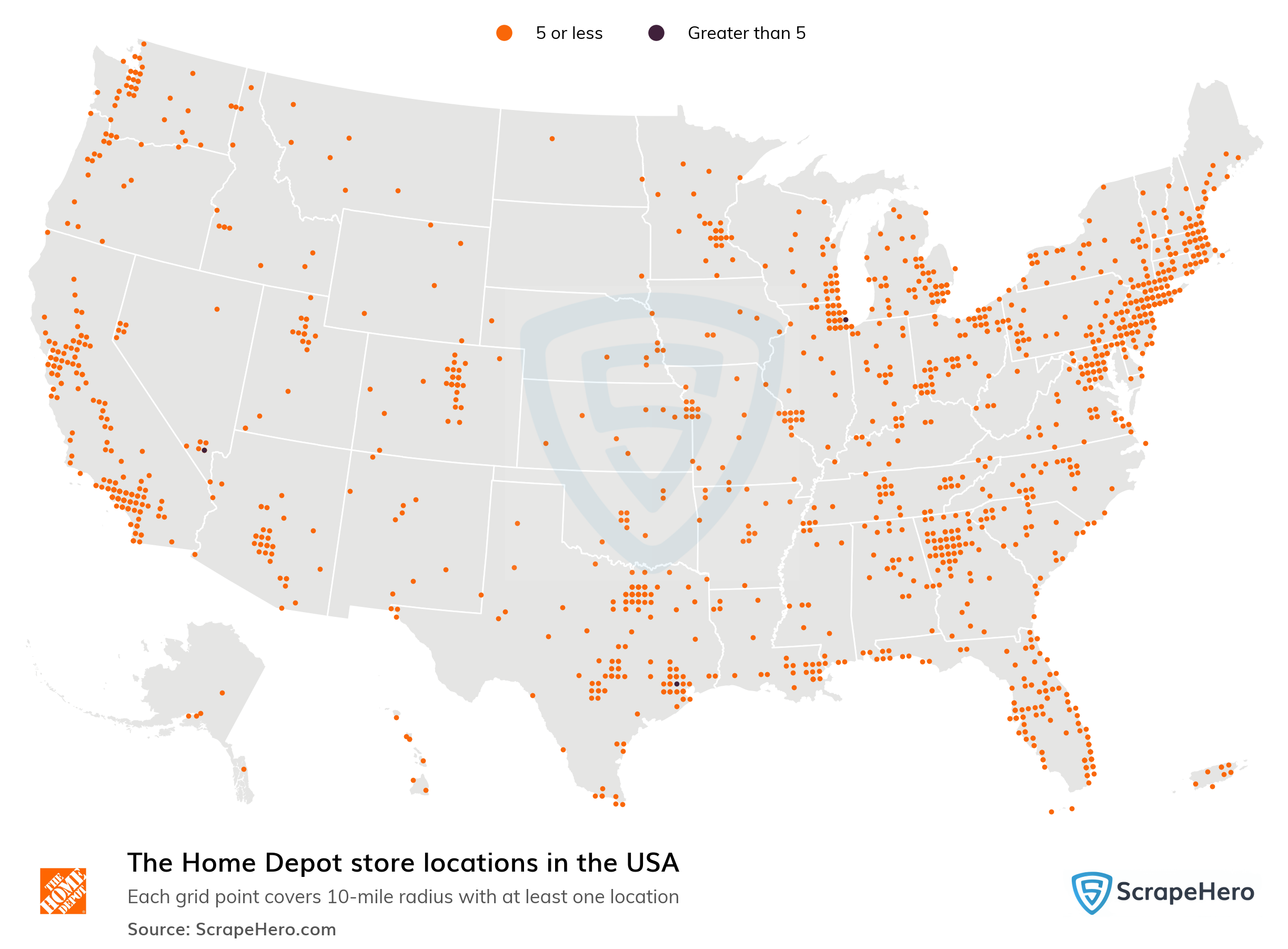
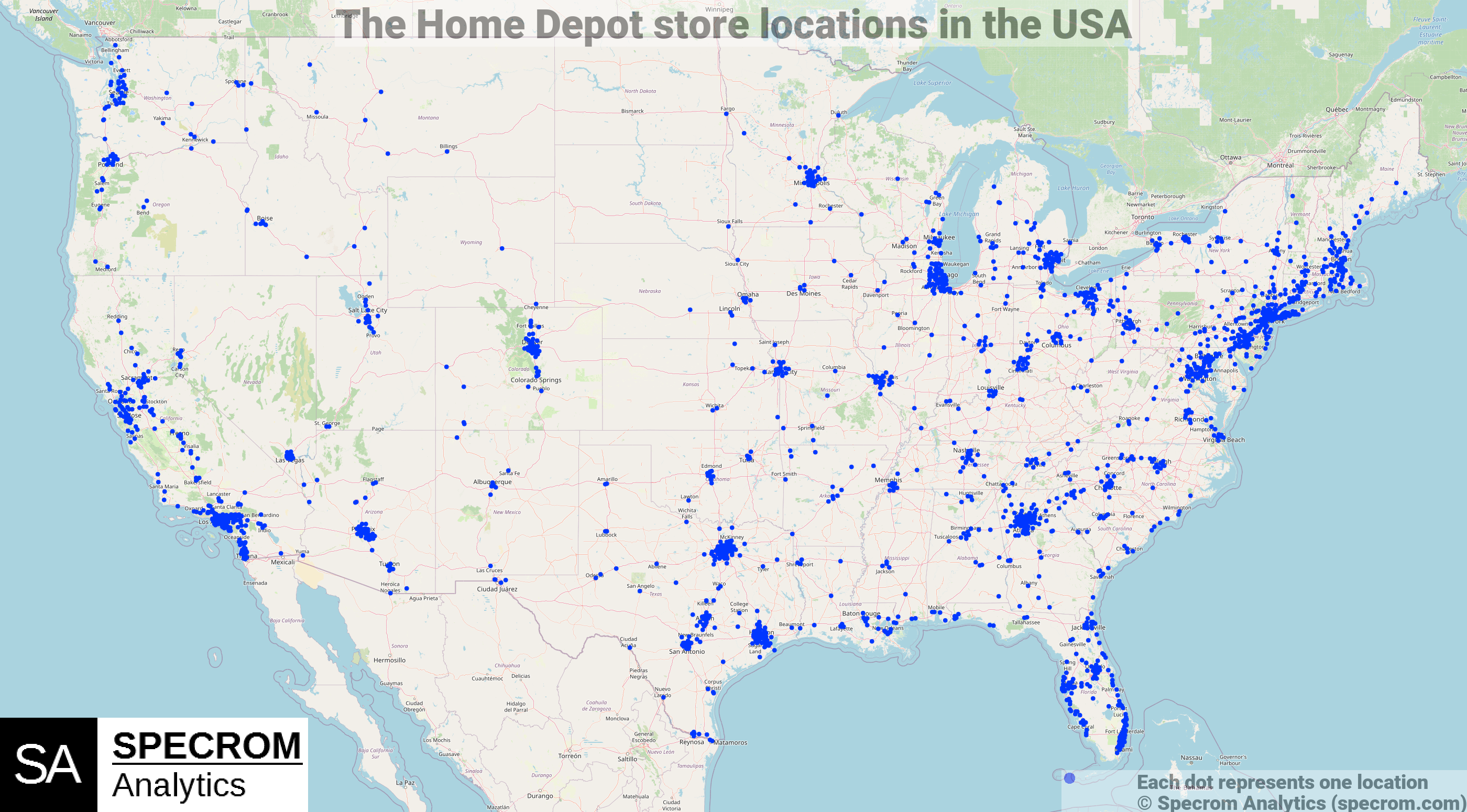
As of the most recent fiscal reporting cycles, The Home Depot operates approximately 2,015 stores across the United States, including the District of Columbia, Guam, Puerto Rico, and the U.S. Virgin Islands. When accounting for its total North American footprint, which includes operations in Canada and Mexico, that number climbs to over 2,335 locations. However, for investors, market analysts, and business strategists, the sheer number of storefronts is only the surface of a much deeper financial narrative.
The Home Depot is not merely a hardware store; it is a massive real estate and logistics engine that serves as a bellwether for the American economy. Its store count represents a calculated saturation of the most lucrative markets in the country, reflecting a sophisticated approach to capital allocation and market dominance.
The Financial Footprint: Analyzing Home Depot’s Retail Dominance
To understand the weight of 2,015 U.S. locations, one must look at the revenue generated per square foot—a critical metric in the retail sector. Home Depot consistently outperforms almost every other big-box retailer in this category. With annual revenues exceeding $150 billion, the average store generates significantly more than its competitors, proving that the company prioritizes location quality and operational efficiency over a strategy of uncontrolled expansion.
Market Share and Revenue per Square Foot
Home Depot’s strategy has shifted over the last decade from rapid physical expansion to optimizing its existing footprint. By focusing on “sales per square foot,” the company has managed to increase its profitability without needing to double its store count. In a typical fiscal year, Home Depot averages over $600 per square foot, a figure that is the envy of the retail world. This efficiency is driven by a high-inventory-turnover model and a strategic focus on high-ticket items that appeal to both homeowners and professional contractors.
Capital Expenditure and Real Estate Valuation
The 2,015 stores in the U.S. represent a massive asset on the corporate balance sheet. Unlike many modern retailers that lease their spaces to remain “asset-light,” Home Depot owns roughly 90% of its locations. This ownership provides a significant hedge against inflation and rising commercial rent prices. From a business finance perspective, this real estate portfolio acts as a foundational pillar of the company’s enterprise value, allowing for more favorable financing terms and providing a tangible asset base that supports its multi-billion dollar valuation.
Geographic Strategy: Why Location Matters for the Bottom Line
The distribution of Home Depot’s 2,000+ stores is not accidental. The company utilizes advanced demographic data and predictive analytics to place stores in high-growth corridors. Their geographic strategy is intricately tied to the U.S. housing market; where home values are rising and the housing stock is aging, Home Depot is present.
Urban vs. Suburban ROI
The financial return on investment (ROI) for a Home Depot location varies significantly between urban “high-density” models and traditional suburban “orange boxes.” In recent years, the company has experimented with smaller-format stores in urban centers like Manhattan, where the cost of real estate is astronomical but the foot traffic and “small project” volume justify the expenditure. Conversely, the suburban stores serve as the primary hubs for the “Pro” customer, offering the necessary space for lumber yards and large-scale inventory that drive the company’s highest-margin transactions.
The “Pro” Customer vs. DIYers: Financial Implications
One of the most important aspects of Home Depot’s store count is how these locations serve the “Pro” segment—professional contractors, renovators, and property managers. While Pros make up only about 5% of the total customer base, they account for nearly 45% of the company’s total revenue. The physical stores are designed as fulfillment centers for these professionals. By placing stores within a specific radius of major construction hubs, Home Depot ensures that they are the primary supplier for recurring, high-volume business, which offers a much more stable revenue stream than the seasonal fluctuations of the casual Do-It-Yourself (DIY) shopper.
Growth Beyond Brick-and-Mortar: The Interconnected Retail Model

The question “how many Home Depots are in the US” is increasingly becoming a question of “how many Home Depot nodes exist in the digital supply chain?” The company has spent billions on its “One Home Depot” strategy, which aims to blur the lines between physical and digital retail.
Digital Integration and E-commerce Revenue
Today, nearly half of all online orders from Home Depot are picked up in a physical store. This means the 2,015 locations serve a dual purpose: they are retail showrooms and decentralized fulfillment centers. This “click-and-collect” model is a financial masterstroke; it reduces the “last-mile” delivery costs that plague companies like Amazon, while simultaneously driving additional foot traffic into the store. When a customer enters to pick up an online order, the probability of an incremental purchase increases significantly, bolstering the store’s overall margin.
Supply Chain Optimization as a Cost-Saving Tool
To support its vast store network, Home Depot has invested heavily in mechanized distribution centers and flatbed delivery centers. These facilities are designed to handle large, bulky items (like lumber and appliances) more efficiently than a standard parcel service. By optimizing the logistics between the distribution centers and the 2,015 stores, Home Depot has maintained industry-leading operating margins, even during periods of supply chain volatility and rising fuel costs.
Comparing the Giants: Home Depot vs. Lowe’s Financial Performance
In the world of personal finance and stock market analysis, Home Depot is frequently compared to its primary rival, Lowe’s. While Lowe’s has a comparable number of stores (roughly 1,700 in the U.S.), the financial health and stock performance of the two companies often diverge based on how they manage their physical footprints.
Operating Margins and Stock Performance
Historically, Home Depot has maintained higher operating margins than Lowe’s, often by a margin of 200 to 300 basis points. This is largely attributed to Home Depot’s superior penetration of the “Pro” market and its more efficient supply chain. For investors, this translates into higher Earnings Per Share (EPS) and a more robust stock price. The “orange” brand has capitalized on its store locations to build a moat that is difficult for competitors to bridge, focusing on the high-end professional market that requires specialized inventory and reliable stock levels.
Dividend History and Investor Relations
For those focused on income investing and side hustles in the stock market, Home Depot is often categorized as a “Dividend Achiever.” The company has a long history of returning capital to shareholders through both dividends and aggressive share buyback programs. The cash flow generated by its 2,000+ stores is so consistent that it allows the company to reinvest in the business while simultaneously rewarding long-term investors. This financial stability makes it a staple in many retirement portfolios and institutional funds.
Future Outlook: Expansion or Consolidation?
As we look toward the next decade, the total number of Home Depots in the U.S. may not grow as rapidly as it did in the 1990s and early 2000s. The focus has shifted from “more stores” to “smarter stores.”
Inflation and the Housing Market Impact
The home improvement sector is uniquely sensitive to interest rates and the housing market. When mortgage rates are high, home sales slow down, which can impact the “move-in” renovation spend. However, high interest rates also discourage people from moving, leading them to renovate their current homes instead. Home Depot’s financial resilience is built on this “stay-in-place” renovation trend. Even if the store count remains relatively static, the company’s ability to capture a larger share of the home equity spend is the key to its future growth.
Long-term Investment Potential
For the savvy investor, the store count is a testament to Home Depot’s market saturation and its role as an essential business. The company has moved into the “maintenance and repair” phase of its corporate lifecycle, where the focus is on maximizing the profitability of every existing square foot. With the rise of smart home technology and sustainable building materials, Home Depot is positioning its 2,015 locations to be the primary distributors of the next generation of home infrastructure.
In conclusion, while the number 2,015 represents the physical presence of Home Depot in the U.S., the true story lies in the financial engineering and strategic positioning of those assets. Through a combination of real estate ownership, professional customer loyalty, and a world-class supply chain, Home Depot has turned its physical footprint into one of the most efficient wealth-generation machines in the history of American retail. For anyone interested in the intersection of business finance and consumer trends, the Home Depot model offers a masterclass in how to scale a brand without sacrificing the bottom line.
aViewFromTheCave is a participant in the Amazon Services LLC Associates Program, an affiliate advertising program designed to provide a means for sites to earn advertising fees by advertising and linking to Amazon.com. Amazon, the Amazon logo, AmazonSupply, and the AmazonSupply logo are trademarks of Amazon.com, Inc. or its affiliates. As an Amazon Associate we earn affiliate commissions from qualifying purchases.