
In the landscape of modern global finance, few names carry as much weight as Google. However, for investors and business analysts, the question of “who owns Google” is not answered by a single entity but through a sophisticated corporate structure designed to manage immense wealth, diverse business interests, and long-term strategic growth. Since 2015, Google has been a wholly-owned subsidiary of Alphabet Inc., a massive holding company created to reorganize the search engine giant’s sprawling interests. Understanding Alphabet is essential for anyone looking to grasp the dynamics of the stock market, corporate governance, and the evolution of the trillion-dollar tech conglomerate.
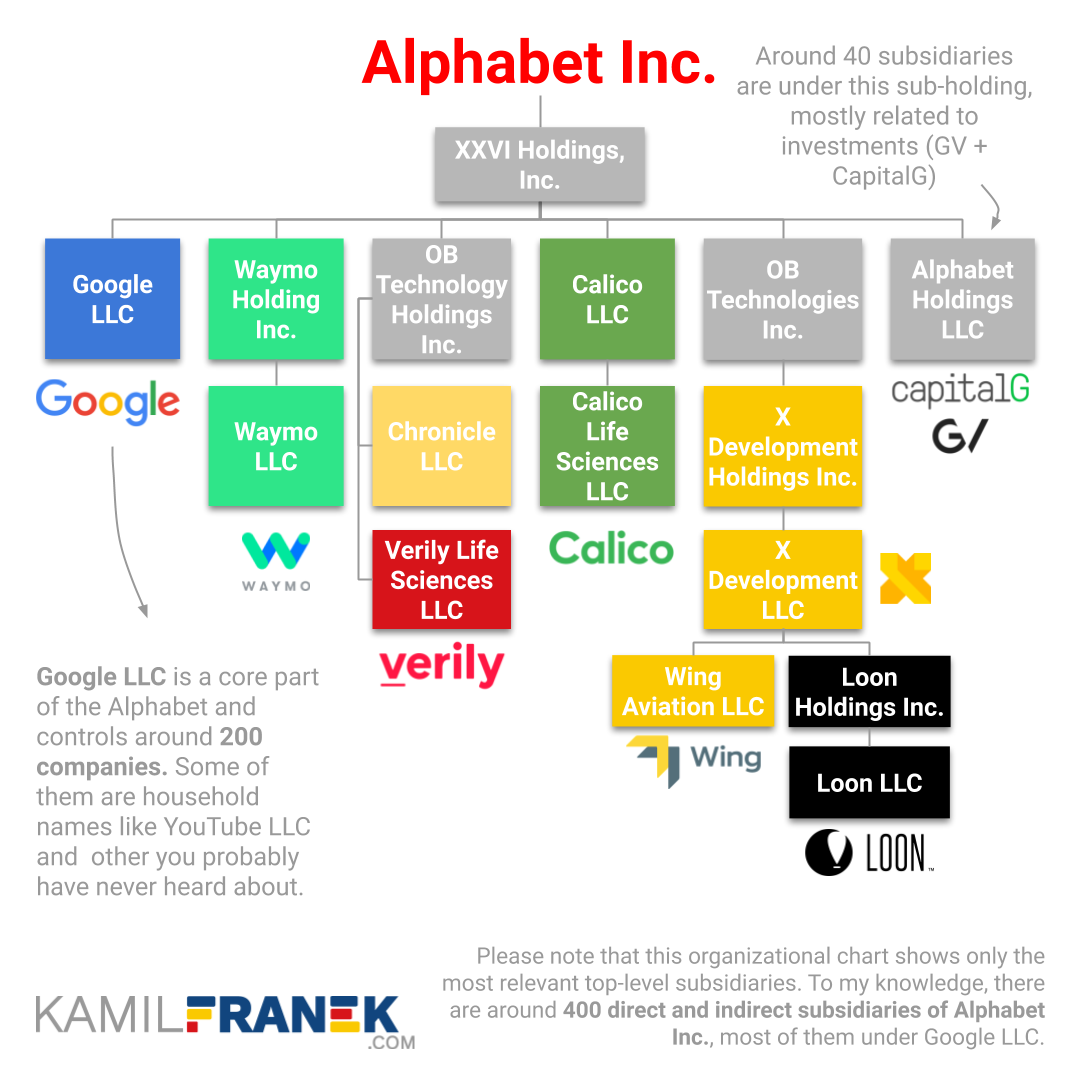
The Birth of Alphabet Inc.: A Strategic Shift in Corporate Finance
The transition from Google Inc. to Alphabet Inc. in August 2015 was more than a mere name change; it was a fundamental shift in how one of the world’s most profitable companies manages its capital and risk. Before this restructuring, Google’s core search and advertising business was lumped together with speculative ventures, such as life sciences and self-driving cars. This created a lack of transparency for shareholders who wanted to see exactly how much profit the core business was generating versus how much capital was being deployed into high-risk “moonshots.”
Why Restructuring Matters to Investors
From a financial perspective, the creation of Alphabet allowed for greater accountability. By separating the “cash cow” (Google) from the “experimental” (Other Bets), the leadership team—led by founders Larry Page and Sergey Brin—could provide Wall Street with a clearer picture of the company’s fiscal health. This segregation prevents the massive R&D costs of futuristic projects from obscuring the exceptional margins of the advertising and search segments. For the savvy investor, this transparency is a vital tool for valuation, allowing for a more nuanced analysis of price-to-earnings (P/E) ratios and operational efficiency.
The “Moonshot” Segregation
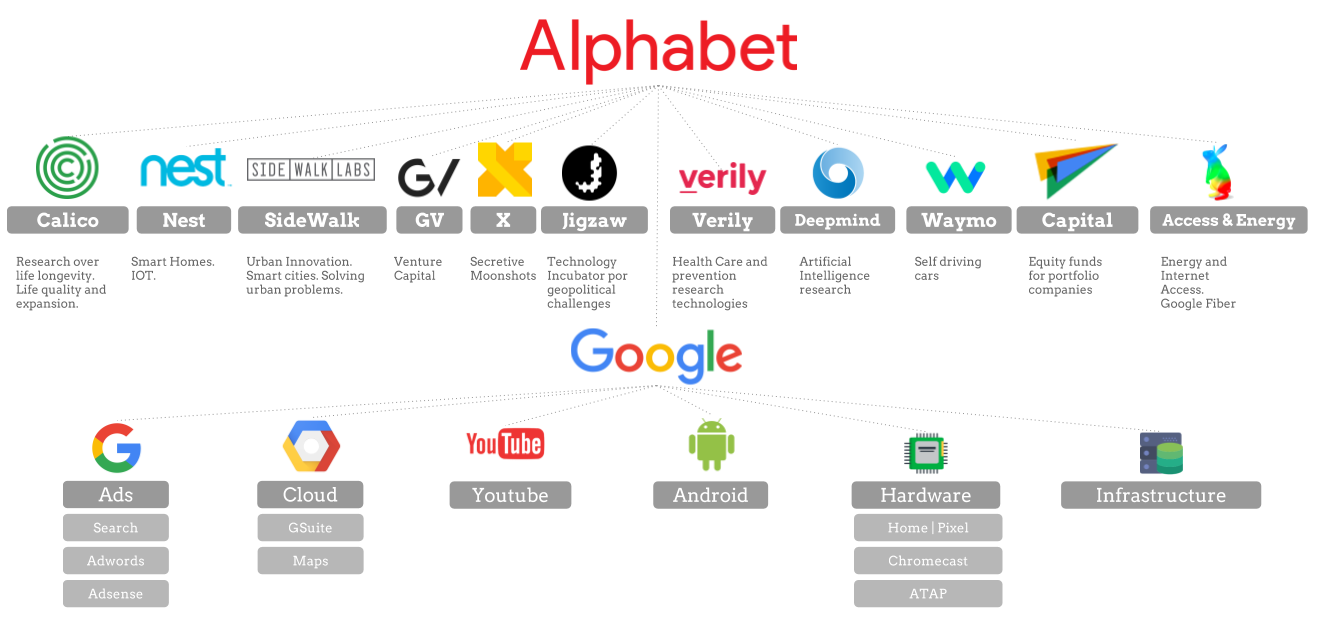
Alphabet acts as an umbrella for a variety of businesses that operate independently from Google. These include Waymo (autonomous vehicles), Verily (life sciences), and GV (formerly Google Ventures). By housing these under Alphabet rather than Google, the parent company can attract specialized talent and venture capital for specific subsidiaries without diluting the brand or the balance sheet of the primary search engine. This corporate architecture is a masterclass in risk management, ensuring that a failure in a speculative field like biotechnology does not fundamentally compromise the financial stability of the core digital infrastructure.
Analyzing the Stock Structure: GOOG vs. GOOGL
For those looking to own a piece of Google, the stock market presents an interesting dilemma. Alphabet Inc. is a publicly traded company, but it offers different classes of shares that represent varying levels of ownership and control. This multi-class share structure is a common feature among modern tech giants, designed to protect the founders’ vision from the short-term pressures of activist investors.
Voting Rights and Shareholder Control
Alphabet’s equity is divided primarily into three classes:
-
Class A (Ticker: GOOGL): These are common shares available to the public. Each share carries one vote. These shares are the standard choice for retail investors who want both equity in the company and a symbolic voice in corporate governance.
-
Class B: These shares are held exclusively by the founders and early insiders. Crucially, Class B shares carry ten votes per share. This ensures that Larry Page and Sergey Brin maintain majority voting control over the company, even if their total economic stake decreases over time.
-
Class C (Ticker: GOOG): These shares carry no voting rights. They were created to allow the company to issue stock-based compensation to employees and to conduct acquisitions without further diluting the voting power of the founders.
Which Class Should You Buy?
From a purely financial standpoint, GOOG and GOOGL typically trade at very similar prices, though GOOGL (Class A) sometimes commands a slight premium due to its voting rights. For the long-term institutional investor, the Class A shares are often preferred for the governance participation they offer. However, for the average individual focused on capital appreciation, Class C (GOOG) provides the same exposure to Alphabet’s earnings and growth without the added cost of a “voting premium.” Understanding this distinction is critical for any portfolio manager looking to optimize their position in the communication services sector.
Alphabet’s Financial Ecosystem: Where the Revenue Flows
To understand what owns Google is to understand how Alphabet generates and allocates its capital. Alphabet is not just a search company; it is an advertising behemoth, a cloud infrastructure provider, and a venture capital powerhouse. The company’s revenue streams are diverse, yet they remain heavily anchored in the digital attention economy.
Google Services: The Primary Engine
The vast majority of Alphabet’s revenue—upwards of 80% in most fiscal years—comes from Google Services. This segment includes Google Search, YouTube, the Play Store, and Chrome. The primary driver here is advertising. Through Google Ads and AdSense, the company has built an almost impenetrable moat in the digital marketing space. For investors, the “Google Services” segment represents the foundational value of the stock, characterized by high margins and consistent cash flow that funds the rest of the conglomerate’s ambitions.
Google Cloud and the Enterprise Revenue Stream
While advertising is the bedrock, Google Cloud has emerged as a significant secondary pillar of growth. In the competitive landscape of cloud computing, Alphabet competes directly with Amazon (AWS) and Microsoft (Azure). For a long time, the Cloud division operated at a loss as it invested heavily in infrastructure and data centers. However, as it has reached a critical scale, it has moved toward profitability, providing Alphabet with a massive, recurring revenue stream from enterprise clients. This shift is a key indicator of Alphabet’s successful diversification strategy.
The “Other Bets” Portfolio
The “Other Bets” category is where Alphabet’s most ambitious projects live. Financially, this segment is often viewed as a “call option” on the future. While currently loss-making, these companies represent potential multi-billion dollar industries. If Waymo becomes the standard for global logistics or Verily discovers a breakthrough in preventative medicine, the value of Alphabet could skyrocket independently of its search business. For the value investor, assessing “Other Bets” requires a long-term horizon and a high tolerance for volatility.
Valuation and Market Position: Investing in the Google Ecosystem
Alphabet consistently ranks as one of the most valuable companies in the world by market capitalization. Its financial strength is defined by a massive cash reserve and a balance sheet that allows for aggressive reinvestment and strategic acquisitions.
Historical Growth and Future Projections
Alphabet’s growth trajectory has been nothing short of historic. From its IPO in 2004 to its current status as a multi-trillion-dollar entity, it has leveraged the global shift toward digitalization. When evaluating Alphabet as an investment, analysts look at metrics like Free Cash Flow (FCF) and return on invested capital (ROIC). Alphabet’s ability to generate tens of billions in free cash flow each quarter allows it to weather economic downturns and continue funding innovation when competitors are forced to scale back.
Regulatory Risks and Financial Impact
No analysis of Alphabet’s ownership and value would be complete without acknowledging the regulatory headwinds. Antitrust investigations in the United States and the European Union pose a direct threat to the company’s monopolistic hold on search and advertising. Fines and potential forced divestitures could alter the corporate structure of Alphabet significantly. Investors must weigh the company’s financial dominance against the legal costs and potential “break-up” scenarios that could unlock or destroy shareholder value.
The Broader Implications of Conglomerate Ownership
The ownership of Google by Alphabet serves as a blueprint for modern corporate governance in the digital age. It allows a company to be both a stable, dividend-potential utility (through Search) and a high-growth venture fund (through Other Bets).
Mergers, Acquisitions, and Capital Allocation
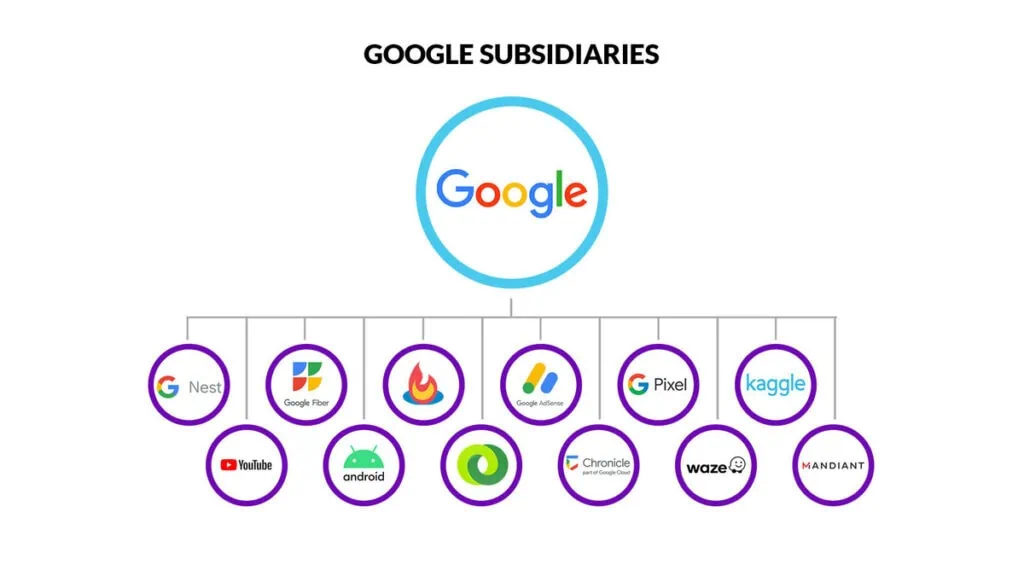
Alphabet’s ownership structure provides it with a unique advantage in the M&A (Mergers and Acquisitions) market. With its vast treasury, it can acquire smaller, innovative startups—like it did with Android, YouTube, and DeepMind—and integrate them into its ecosystem before they become competitors. This aggressive capital allocation strategy is why Alphabet remains at the forefront of the AI revolution. By owning the hardware, the software, and the data, the parent company ensures that Google remains the central hub of the global information economy.
In conclusion, while “Google” is the name on everyone’s lips, Alphabet Inc. is the financial engine that drives the machine. For the modern investor or business professional, understanding the relationship between this parent company and its famous subsidiary is essential. It is a story of strategic restructuring, savvy stock management, and a relentless pursuit of future markets—all underpinned by a financial architecture designed to dominate the 21st-century economy.
aViewFromTheCave is a participant in the Amazon Services LLC Associates Program, an affiliate advertising program designed to provide a means for sites to earn advertising fees by advertising and linking to Amazon.com. Amazon, the Amazon logo, AmazonSupply, and the AmazonSupply logo are trademarks of Amazon.com, Inc. or its affiliates. As an Amazon Associate we earn affiliate commissions from qualifying purchases.