
The question “what is the google stock price” is more than a simple request for a numerical value. For the modern investor, it represents an inquiry into the health of one of the world’s most dominant economic engines: Alphabet Inc. While the price fluctuates second-by-second during market hours, understanding that number requires a deep dive into market mechanics, share classes, and the fundamental drivers that move the needle for this tech giant.
To understand the price of Google today, an investor must first recognize that they are actually looking at Alphabet Inc., the parent company formed in 2015. Alphabet acts as an umbrella for Google’s core businesses—like Search, YouTube, and Android—as well as its “Other Bets,” which include experimental ventures like Waymo and Verily. Navigating the price requires distinguishing between different share classes and understanding the macroeconomic factors that dictate whether the stock is “cheap” or “expensive” at any given moment.
Understanding Alphabet Inc. Ticker Symbols: GOOG vs. GOOGL
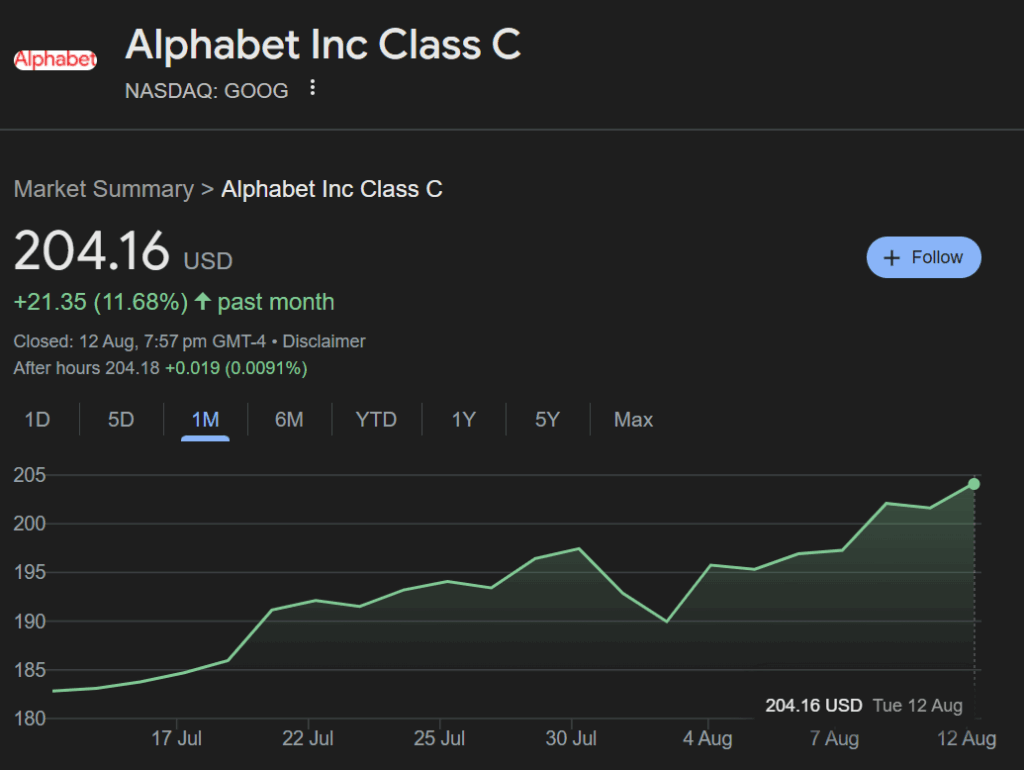
When you search for the Google stock price, you will invariably encounter two different tickers: GOOGL and GOOG. This distinction is vital for anyone looking to allocate capital to the company, as the price difference, though usually marginal, stems from a fundamental difference in shareholder rights.
Class A Shares (GOOGL)
Alphabet Class A shares trade under the ticker GOOGL. These are the traditional common shares that most retail investors hold. The primary characteristic of GOOGL shares is that they carry voting rights—typically one vote per share. If you are an investor who values having a voice in corporate governance, or if you want to participate in shareholder meetings and vote on board members and corporate policies, GOOGL is the ticker to watch. Historically, Class A shares have traded at a slight premium to Class C shares due to these voting rights, though the gap is often negligible.
Class C Shares (GOOG)
Alphabet Class C shares trade under the ticker GOOG. These shares were created to allow the company to issue equity for employee compensation and acquisitions without diluting the voting power of the founders, Larry Page and Sergey Brin. Class C shares have zero voting rights. Because they lack the power to influence corporate decisions, they are sometimes viewed as a “pure” economic play on the company’s success. For the average investor who does not plan to participate in corporate proxy voting, GOOG often serves as the primary benchmark for the “Google stock price.”
The History of the Stock Split
In July 2022, Alphabet executed a 20-for-1 stock split. Before this event, a single share of Google could cost upwards of $2,000, making it difficult for small-scale investors to purchase whole shares. The split brought the price down to a more accessible double or triple-digit range without changing the company’s overall market capitalization. When looking at historical charts to determine the “true” price growth, it is essential to ensure that the data is split-adjusted to avoid the appearance of a sudden 95% drop in value.
Key Factors Influencing the Google Stock Price
The stock price of Alphabet is not a static figure; it is a reflection of the market’s collective expectation of the company’s future cash flows. Several core business segments and external pressures dictate whether the price trends upward or faces resistance.
Advertising Revenue and Search Dominance
The backbone of the Google stock price remains its advertising ecosystem. Google Search and YouTube generate the vast majority of Alphabet’s revenue. When corporate ad spending is high, Alphabet’s earnings soar, typically driving the stock price up. Conversely, during periods of economic uncertainty, businesses often slash marketing budgets, which can lead to a contraction in the stock price. Investors monitor “Cost Per Click” (CPC) and “Paid Clicks” metrics during quarterly earnings calls to gauge the health of this revenue stream.
The Cloud Computing Frontier
Google Cloud is a significant driver of the stock’s valuation multiple. As businesses migrate to the cloud, Google Cloud Platform (GCP) has become a major competitor to Amazon Web Services (AWS) and Microsoft Azure. While the advertising business provides the cash flow, the Cloud segment provides the “growth story.” If Google Cloud shows accelerating revenue growth and improving profit margins, the stock price often receives a “growth premium,” as investors become willing to pay more for each dollar of earnings.
Artificial Intelligence and Future Growth
In recent years, the integration of Generative AI has become the single most influential narrative for the Google stock price. The market closely watches how Google integrates its Gemini AI models into its core Search product. There is a “fear and greed” dynamic at play here: fear that AI might disrupt traditional search advertising (leading to a lower stock price), and greed regarding the potential for AI to create entirely new revenue streams (leading to a higher stock price). Capital expenditures (CapEx) related to AI data centers are a critical metric for investors, as they signal how much the company is betting on its technological future.
Historical Performance and Market Volatility
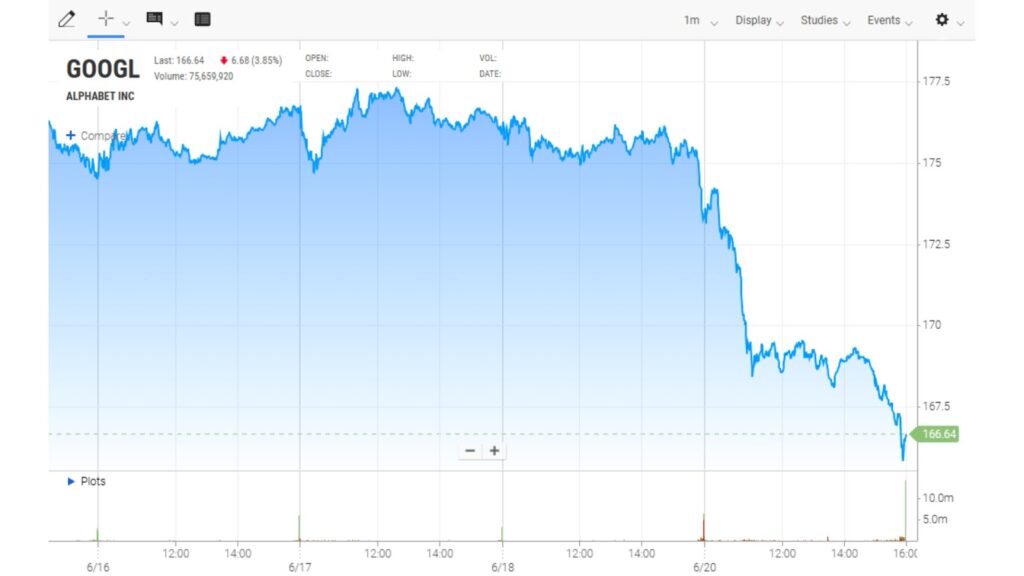
Reviewing the historical trajectory of the Google stock price provides context for its current valuation. Since its IPO in 2004 at $85 per share (pre-split), the company has been one of the most consistent performers in the S&P 500 and the Nasdaq-100.
Long-term Growth Trends
Alphabet’s stock has historically outperformed the broader market, driven by its near-monopoly in search and the explosive growth of mobile internet usage. However, the path has not been linear. The stock price has weathered the 2008 financial crisis, the 2018 tech sell-off, and the post-pandemic inflationary period. Investors who focus on the “what is the price” question on a daily basis often miss the long-term compounding effect that has made Google a cornerstone of institutional portfolios.
Macroeconomic Impacts: Interest Rates and Inflation
As a “growth” stock, Alphabet’s price is sensitive to interest rate changes. When the Federal Reserve raises interest rates, the “discount rate” applied to future earnings increases, which can lower the present value of the stock. This is why you will often see the Google stock price drop on days when inflation data comes in higher than expected. High interest rates make today’s certain cash more valuable than tomorrow’s potential growth, forcing a repricing of high-valuation tech stocks.
How to Evaluate the Google Stock Price Before Investing
Simply knowing the current price is insufficient for making a sound financial decision. Investors must apply valuation frameworks to determine if the current price represents a fair entry point.
Price-to-Earnings (P/E) Ratio
The P/E ratio is the most common tool used to evaluate the Google stock price. It compares the current share price to the company’s earnings per share (EPS). A “high” P/E might suggest the stock is overvalued, or it might indicate that the market expects massive growth. Historically, Alphabet has traded at a lower P/E ratio than peers like Microsoft or Amazon, often because its business model is heavily tied to the cyclical advertising market. Value-oriented investors look for moments when the P/E ratio dips below historical averages to “buy the dip.”
Earnings Per Share (EPS) and Quarterly Reports
Four times a year, Alphabet releases its quarterly earnings report. These events are the most significant catalysts for price movement. If the company beats analyst expectations for EPS and revenue, the stock price typically jumps. However, the “guidance”—what the company says about the next quarter—is often more important than the past performance. A “beat and raise” (beating current estimates and raising future ones) is the gold standard for driving a sustainable increase in the stock price.
Competitive Positioning in the Big Tech Landscape
The price is also influenced by the “Magnificent Seven” sentiment. This group of tech leaders (including Apple, Nvidia, and Meta) often moves in tandem. Regulatory scrutiny is a unique headwind for the Google stock price. Antitrust lawsuits from the Department of Justice (DOJ) or the European Union regarding search dominance or ad-tech practices can create “headline risk,” causing the price to stagnate even if the underlying financials are strong.
Practical Tools for Tracking and Trading Google Stock
For those monitoring the price for active trading or long-term accumulation, having the right financial tools is essential.
Real-Time Monitoring Platforms
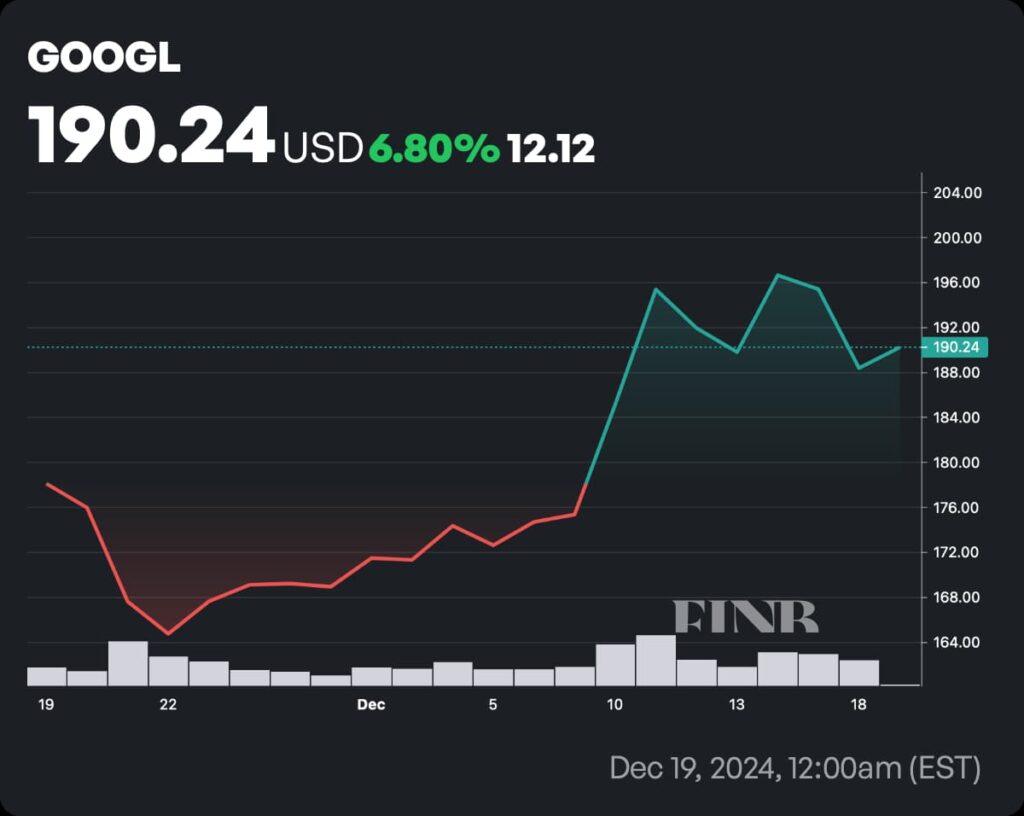
Because the Google stock price changes every millisecond during the trading day (9:30 AM to 4:00 PM EST), using real-time data is crucial. Financial news portals, brokerage apps, and specialized tools like Bloomberg Terminal or Reuters Eikon provide live feeds. For retail investors, free tools like Yahoo Finance or Google Finance (ironically) offer reliable price tracking, including “After Hours” and “Pre-Market” trading data, which can signal how the stock will open the following day.
Setting Up a Brokerage Account
To participate in the movement of the Google stock price, an investor must have a brokerage account. Modern platforms allow for “fractional shares,” meaning if the price of a full share is $150 and you only have $10, you can still own a piece of Alphabet. When choosing a platform to trade Google, consider factors like commission fees, the availability of Class A vs. Class C shares, and the ability to set “Limit Orders.” A limit order allows you to specify the maximum price you are willing to pay, ensuring you don’t overpay during a period of high volatility.
In summary, the Google stock price is a complex barometer of global digital health, advertising demand, and AI innovation. By distinguishing between GOOG and GOOGL, understanding the core revenue drivers, and applying fundamental valuation metrics, an investor can move beyond the surface-level “what is the price” and begin to understand the intrinsic value of one of the most influential companies in history.
aViewFromTheCave is a participant in the Amazon Services LLC Associates Program, an affiliate advertising program designed to provide a means for sites to earn advertising fees by advertising and linking to Amazon.com. Amazon, the Amazon logo, AmazonSupply, and the AmazonSupply logo are trademarks of Amazon.com, Inc. or its affiliates. As an Amazon Associate we earn affiliate commissions from qualifying purchases.