
To understand the Google share price, one must first look beyond the search bar and into the corporate structure of its parent company, Alphabet Inc. Since its restructuring in 2015, Google has operated as the primary subsidiary of Alphabet, a massive conglomerate that houses everything from autonomous driving technology to life sciences. For investors, tracking the share price isn’t just about watching a ticker move on a screen; it is about evaluating the health of the global digital economy, the shift toward artificial intelligence, and the resilience of the digital advertising market.
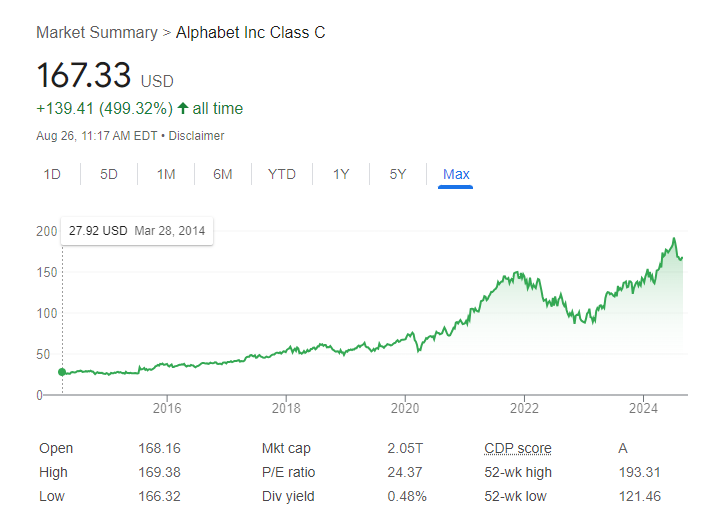
Because Alphabet is a multi-trillion-dollar entity, its share price is a bellwether for the Nasdaq and the S&P 500. When an investor asks, “What is the Google share price?” they are often looking for more than a real-time quote. They are looking for the narrative behind the numbers: why the stock trades at its current valuation and what catalysts might move it in the future.
Understanding the Dual-Class Structure: GOOGL vs. GOOG
One of the most common points of confusion for new investors is the existence of two different ticker symbols for Google: GOOGL and GOOG. While they both represent equity in the same company, they carry different rights and occasionally trade at slightly different prices.
Class A Shares (GOOGL)
Class A shares are the standard common stock offered to the public. These shares carry a “one share, one vote” policy. If you are an investor who values having a say in corporate governance—even if your individual vote is a tiny drop in a massive bucket—GOOGL is the ticker you would typically choose. Historically, Class A shares have traded at a slight premium to Class C shares due to these voting rights.
Class C Shares (GOOG)
Class C shares are non-voting shares. These were created primarily to allow the company to issue stock for employee compensation and acquisitions without diluting the voting power of the founders, Larry Page and Sergey Brin. For the average retail investor, the lack of voting rights is rarely a dealbreaker, and GOOG often tracks almost identically to GOOGL.
Class B Shares
There is also a Class B category, which is held internally by the founders and insiders. These shares are not traded on public exchanges and carry ten votes per share. This structure ensures that despite the fluctuating share price and the massive influx of public capital, the original visionaries maintain control over the company’s long-term strategic direction.
The Financial Engines Driving the Share Price
To evaluate the Google share price accurately, an investor must deconstruct the company’s revenue streams. Alphabet is not a monolithic entity; it is a portfolio of businesses, each contributing differently to the bottom line and, consequently, the stock’s valuation.
The Advertising Core: Search and YouTube
The vast majority of Alphabet’s revenue still comes from Google Services, which includes Search, YouTube, and the Google Network. Search remains the most profitable advertising real estate in history. Its share price often reacts sharply to quarterly “Cost-Per-Click” (CPC) and “Paid Clicks” metrics. YouTube, meanwhile, has evolved into a powerhouse that competes not just for digital ad dollars but for traditional television budgets, making its growth a critical component of the share price’s upward trajectory.
Google Cloud: The Growth Catalyst
In recent years, the share price has become increasingly sensitive to the performance of Google Cloud. As enterprises migrate to the cloud, Google has secured its position as the third-largest provider behind Amazon (AWS) and Microsoft (Azure). For a long time, Google Cloud operated at a loss to gain market share. Now that it has reached profitability, it serves as a significant margin expander. Investors often look at Cloud’s growth rate as a sign of Alphabet’s ability to diversify away from its reliance on advertising.
“Other Bets”: The Moonshot Factor
Alphabet’s “Other Bets” segment includes Waymo (autonomous driving), Verily (life sciences), and Wing (drone delivery). While these ventures often lose billions of dollars annually, they represent the “lottery tickets” in the Alphabet portfolio. A breakthrough in Waymo’s commercialization, for instance, could lead to a massive re-rating of the share price, as investors begin to price in the potential of a trillion-dollar autonomous transport market.
Key Valuation Metrics for Investors
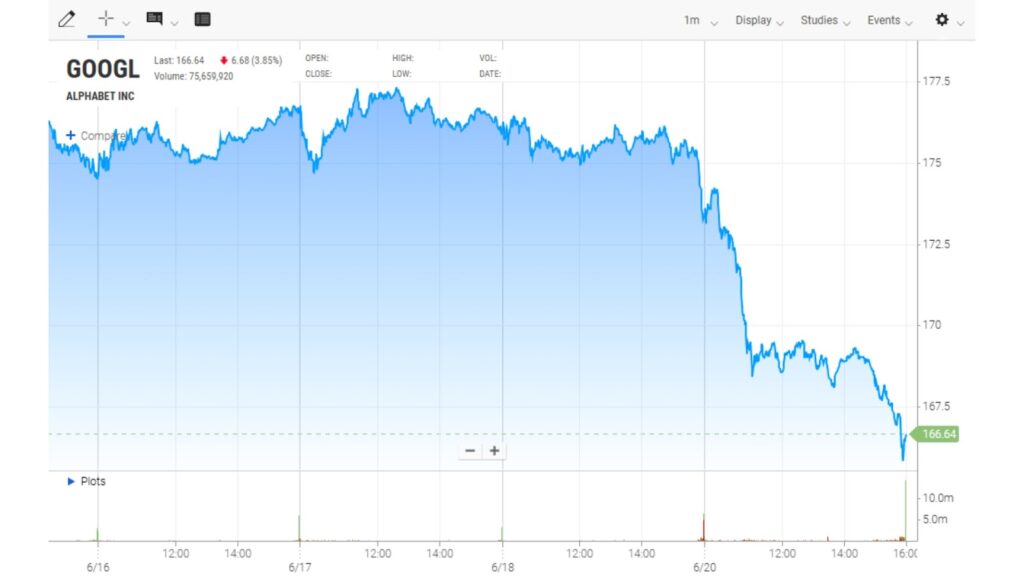
When analyzing if the Google share price is “fair,” “cheap,” or “expensive,” professional investors look beyond the nominal dollar amount and focus on valuation ratios. Because Alphabet is a mature tech company with high growth, it is typically evaluated using a mix of growth and value metrics.
Price-to-Earnings (P/E) Ratio
The P/E ratio is the most common tool for valuing Alphabet. Historically, the company has traded at a P/E that reflects its dominant market position—often ranging between 15x and 30x forward earnings. If the share price stays flat while earnings grow, the P/E drops, making the stock appear more attractive to value-oriented investors. Conversely, if the P/E expands rapidly without a corresponding jump in earnings, it may indicate that the stock is overextended.
Free Cash Flow (FCF) and Buybacks
One of the strongest arguments for a rising Google share price is the company’s massive cash generation. Alphabet produces billions in free cash flow every quarter. Instead of paying a high dividend (though they recently initiated a modest dividend), the company has historically preferred aggressive share buybacks. By repurchasing and retiring shares, Alphabet reduces the total supply, which increases the earnings per share (EPS) for remaining stockholders and provides a natural floor for the share price.
The Impact of Stock Splits
In July 2022, Alphabet executed a 20-for-1 stock split. While a split does not change the fundamental value of the company (it’s like cutting a pizza into more slices), it drastically lowered the nominal price of a single share. This move was designed to make the stock more accessible to retail investors and paved the way for Alphabet’s inclusion in price-weighted indices like the Dow Jones Industrial Average. Accessibility often leads to higher liquidity, which can have a stabilizing effect on the share price.
Macro Trends and Risks Affecting Volatility
No stock exists in a vacuum, and the Google share price is subject to several external pressures that can cause significant volatility.
The AI Revolution and “Search Generative Experience”
The emergence of generative AI, led by OpenAI’s ChatGPT, has created a new risk narrative for Google. Investors are closely watching how Google integrates AI into its search engine. The concern is twofold: first, that AI-driven answers might reduce the number of clicks on ads, and second, that the increased computing power required for AI will squeeze profit margins. The share price often fluctuates based on the perceived success of “Gemini,” Google’s flagship AI model, as the market weighs the company’s ability to defend its search moat.
Regulatory and Antitrust Headwinds
Google is a frequent target of antitrust regulators in the United States, the European Union, and other jurisdictions. Lawsuits targeting its dominance in the ad-tech stack or its default status on mobile devices represent a systemic risk. A ruling that forces a “breakup” of the company or limits its data collection abilities could lead to a sudden devaluation of the share price. However, some analysts argue that a breakup might actually unlock value, as individual components like YouTube or Cloud might be worth more as standalone entities.
Interest Rates and the Broader Market
As a “growth” stock, Alphabet’s share price is sensitive to interest rate changes. When the Federal Reserve raises rates, the present value of future earnings decreases, which can lead to a sell-off in high-multiple tech stocks. Conversely, a stabilizing or falling rate environment generally provides a tailwind for the Google share price, as investors become more willing to pay a premium for the company’s long-term growth prospects.
Conclusion: How to View the Google Share Price
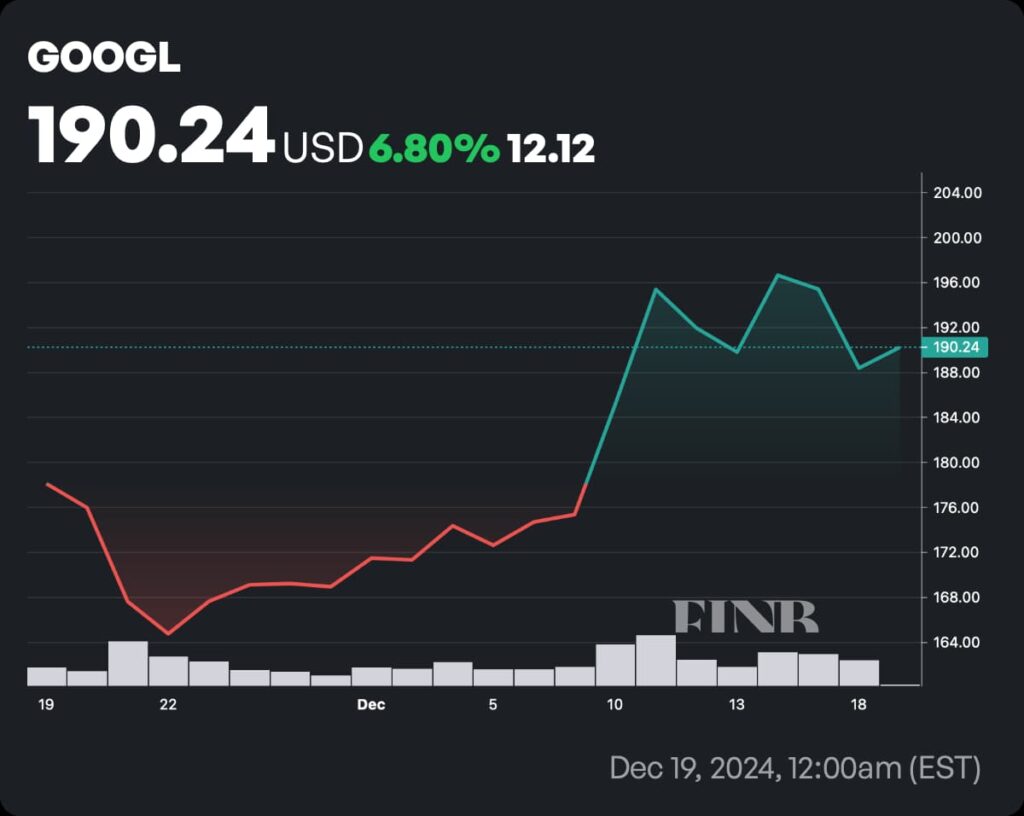
For the modern investor, the Google share price is more than just a number on a ticker; it is a reflection of Alphabet’s dominance in the digital age and its potential in the artificial intelligence era. While volatility is a constant—driven by regulatory scrutiny, AI competition, and macroeconomic shifts—the company’s underlying fundamentals remain robust.
When tracking the share price, it is essential to distinguish between short-term noise (such as a single news cycle about a regulatory fine) and long-term value drivers (such as the expansion of Cloud margins or the stabilization of YouTube ad revenue). By understanding the difference between GOOG and GOOGL, monitoring key valuation metrics like the P/E ratio, and keeping an eye on the company’s massive cash reserves, investors can make more informed decisions about whether the current price represents a strategic entry point or a moment for caution.
Alphabet continues to sit at the intersection of information and innovation. As long as the world relies on the internet to find answers and businesses rely on digital platforms to find customers, the Google share price will remain one of the most critical indicators in the financial world.
aViewFromTheCave is a participant in the Amazon Services LLC Associates Program, an affiliate advertising program designed to provide a means for sites to earn advertising fees by advertising and linking to Amazon.com. Amazon, the Amazon logo, AmazonSupply, and the AmazonSupply logo are trademarks of Amazon.com, Inc. or its affiliates. As an Amazon Associate we earn affiliate commissions from qualifying purchases.