
Determining the “cheapest” airline is a complex financial calculation that extends far beyond the initial price displayed on a search engine. In the world of personal finance and strategic spending, the lowest ticket price rarely equates to the lowest total expenditure. To truly understand which airline is the cheapest to fly, one must apply the principles of “Total Cost of Ownership” (TCO) to the aviation industry. This involves accounting for ancillary fees, time-value opportunity costs, and the financial impact of loyalty structures.
For the savvy traveler looking to optimize their budget, the answer depends on your specific financial profile—whether you are a “bare-bones” minimalist or a value-driven traveler who prioritizes the return on investment (ROI) for every dollar spent.
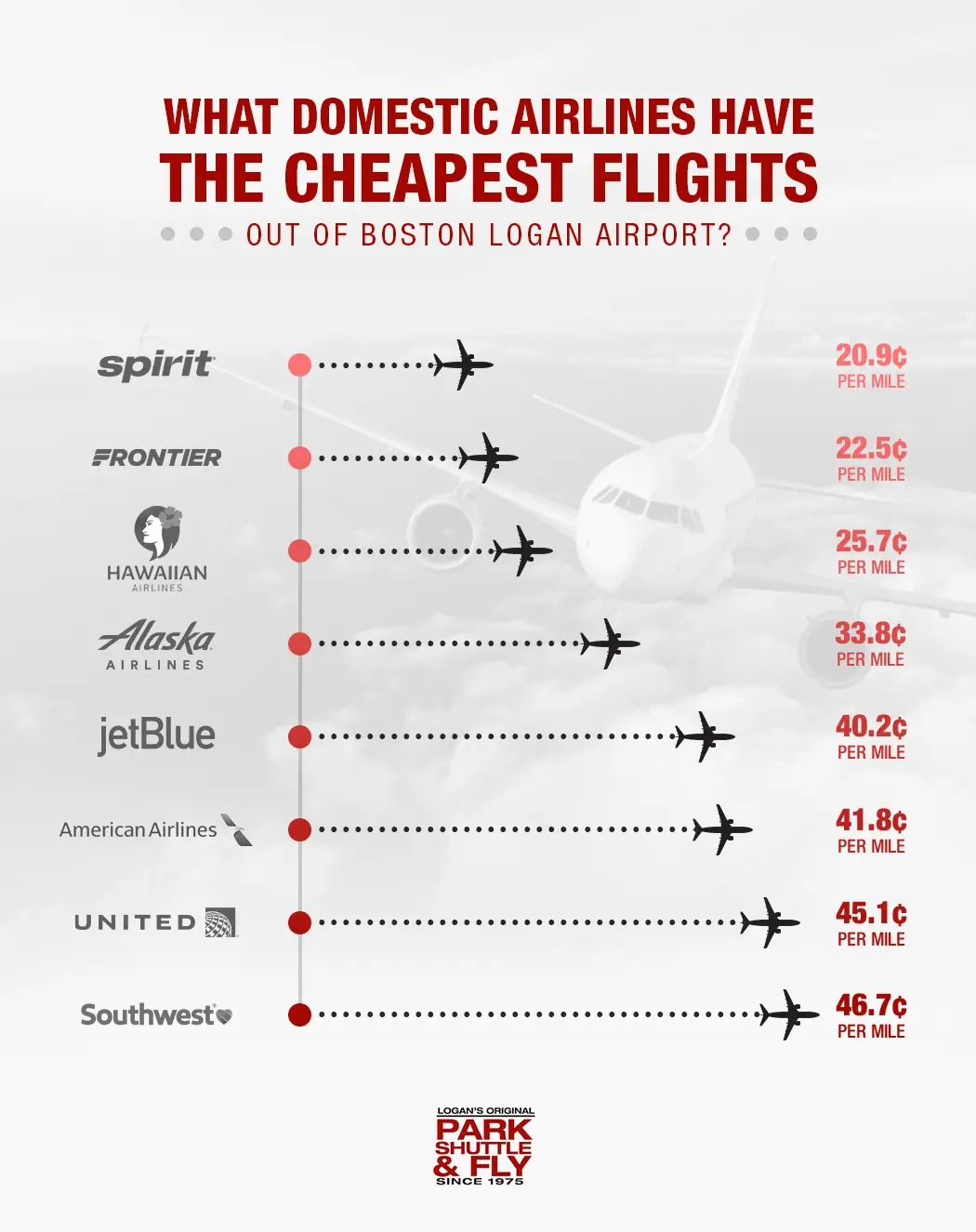
The Economics of the Ultra-Low-Cost Carrier (ULCC) Model
When strictly looking at the base fare, Ultra-Low-Cost Carriers (ULCCs) like Spirit, Frontier, and Allegiant in the United States, or Ryanair and easyJet in Europe, almost always win. These companies operate on a business model known as “unbundling.” By separating every individual component of the flight experience—from carry-on bags to seat assignments—they can offer a “naked” fare that is often lower than the cost of a tank of gas.
The Financial Mechanics of Unbundling
The unbundled model is designed to maximize the airline’s ancillary revenue. For the consumer, this is a double-edged sword. If you are traveling for a quick weekend trip with nothing but a small backpack that fits under the seat, a ULCC is mathematically the cheapest option. However, the moment you introduce a standard carry-on or a checked bag, the financial landscape shifts.
Ancillary fees can sometimes exceed the cost of the ticket itself. For instance, a $40 flight on a ULCC might incur a $60 fee for a carry-on bag at the gate. From a personal finance perspective, this represents a 150% “hidden tax” on the base fare. To find the cheapest airline, you must perform a pre-purchase audit of your needs and add these anticipated costs to the base price before comparing it with “full-service” carriers.
Operational Efficiency and Lower Fares
ULCCs achieve these low prices through aggressive cost-cutting in their own balance sheets. They typically fly a single type of aircraft (such as the Airbus A320 family) to reduce maintenance and training costs. They also tend to utilize secondary airports, which charge lower landing fees. While these savings are passed to the consumer, the traveler must account for the “last mile” cost—the expense of getting from a remote secondary airport to the actual destination. If a cheaper flight lands you 60 miles away from your city, the $80 Uber ride back into town might negate any savings found on the ticket price.
Value-Based Carriers: The “All-In” Financial Strategy
On the other end of the budget spectrum are airlines like Southwest or JetBlue, which operate on a value-centric model rather than a strictly price-centric one. In many financial analyses, Southwest often emerges as the “cheapest” airline for the average traveler due to its unique baggage policy.
The “Two Bags Fly Free” Math
Southwest Airlines is famous for allowing two checked bags for free. In an industry where most carriers charge $30 to $50 per bag, this represents a built-in value of $60 to $100 per flight. For a family of four, this equates to a $400 to $800 saving on a round-trip journey.
When comparing a $150 Southwest flight to a $90 Frontier flight, the “cheapest” option is actually Southwest if you have luggage. This is a classic example of looking at the net cost rather than the gross price. The psychological ease of not having to calculate fees also reduces the “cognitive load” of travel, which, while not a direct financial metric, contributes to a more efficient decision-making process.
Flexibility as an Asset
Another financial advantage of value-based carriers is the absence of change or cancellation fees. In the realm of personal finance, flexibility is a form of insurance. If your plans change, a “cheap” $50 non-refundable ticket on a ULCC becomes a $50 loss. On a carrier with no change fees, that capital is preserved in the form of a travel credit. For business owners and freelancers whose schedules are volatile, the “cheapest” airline is often the one that protects their capital against unforeseen changes.
Leveraging Financial Tools and Credit Arbitrage
In the modern economy, the cheapest airline is often the one you don’t pay for with cash. To find the ultimate low-cost flight, one must understand the intersection of personal finance and credit card rewards. This is often referred to as “Travel Hacking,” but at its core, it is simply the strategic use of financial instruments to lower travel liabilities.

The ROI of Travel Credit Cards
Many major airlines (Delta, United, American) offer co-branded credit cards that provide “free” flights through sign-up bonuses. From a budget standpoint, the cheapest airline becomes whichever one allows you to leverage your daily spending into points. If you spend $2,000 a month on groceries and utilities, and those points earn you a round-trip ticket to Europe, the “cost” of that flight is essentially zero, minus the taxes and fees.
Furthermore, many of these cards offer perks like free checked bags and priority boarding, which further erode the cost advantages of ULCCs. When you have a “Status” or a “Card Advantage” with a legacy carrier, the total cost of flying with them often drops below the price of a budget carrier.
Cents Per Point (CPP) Analysis
To determine the true value of these programs, savvy travelers calculate the Cents Per Point (CPP). If a flight costs $500 or 25,000 points, the value is 2 cents per point. If you find a redemption that offers 4 or 5 cents per point, you have effectively “arbitraged” the system. In this scenario, a legacy carrier like United or Delta becomes significantly cheaper than a low-cost carrier because you are using a high-value currency (points) that you acquired at a low cost (daily spending).
The Time-Value of Money in Aviation
A critical error many budget-conscious travelers make is ignoring the “Time-Value of Money.” In finance, time is a resource just as valuable as capital. When searching for the cheapest airline, you must factor in the duration and convenience of the itinerary.
Direct Flights vs. Multi-Stop Itineraries
A flight with two layovers might be $100 cheaper than a direct flight, but if those layovers add eight hours to your journey, you are essentially “paying” yourself $12.50 an hour to sit in an airport. For most working professionals, their hourly rate is significantly higher than this. If your time is worth $50 an hour, that “cheaper” flight actually costs you an additional $400 in lost time or productivity.
Moreover, every connection increases the statistical probability of a delay, a missed flight, or lost luggage. These disruptions have real financial consequences—missed hotel nights, additional meals, or the need to book a last-minute alternative. The “cheaper” airline often carries a higher risk premium.
Productivity and the “Mobile Office”
For those who work while traveling, an airline that offers free or reliable high-speed Wi-Fi (like JetBlue or Delta) can be cheaper in the long run. If the ability to work during a four-hour flight allows you to bill a client or finish a project, the revenue generated far outweighs the $20 or $30 saved by choosing a carrier without those amenities. In this light, the cheapest airline is the one that facilitates your income-generating activities.
How to Find the Cheapest Flight for Your Specific Budget
Ultimately, identifying the cheapest airline requires a three-step financial audit:
-
Define the Payload: Are you traveling with bags? Do you need a specific seat for health or work reasons? Calculate the “Total Bag and Seat Cost” and add it to the base fare.
-
Audit the Infrastructure: Calculate the cost of getting to and from the specific airports used by the airline. Factor in parking fees and transit time.
-
Evaluate the Reward Ecosystem: Check if you have points or credits that can be used to offset the cost. Determine if the flight will earn you enough points to subsidize a future trip.
Market Volatility and Dynamic Pricing
Airlines use sophisticated AI-driven dynamic pricing models. This means the “cheapest” airline changes by the hour based on supply, demand, and consumer behavior data. Utilizing tools that track price history and predict future trends is essential for protecting your travel budget. Just as an investor wouldn’t buy a stock without looking at its price history, a traveler shouldn’t book a flight without understanding the market cycle of that specific route.

The Verdict: Context is King
There is no single “cheapest” airline for every person. If you are a student with a backpack and a high tolerance for discomfort, Spirit or Frontier will almost certainly be your most cost-effective choice. If you are a traveler with luggage who values flexibility and transparency, Southwest frequently provides the best bottom-line value. And for those who have mastered the art of personal finance and credit management, Legacy Carriers (Delta, United, American) can be the cheapest through the strategic use of points and elite benefits.
By shifting your perspective from “lowest price” to “highest value,” you can ensure that your travel expenditures are an efficient allocation of your capital, allowing you to see more of the world for less money. In the end, the cheapest airline is the one that aligns most closely with your personal financial goals and your specific logistical needs for each unique journey.
aViewFromTheCave is a participant in the Amazon Services LLC Associates Program, an affiliate advertising program designed to provide a means for sites to earn advertising fees by advertising and linking to Amazon.com. Amazon, the Amazon logo, AmazonSupply, and the AmazonSupply logo are trademarks of Amazon.com, Inc. or its affiliates. As an Amazon Associate we earn affiliate commissions from qualifying purchases.