
For the modern traveler, the quest for affordable airfare is no longer a matter of luck or obsessive searching on Tuesday afternoons. In the realm of personal finance, “flying cheap” has evolved into a sophisticated discipline known as travel hacking. This practice treats airfare not as a static expense, but as a variable that can be manipulated through strategic financial planning, the leverage of banking tools, and a deep understanding of market arbitrage.
To fly for a fraction of the retail cost, one must shift their perspective from that of a consumer to that of a financial strategist. By treating credit card points, airline miles, and cashback rewards as a secondary currency, you can decouple the experience of travel from your primary liquid savings. The following guide outlines the systemic approach to reducing travel costs through the lens of personal finance and strategic asset management.

The Economics of Travel Hacking: Transforming Expenditures into Assets
At its core, the ability to fly cheaply depends on your ability to optimize your existing spending. Every dollar you spend on groceries, utilities, and business expenses carries an inherent “rebate” in the form of rewards. Failure to capture this rebate is effectively leaving money on the table.
Understanding the ROI of Travel Rewards
In financial terms, travel hacking is the pursuit of a high Return on Investment (ROI) on your daily spending. While a standard cashback card might offer a 1% or 2% return, a strategic travel rewards system can yield a value of 5% to 10% or more when points are redeemed for international business or first-class travel. The key is to calculate the “cents per point” (CPP) value. If a flight costs $1,000 or 50,000 miles, the value is 2 cents per point. Professional travel hackers aim for a redemption value that significantly exceeds the cost of the points earned.
The “Earn and Burn” Philosophy
Unlike traditional investments like stocks or real estate, airline miles and credit card points are inflationary assets. Airlines frequently “devalue” their charts, requiring more miles for the same flight. From a financial management perspective, it is rarely wise to hoard points for years. The most efficient strategy is “earn and burn”—accumulating points with a specific trip in mind and redeeming them before the currency loses its purchasing power.
Strategic Credit Card Management: The Engine of Low-Cost Airfare
The most potent tool for flying cheap is the strategic acquisition and use of rewards-based credit cards. This is not about accumulating debt; rather, it is about routing your existing cash flow through financial instruments that provide high-value rewards.
Leveraging Sign-Up Bonuses (SUBs)
The fastest way to acquire enough points for a “free” flight is through sign-up bonuses. Banks are willing to pay a premium to acquire high-quality customers, often offering 50,000 to 100,000 points if a spending threshold is met within the first three months. For a disciplined budgeter, these bonuses represent a massive injection of travel capital. By timing these applications around large, planned purchases—such as home renovations or insurance premiums—you can meet the requirements without increasing your actual cost of living.
The Power of “The Trifecta” Strategy
Many successful travel hackers utilize a “trifecta” of cards from a single ecosystem, such as Chase, American Express, or Capital One. This strategy involves using three specific cards that complement each other to maximize point acceleration. For example, one card might offer 5x points on office supplies, another 3x on dining and travel, and a third 1.5x on all “catch-all” purchases. By systematically using the card that offers the highest multiplier for each category, you effectively lower the “cost” of every future flight you book with those points.
Maintaining Financial Health
It is imperative to note that the financial benefit of travel hacking is instantly negated if you carry a balance. The high interest rates on rewards cards will far exceed the value of the points earned. Therefore, flying cheap through these methods requires a foundation of strong personal finance habits: paying statements in full every month and maintaining a high credit score to qualify for the best financial products.

Maximizing Redemption Value: The Mathematics of Miles and Points
Once you have accumulated a treasury of points, the next step in flying cheap is the redemption phase. This is where many travelers make the mistake of booking through a bank’s travel portal, which usually offers a fixed value (e.g., 1 cent per point). To truly maximize your financial advantage, you must understand the world of transfer partners.
The Arbitrage of Transfer Partners
Most premium credit cards allow you to transfer points to various airline loyalty programs at a 1:1 ratio. This is where the real “cheap” flying happens. For instance, a flight from New York to London might cost 60,000 points on a bank portal (equivalent to $600). However, by transferring those same points to a partner airline like Virgin Atlantic during a transfer bonus period, you might book the same seat for only 30,000 miles. You have essentially doubled the purchasing power of your points through a simple financial maneuver.
Alliances and Codesharing
The global aviation market is organized into three major alliances: Star Alliance, SkyTeam, and Oneworld. Understanding these relationships is vital for finding the cheapest “award space.” You can often use miles from a domestic carrier to book a flight on a much more expensive international partner. This form of “geographic arbitrage” allows you to leverage the currency of a low-cost program to sit in the cabin of a high-cost luxury carrier.
Tactical Budgeting and Expense Management for Airfare
While points and miles are the “gold standard” of cheap flight strategies, there are times when paying cash is the more fiscally responsible choice—particularly if you are trying to preserve points for a higher-value redemption. In these cases, specific financial tactics can minimize the out-of-pocket cost.
Dynamic Pricing and the “Google Flights” Methodology
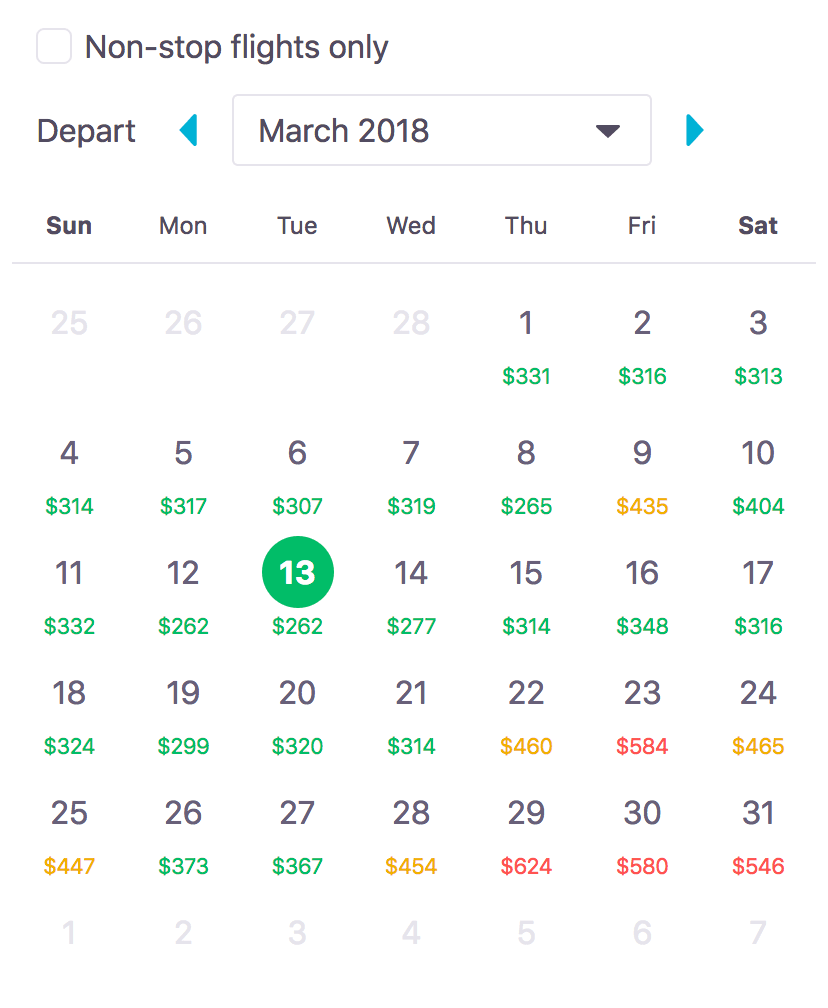
Airfare is a commodity with highly volatile pricing. To fly cheap, one must utilize tracking tools that monitor price fluctuations. Setting price alerts allows you to wait for a “bottom” in the market. From a budgeting perspective, this requires flexibility. If your travel dates are rigid, you are a “price taker.” If your dates are flexible, you become a “price maker,” choosing to buy only when the market hits your target price point.
Positioning Flights and Hidden City Ticketing
Sophisticated travelers often use “positioning flights” to save thousands of dollars. If a flight from a major hub like New York is $1,200, but the same flight from Toronto is $600, it may be financially prudent to buy a cheap $100 “positioning” ticket to Toronto to save $500 on the total journey. Additionally, some use “hidden city ticketing”—booking a flight with a layover in their actual destination and simply deplaning there. While this carries certain risks and should be used sparingly, it is a clear example of using market inefficiencies to reduce travel expenses.
Integrating Travel into Your Long-Term Financial Plan
Ultimately, flying cheap is not just about the transaction; it is about how travel fits into your broader financial landscape. Travel should be a line item in your budget that is funded through intentionality rather than impulse.
Sinking Funds for Travel
A “sinking fund” is a strategic savings category where you set aside a small amount of money each month specifically for travel. By automating this transfer, you ensure that when a flight deal appears, you have the liquid capital ready to deploy. This prevents the “financial shock” of a large purchase and ensures that your travel habits do not interfere with your long-term goals, such as retirement contributions or emergency fund maintenance.
Tax-Loss Harvesting and Business Deductions
For business owners and freelancers, the cost of flying can be significantly reduced through tax optimization. If a trip has a legitimate business purpose, the airfare may be tax-deductible, effectively reducing the “net cost” of the flight by your marginal tax rate. Even for W-2 employees, certain “bleisure” (business + leisure) travel strategies allow for the primary flight to be covered by an employer, with the traveler only paying for the marginal cost of the extra days.
In conclusion, flying cheap is a multifaceted financial strategy that rewards discipline, research, and the clever use of available tools. By mastering the mechanics of credit card rewards, understanding the mathematics of point redemptions, and treating airfare as a volatile asset class to be monitored, you can enjoy global experiences without compromising your financial security. The sky is not the limit; your financial strategy is.
aViewFromTheCave is a participant in the Amazon Services LLC Associates Program, an affiliate advertising program designed to provide a means for sites to earn advertising fees by advertising and linking to Amazon.com. Amazon, the Amazon logo, AmazonSupply, and the AmazonSupply logo are trademarks of Amazon.com, Inc. or its affiliates. As an Amazon Associate we earn affiliate commissions from qualifying purchases.