
Navigating the landscape of American healthcare often feels like managing a second full-time job. Between fluctuating insurance premiums, high deductibles, and the rising cost of essential medications, the financial burden on the average household is significant. For those seeking to optimize their personal finances, finding ways to cut recurring expenses is a top priority. This is where prescription discount services enter the conversation.
When consumers ask, “How much does SingleCare cost a month?” they are often approaching the question from the perspective of traditional insurance or subscription-based services. However, the answer is central to understanding how modern financial tools are disrupting the healthcare space to provide relief to the consumer’s bottom line.

The Direct Cost of SingleCare: Breaking Down the Subscription Model
To provide a direct answer to the primary question: SingleCare costs zero dollars per month. There are no membership fees, no hidden subscription costs, and no annual dues. Unlike private health insurance—which requires a monthly premium regardless of whether you use the service—or certain concierge medical services that charge for access, SingleCare operates as a free-to-use financial tool.
Why There Is No Monthly Fee
The absence of a monthly fee often leads to skepticism among budget-conscious individuals. In the world of personal finance, there is a common adage that “if you aren’t paying for the product, you are the product.” While SingleCare does utilize data to streamline its services, its primary revenue model is based on transaction fees paid by its pharmacy partners rather than the end consumer.
When a customer uses a SingleCare card or coupon at a pharmacy, the pharmacy pays a small processing fee to the platform. In exchange, the pharmacy gains access to a wider customer base and ensures that patients can afford the medications they might otherwise leave behind at the counter. This creates a symbiotic financial relationship where the consumer saves money, the pharmacy moves inventory, and the platform remains sustainable without taxing the user’s monthly budget.
How the Revenue Model Benefits the Consumer
Because SingleCare does not rely on a subscription model, the consumer’s financial risk is non-existent. There is no commitment, meaning that if a user finds a better price through their insurance or another discount tool in a given month, they are under no obligation to use SingleCare. This flexibility is a vital component of a modern financial strategy, allowing individuals to cherry-pick the most cost-effective solution for every individual transaction.
Analyzing the Financial Impact on Your Household Budget
While the service itself has no monthly cost, the value it adds to a monthly budget is measured by the reduction in out-of-pocket medical expenses. For many Americans, prescription costs represent a volatile variable in an otherwise stable budget. Integrating a tool like SingleCare is about more than just “saving money”; it is about financial predictability and cash flow management.
Out-of-Pocket Savings vs. Insurance Premiums
One of the most complex financial decisions a household can make is choosing between a high-premium, low-deductible insurance plan and a low-premium, high-deductible plan (HDHP). For those on HDHPs, the first several thousand dollars of medical spending each year come directly out of their pocket.
In this scenario, using a discount card can often result in a lower price for a generic medication than the “negotiated rate” offered by an insurance provider before the deductible is met. By utilizing SingleCare, a family can preserve their cash flow during the early months of the year, effectively lowering the “real cost” of their healthcare by bypassing the high retail rates that insurance companies often ignore until the deductible is cleared.
Managing Recurring Costs for Chronic Medications
For individuals managing chronic conditions—such as hypertension, diabetes, or mental health issues—medication is a non-negotiable monthly expense. These recurring costs can range from $20 to several hundred dollars. SingleCare functions as a price-stabilization tool. By using the platform’s transparency features, a user can search for their medication across various pharmacies in their zip code to find the lowest possible price point.
When a consumer finds that their medication is $15 at a local grocery store pharmacy versus $45 at a national chain, they have effectively “found” $30 a month in their budget. Over a year, that is a $360 surplus generated from a free tool—the equivalent of a modest investment return or a significant contribution to an emergency fund.
Comparative Financial Analysis: SingleCare vs. Competitors
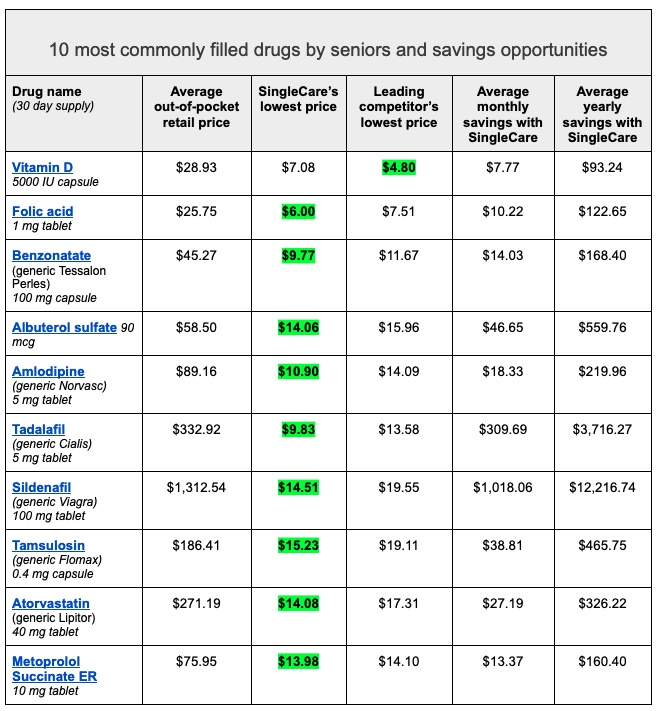
In the personal finance space, savvy users rarely rely on a single tool. They compare interest rates, cashback percentages, and, in this case, prescription discount prices. While SingleCare is a leader in the field, it exists in a competitive market alongside platforms like GoodRx, WellRx, and Optum Perks.
Price Transparency and Stability
The primary “cost” of using these services is actually the time spent on price discovery. SingleCare differentiates itself through a user-friendly interface that provides immediate transparency. From a financial management perspective, price transparency is the enemy of inflation. When you know the floor price of a commodity—in this case, a generic drug—you are empowered to make better purchasing decisions.
SingleCare often negotiates directly with pharmacies, which can lead to more stable pricing. While prices for medications do fluctuate based on manufacturer supply and pharmacy overhead, having a reliable baseline allows a household to budget for their medical needs with greater accuracy.
Accessibility Across Pharmacy Networks
A financial tool is only valuable if it is liquid and accessible. SingleCare is accepted at over 35,000 pharmacies nationwide, including major players like CVS, Walgreens, Walmart, and Kroger. This wide acceptance ensures that the “cost” of using the service doesn’t include excessive travel time or fuel expenses to reach a specific, obscure pharmacy. For the consumer, this means the convenience of their local infrastructure remains intact while their costs decrease.
Advanced Financial Strategies for Prescription Management
To truly maximize the benefit of a $0-cost tool like SingleCare, users should integrate it into their broader financial planning. This involves understanding the intersection of discount cards with tax-advantaged accounts and government programs.
Leveraging SingleCare with Health Savings Accounts (HSAs)
For those who have a Health Savings Account (HSA) or a Flexible Spending Account (FSA), SingleCare becomes even more powerful. While you generally cannot “double-dip” by using insurance and a discount card simultaneously, you can use your HSA or FSA funds to pay for the discounted price found through SingleCare.
This creates a triple-financial win:
-
You lower the base price of the medication using the discount card.
-
You pay for that lower price using pre-tax dollars from your HSA.
-
You keep more of your post-tax income for other investments or living expenses.
This strategy is particularly effective for generic drugs, where the SingleCare price might be lower than the insurance copay. By choosing the lower price and paying with tax-advantaged funds, the effective “net cost” of the medication is reduced to its absolute minimum.
Navigating the Medicare Coverage Gap
For retirees, the “Donut Hole” or coverage gap in Medicare Part D is a significant financial hurdle. When a senior enters the coverage gap, their out-of-pocket costs for prescriptions can skyrocket. During this period, the “monthly cost” of their medications can become unsustainable.
SingleCare provides a vital financial bridge during these months. Because the card is not insurance, it can be used by Medicare recipients to secure lower prices when they are in the coverage gap. While these purchases typically do not count toward the TrOOP (True Out-of-Pocket) costs that help a user exit the Donut Hole, the immediate cash-flow relief is often more important for those living on a fixed monthly income.
The Bottom Line: Evaluating the Long-Term Value
When we conclude that SingleCare costs nothing per month, we must then look at the opportunity cost of not using it. In personal finance, failing to utilize a free tool that reduces expenses is effectively a self-imposed tax.
The Impact of Medication Adherence on Personal Wealth
There is a direct correlation between physical health and financial health. Medication non-adherence—the act of not taking prescribed medicine—is often driven by cost. When patients skip doses to save money, they risk catastrophic health events that lead to emergency room visits, hospitalizations, and lost wages.
The long-term financial “cost” of not affording a $20 monthly medication could be a $50,000 hospital bill. By removing the price barrier, SingleCare acts as a form of financial insurance, protecting the user from the high costs associated with declining health.

Conclusion: A Staple Tool for the Modern Budget
In the search for financial independence and stability, every dollar saved on recurring expenses is a dollar that can be put to work in an index fund, a high-yield savings account, or a child’s education fund. SingleCare is a rare example of a financial tool that offers high utility with zero overhead.
It does not cost a cent per month to carry the card or use the app. Instead, it offers a pathway to transparency in an opaque industry. By integrating this tool into a monthly financial routine—alongside budgeting apps and investment platforms—consumers can gain mastery over one of their most unpredictable expenses. The question isn’t how much SingleCare costs, but rather, how much it can save you. For the disciplined optimizer, the answer is often enough to change the trajectory of their monthly savings rate.
aViewFromTheCave is a participant in the Amazon Services LLC Associates Program, an affiliate advertising program designed to provide a means for sites to earn advertising fees by advertising and linking to Amazon.com. Amazon, the Amazon logo, AmazonSupply, and the AmazonSupply logo are trademarks of Amazon.com, Inc. or its affiliates. As an Amazon Associate we earn affiliate commissions from qualifying purchases.