
In the modern financial landscape, the seamless movement of capital depends on a sophisticated network of identifiers that ensure funds reach their intended destination without friction. Among these identifiers, the routing transit number (RTN) stands as one of the most critical components of the United States banking infrastructure. Whether you are setting up a direct deposit for a new career opportunity, scheduling an automated mortgage payment, or initiating an electronic wire transfer, knowing exactly where to find your routing number—and understanding its function—is a fundamental skill in personal and business finance management.

While the digitalization of banking has made financial management more convenient, it has also distributed essential information across various platforms. This guide provides a deep dive into the physical and digital locations where you can locate your routing number, the mechanics of how these numbers function, and the security protocols necessary to protect your financial data.
Understanding the Role of Routing Numbers in Personal Finance
Before embarking on the search for your routing number, it is essential to understand what this sequence of digits represents. Introduced by the American Bankers Association (ABA) in 1910, the routing number was designed to facilitate the sorting, bundling, and shipment of physical paper checks. Over a century later, it remains the “address” for your financial institution within the Federal Reserve’s electronic payment system.
What is an ABA Routing Number?
An ABA routing number is a nine-digit code used to identify a specific financial institution within the United States. Unlike an account number, which is unique to your individual holdings, a routing number is shared by many customers within the same bank or geographical region. It acts as a gateway, telling the banking system exactly which “vault” the money needs to enter or exit.
The nine digits are not random. The first two digits represent the Federal Reserve district where the bank is located. The third digit identifies the Federal Reserve check processing center initially assigned to the bank. The fourth digit denotes the state where the bank is headquartered. Digits five through eight represent the specific financial institution’s unique identifier, and the ninth digit is a “check digit,” a mathematical verification tool used to ensure the preceding eight digits were entered correctly.
Why Your Routing Number Matters for Financial Transactions
In the realm of personal finance, the routing number is the primary mechanism for Automated Clearing House (ACH) transfers. This includes the vast majority of payroll deposits, Social Security payments, and recurring bill payments. Without a valid routing number, the electronic network cannot “route” the transaction to your bank. Furthermore, for businesses managing accounts payable or individuals moving large sums via domestic wire transfers, the routing number provides the necessary verification that the receiving institution is a legitimate, regulated entity.
Primary Locations to Locate Your Bank’s Routing Number
While there are several ways to find a routing number, the most reliable methods involve checking the documents or portals provided directly by your financial institution.
Reading a Paper Check: The Standard Method
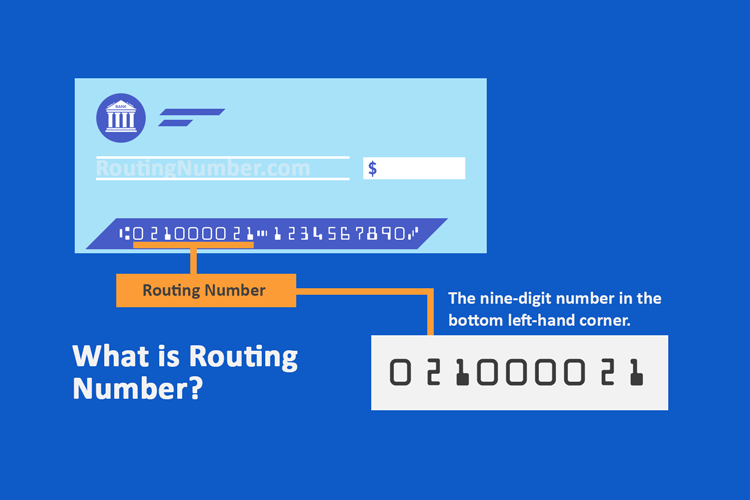
For those who still maintain a physical checkbook, the routing number is readily available on every individual check. If you look at the bottom of a check, you will see a string of numbers printed in a unique, blocky font. This is known as the MICR line (Magnetic Ink Character Recognition).
The MICR line typically consists of three sets of numbers. In almost all standard personal checks, the routing number is the first sequence of nine digits on the far left. It is usually flanked by a specific symbol that looks like a vertical bar and a colon. The second set of numbers is your individual account number, and the third set is the specific check number. By identifying the nine-digit sequence on the bottom left, you have found the routing number for your checking account.
Online Banking Portals and Mobile Apps
As the world moves toward a paperless economy, many consumers no longer carry checkbooks. In these instances, the most efficient way to find a routing number is through a bank’s digital interface. Upon logging into your online banking portal or mobile application, you should navigate to the “Account Details,” “Account Summary,” or “Information” tab for the specific account you are using.
Most modern banking apps include a “Direct Deposit” or “ACH Information” section. Within this section, banks will explicitly list the routing number alongside your account number. Some institutions even provide a pre-filled PDF form for direct deposits, which contains all the necessary identifiers in a professional format ready for submission to an employer or a government agency.
Official Bank Statements and Correspondence
Your monthly or quarterly bank statements are another authoritative source for your routing number. Financial institutions typically print the routing number at the top or bottom of the statement header, often near the bank’s logo and contact information. If you receive digital statements via email or through an “e-Statements” portal, you can download the PDF and search for the nine-digit code. This is particularly useful for savings accounts, which do not typically come with checkbooks but still require routing numbers for electronic transfers.
Alternative Methods and Technical Considerations

In certain circumstances, you may not have immediate access to your checkbook or your online login credentials. In these cases, secondary methods can be utilized to verify your bank’s routing information.
The American Bankers Association (ABA) Database
Since the ABA is the organization that assigns and manages these numbers, they maintain a comprehensive database. You can visit the ABA website and use their “Routing Number Lookup” tool. By providing the legal name of your bank and the state in which your account was opened, you can retrieve the correct routing sequence. However, keep in mind that some large national banks have multiple routing numbers based on the state where the account was originally established, so you must be specific about your account’s origin.
Distinguishing Between ACH and Wire Routing Numbers
A common point of confusion in business finance and high-value personal transactions is the distinction between ACH routing numbers and Wire routing numbers. While many smaller banks use a single routing number for all transactions, larger national institutions often maintain separate numbers.
The ACH routing number is used for standard electronic transfers, such as payroll or utility payments. The Wire routing number is used specifically for real-time, high-security domestic wire transfers. If you provide an ACH routing number for a wire transfer, the transaction may be rejected or delayed. Always check your bank’s “Wire Transfer Instructions” page to confirm if a different number is required for these specific types of movements.
Mergers, Acquisitions, and Changing Numbers
The banking industry is characterized by frequent mergers and acquisitions. When one bank buys another, the routing numbers of the acquired institution are eventually phased out and replaced by those of the parent company. If your bank has recently undergone a rebranding or a merger, your old routing number may remain valid for a “grace period,” but you will eventually need to update your records. To find the current, post-merger routing number, check the “Frequently Asked Questions” section of the new bank’s website; they will usually have a dedicated page for former customers of the acquired bank to find their new identifiers.
Critical Distinctions: Routing Numbers vs. Account Numbers
For those managing their personal finances, the most dangerous error is confusing the routing number with the account number. While the routing number is public information in the sense that it identifies the institution, your account number is private and unique to your funds.
Identifying the Sequence Length
The easiest way to tell the two apart is the length of the digit string. An ABA routing number is strictly nine digits long. Account numbers, however, vary significantly in length depending on the bank, typically ranging from 8 to 12 digits. When filling out financial forms, the routing number box will often have nine slots, providing a visual cue to ensure the correct number is entered.
Security and Data Privacy
In the context of digital security, the routing number is generally considered less sensitive than the account number. You can often find a bank’s routing number by a simple search on their public website. However, when the routing number is paired with your account number, it provides the full “coordinate set” required to withdraw or deposit funds.
Because of this, you should never share your routing and account numbers on unencrypted platforms or via standard email. When setting up financial tools or apps, ensure that you are using a secure, verified connection. Financial tools that use “Plaid” or similar API aggregators allow you to link accounts without manually entering routing numbers, adding a layer of encryption and security to the process.
Troubleshooting and International Considerations
While the routing number system is robust, certain scenarios require additional knowledge to navigate effectively.
International Transfers and SWIFT Codes
If you are expecting funds from outside the United States, a standard nine-digit routing number will not suffice. The U.S. routing system is domestic. For international transactions, the global banking system uses SWIFT (Society for Worldwide Interbank Financial Telecommunication) codes or BIC (Bank Identifier Codes).
If a sender in Europe or Asia asks for your routing information, you must provide your bank’s SWIFT code in addition to your domestic routing and account numbers. Most major U.S. banks have a dedicated international department that can provide this code, which is usually 8 to 11 characters long and contains both letters and numbers.
What to Do if a Transaction Fails
If you have entered what you believe to be the correct routing number and a transaction fails, the first step is to verify the “transit” status of the number. Occasionally, banks retire certain routing numbers due to internal restructuring. You can contact your bank’s customer service or visit a local branch to ask for a “Direct Deposit Letter.” This is an official document provided by the bank that lists the current, verified routing and account numbers specifically for your account type.
By mastering the details of where to find and how to use your routing number, you take a significant step toward financial literacy and operational security. Whether it is through the MICR line of a paper check or the secure dashboard of a mobile app, this nine-digit code remains the essential heartbeat of the American financial system, ensuring that your hard-earned money arrives exactly where it belongs.
aViewFromTheCave is a participant in the Amazon Services LLC Associates Program, an affiliate advertising program designed to provide a means for sites to earn advertising fees by advertising and linking to Amazon.com. Amazon, the Amazon logo, AmazonSupply, and the AmazonSupply logo are trademarks of Amazon.com, Inc. or its affiliates. As an Amazon Associate we earn affiliate commissions from qualifying purchases.