
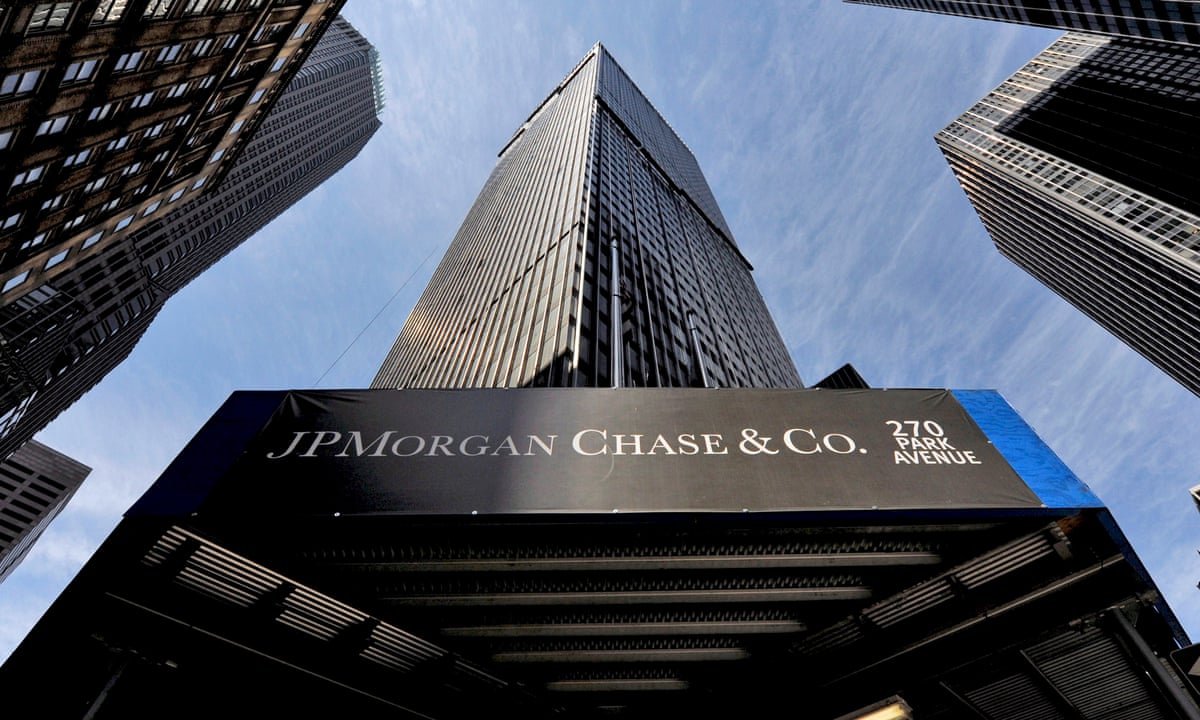
The landscape of American finance was irrevocably altered on December 31, 2000. As the world stood on the cusp of a new millennium, two of the most storied names in banking—J.P. Morgan & Co. and The Chase Manhattan Corporation—officially finalized a merger that created a global financial powerhouse. This $30 billion deal was not merely a corporate transaction; it was a strategic marriage that redefined the concept of the “universal bank,” blending high-stakes investment banking with a massive commercial and retail footprint.
Understanding when and why these two giants merged requires a deep dive into the regulatory shifts of the late 1990s and the evolving demands of global capital markets. The resulting entity, JPMorgan Chase & Co., has since become the largest bank in the United States and a cornerstone of the global economy. This merger represented the culmination of decades of consolidation in the banking sector, signaling the end of the era of specialized banking and the beginning of the age of the financial supermarket.

The Finalization of the $30 Billion Deal
The formal announcement of the merger came in September 2000, sent as a shockwave through Wall Street. At the time, J.P. Morgan & Co. was viewed as the “blue-blooded” aristocrat of the banking world, known for its prestigious client list and its role as a premier advisor to the world’s largest corporations and governments. Chase Manhattan, meanwhile, was a powerhouse of commercial lending and retail banking, having recently merged with Chemical Bank in 1996 to become the largest bank holding company in the U.S. at the time.
The deal was structured as a stock swap valued at approximately $30 billion. Under the terms of the agreement, Chase Manhattan acquired J.P. Morgan, but the brand identity of the new firm reflected the immense prestige of the Morgan name. William B. Harrison Jr., who was the chairman and CEO of Chase at the time, became the CEO of the combined firm, while Douglas A. Warner III, the chairman of J.P. Morgan, served as the chairman of the board.
The Strategic Announcement and Market Reaction
When the merger was announced on September 13, 2000, the primary motivation was clear: scale. The financial services industry was becoming increasingly globalized and competitive. By joining forces, Chase and J.P. Morgan could offer a “one-stop-shop” for every financial need. A corporate client could now look to the same institution for a multi-billion dollar credit line (Chase’s specialty) and a sophisticated merger advisory or equity underwriting (Morgan’s specialty).
The market reaction was a mix of awe and skepticism. Critics questioned whether the starkly different cultures of the two firms—the aggressive, volume-driven culture of Chase and the refined, relationship-oriented culture of J.P. Morgan—could successfully integrate. However, the sheer logic of the balance sheet was undeniable. The combined entity boasted assets of approximately $660 billion, placing it in direct competition with the other emerging behemoth of the era, Citigroup.
The Historical DNA of Two Banking Powerhouses
To understand the weight of the 2000 merger, one must look at the lineages of the two institutions. Both firms carried legacies that stretched back to the early days of the American republic and the industrial revolution.
J.P. Morgan & Co.: The Aristocrat of Wall Street
Founded by John Pierpont Morgan, the firm was synonymous with the development of the American economy. J.P. Morgan himself was the primary architect of the “Morganization” of the U.S. rail system and the creator of U.S. Steel, the world’s first billion-dollar corporation. The firm was famous for its “House of Morgan” headquarters at 23 Wall Street, a building that still stands as a symbol of financial power. For over a century, J.P. Morgan & Co. acted as a de facto central bank for the United States before the creation of the Federal Reserve, most notably during the Panic of 1907.
Chase Manhattan: The Commercial Engine
The Chase side of the family tree was equally impressive. The Chase National Bank was founded in 1877 and named after Salmon P. Chase, the Treasury Secretary under Abraham Lincoln. In 1955, Chase National Bank merged with the Bank of the Manhattan Company (founded by Aaron Burr in 1799) to form the Chase Manhattan Bank. This institution became closely associated with the Rockefeller family, particularly David Rockefeller, who led the bank during its period of massive international expansion in the 1960s and 70s. By the late 1990s, after its merger with Chemical Bank, Chase was the king of the “middle market” and consumer banking.
Regulatory Catalysts: The Gramm-Leach-Bliley Act of 1999
The merger would likely have been impossible—or at least much more difficult—just two years prior. The defining regulatory moment that paved the way for the J.P. Morgan and Chase union was the passage of the Gramm-Leach-Bliley Act in 1999.
For nearly 70 years, the Glass-Steagall Act of 1933 had mandated a strict separation between commercial banking (taking deposits and making loans) and investment banking (underwriting securities and advising on mergers). This regulation was a response to the Great Depression, designed to prevent banks from risking depositors’ money in volatile stock market activities.
By the late 1990s, the momentum for deregulation reached a fever pitch. Proponents argued that American banks were at a disadvantage compared to European and Japanese “universal banks” that faced no such restrictions. When President Bill Clinton signed the Gramm-Leach-Bliley Act into law, it repealed the core provisions of Glass-Steagall. This legislative shift opened the floodgates for consolidation. Banks no longer had to choose between being a commercial lender or an investment house; they could be both. Chase, a dominant commercial lender, saw the acquisition of J.P. Morgan as the fastest way to acquire a world-class investment banking platform that would have taken decades to build organically.
Strategic Rationale: The Birth of the “Universal Bank”
The merger was driven by the realization that in a globalized economy, size and diversity of revenue were the ultimate defensive and offensive tools. The leadership of both firms recognized several key synergies that made the merger attractive from a business finance perspective.
Diversification of Revenue Streams
Before the merger, Chase was heavily reliant on net interest income—the profit made from the difference between interest paid on deposits and interest earned on loans. While stable, this model was susceptible to interest rate fluctuations. J.P. Morgan, conversely, derived much of its income from fee-based services like asset management and investment banking. By merging, the new firm created a balanced revenue profile that could withstand various economic cycles. When the stock market was booming, investment banking fees would carry the firm; during downturns, the steady income from retail and commercial loans provided a “fortress balance sheet.”
Cost Synergies and Infrastructure Efficiency
In any merger of this scale, cost-cutting is a primary goal. The firms estimated that they could save billions of dollars by consolidating their back-office operations, technology platforms, and physical branches. This efficiency allowed the combined entity to invest more heavily in the emerging digital technologies that were beginning to transform banking at the turn of the century. It also allowed them to offer more competitive pricing to large corporate clients who were looking for consolidated services.
The Aftermath: Building the World’s Leading Financial Institution
The years immediately following the December 31, 2000, merger were challenging. The “dot-com” bubble had just burst, and the global economy was entering a recession. The integration process was grueling, involving the merging of thousands of employees and vastly different IT systems. However, the strategic foundation laid in 2000 proved to be remarkably resilient.
The merger allowed the firm to survive—and thrive—during periods that decimated its competitors. While other firms remained specialized and vulnerable, JPMorgan Chase used its scale to acquire other distressed or strategic assets.
The Jamie Dimon Era and Future Acquisitions
While the 2000 merger was the “Big Bang” for the firm, the next major evolutionary step occurred in 2004, when JPMorgan Chase merged with Bank One of Chicago. This deal brought Jamie Dimon into the fold as President and COO, and eventually CEO. Dimon, a protégé of Sandy Weill (the architect of Citigroup), brought a disciplined approach to risk management and a focus on operational excellence.
Under Dimon’s leadership, the firm utilized the massive capital base created by the 2000 merger to navigate the 2008 financial crisis. During the height of the crisis, at the urging of the U.S. government, JPMorgan Chase acquired the investment bank Bear Stearns and the retail giant Washington Mutual. These acquisitions solidified the firm’s position as the dominant force in American finance, a trajectory that began with the pivotal decision of Chase and J.P. Morgan to join forces at the end of 2000.

The Impact on Modern Business Finance and Global Markets
Today, JPMorgan Chase & Co. serves as the blueprint for the modern financial institution. The merger of 2000 proved that the universal banking model was not only viable but superior in terms of risk distribution and client service. For the business world, this meant that a single banking partner could support a company’s entire lifecycle—from a startup’s first credit line to an established corporation’s multi-billion dollar IPO and subsequent international expansion.
The legacy of the merger is visible in the bank’s current market capitalization, which often exceeds that of its closest rivals by significant margins. It also set a precedent for other “mega-mergers” in the industry, forcing competitors to either scale up or find niche specializations. When we look back at the date of December 31, 2000, we see more than just a calendar change; we see the birth of a financial titan that continues to shape the flow of capital across the globe, proving that the union of Chase’s commercial might and J.P. Morgan’s investment prestige was the most consequential financial deal of the 21st century.
aViewFromTheCave is a participant in the Amazon Services LLC Associates Program, an affiliate advertising program designed to provide a means for sites to earn advertising fees by advertising and linking to Amazon.com. Amazon, the Amazon logo, AmazonSupply, and the AmazonSupply logo are trademarks of Amazon.com, Inc. or its affiliates. As an Amazon Associate we earn affiliate commissions from qualifying purchases.