
Navigating the complexities of modern banking requires more than just keeping an eye on your balance; it requires a deep understanding of the fine print that governs how your money is handled when that balance hits zero. For millions of Americans, Chase Bank serves as the primary hub for their financial lives. However, even the most diligent budgeters can occasionally find themselves facing a transaction that exceeds their available funds.
Understanding the specific costs, grace periods, and protection mechanisms Chase has in place is essential for maintaining financial health. As the banking industry faces increasing pressure from regulators and fintech disruptors to lower or eliminate “junk fees,” Chase has overhauled its overdraft policies. This guide provides an exhaustive look at the current fee structure, the innovative “Overdraft Assist” program, and the strategic steps you can take to ensure you never pay a surcharge for spending your own money.

Understanding the Chase Overdraft Fee Structure
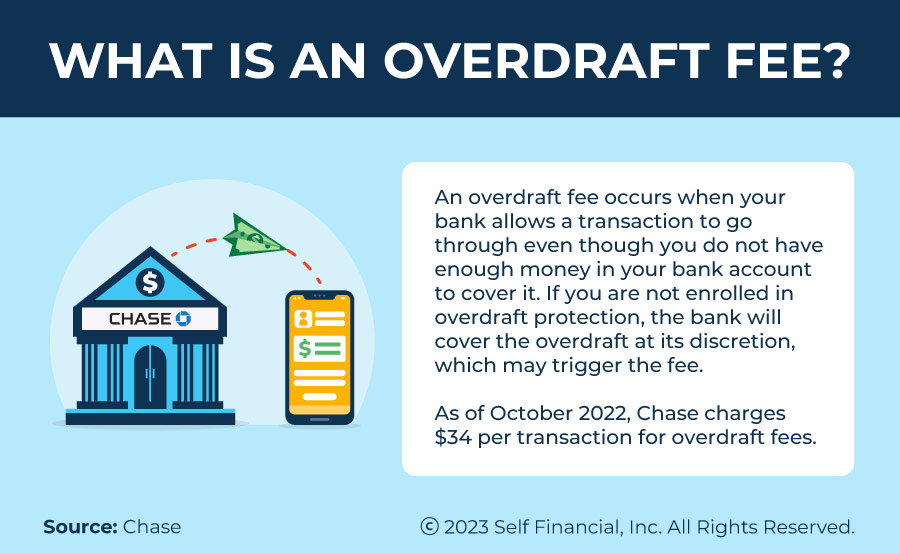
At its core, an overdraft occurs when you do not have enough money in your checking account to cover a transaction, but the bank authorizes the payment anyway. This is essentially a short-term, high-cost loan provided by the bank to prevent a payment from being returned unpaid.
The Standard Overdraft Fee
As of the current policy, Chase charges a standard Insufficient Funds Fee of $34 per transaction. This fee applies if the bank decides to pay an item—such as a check, an automatic payment (ACH), or a recurring debit card transaction—that results in your account balance being overdrawn by more than $50.
It is important to note that Chase distinguishes between “Standard Overdraft Practice” and “Debit Card Coverage.” By default, the bank will generally decline everyday, non-recurring debit card transactions (like buying a coffee or groceries) if you don’t have the funds, and no fee is charged. However, if you have specifically opted into “Debit Card Coverage,” the bank may authorize these transactions and apply the $34 fee.
The Daily Limit on Fees
One of the most critical aspects of Chase’s policy is the limit on cumulative charges. To prevent a “snowball effect” where multiple small transactions lead to hundreds of dollars in penalties, Chase limits Insufficient Funds Fees to a maximum of three per business day. This means the most you can be charged in a single day for overdrawing your account is $102, regardless of how many individual transactions are processed.
The $5 De Minimis Exception
Chase employs what is known in the industry as a “de minimis” rule. If a transaction results in your account being overdrawn by $5 or less, the bank will not charge an overdraft fee. This policy is designed to protect consumers from being penalized for minor mathematical errors or small price fluctuations in automated subscriptions.
Chase Overdraft Assist: The Modern Safety Net
In recent years, Chase introduced “Chase Overdraft Assist,” a feature that significantly altered the landscape for its account holders. This program is designed to provide a “grace period” that was previously unavailable in traditional retail banking.
The $50 Threshold
Under Chase Overdraft Assist, you will not be charged an overdraft fee if you are overdrawn by $50 or less at the end of the business day. This is a substantial increase from the previous $5 threshold and provides a significant buffer for those who might have a check clear a day earlier than expected or a utility bill that was higher than anticipated.
The Next-Day Grace Period
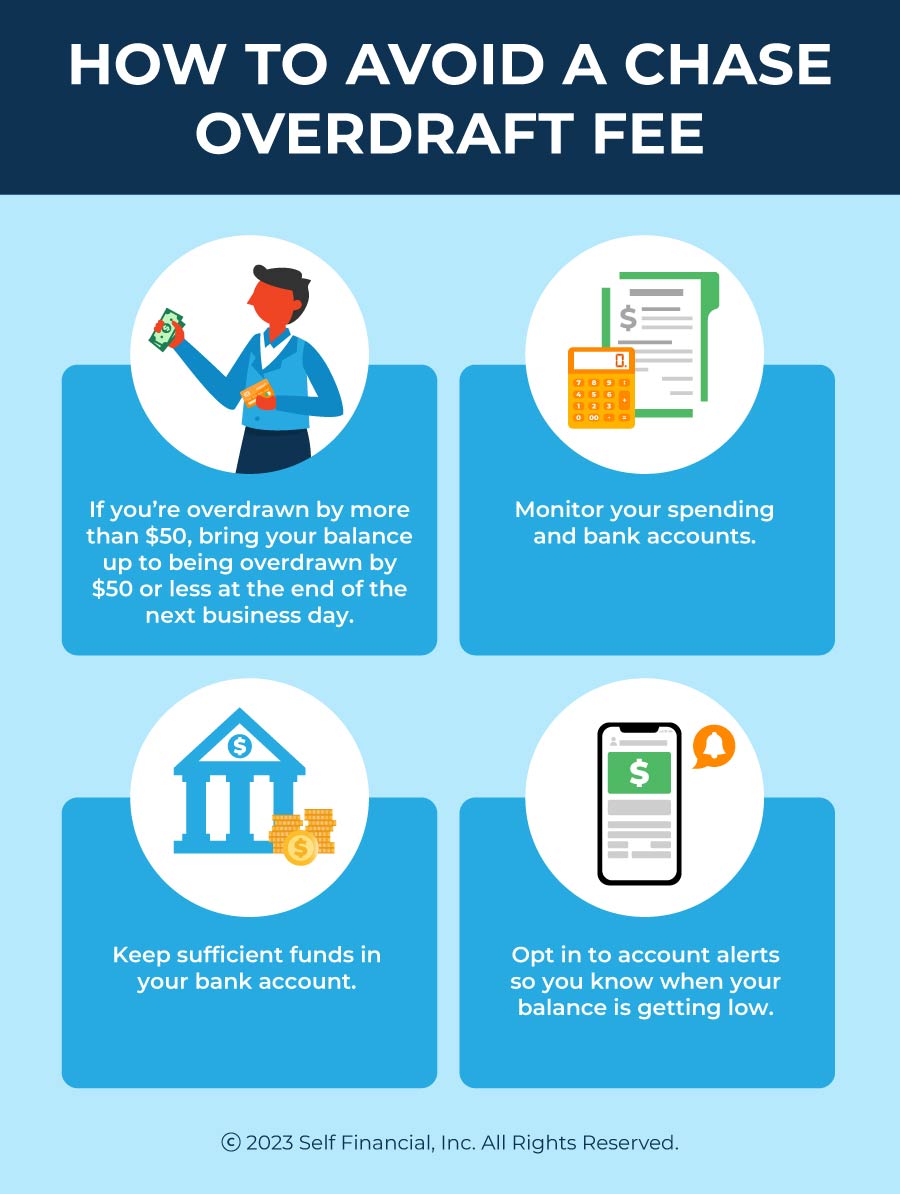
Perhaps the most consumer-friendly aspect of Chase’s current policy is the “Overdraft Assist” timing. If your account is overdrawn by more than $50 at the end of the business day, you have until the end of the next business day to bring your account balance back to a status where it is overdrawn by $50 or less.
For example, if a $200 rent check clears on Tuesday and leaves your account with a negative balance of $150, you have until the end of the business day on Wednesday to deposit or transfer at least $100. If you do this, Chase will waive the $34 overdraft fee that would have otherwise been assessed on Tuesday’s transaction. This provides a vital window for individuals to move money from a side hustle, a savings account, or a paycheck to cover the gap.
Overdraft Protection vs. Overdraft Coverage: Know the Difference
To effectively manage your finances at Chase, you must understand the distinction between “Overdraft Protection” and “Overdraft Coverage.” While they sound similar, they function very differently and carry different implications for your wallet.
Overdraft Protection (Linking Accounts)
Overdraft Protection is an optional service where you link your Chase checking account to a backup account, typically a Chase savings account or a Chase Liquid card. If a transaction exceeds your checking balance, the bank automatically transfers funds from the linked backup account to cover the shortfall.
Historically, banks charged a fee for this transfer, but Chase has eliminated the transfer fee for Overdraft Protection. This makes it one of the most effective tools for avoiding the $34 overdraft fee. As long as the linked savings account has sufficient funds, the transfer happens seamlessly, and no Insufficient Funds Fee is triggered.
Debit Card Coverage
Debit Card Coverage is a specific choice you make regarding everyday, one-time debit card transactions. Under federal law, banks cannot charge you fees for overdrawing your account with a one-time debit card transaction unless you have explicitly “opted in.”
-
If you do NOT opt in: Your card will simply be declined at the point of sale if you have insufficient funds. No fee is charged, but the inconvenience of a declined card can be high.
-
If you DO opt in: Chase may authorize the transaction at its discretion. If the transaction results in a negative balance of more than $50 (and you don’t rectify it via Overdraft Assist), you will be charged the $34 fee.
For many financial experts, the recommendation is to stay “opted out” of Debit Card Coverage. While a declined card is embarrassing, it is a free event, whereas the alternative is a $34 penalty for what might be a $5 purchase.
Chase Secure Banking: The “No-Fee” Alternative
For consumers who want to eliminate the risk of overdraft fees entirely, Chase offers the “Chase Secure Banking” account. This is a specialized checking account designed without check-writing capabilities. It is structured so that the bank will generally only process transactions if the money is available. Consequently, Chase Secure Banking accounts have zero overdraft fees. While the account carries a small monthly service fee that cannot be waived through a minimum balance, it provides absolute peace of mind for those who struggle with traditional account management.
Strategic Ways to Avoid Overdraft Fees at Chase
While Chase has made its fee structure more transparent and forgiving, the best strategy is always to avoid the fees entirely. This requires a combination of leveraging Chase’s digital tools and maintaining strict personal financial discipline.
Utilize Real-Time Alerts
The Chase mobile app offers robust notification settings. You can set up “Low Balance Alerts” that send a push notification or text message the moment your account drops below a certain dollar amount (e.g., $100 or $200). This acts as an early warning system, allowing you to curb spending or transfer funds before you even reach the overdraft threshold.
Mind the “Available Balance” vs. “Present Balance”
One of the most common reasons people hit overdraft fees is a misunderstanding of their balance.
-
Present Balance: The total amount of money in your account, including “pending” transactions that haven’t fully cleared.
-
Available Balance: The amount of money you can actually spend right now.
Always check your Available Balance. If you have a $100 “pending” hold from a gas station or a hotel, that money is not available for other purchases, even if it still appears in your total balance.
Understand Business Day Cut-Offs
Chase processes transactions on “business days,” which are Monday through Friday, excluding federal holidays. If you make a deposit at an ATM or via the mobile app after the daily cut-off time (usually 8:00 PM or 11:00 PM ET depending on the method and location), that money might not be considered “available” until the following business day. If a bill clears during that gap, you could be hit with a fee despite having made the deposit. Always aim to deposit funds well before the cut-off times to ensure they are credited to your available balance.
The Evolving Landscape of Modern Banking Fees
The conversation around Chase’s overdraft fees does not exist in a vacuum. It is part of a broader shift in the American banking sector. In recent years, several major competitors have eliminated overdraft fees entirely or introduced even more aggressive grace periods.
Regulators, including the Consumer Financial Protection Bureau (CFPB), have taken a hard line against “surprise” fees, leading institutions like Chase to lean more heavily into “Overdraft Assist.” This trend toward consumer-friendly fee structures is a net positive for personal finance management. It moves the banking relationship away from a punitive model and toward a collaborative one, where the bank provides the tools for the consumer to succeed rather than profiting from their mistakes.
Ultimately, while Chase charges $34 for a standard overdraft, the numerous exceptions—the $50 buffer, the $5 de minimis rule, the next-day grace period, and the ability to link accounts for free protection—mean that an informed consumer should rarely have to pay these fees. By mastering the nuances of the Chase Overdraft Assist program and utilizing the bank’s digital alert systems, you can ensure that your capital stays in your account, working for your future rather than being lost to preventable penalties.
aViewFromTheCave is a participant in the Amazon Services LLC Associates Program, an affiliate advertising program designed to provide a means for sites to earn advertising fees by advertising and linking to Amazon.com. Amazon, the Amazon logo, AmazonSupply, and the AmazonSupply logo are trademarks of Amazon.com, Inc. or its affiliates. As an Amazon Associate we earn affiliate commissions from qualifying purchases.