
Obtaining your first credit card, or even adding a new one to your financial portfolio, is a significant milestone in your personal finance journey. A credit card is more than just a piece of plastic or a digital entry in a mobile wallet; it is a powerful financial tool that, when used correctly, can help you build a robust credit history, earn valuable rewards, and provide a safety net for emergencies. However, the process of getting a credit card is often shrouded in jargon and complex requirements. To navigate this landscape successfully, you must understand the mechanics of credit scoring, the variety of products available, and the specific steps required to move from applicant to cardholder.
Understanding Your Credit Profile Before Applying
Before you fill out a single application, the most critical step is to understand where you stand in the eyes of lenders. Financial institutions use your credit profile to assess risk—the likelihood that you will pay back the money you borrow. If you apply for a card that requires “Excellent” credit while yours is “Fair,” you risk a rejection that could temporarily lower your credit score further.
The Role of Credit Scores and Reports
Your credit score is a three-digit number, typically ranging from 300 to 850, that summarizes your creditworthiness. The most commonly used models are FICO and VantageScore. A score above 740 is generally considered very good to excellent, while a score below 600 may limit your options to specialized products.
Your score is derived from your credit report, a detailed record maintained by the three major credit bureaus: Equifax, Experian, and TransUnion. This report includes your history of loans, credit card accounts, payment patterns, and any public records like bankruptcies. It is essential to pull your credit report—which you can do for free once a week through official channels—to ensure there are no errors. Incorrectly reported late payments or accounts you didn’t open can tank your score and lead to an immediate denial.
Establishing Credit if You Have No History
If you are a student or someone who has never used credit, you face a “thin file” problem. Lenders cannot assess your risk because there is no data to analyze. In this scenario, your path to a credit card might involve a “secured” card or a student-specific card. A secured card requires a refundable security deposit that usually acts as your credit limit. This minimizes the lender’s risk while allowing you to build the payment history necessary to graduate to a traditional “unsecured” card.
Assessing Your Debt-to-Income Ratio
While your credit score is the primary factor, lenders also look at your ability to pay. This is often measured by your Debt-to-Income (DTI) ratio. Even with a high credit score, if your monthly debt obligations are too high relative to your gross monthly income, a lender might worry that adding another line of credit will overextend your finances. Before applying, ensure your stated income is accurate and includes all legal sources of funds available to you.
Choosing the Right Credit Card for Your Needs
The market is saturated with hundreds of credit card products, each designed for a specific type of consumer. Applying for the “best” card on a top-ten list might not be the best move for you if its features don’t align with your spending habits or financial goals.
Secured vs. Unsecured Credit Cards
As mentioned, secured cards are the entry point for those with poor or no credit. Unsecured cards are the standard product where no deposit is required. Within the unsecured category, cards are further stratified by their “prestige” and requirements. Premium cards with high annual fees often offer massive sign-up bonuses and travel perks but require high scores and high income. “Starter” unsecured cards may have lower limits and fewer perks but are more accessible.
Rewards, Cash Back, and Travel Incentives
If your credit score is in the good-to-excellent range (670+), you should look for cards that pay you back for your spending.
-
Cash Back Cards: These are the simplest. They offer a percentage of your spend (usually 1% to 6%) back as a statement credit or bank deposit. Some have flat rates, while others have “rotating categories” like groceries or gas.
-
Travel Rewards Cards: These earn points or miles that can be redeemed for flights, hotels, or car rentals. These are ideal for frequent travelers who can maximize the value of the points.
-
Retail/Store Cards: These are specific to a brand (like Amazon or Target). They often have lower barriers to entry but can only be used at that specific retailer or offer much lower rewards elsewhere.
Low-Interest and Balance Transfer Cards
If your goal is not rewards but rather managing existing debt or financing a large purchase, you should look for cards offering a 0% introductory APR (Annual Percentage Rate). A balance transfer card allows you to move high-interest debt from an old card to a new one with 0% interest for a set period (usually 12 to 21 months). This can save you hundreds of dollars in interest, provided you have a plan to pay off the balance before the introductory period ends.
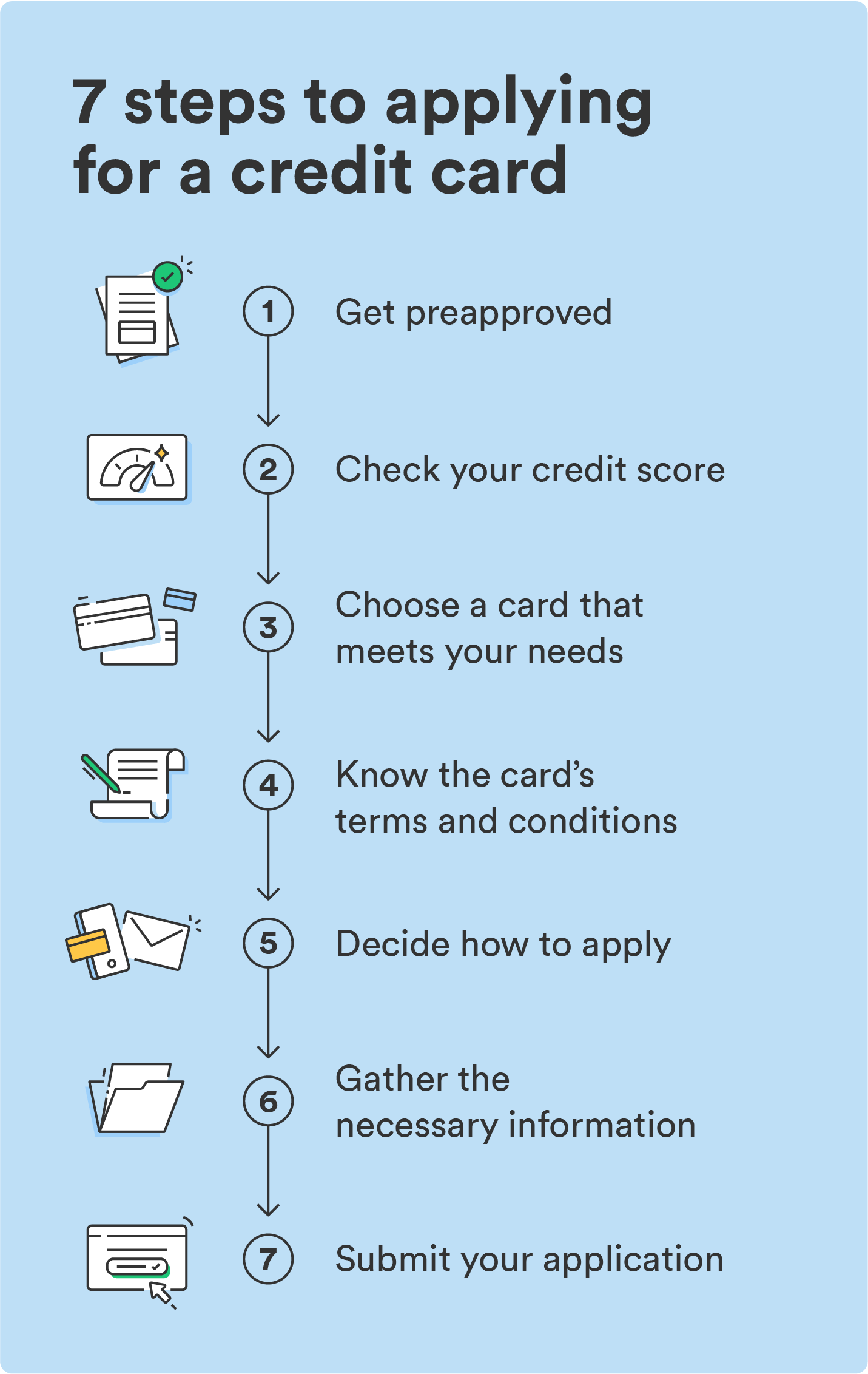
The Step-by-Step Application Process

Once you have identified the right card for your profile, the application process itself is relatively straightforward, but it requires precision. Most applications are completed online and provide a decision within seconds, though some may require manual review.
Gathering Necessary Documentation
To complete an application, you will need to provide:
-
Personal Identification: Full legal name, Social Security Number (SSN) or Individual Taxpayer Identification Number (ITIN), and date of birth.
-
Contact Information: Physical address (usually not a P.O. Box), email address, and phone number.
-
Financial Details: Total annual gross income. This can include salary, bonuses, investment income, and in some cases, household income if you have reasonable access to it. You will also likely be asked for your monthly housing payment (rent or mortgage).
Pre-qualification and Pre-approval
Many major issuers offer a “pre-qualification” tool on their websites. This is a crucial step for savvy applicants. Pre-qualification uses a “soft pull” on your credit, which does not affect your credit score. It gives you a highly accurate estimate of whether you will be approved before you commit to a “hard pull.” While pre-qualification is not a 100% guarantee of approval, it significantly reduces the guesswork.
Completing the Official Application
When you submit the final application, the lender performs a “hard inquiry.” This will typically drop your credit score by a few points temporarily. Ensure all information is entered accurately; a simple typo in your SSN or address can lead to an automatic rejection for “identity verification” issues. Once submitted, the issuer’s algorithm will analyze your data against their internal underwriting standards.
What Happens After You Submit Your Application
After clicking “submit,” you will usually see one of three outcomes: immediate approval, immediate denial, or a “pending” status.
The Approval and Hard Inquiry Phase
If approved, you will be notified of your initial credit limit and your APR. Note that the APR offered is often a range; those with better credit get the lower end of that range. Your hard inquiry will appear on your credit report shortly thereafter. It remains on your report for two years but generally only impacts your score for one.
Dealing with a Rejection
If your application is denied, do not panic. By law, the lender must send you an “Adverse Action Notice.” This document explains the specific reasons for the denial (e.g., “too many recent inquiries,” “income too low,” or “insufficient credit history”).
- Reconsideration Lines: One of the best-kept secrets in personal finance is the reconsideration line. You can call the lender’s credit department and ask them to review your application manually. If you can explain a one-time blip in your credit history or clarify your income, a human representative can sometimes overturn a computer-generated denial.
Receiving and Activating Your Card
If approved, your physical card will typically arrive by mail within 7 to 10 business days. Some issuers provide a “virtual card number” immediately upon approval so you can begin spending online or through mobile wallets right away. Once the physical card arrives, you must activate it via the issuer’s app or website and set up your online account management.
Best Practices for Maintaining Your New Credit Line
Getting the card is only the beginning. How you manage it over the first six months will determine the future of your credit score and your ability to access larger loans, such as mortgages or auto loans, in the future.
Utilization Ratios and Payment History
The two most important factors in your credit score are payment history and credit utilization.
-
Payment History (35% of score): Never miss a payment. Even one payment that is 30 days late can cause a massive drop in your score. Set up autopay for at least the “minimum amount due” to ensure you are never late.
-
Credit Utilization (30% of score): This is the percentage of your total credit limit that you are using. If you have a $1,000 limit and a $900 balance, your utilization is 90%, which signals high risk to lenders. Aim to keep your utilization below 30%, and ideally below 10%, to maximize your score.
Avoiding Interest and Managing Debt
The highest cost of a credit card is the interest rate. Most credit cards have an “interest-free grace period.” If you pay your “Statement Balance” in full every single month by the due date, you will not be charged a penny in interest. This is the gold standard of credit card use. If you only pay the minimum, the interest will compound, and you may find yourself in a cycle of debt that is difficult to escape.
Long-term Credit Growth Strategies
As you demonstrate responsible use, you can request credit limit increases every 6 to 12 months. A higher limit with the same spending habits lower your utilization ratio, further boosting your score. Additionally, keep your oldest accounts open even if you don’t use them frequently, as the “age of credit” is a significant factor in your score’s longevity. By treating your credit card as a financial tool rather than a source of “free money,” you turn the application process into a gateway for long-term financial stability and wealth building.
aViewFromTheCave is a participant in the Amazon Services LLC Associates Program, an affiliate advertising program designed to provide a means for sites to earn advertising fees by advertising and linking to Amazon.com. Amazon, the Amazon logo, AmazonSupply, and the AmazonSupply logo are trademarks of Amazon.com, Inc. or its affiliates. As an Amazon Associate we earn affiliate commissions from qualifying purchases.