
The journey of a brand from a regional concept to a global retail behemoth is a complex tapestry woven with strategic vision, cultural understanding, and unwavering commitment to its core identity. Costco Wholesale, renowned for its membership-based warehouse model, bulk offerings, and “treasure hunt” shopping experience, stands as a prime example of a brand that has successfully transcended geographical boundaries. Its global footprint is not merely a testament to market expansion but a powerful case study in how a distinct brand strategy can be adapted and sustained across diverse international landscapes.
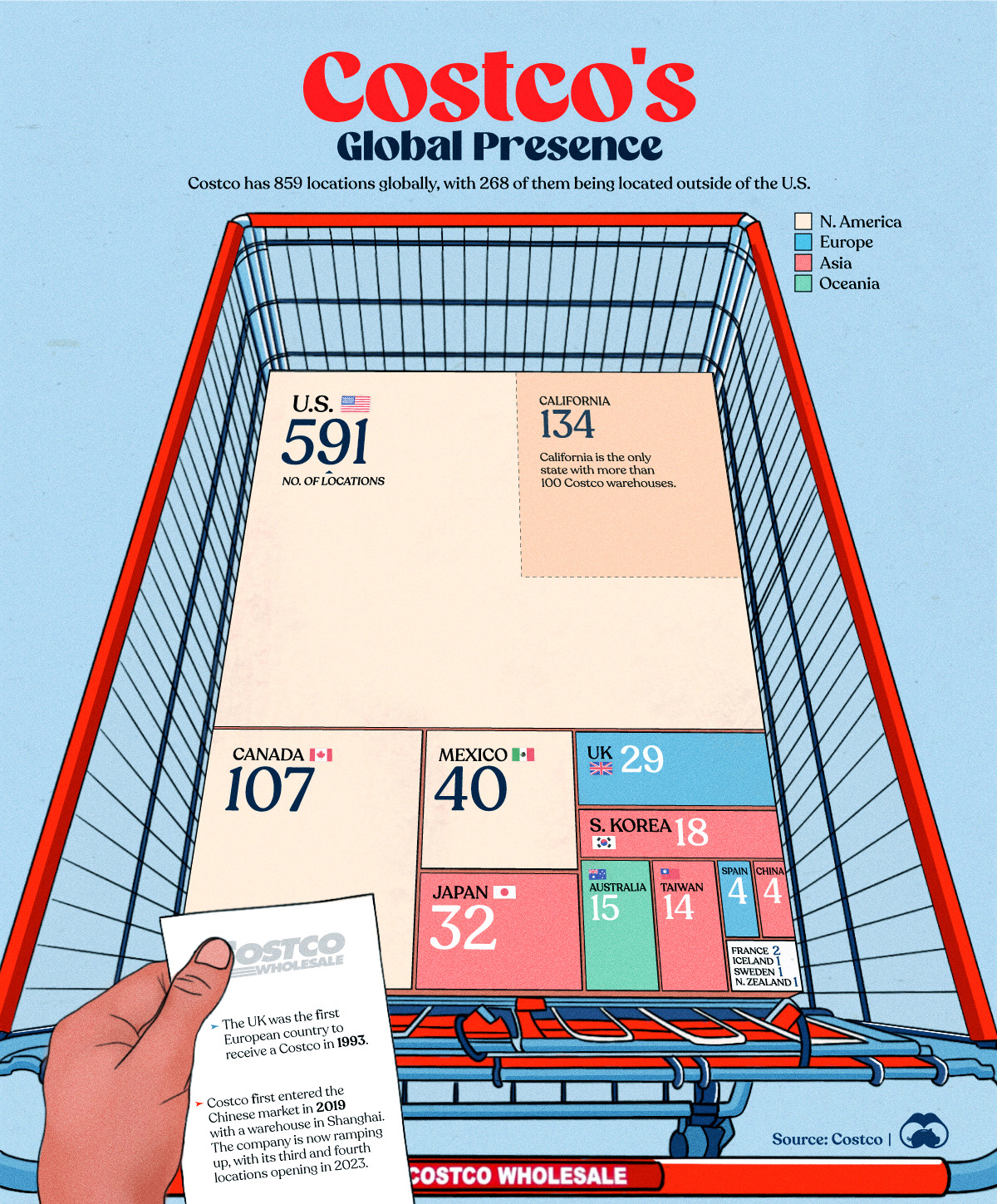
Costco currently operates in a significant number of countries worldwide, extending its unique retail model far beyond its North American origins. As of its latest reports, Costco’s presence includes:

-
United States: The foundational market, home to the vast majority of its warehouses.
-
Canada: Its first international market, with a robust and well-established presence.
-
Mexico: A strong foothold in Latin America.
-
United Kingdom: A key market in Europe.
-
Japan: A significant presence in Asia, showcasing successful adaptation to a unique consumer culture.
-
South Korea: Another strong Asian market.
-
Taiwan: Continuing its Asian expansion.
-
Australia: Dominating the Oceania region.
-
Spain: Expanding its European reach.
-
France: Further solidifying its presence in Western Europe.
-
China: A newer, high-profile entry point into the world’s most populous market.
-
Iceland: A unique and smaller European market entry.
-
New Zealand: Expanding its Oceania presence.
-
Sweden: Its latest foray into Northern Europe, demonstrating continuous strategic growth.
This diverse geographical spread underscores the universal appeal of its value proposition and the adaptability of its corporate identity, yet each market presents its own unique brand challenges and opportunities.
The Global Resonance of a Distinct Brand Strategy
Costco’s brand strategy is fundamentally built upon several pillars: value, quality, the “treasure hunt” experience, and the exclusive nature of its membership. Translating these core brand elements successfully across varying economic conditions, consumer behaviors, and cultural preferences is paramount to its international triumph.
Membership: The Cornerstone of Global Loyalty
At the heart of the Costco brand is its membership model. This isn’t merely a barrier to entry; it’s a critical component of its value proposition and a powerful loyalty mechanism. Internationally, the concept of paying an annual fee for the privilege of shopping has been met with varying degrees of initial skepticism, yet Costco has consistently demonstrated its ability to convert customers into loyal members.
The brand messaging around membership focuses on access to significantly lower prices on bulk items, exclusive products, and a curated selection of high-quality goods. In markets like Japan, where smaller living spaces are common, the large package sizes might seem incongruous, yet the perceived value of premium goods at competitive prices, particularly for families or small businesses, has resonated strongly. This success highlights the power of a consistent brand promise that prioritizes perceived savings and quality, rather than just convenience or immediate gratification, which might be more common in other retail formats. The membership fee also fosters a sense of exclusivity and community, subtly reinforcing the brand’s premium yet accessible image globally.
Value and Quality: A Universal Brand Language
While “value” can be interpreted differently across cultures, Costco’s brand articulates it through a clear promise: providing high-quality, often premium, goods at prices typically lower than traditional retail, especially when purchased in bulk. This commitment extends to its private label, Kirkland Signature, which plays a pivotal role in its global brand identity.
Kirkland Signature is not just a private label; it’s a brand within a brand, perceived by many members as equal to, if not superior to, national brands. This trust, built over decades, is vital for international expansion. When Costco enters a new market, Kirkland Signature products immediately convey the brand’s commitment to quality and value. Whether it’s olive oil in France, snacks in Korea, or coffee in the UK, the Kirkland Signature brand offers a consistent benchmark of quality that members globally have come to expect and trust, solidifying Costco’s overall brand promise regardless of local product assortments. This consistency helps to mitigate the risks associated with introducing new local products, as the core brand message remains robust.
Adapting the Warehouse Experience: Local Nuances, Global Identity
While Costco maintains a remarkable level of consistency in its store layout, operational model, and branding globally, successful international expansion requires a nuanced understanding of local markets. The challenge for Costco, from a brand perspective, is to adapt sufficiently to local preferences without diluting its core brand identity.
Product Assortment and Local Taste Integration
One of the most visible adaptations lies in the product assortment. While a significant portion of the merchandise, especially non-food items and Kirkland Signature products, remains consistent, the food selection is highly localized. In Japan, shoppers might find sushi platters prepared fresh daily, while in South Korea, kimchi and bulgogi are prominent. French warehouses stock local cheeses and wines, and Australian stores feature regional meats and produce.
This strategic localization of perishable goods is crucial for brand acceptance. It demonstrates that Costco, while global, respects and caters to local tastes and culinary traditions. It’s an exercise in balancing global efficiency with local appeal, reinforcing the brand’s relevance to diverse consumer groups. This careful curation ensures that the “treasure hunt” experience, a core brand differentiator, remains exciting and relevant to the local palate, while also introducing global products that expand members’ horizons.
Cultural Adaptation in Store Experience and Marketing
Beyond products, the overall brand experience subtly shifts to accommodate cultural nuances. In some Asian markets, for instance, a more attentive customer service approach might be expected, or the layout might be optimized for different shopping patterns. Marketing materials and campaigns also adapt their tone and imagery to resonate with local sensibilities, while still adhering to the overarching Costco brand guidelines.
For example, promotional flyers or digital ads might feature local families or cultural celebrations, making the brand feel more integrated and less like an imposing foreign entity. Social media strategies are also tailored, using platforms and content styles popular in each region to engage effectively with local audiences and build community around the brand. This localized communication strategy is essential for forging deeper connections with members and fostering brand loyalty that transcends cultural differences.
Strategic Expansion: Brand Building in New Markets
Costco’s entry into new markets is not haphazard; it’s a carefully executed brand-building endeavor. Each new country represents an opportunity to extend its brand narrative, often through joint ventures or strategic partnerships that leverage local expertise while upholding the global brand standard.
Entry into China: A High-Stakes Brand Play
The entry into mainland China is a compelling case study in high-stakes brand building. Operating through a joint venture, Costco faced a market with deeply ingrained e-commerce habits and strong local competition. Yet, its brand promise of high-quality, authentic Western goods and competitive pricing resonated powerfully. The initial store opening in Shanghai saw unprecedented crowds, underscoring the strong pent-up demand for its brand proposition.
In China, Costco’s brand represents not just value, but also a guarantee of quality and authenticity, particularly for imported goods, which is a significant differentiator in a market sometimes wary of product provenance. Its strategic focus on a limited, curated selection of premium products, combined with its renowned customer service, has quickly established a strong brand reputation, attracting a rapidly growing middle class eager for perceived superior offerings and a unique shopping experience. The brand leveraged initial buzz and word-of-mouth, which is a powerful marketing tool, especially in densely populated urban centers.
Sweden: The Latest European Brand Chapter
Costco’s recent opening in Sweden in 2022 exemplifies its continued confidence in the universal appeal of its brand. Entering a market known for its strong co-operative retail culture and high consumer expectations for sustainability and quality, Costco needed to clearly articulate its unique value proposition. The brand successfully communicated the benefits of its membership model and bulk offerings, appealing to both families and small businesses. Its brand identity as a trusted source for both everyday essentials and unique “discovery” items quickly found its footing, demonstrating that its core brand appeal translates even into highly developed and competitive European retail landscapes. The focus was on highlighting the smart shopping aspect, aligning with the pragmatic Swedish consumer mindset.
Sustaining the Costco Brand: Challenges and Opportunities in a Diverse World
Maintaining a consistent and compelling brand identity across such a vast international network presents ongoing challenges, from supply chain complexities to navigating local regulatory environments. However, these challenges also create opportunities for the brand to continuously innovate and strengthen its global presence.
The E-commerce Factor and Brand Consistency
The rise of e-commerce, accelerated by global events, has added another layer of complexity to Costco’s brand strategy. While the in-store “treasure hunt” experience is a fundamental aspect of its brand, adapting its online presence to replicate or complement this experience is crucial for future growth. Different countries have varying levels of e-commerce penetration and consumer expectations. Costco’s brand must seamlessly integrate its digital and physical offerings, ensuring that the online shopping experience, whether for delivery or click-and-collect, reinforces the core brand promises of value and quality, rather than detracting from them. The visual identity, user experience, and product representation online must align perfectly with the in-warehouse brand experience.

Brand Differentiation in Evolving Retail Landscapes
As global retail landscapes evolve, Costco’s brand must continually differentiate itself. The competition is fierce, from traditional supermarkets and hypermarkets to specialized online retailers and local wholesale clubs. Its membership model, the Kirkland Signature brand, and its unique product curation remain powerful differentiators. However, the brand must remain agile, observing consumer trends, and adapting its marketing and product strategies to stay relevant. This involves not only showcasing its unique offerings but also communicating its corporate values, such as sustainability and ethical sourcing, which are increasingly important to global consumers.
In conclusion, Costco’s presence in numerous countries around the globe is far more than a list of locations; it is a dynamic story of brand building. It showcases the enduring power of a clear value proposition, the strategic adaptation of a corporate identity, and the meticulous process of cultivating brand loyalty in highly diverse markets. Its global expansion serves as a powerful case study for any brand aspiring to achieve international recognition and sustained success.
aViewFromTheCave is a participant in the Amazon Services LLC Associates Program, an affiliate advertising program designed to provide a means for sites to earn advertising fees by advertising and linking to Amazon.com. Amazon, the Amazon logo, AmazonSupply, and the AmazonSupply logo are trademarks of Amazon.com, Inc. or its affiliates. As an Amazon Associate we earn affiliate commissions from qualifying purchases.