
Costco Wholesale Corporation stands as a titan in the global retail landscape, renowned for its bulk sales, membership model, and unique “treasure hunt” shopping experience. For investors, business analysts, and even curious consumers, understanding the physical footprint of this retail giant in its home market—the United States—is crucial. The sheer number of warehouses not only signifies market penetration but also provides profound insights into its operational strategy, revenue generation capabilities, and economic impact.
The Retail Giant’s Footprint: A Strategic Overview
As of late 2023 and early 2024, Costco operates approximately 590 to 600 warehouses across the United States and Puerto Rico. This figure is dynamic, subject to new openings and occasional closures, but consistently represents the largest segment of Costco’s global presence, which totals over 870 warehouses worldwide. Each of these locations is more than just a retail store; it is a meticulously planned hub designed to maximize sales volume, operational efficiency, and member loyalty.
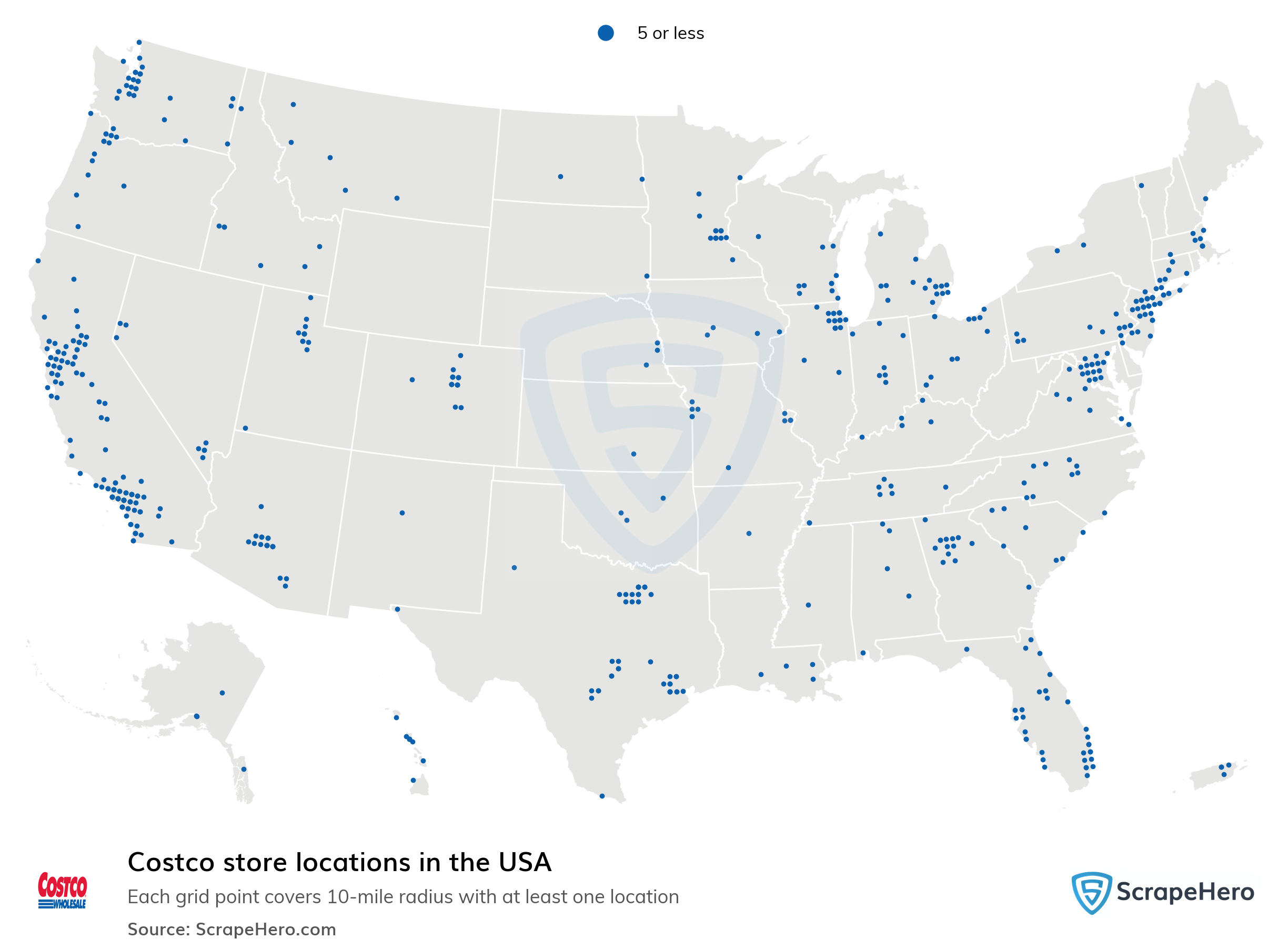
The concentration of these warehouses is not uniform. High-population states and metropolitan areas naturally boast a greater number of locations, reflecting strategic decisions to tap into dense consumer bases. California, with its massive population and early adoption of warehouse clubs, typically leads the nation in Costco store count, followed by other populous states like Texas, Florida, and Washington. This geographical distribution is a testament to Costco’s data-driven approach to market selection, prioritizing areas with strong demographics for its target membership base, including higher-income households and small businesses.
Beyond mere numbers, the scale of each individual Costco warehouse is a significant factor. Averaging around 146,000 square feet, these vast retail spaces require substantial upfront capital investment in real estate, construction, and inventory. This considerable investment underscores Costco’s long-term commitment to its chosen markets and its confidence in its ability to generate significant returns from each location. The physical presence of nearly 600 such mega-stores within the US alone represents an enormous asset base and a powerful distribution network that underpins its entire business model.
Operational Strategy and Market Penetration
Costco’s expansion strategy within the US is deeply intertwined with its operational philosophy. Unlike traditional supermarkets or department stores that may saturate a market with numerous smaller outlets, Costco opts for fewer, larger warehouses strategically placed to serve broad geographic areas. This approach enhances efficiency in several ways:
Site Selection and Demographics
The process of selecting a new Costco location is exhaustive. It involves comprehensive analysis of demographics, traffic patterns, visibility, and competition. Costco targets areas with high population density, strong median household incomes, and proximity to major transportation arteries. The aim is to ensure each new warehouse can attract a large enough membership base within a reasonable driving distance to sustain its high sales volume and operational costs. This meticulous site selection minimizes cannibalization among its own stores while maximizing market penetration in underserved or growing areas.
Supply Chain Optimization
A robust physical network of warehouses is critical for Costco’s highly efficient supply chain. The limited number of SKUs (Stock Keeping Units) per store, coupled with direct-to-store deliveries and cross-docking practices, allows for streamlined logistics. Each new US location integrates into this existing network, contributing to economies of scale in procurement, warehousing, and transportation. The density of US locations allows for optimized regional distribution centers, reducing lead times and transportation costs, which directly impacts the competitive pricing Costco offers to its members.
Member Engagement and Loyalty
The widespread availability of Costco warehouses across the US is fundamental to retaining and growing its membership base. Members pay an annual fee for access to these stores, and the convenience of having a location within a reasonable distance is a key driver for membership renewal. The physical store is the primary touchpoint where members experience the value proposition—from bulk savings on everyday essentials to the “treasure hunt” experience of discovering unique, limited-time items. The growing number of locations makes the membership more valuable to a wider demographic, solidifying loyalty and ensuring a consistent stream of recurring revenue.
Economic Impact and Local Contribution

Each Costco warehouse represents a significant economic anchor within its local community, extending far beyond its direct retail sales. The financial implications of nearly 600 such operations across the US are substantial.
Job Creation
A typical Costco warehouse employs between 200 to 300 individuals, offering competitive wages and benefits. Multiplied across hundreds of locations, Costco is a major employer, providing tens of thousands of jobs nationally. These are not just entry-level positions; they include management roles, specialized department staff, and logistics personnel, contributing to a diverse local job market. The stability and quality of these jobs have a ripple effect on local economies, boosting consumer spending and supporting other local businesses.
Local Tax Revenue
Costco warehouses contribute significantly to local and state tax bases through property taxes, sales taxes, and payroll taxes. The large footprint and high property values of these commercial sites generate substantial property tax revenue, which helps fund local public services such as schools, infrastructure, and emergency services. The consistent sales volume ensures a steady stream of sales tax contributions, further bolstering municipal and state budgets.
Support for Local Businesses
While Costco is known for its national and international supply chains, its vast network of US stores also creates opportunities for local and regional producers. Many warehouses feature local and regional products, from fresh produce to specialty foods, providing smaller businesses with access to a massive distribution channel. This integration supports local agriculture and manufacturing, fostering economic diversification within the communities Costco serves. Furthermore, the construction and maintenance of these large facilities often engage local contractors and service providers, generating additional economic activity.
Financial Performance and Investor Insights
For investors, the number and distribution of Costco locations in the US are critical metrics for evaluating the company’s financial health and growth prospects.
Revenue Generation and Membership Fees
Each US warehouse is a direct revenue center, driving sales of merchandise and generating new and renewal membership fees. The consistent growth in the number of US locations directly correlates with the potential for increased membership penetration and, consequently, higher membership fee income—a highly profitable and predictable revenue stream for Costco. Investors closely monitor comparable store sales, a metric heavily influenced by the performance and maturity of existing US locations, as well as the initial performance of newly opened stores.
Capital Allocation and Return on Investment
The decision to open a new US warehouse involves substantial capital expenditure. Investors analyze Costco’s ability to efficiently deploy this capital and generate strong returns. The company’s track record of quickly making new stores profitable and achieving impressive sales per square foot demonstrates its expertise in site selection, operational management, and market timing. The sustained expansion of its US footprint is a strong indicator of its confidence in continued growth opportunities within its home market.
Market Share and Competitive Advantage
The density of Costco’s US locations solidifies its market share in the fiercely competitive retail sector. Its widespread presence creates a formidable barrier to entry for potential competitors and strengthens its bargaining power with suppliers. This extensive network allows Costco to achieve unparalleled economies of scale, passing on savings to members and reinforcing its value proposition. From an investment perspective, this strong competitive moat, built partly on its physical scale, makes Costco a compelling long-term holding. The ability to leverage its physical stores for its growing e-commerce operations, offering convenient pick-up options, further integrates its omnichannel strategy and enhances its financial outlook.

Challenges and Future Outlook
While Costco’s robust US presence is a strength, it also presents ongoing challenges. Market saturation in some affluent urban and suburban areas could temper future growth rates. Competition from other big-box retailers, discount chains, and the relentless rise of e-commerce necessitates continuous innovation. Costco’s ability to maintain its unique membership value proposition, adapt to evolving consumer preferences, and integrate its physical and digital channels will be crucial.
Despite these challenges, Costco continues to identify opportunities for strategic expansion within the US, often focusing on underserved regions or infill locations within existing markets. The sustained growth of its US location count underscores a broader strategy of consistent, disciplined expansion that leverages its proven business model. For anyone analyzing Costco, its enduring physical footprint in the United States remains a fundamental indicator of its operational prowess, financial stability, and long-term potential as a retail powerhouse.
aViewFromTheCave is a participant in the Amazon Services LLC Associates Program, an affiliate advertising program designed to provide a means for sites to earn advertising fees by advertising and linking to Amazon.com. Amazon, the Amazon logo, AmazonSupply, and the AmazonSupply logo are trademarks of Amazon.com, Inc. or its affiliates. As an Amazon Associate we earn affiliate commissions from qualifying purchases.