
The question of “how long will my money last?” is one that silently echoes in the minds of many, from young professionals just starting their savings journey to seasoned individuals nearing retirement. It’s a fundamental concern that underpins financial security, dictates lifestyle choices, and ultimately defines peace of mind. In an age where financial planning can feel overwhelmingly complex, tools like the Bankrate “How Long Will My Money Last” calculator emerge as essential guides, offering a data-driven perspective on our financial future. This article delves into the mechanics and implications of such tools, exploring how they empower individuals to gain clarity, make informed decisions, and strategically navigate their personal finance journey.
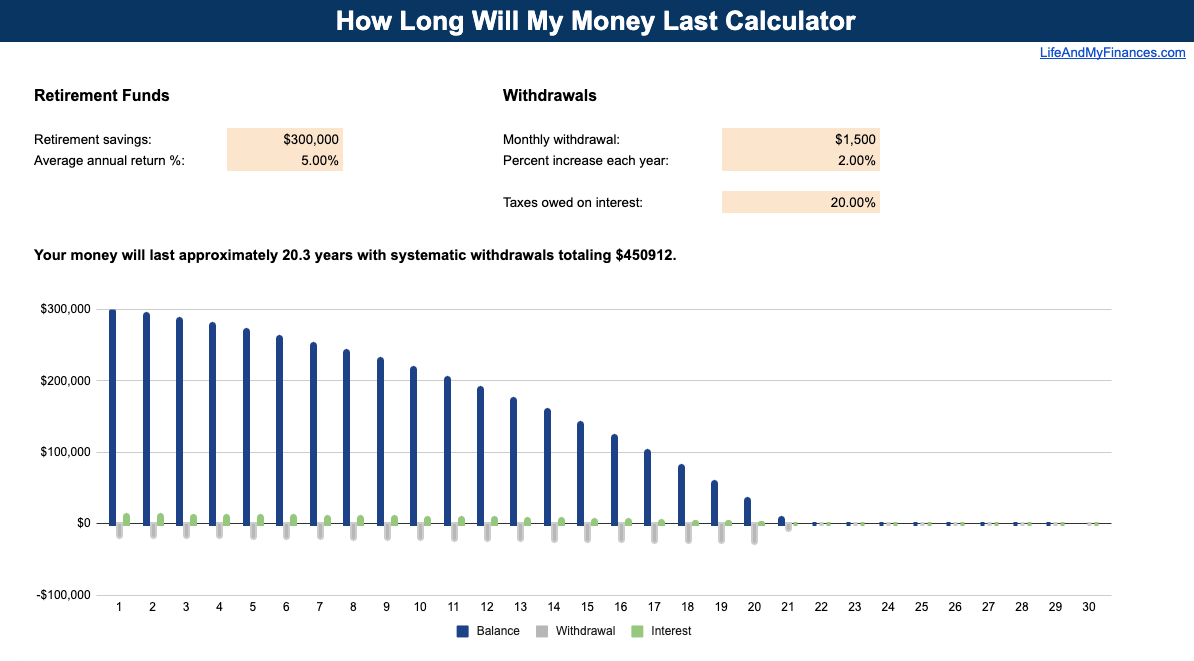
Understanding Your Financial Runway: Why It Matters
The concept of a “financial runway” refers to the period during which your existing savings and investments can sustain your living expenses without additional income. It’s a critical metric, not just for entrepreneurs, but for anyone looking to understand their financial resilience. Knowing your financial runway isn’t about predicting the future with absolute certainty; it’s about building a robust framework for financial preparedness and strategic planning.
The Psychology of Financial Security
There’s a profound psychological impact associated with understanding your financial runway. Uncertainty breeds anxiety, and nowhere is this more true than in personal finance. A clear projection of how long your money might last provides a tangible anchor, transforming vague fears into actionable insights. It shifts the narrative from “Will I have enough?” to “What adjustments can I make to ensure I have enough?” This mental clarity is invaluable, empowering individuals to take control rather than feeling at the mercy of economic tides. It allows for a more relaxed approach to spending, saving, and investing, knowing that a foundational analysis has been performed. This newfound peace of mind can reduce stress, improve decision-making, and even positively impact overall well-being.
Key Life Transitions That Demand Planning
Life is a series of transitions, and many of these have significant financial implications. Retirement stands out as the most obvious example, where income typically shifts from earned wages to drawing down savings and other passive sources. But other transitions are equally critical: unexpected job loss, taking a sabbatical, funding a child’s education, or making a major purchase like a home. Each scenario necessitates an understanding of how long current funds can sustain needs and wants. A financial calculator becomes an indispensable tool in stress-testing these scenarios, allowing individuals to model different outcomes and prepare contingencies. For instance, understanding the impact of an early retirement versus working a few extra years can be eye-opening, providing the motivation needed to either accelerate savings or re-evaluate career plans.
Beyond Basic Budgeting: Projecting Your Future
While budgeting is about managing current income and expenses, projecting your financial runway takes a longer, more strategic view. It moves beyond the immediate month-to-month cash flow to encompass long-term wealth accumulation and depletion. This perspective helps in setting more ambitious financial goals, such as saving for a down payment, planning for a child’s future, or ensuring a comfortable retirement. It’s about seeing the forest for the trees – understanding how today’s financial decisions ripple through decades. This forward-looking approach allows for proactive adjustments rather than reactive measures, fostering a sense of control over one’s financial destiny. It encourages a shift from mere tracking of expenses to strategic financial engineering, where every dollar has a purpose and contributes to a larger, long-term vision.
Deconstructing the “How Long Will My Money Last” Calculator
Financial calculators, particularly sophisticated ones like Bankrate’s, are more than simple arithmetic tools. They are complex models designed to simulate various financial futures based on a user’s unique input. Understanding their core components is key to leveraging their full potential.
Core Inputs: What Data Do You Need?
The accuracy and utility of any financial projection hinge entirely on the quality of the input data. For a “how long will my money last” calculator, several critical pieces of information are required:
-
Current Savings & Investments: This includes all liquid assets, such as checking and savings accounts, CDs, brokerage accounts, IRAs, 401(k)s, and other retirement vehicles. The total value of these assets forms the capital base.
-
Annual Expenses: A realistic assessment of your annual spending is paramount. This should include both fixed costs (rent/mortgage, insurance, utilities) and variable costs (food, entertainment, travel). Many people underestimate this, leading to overly optimistic projections.
-
Anticipated Annual Income (if any): If you plan to work part-time in retirement, receive a pension, or have other reliable income streams, these need to be factored in.
-
Expected Inflation Rate: Inflation erodes purchasing power over time. A realistic long-term inflation rate (e.g., 2-3%) is crucial for accurate projections.
-
Expected Investment Return Rate: This is arguably the most impactful variable. A higher assumed return rate will naturally make your money last longer. However, it’s vital to be realistic and somewhat conservative, especially when projecting over decades.
-
Start Age and End Age (or Retirement Age): These define the timeframe over which the calculation is performed.
The more precise and honest these inputs are, the more valuable the calculator’s output will be.
The Algorithm Behind the Projections
While the exact proprietary algorithms vary, most sophisticated “how long will my money last” calculators employ a variation of Monte Carlo simulation or a deterministic model that accounts for the inputs over time.
-
Deterministic Model: This simpler approach calculates a single outcome based on the average values entered for inflation, returns, etc. It provides a clear, single number.
-
Monte Carlo Simulation: More advanced calculators use this statistical method. Instead of fixed rates, it runs thousands of simulations, each with slightly varied (randomized within a range) inflation rates, investment returns, and even spending patterns. This produces a range of possible outcomes, often expressed as a probability (e.g., “there’s an 80% chance your money will last 30 years”). This approach offers a more nuanced and realistic understanding of potential volatility and uncertainty.
Regardless of the underlying model, the calculator iteratively subtracts annual expenses (adjusted for inflation) and adds investment returns from the total capital over the specified period, until the capital is depleted or the end age is reached.
Interpreting the Results: What Does Your Number Mean?
The output from these calculators isn’t a prophecy; it’s a powerful indicator. If the calculator suggests your money will run out sooner than desired, it’s a red flag prompting action. If it indicates a longer runway, it confirms you’re on a solid path, or perhaps even have room to increase discretionary spending or charitable giving.
The key is to not just look at the final number but to understand the “why” behind it. Experiment with different variables: What if I save an extra $100 per month? What if my investment returns are 1% lower? What if I reduce my annual expenses by 5%? This interactive experimentation helps identify the most impactful levers you can pull to alter your financial trajectory. It transforms the calculator from a passive display into an active planning tool, allowing users to “stress-test” their financial plans against various scenarios and adjust their strategies accordingly.
Factors That Influence Your Money’s Lifespan
Numerous variables exert a significant influence on how long your money will ultimately last. Recognizing these factors and understanding their interplay is crucial for effective financial planning.
Inflation: The Silent Eroder of Purchasing Power
Often underestimated, inflation is a pervasive economic force that steadily diminishes the purchasing power of money over time. A dollar today buys less than a dollar bought 20 years ago, and it will buy even less 20 years from now. If your money is merely sitting in a low-interest savings account, inflation is effectively reducing its value year after year. Most financial calculators factor in an inflation rate (typically 2-3% annually) to project future expenses in today’s dollars, making the projection more realistic. Ignoring inflation is a common mistake that can lead to a significant shortfall in retirement funds. It highlights the necessity of investments that at least keep pace with, if not exceed, the rate of inflation.

Investment Returns: The Engine of Growth (or Stagnation)
The rate at which your investments grow (or decline) is perhaps the most significant determinant of your money’s longevity. Compounding returns—earning returns on your initial investment and on the accumulated returns—can dramatically accelerate wealth growth. Conversely, low returns or significant losses can severely deplete your capital. This emphasizes the importance of a well-thought-out investment strategy, considering asset allocation, risk tolerance, and diversification. While aggressive investing might promise higher returns, it also carries higher risk. A balanced approach that aligns with your financial goals and comfort level is essential. Calculators use assumed return rates, underscoring the need for these assumptions to be realistic and potentially conservative for long-term planning.
Lifestyle Inflation vs. Frugality: Your Spending Habits
“Lifestyle inflation” refers to the tendency to increase spending as income rises. While enjoying the fruits of your labor is understandable, unchecked lifestyle inflation can severely undermine savings goals. Conversely, a commitment to frugality and mindful spending can significantly extend your financial runway. Every dollar saved and invested today is a dollar that can grow and support you in the future. Understanding and controlling your discretionary spending is a powerful lever you can pull. A calculator can vividly illustrate the impact of reducing annual expenses by even a small percentage, often adding years to your projected financial longevity. This highlights the importance of regular expense reviews and distinguishing between needs and wants.
Healthcare Costs: A Growing Concern in Later Life
One of the most unpredictable yet substantial expenses in retirement is healthcare. As individuals age, healthcare needs often increase, and these costs can quickly consume a significant portion of retirement savings, even with Medicare or other insurance. Dental care, vision care, long-term care, and prescription medications can all add up. While a general expenses input covers some of this, it’s wise to consider a separate, perhaps escalating, provision for healthcare costs, especially for those planning for a long retirement. Some advanced financial planners and calculators will allow for more granular input on projected healthcare expenditures, providing a more robust long-term forecast.
Strategies to Extend Your Financial Runway
Identifying how long your money will last is just the first step. The true power lies in implementing strategies to ensure it lasts as long as you need it to. Here are several effective approaches:
Optimizing Your Savings Rate
Simply put, the more you save, the longer your money will last. Increasing your savings rate, especially early in your career, has a compounding effect that is difficult to replicate later on. Automating savings transfers, maximizing contributions to retirement accounts (401(k), IRA), and taking advantage of employer matches are fundamental strategies. Even small, consistent increases can significantly alter your long-term financial picture. Consider the “pay yourself first” principle, where a portion of every paycheck is automatically directed to savings or investments before any other expenses are paid.
Smart Investment Choices and Portfolio Diversification
Your money needs to work as hard as you do. This means moving beyond basic savings accounts to a diversified investment portfolio. This typically includes a mix of stocks, bonds, and potentially real estate or other assets. Diversification helps mitigate risk, ensuring that a downturn in one asset class doesn’t decimate your entire portfolio. The specific asset allocation should align with your risk tolerance and time horizon. Younger investors with a longer runway might opt for a higher allocation to growth-oriented stocks, while those nearing retirement might prefer a more conservative, income-generating portfolio. Regularly rebalancing your portfolio to maintain your desired asset allocation is also crucial.
Income Generation: Side Hustles and Passive Income Streams
Supplementing your primary income or creating new income streams can dramatically extend your financial runway. Side hustles, freelancing, or even starting a small business can boost your savings rate or provide additional funds to cover expenses. Passive income streams, such as rental properties, dividend stocks, or royalties, can provide ongoing income with less active effort, creating a valuable buffer in your financial plan. These additional income sources can either be reinvested to accelerate wealth accumulation or used to reduce reliance on your primary capital, thereby extending its lifespan.
Expense Reduction and Frugal Living Tips
While increasing income and optimizing investments are crucial, controlling your outflow is equally important. Regularly reviewing your budget to identify areas for expense reduction can free up significant capital for savings. This could involve cutting subscriptions you don’t use, cooking at home more often, negotiating better rates for services, or making more mindful purchasing decisions. Frugal living isn’t about deprivation; it’s about intentional spending that aligns with your values and financial goals. Even modest cuts, consistently applied, can have a profound impact when compounded over decades.
The Role of Social Security and Pensions
For many, Social Security benefits and employer-sponsored pensions (if available) will form a vital component of their retirement income. These guaranteed income streams reduce the pressure on personal savings. Understanding when to claim Social Security benefits can significantly impact the total amount received over your lifetime. Delaying benefits past your full retirement age, up to age 70, can result in higher monthly payouts. Pensions, if applicable, also provide a predictable income floor. Factoring these into your “how long will my money last” calculation provides a more complete and realistic picture of your long-term financial security.
The Limitations and Nuances of Financial Calculators
While immensely valuable, financial calculators are tools, not crystal balls. Understanding their limitations is as important as understanding their strengths.
They Are Projections, Not Guarantees
Every calculator relies on assumptions: assumed investment returns, inflation rates, and consistent spending patterns. The real world is far more unpredictable. Market crashes, unexpected medical emergencies, legislative changes (e.g., to Social Security), or personal life events can all derail even the most carefully crafted projections. Treat the output as a best-guess scenario based on current information, not an ironclad guarantee. This perspective encourages flexibility and regular review of your financial plan.
The Importance of Regular Reviews and Adjustments
Because circumstances change, your financial plan—and the inputs you feed into your calculator—should be revisited regularly. Annual reviews are a good practice, but significant life events (marriage, birth of a child, job change, inheritance) warrant immediate reassessment. Adjust your savings rate, investment strategy, or expense forecasts as your situation evolves. This iterative process ensures that your financial roadmap remains relevant and accurate over time. A static plan in a dynamic world is a recipe for disappointment.
When to Seek Professional Financial Advice
While online calculators are powerful self-service tools, they cannot replace the personalized guidance of a qualified financial advisor. If your financial situation is complex (e.g., multiple income streams, business ownership, significant assets, specific tax considerations), or if you simply feel overwhelmed by the planning process, a professional can provide tailored advice. An advisor can help you develop a comprehensive financial plan, navigate complex investment strategies, optimize tax efficiency, and provide behavioral coaching to keep you on track. They can also help you understand the nuances of your specific situation that a generic calculator might miss, such as estate planning or complex legacy considerations.
In conclusion, tools like the Bankrate “How Long Will My Money Last” calculator offer an invaluable starting point for financial introspection and planning. By providing a data-driven lens through which to view your financial future, they empower individuals to move from uncertainty to informed action. While they demand accurate inputs and a realistic interpretation of outputs, when used diligently and complemented by strategic planning and, if necessary, professional advice, they can be a cornerstone in building a secure and enduring financial future.
aViewFromTheCave is a participant in the Amazon Services LLC Associates Program, an affiliate advertising program designed to provide a means for sites to earn advertising fees by advertising and linking to Amazon.com. Amazon, the Amazon logo, AmazonSupply, and the AmazonSupply logo are trademarks of Amazon.com, Inc. or its affiliates. As an Amazon Associate we earn affiliate commissions from qualifying purchases.