
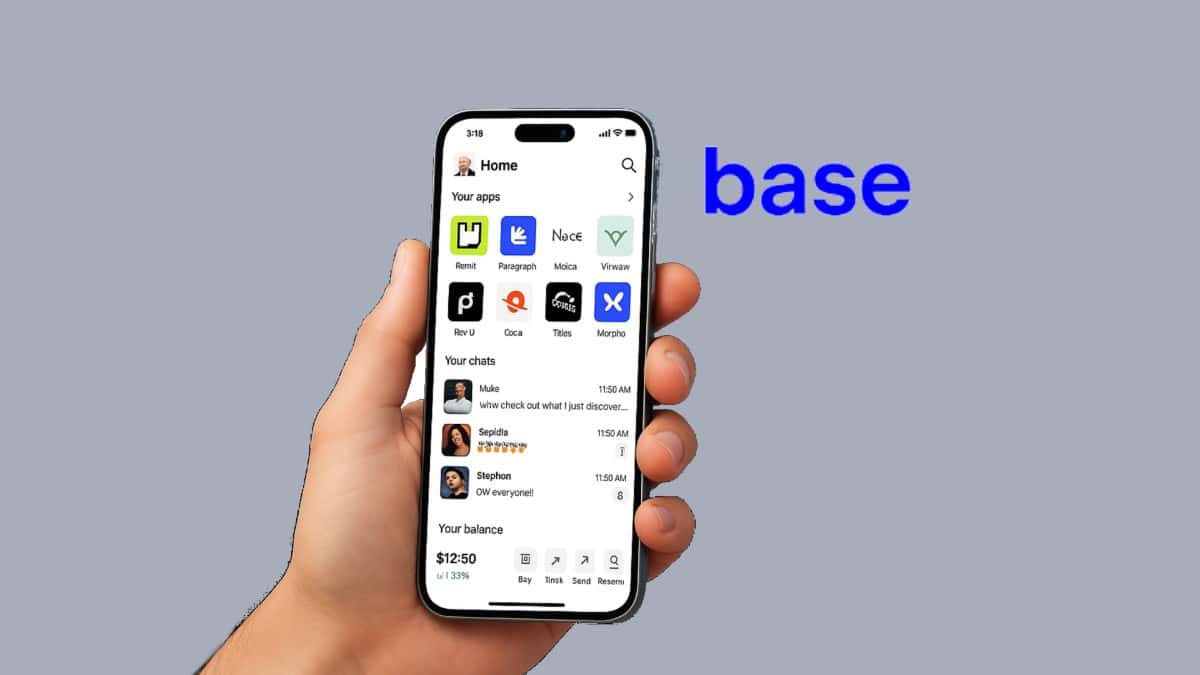
In the vast and ever-evolving landscape of software, the term “base app” often arises, carrying a nuanced but critical meaning. It refers to a foundational application, a core piece of software that provides essential functionalities upon which other features, extensions, or even entirely different applications are built. Far from being simplistic, a base app represents the bedrock of a digital experience, designed to deliver primary value with efficiency, stability, and often, the potential for expansion. Understanding what constitutes a base app is crucial for both users seeking reliable digital tools and developers aiming to build sustainable and scalable software ecosystems.
Defining the “Base App” Concept
At its heart, a base app is an application designed to fulfill a primary, fundamental need or set of needs within a specific domain. It’s the initial, indispensable layer of functionality that establishes the core purpose and utility of a software product. Think of it as the minimalist, yet complete, version of a tool, stripped down to its essentials but still fully functional.
The Foundation of Digital Experiences
A base app serves as the foundational layer, much like the operating system is the base app for all other software on a computer or smartphone. It provides the essential services and interface that allow users to interact with the core functionality without being overwhelmed by excessive features. For instance, a basic email client’s base app functionality would be sending and receiving messages, managing contacts, and organizing inboxes. Everything else—advanced filtering, calendaring, task management integrations—could be considered enhancements or extensions built upon this core.
Core Functionality vs. Feature Creep
One of the defining characteristics of a base app is its strict adherence to core functionality. In a world often plagued by “feature creep,” where applications become bloated with an ever-increasing array of functionalities, a base app champions simplicity and focus. Its primary goal is to perform its core task exceptionally well, without unnecessary distractions or complexities. This dedication to core utility ensures performance, reduces bugs, and makes the application intuitive for users. The moment an app starts adding peripheral features that divert from its primary purpose, it begins to move away from being a pure base app.
The Role of a Base App in a Software Ecosystem
A base app rarely exists in isolation. Instead, it often plays a pivotal role within a larger software ecosystem. It provides a stable and reliable platform upon which developers can build modules, plugins, integrations, or even entirely new applications. For example, a base content management system (CMS) might provide the core functionality for creating and publishing web content. Third-party developers can then create themes, plugins for e-commerce, SEO optimization, or social media integration, all leveraging the robust foundation of the base CMS. This architectural approach fosters innovation and allows for a customizable experience without compromising the core stability.
Characteristics of an Effective Base App
For a base app to be truly effective, it must embody several key characteristics that ensure its reliability, usability, and potential for growth. These traits are what differentiate a robust foundation from a shaky one.
Simplicity and Intuitiveness
The hallmark of a well-designed base app is its simplicity and ease of use. It should be intuitive, allowing users to quickly grasp its core functions without extensive training or complex tutorials. The user interface (UI) and user experience (UX) should be clean, uncluttered, and directly support the primary purpose. This focus on clarity reduces cognitive load and enhances user adoption. Complex features, if needed, are often delegated to extensions rather than baked into the core.
Reliability and Performance
A base app must be inherently reliable. Users depend on it for fundamental tasks, and any instability or performance issues can undermine trust and productivity. This demands rigorous testing, efficient code, and optimized resource utilization. A base app should load quickly, execute commands promptly, and maintain stability even under varying conditions. Reliability is not just about avoiding crashes; it’s about consistently delivering on its core promise.
Security and Privacy
Given its foundational role, a base app is often privy to sensitive data or critical operations. Therefore, robust security and privacy measures are paramount. This includes secure coding practices, data encryption, strong authentication mechanisms, and clear privacy policies. Any vulnerabilities in a base app can have cascading effects, compromising not only the app itself but also any extensions or data built upon it. Developers must prioritize security from the very outset of the design process.
Extensibility and Scalability
While focused on core functionality, an effective base app is also designed with future growth in mind. Extensibility refers to its ability to be easily enhanced or integrated with other systems through APIs, plugins, or modular architectures. Scalability ensures that the app can handle increasing loads, more users, or larger datasets without significant degradation in performance. This forward-thinking design allows the base app to remain relevant and adaptable as needs evolve, supporting a dynamic ecosystem of features and integrations.
Examples of Base Apps Across Different Domains
The concept of a base app is pervasive across various technological domains, though the specific implementations differ. Recognizing these examples helps solidify understanding.
Operating Systems and Core Utilities
Operating systems themselves (e.g., Windows, macOS, Linux, Android, iOS) are the ultimate base apps. They provide the fundamental interface and services for all other software and hardware interactions. Within an OS, core utilities like file managers, calculators, text editors (notepad, textedit), and terminal emulators often function as base apps. They offer essential, self-contained functionalities without overwhelming complexity, serving as indispensable tools.

Communication Platforms
Consider a messaging application. Its base app functionality is typically sending and receiving text messages, perhaps with basic media sharing. More advanced features like video calls, group chat management, end-to-end encryption details, or integrations with other apps are built upon this core. Similarly, a simple email client’s base app focuses on inbox management and message composition, while calendaring or task management might be separate or integrated as advanced features.
Productivity Suites
In productivity software, a word processor’s base app capabilities revolve around text input, formatting, saving, and printing. A spreadsheet application’s core is data entry, basic calculations, and cell manipulation. While modern suites offer a plethora of advanced tools (collaboration, macros, complex analytics), the underlying base app provides the essential framework for document or data creation and manipulation.
Development Frameworks and Tools
For developers, Integrated Development Environments (IDEs) like VS Code or IntelliJ IDEA often start as powerful base apps providing core code editing, debugging, and project management capabilities. They are highly extensible, allowing developers to install numerous plugins and extensions for language support, version control integration, testing frameworks, and more, all building upon the robust foundation of the editor. Version control systems like Git, at their core, are base apps for tracking changes and collaborating on code, with various graphical user interfaces (GUIs) and integration tools built on top of its command-line interface.
Why a Robust Base App Matters for Users and Developers
The emphasis on building and utilizing strong base apps is not merely an academic exercise; it has tangible benefits for everyone involved in the software ecosystem.
For Users: Enhanced Usability and Trust
For end-users, a robust base app translates directly into a more reliable, performant, and intuitive experience. When the core functionality works flawlessly, users can trust the application to perform its primary purpose effectively. This reduces frustration, increases productivity, and builds confidence in the software. A simple, focused base app is also easier to learn and master, lowering the barrier to entry and enhancing overall usability.
For Developers: Streamlined Development and Maintenance
From a development perspective, a well-defined base app simplifies the entire software development lifecycle. It provides a clear architectural blueprint, making it easier to develop new features or extensions without introducing conflicts or breaking core functionality. Modular design, inherent to many base apps, allows for independent development and testing of components. Furthermore, maintenance becomes more manageable, as updates and bug fixes can be targeted more precisely, reducing the risk of introducing new issues. This leads to faster development cycles, reduced technical debt, and more efficient resource allocation.
Impact on Ecosystem Growth and Innovation
Perhaps one of the most significant impacts of robust base apps is their ability to foster vibrant ecosystems. By providing a stable and extensible foundation, they encourage third-party developers to build innovative solutions, plugins, and integrations. This collaborative environment expands the utility and reach of the base app exponentially, offering users a wealth of choices and functionalities that the original developers might never have envisioned or had the resources to build. This open approach drives innovation, creates new market opportunities, and ultimately benefits the entire user base through a richer, more tailored software experience.
Challenges and Considerations in Base App Development
Developing a base app is not without its challenges. The very principles that define it—simplicity, reliability, and extensibility—often present complex trade-offs and decisions.
Balancing Simplicity with Feature Demands
One of the perpetual struggles in base app development is the tension between maintaining core simplicity and responding to user demand for more features. While feature creep is undesirable, ignoring legitimate user needs can render an app uncompetitive. The key lies in strategic feature placement: ensuring essential features are integrated seamlessly into the core, while advanced or niche functionalities are designed as optional extensions or modular components. This requires careful user research and a clear product vision.
Managing Updates and Compatibility
As the foundation of a software ecosystem, a base app must undergo regular updates for security, performance, and compatibility with new operating systems or hardware. However, these updates must be managed meticulously to avoid breaking compatibility with existing extensions or user workflows. A robust API and well-documented change logs are crucial for communicating updates and enabling third-party developers to adapt their integrations. Backward compatibility is often a significant consideration, balancing necessary evolution with the stability of the ecosystem.
Security Vulnerabilities and Mitigation
The foundational nature of a base app means that any security vulnerability can have widespread consequences. Identifying and mitigating these risks requires continuous vigilance, robust testing, and a proactive approach to security patching. Developers must adhere to best practices for secure coding, conduct regular security audits, and be prepared to issue rapid fixes for discovered exploits. The trust placed in a base app is directly tied to its security posture.
The “Not Invented Here” Syndrome vs. Leveraging Existing Solutions
Developers sometimes face the temptation to build every component of their base app from scratch, driven by the “Not Invented Here” syndrome. While custom solutions can offer unique advantages, leveraging existing, well-tested libraries, frameworks, or open-source components can significantly accelerate development, improve reliability, and reduce maintenance overhead. The challenge is in discerning which components genuinely require custom development and which can be effectively outsourced or integrated from proven third-party solutions, ensuring they align with the base app’s core principles.
In conclusion, a base app is more than just a simple application; it’s a strategic architectural choice that prioritizes core functionality, stability, and extensibility. By serving as a robust and reliable foundation, it empowers users with essential tools and enables developers to build rich, dynamic, and innovative software ecosystems. Understanding and appreciating the concept of a base app is fundamental to navigating and contributing to the modern digital world.
aViewFromTheCave is a participant in the Amazon Services LLC Associates Program, an affiliate advertising program designed to provide a means for sites to earn advertising fees by advertising and linking to Amazon.com. Amazon, the Amazon logo, AmazonSupply, and the AmazonSupply logo are trademarks of Amazon.com, Inc. or its affiliates. As an Amazon Associate we earn affiliate commissions from qualifying purchases.