
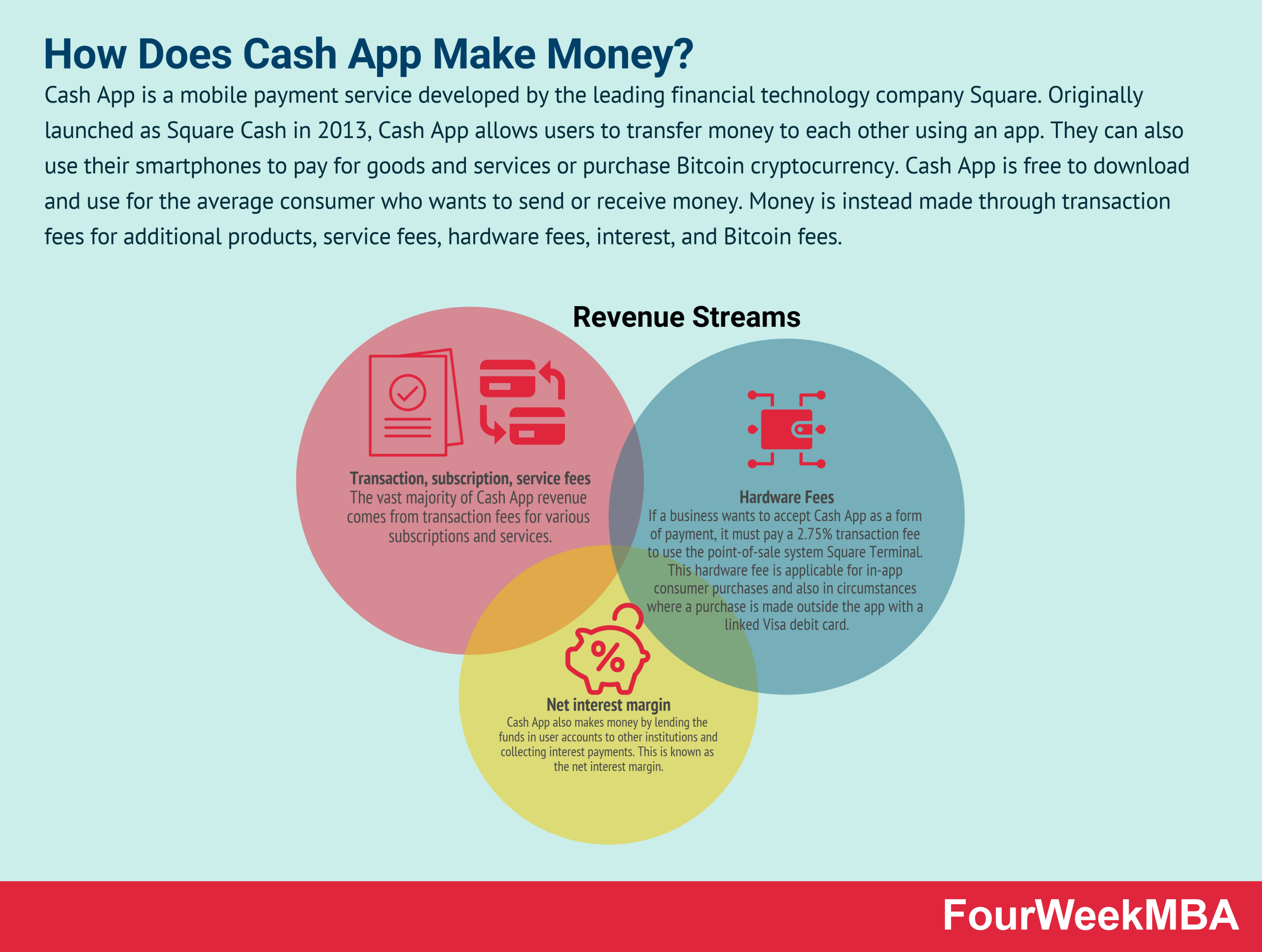
Cash App, a ubiquitous mobile payment service, has cemented its place in the personal finance landscape as a swift and user-friendly platform for peer-to-peer (P2P) transactions, direct deposits, and even micro-investments. While seemingly offering many free services, the company, a subsidiary of Block (formerly Square), employs a sophisticated multi-pronged business model to generate substantial revenue. Its financial strategy hinges on leveraging transaction fees, premium services, investment functionalities, and merchant solutions, all designed to monetize its vast user base and integrated ecosystem.
Transaction Fees and Expedited Services
One of Cash App’s primary revenue streams comes from transaction fees, particularly those associated with convenience and speed. While standard P2P payments from a linked debit card or Cash App balance are free, the platform strategically applies fees for certain expedited or credit-based transactions.
Instant Deposit Fees
Cash App users often utilize the platform for quick access to funds. The standard process for transferring funds from Cash App to an external bank account typically takes 1-3 business days. However, users can opt for an “Instant Deposit” service, which transfers funds to their linked debit card immediately. For this expedited service, Cash App charges a fee, typically ranging from 0.5% to 1.75% of the transaction amount. This seemingly small percentage on millions of daily transactions accumulates into a significant revenue stream for the company, catering to users who prioritize immediate liquidity over cost. The convenience factor drives adoption, making this a reliable and consistent income source.
Credit Card Transaction Fees
While sending money using a linked debit card or Cash App balance is free, users who choose to fund their P2P payments using a linked credit card incur a service charge. This fee is generally around 3% of the transaction amount. This model mirrors that of many other payment processors, where the higher cost associated with processing credit card transactions (due to interchange fees charged by credit card networks and issuing banks) is passed on to the user. By offering a convenient, albeit slightly more expensive, option for users who prefer to leverage their credit lines or earn credit card rewards, Cash App taps into another segment of its user base while covering its own processing costs and generating profit.
Cash App Card and ATM Usage
The Cash Card, a customizable, free-to-order debit card linked directly to a user’s Cash App balance, plays a crucial role in the platform’s monetization strategy. It extends the utility of the Cash App balance beyond P2P transfers, enabling users to spend their funds at physical and online merchants.
Interchange Fees
When a Cash Card user makes a purchase, Cash App (through its banking partners) earns a portion of the “interchange fee” charged to the merchant by the acquiring bank. Interchange fees are standard fees that merchants pay to accept credit and debit card payments. While seemingly small, typically a fraction of a percent of each transaction, these fees generate substantial revenue due to the high volume of transactions processed daily across millions of Cash Cards in circulation. This revenue stream is passive and scales directly with user engagement and spending activity, making the Cash Card a powerful financial tool for both users and Cash App itself.
ATM Withdrawal Fees
Cash App also generates revenue from ATM withdrawals. While Cash Card users can withdraw cash from ATMs, fees apply under certain conditions. For users who have not set up direct deposit with Cash App, a fee (typically around $2.50) is charged for each ATM withdrawal. However, Cash App waives these fees for users who receive at least $300 in direct deposits into their Cash App account each month. This incentivizes direct deposit usage, which further strengthens user engagement and allows Cash App to hold larger balances, increasing its “float” (see below). By differentiating services based on user engagement, Cash App optimizes its revenue while encouraging deeper integration into its financial ecosystem.
Investment Services
Beyond traditional payment processing, Cash App has ventured into the investment arena, offering simplified access to stock and Bitcoin trading directly within the app. This diversification allows Cash App to capture a share of the investment market, particularly appealing to younger or novice investors.
Stock Trading
Cash App facilitates commission-free stock trading, allowing users to buy fractional shares of public companies with as little as $1. While Cash App doesn’t charge a direct commission for these trades, it generates revenue through other means, primarily “payment for order flow” (PFOF) and the “spread.” PFOF involves Cash App selling its users’ stock orders to wholesale market makers for execution. These market makers pay Cash App for the privilege, as it allows them to profit from the bid-ask spread (the small difference between the highest price a buyer is willing to pay and the lowest price a seller is willing to accept). Additionally, Cash App might profit from the spread itself, by executing trades at a slightly less favorable price for the user than the market rate, keeping the difference. This model, while transparently disclosed, is a significant revenue driver for many commission-free trading platforms.
Bitcoin Trading
Recognizing the burgeoning interest in cryptocurrencies, Cash App enables users to buy and sell Bitcoin. Similar to stock trading, Cash App generally does not charge a flat fee or commission for Bitcoin transactions. Instead, its revenue model for Bitcoin trading primarily relies on two factors: the “spread” and a service fee. The spread refers to the difference between the price at which Cash App buys Bitcoin from its liquidity providers and the price at which it sells to its users (or vice versa). This small differential on each trade adds up given the volume. Additionally, depending on market conditions and transaction size, Cash App may apply a small service fee on Bitcoin purchases and sales, which is clearly displayed to the user before confirming the transaction. This direct charge, combined with the spread, ensures that Cash App monetizes every Bitcoin trade.
Merchant Services and Business Accounts
While largely known for P2P payments, Cash App also serves businesses, integrating seamlessly with its parent company’s broader merchant solutions. This expands Cash App’s revenue opportunities by catering to commercial transactions.
Cash App for Business
Businesses can create Cash App for Business accounts, enabling them to accept payments from customers via Cash App. This service is particularly attractive to small businesses, freelancers, and sole proprietors due to its ease of setup and integration. For payments received through a business account, Cash App charges a processing fee, typically around 2.75% per transaction. This fee is competitive with traditional credit card processing rates and provides a straightforward revenue stream for Cash App. By offering an accessible payment solution, Cash App not only facilitates transactions but also becomes an essential financial tool for a growing number of commercial entities.
Synergy with Square Ecosystem
Cash App’s existence under the Block umbrella provides significant strategic advantages and revenue synergies. While Cash App primarily focuses on the consumer side, its integration capabilities with Square’s merchant services create a powerful ecosystem. For instance, a small business using a Square Point-of-Sale system can easily accept payments from customers using their Cash App. This integration can streamline operations for businesses and deepen customer loyalty within the Block ecosystem, indirectly leading to increased transaction volumes across both Cash App and Square, thereby boosting overall revenue for the parent company.
Interest on User Balances (Float Income) and Other Streams
Beyond direct transaction fees and investment services, Cash App also generates revenue through less obvious financial mechanisms inherent to its operation as a financial tool.
Float Income
Like traditional banks, Cash App benefits from “float income.” This refers to the interest earned on the aggregate balances of customer funds held within the Cash App ecosystem that are awaiting withdrawal or use. While individual user balances might fluctuate, the collective pool of unspent funds across millions of users represents a substantial amount that Cash App’s banking partners can invest in low-risk, interest-bearing assets. The interest generated from this float contributes a consistent, albeit indirect, revenue stream to the company.
Cash App Boosts and Strategic Partnerships
Cash App also employs “Boosts,” which are instant discounts available when using the Cash Card at specific merchants. While these appear to be a cost, they often represent strategic partnerships where merchants pay Cash App for increased visibility and customer acquisition, or Cash App subsidizes them to drive Cash Card usage, which in turn generates interchange fees. These partnerships can involve direct payments or revenue-sharing agreements, subtly contributing to Cash App’s overall financial health by enhancing user engagement and transaction volume. This demonstrates a sophisticated approach to monetizing user behavior and network effects within the financial tool space.
In essence, Cash App’s impressive revenue generation is a testament to its multifaceted financial strategy, which skillfully combines traditional payment processing fees, modern investment opportunities, and strategic partnerships, all underpinned by its vast and engaged user base.
aViewFromTheCave is a participant in the Amazon Services LLC Associates Program, an affiliate advertising program designed to provide a means for sites to earn advertising fees by advertising and linking to Amazon.com. Amazon, the Amazon logo, AmazonSupply, and the AmazonSupply logo are trademarks of Amazon.com, Inc. or its affiliates. As an Amazon Associate we earn affiliate commissions from qualifying purchases.