
Creating a cash application, often referred to as a fintech app, involves a sophisticated blend of software development, robust security protocols, and intricate system integrations. This endeavor is far more complex than developing a standard utility application due to the critical nature of financial transactions and user data. Understanding the technical architecture, development lifecycle, and paramount security considerations is essential for anyone embarking on building a reliable and compliant cash app.
Understanding the Core Technical Architecture of a Cash App
A cash app is a multi-layered software system designed to facilitate financial transactions securely and efficiently. Its technical architecture typically comprises several interconnected components, each playing a vital role in the overall functionality and user experience.

Front-End Development: User Interface and Experience
The front-end is the user-facing part of the application, encompassing everything the user sees and interacts with. For a cash app, this includes the mobile application (iOS, Android) and potentially a web interface. The primary technical considerations here are:
-
Platform Selection: Deciding between native development (Swift/Kotlin) for optimal performance and access to device features, or cross-platform frameworks (React Native, Flutter, Xamarin) for faster development across multiple operating systems with a single codebase.
-
User Interface (UI) Design Systems: Implementing a consistent and intuitive design system is crucial. This involves defining components, layouts, typography, and color palettes that ensure a seamless user experience. The technical implementation often relies on component libraries and design patterns.
-
Data Presentation and Interaction: Efficiently displaying real-time financial data, transaction histories, and user profiles. This requires careful state management, asynchronous data fetching, and rendering optimizations to keep the app responsive.
-
Secure Input Handling: Ensuring that sensitive user inputs, such as PINs, passwords, and credit card details, are handled securely from the point of entry, often involving custom keyboard implementations or secure input fields provided by the operating system.
Back-End Development: Server-Side Logic and Data Management
The back-end is the invisible engine that powers the cash app. It handles all the server-side operations, data storage, and business logic. This is where the core financial transaction processing occurs.
-
Programming Languages and Frameworks: Common choices include Python (Django, Flask), Node.js (Express), Java (Spring Boot), Ruby on Rails, and Go. These frameworks provide robust tools for building scalable and maintainable APIs.
-
Database Management Systems (DBMS): A robust database is critical for storing vast amounts of sensitive financial data. Relational databases like PostgreSQL or MySQL are popular for their ACID (Atomicity, Consistency, Isolation, Durability) properties, which are vital for transactional integrity. NoSQL databases like MongoDB might be used for less structured data, such as logs or user preferences.
-
Core Business Logic: This includes algorithms for transaction processing, balance management, fraud detection, user authentication, and data validation. These services must be highly available and fault-tolerant.
-
Microservices Architecture: For complex cash apps, a microservices approach is often adopted. This breaks down the application into smaller, independently deployable services (e.g., a user service, a transaction service, a notification service). This enhances scalability, resilience, and development velocity.
API Integration: Connecting Services
Application Programming Interfaces (APIs) are the bridges that connect different components of the cash app and external services.
-
Internal APIs: Facilitate communication between the front-end and back-end services, and between different microservices. These are typically RESTful APIs or GraphQL endpoints.
-
External APIs: Integrate with third-party services crucial for a cash app’s functionality. This includes:
-
Payment Gateways: For processing credit/debit card payments, bank transfers, and other financial instruments (e.g., Stripe, PayPal, local bank APIs).
-
KYC/AML Providers: Know Your Customer (KYC) and Anti-Money Laundering (AML) services for identity verification and regulatory compliance.
-
SMS/Email Services: For sending transaction alerts, verification codes, and promotional messages.
-
Banking APIs (Open Banking): In regions with open banking initiatives, these APIs allow secure access to customer account data from various financial institutions with user consent.
-
Key Technical Features and Functionalities
Beyond the architectural foundation, a cash app requires a suite of technical features designed to ensure functionality, security, and compliance.
User Authentication and Authorization
Robust security begins with identity. Technical implementations include:
-
Multi-Factor Authentication (MFA): Implementing mechanisms like SMS OTPs, email verification, authenticator apps, or biometrics (fingerprint, face ID) to verify user identity beyond a simple password.
-
OAuth 2.0 and OpenID Connect: Standard protocols for secure authorization and authentication, allowing users to grant third-party applications limited access to their resources without sharing their credentials directly.
-
Session Management: Securely managing user sessions, including token-based authentication (e.g., JWTs), session expiry, and mechanisms for revoking compromised sessions.
Transaction Processing and Ledger Management
This is the heart of any cash app and requires meticulous technical design:
-
Atomic Transactions: Ensuring that financial transactions are atomic – either they complete entirely, or they don’t happen at all – to maintain data integrity. This is often handled at the database level using transactions and appropriate isolation levels.
-
Double-Entry Accounting System: Technically, this means maintaining a ledger where every debit has a corresponding credit, ensuring balances always reconcile. This system architecture is fundamental for financial accuracy.
-
Real-Time Balance Updates: Implementing efficient mechanisms to update user balances in real-time, often involving message queues (e.g., Kafka, RabbitMQ) for asynchronous processing of transactions to maintain responsiveness.
Payment Gateway Integration
Connecting to diverse payment networks is paramount.
-
API Wrappers and SDKs: Utilizing official SDKs and API documentation provided by payment gateways to integrate securely and efficiently.
-
PCI DSS Compliance: Ensuring that the application’s handling of cardholder data adheres to the Payment Card Industry Data Security Standard (PCI DSS). This often involves offloading card data capture to the gateway’s hosted fields or utilizing tokenization.
Notification Systems
Timely communication is crucial for user trust and security.
-
Push Notifications: Implementing server-side logic to send push notifications via Firebase Cloud Messaging (FCM) for Android or Apple Push Notification Service (APNS) for iOS.
-
Email and SMS Gateways: Integrating with services like SendGrid, Twilio, or other local providers to send critical alerts, receipts, and verification codes.
Security and Fraud Detection
Given the financial nature, these features are non-negotiable.
-
Encryption: Implementing strong encryption for data at rest (database encryption, disk encryption) and data in transit (TLS/SSL for all communications).
-
Fraud Detection Engines: Integrating or building systems that analyze transaction patterns, user behavior, and device information to identify and flag suspicious activities in real-time. This often involves machine learning models.
-
Rate Limiting and Throttling: Implementing technical controls to prevent brute-force attacks and abuse of APIs by limiting the number of requests a user or IP can make within a given timeframe.
The Development Lifecycle for a Fintech Application
Developing a cash app follows a structured software development lifecycle, but with increased emphasis on security, compliance, and rigorous testing at every stage.
Planning and Requirements Gathering (Technical Specifications)
This phase focuses on defining the technical blueprint. It involves:
-
Detailed Technical Specification Document: Outlining every feature, integration point, database schema, API endpoint, and security requirement.
-
Technology Stack Selection: Deciding on programming languages, frameworks, cloud providers, and third-party services based on scalability needs, developer expertise, and cost implications.
-
Compliance Matrix: Identifying all relevant financial regulations (e.g., GDPR, CCPA, PCI DSS, local financial laws) and translating them into technical requirements.
Technology Stack Selection
Choosing the right tools for the job:
-
Cloud Providers: AWS, Google Cloud, Azure are preferred for their scalability, security features, and managed services (e.g., managed databases, serverless functions).
-
Programming Languages & Frameworks: Based on performance needs, ecosystem maturity, and developer availability.
-
Developer Tools: Version control (Git), CI/CD pipelines (Jenkins, GitLab CI, GitHub Actions), monitoring tools (Prometheus, Grafana).
Design and Prototyping (UX/UI Technical Design)
Beyond visual aesthetics, this involves technical design of interactions:
-
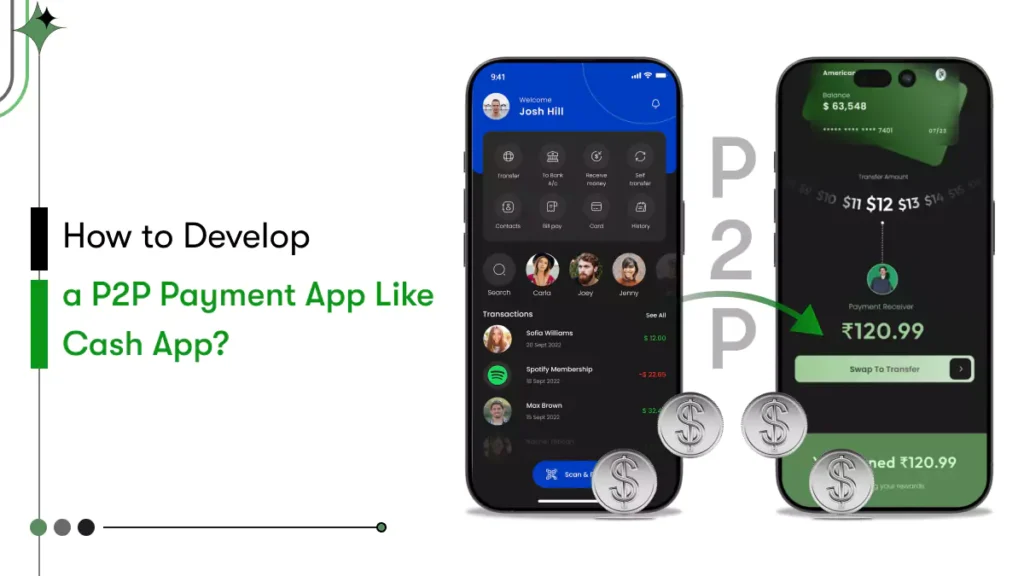
Wireframing and Mockups: Creating visual representations of the app’s interface.
-
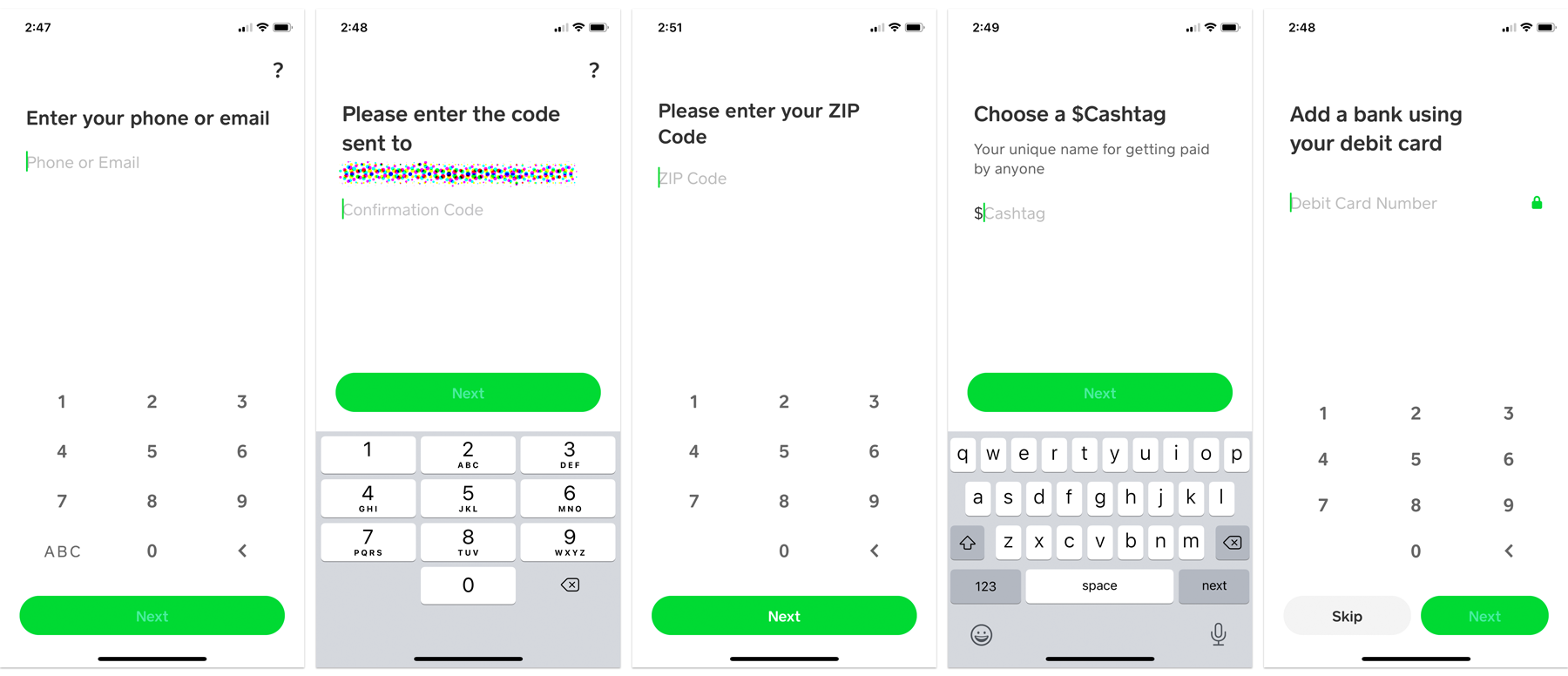
Technical Design of User Flows: Mapping out how users interact with the app, identifying potential friction points, and designing technical solutions for smooth transitions and error handling.
-
API Design: Creating detailed specifications for all internal and external APIs, ensuring clarity and consistency.
Development and Coding
The actual building phase:
-
Agile Methodologies: Often adopted for flexibility and iterative development, with continuous integration.
-
Clean Code Practices: Emphasizing readability, maintainability, and testability of the codebase.
-
Code Reviews: Implementing peer code reviews to catch bugs, ensure adherence to coding standards, and share knowledge.
Rigorous Testing and Quality Assurance
Testing for a cash app must be exhaustive.
-
Unit Tests: Verifying individual components and functions.
-
Integration Tests: Ensuring different modules and services interact correctly, especially crucial for API integrations.
-
End-to-End Tests: Simulating real user scenarios to validate the entire application flow.
-
Performance Testing: Stress testing the system to ensure it can handle expected and peak loads without degradation.
-
Security Penetration Testing: Engaging ethical hackers to identify vulnerabilities in the application and infrastructure.
-
Compliance Audits: Verifying that the application adheres to all regulatory requirements through automated tools and manual checks.
Deployment and Maintenance
Bringing the app to users and keeping it operational.
-
CI/CD Pipelines: Automating the build, test, and deployment process to ensure consistent and reliable releases.
-
Monitoring and Logging: Implementing comprehensive monitoring for application performance, server health, security events, and transaction status. Centralized logging systems are crucial for debugging and auditing.
-
Incident Response Plan: Establishing clear procedures for identifying, responding to, and resolving security incidents or system failures.
-
Regular Updates and Patches: Continuously applying security patches, updating dependencies, and releasing new features to keep the app secure and competitive.
Crucial Security and Compliance Considerations
The technical implementation of security and compliance cannot be overstated for a cash app.
Data Encryption and Privacy Protocols
-
End-to-End Encryption: Protecting sensitive data from the user’s device to the server and back.
-
Encryption at Rest: Encrypting all data stored in databases, file systems, and backups.
-
Secure Communication (TLS/SSL): All data transmitted between the app, servers, and third-party services must be encrypted using strong TLS 1.2 or higher protocols.
-
Privacy by Design: Incorporating privacy controls from the initial design phase, minimizing data collection, and providing users with control over their data in compliance with GDPR, CCPA, etc.
Regulatory Compliance (PCI DSS, KYC/AML)
These are technical mandates, not just legal ones.
-
PCI DSS (Payment Card Industry Data Security Standard): If the app handles, processes, or stores credit card data, technical controls must be in place to meet all 12 requirements, including network security, data protection, vulnerability management, and access controls. Often, this involves using PCI-compliant third-party gateways to offload direct card data handling.
-
KYC (Know Your Customer) and AML (Anti-Money Laundering): Implementing technical solutions for identity verification (document scanning, facial recognition, database checks) and transaction monitoring algorithms to detect suspicious financial activities indicative of money laundering. These systems must securely store and process identity information.
Fraud Prevention Mechanisms
-
Behavioral Analytics: Using machine learning to detect unusual user behavior patterns (e.g., login from a new device/location, large unusual transactions).
-
Device Fingerprinting: Identifying and tracking user devices to detect unauthorized access or fraudulent activities.
-
Transaction Limits and Velocity Checks: Implementing technical rules to restrict transaction amounts or frequency based on user profiles or risk assessment.
Scaling and Future-Proofing Your Cash App
A successful cash app must be built with scalability and future growth in mind.
Cloud Infrastructure and Scalability
-
Elastic Cloud Services: Utilizing auto-scaling groups, load balancers, and serverless functions offered by cloud providers to automatically adjust resources based on demand.
-
Containerization (Docker, Kubernetes): Packaging applications into containers for consistent deployment across different environments and orchestrating them for high availability and scalability.
-
Distributed Systems: Designing the back-end to distribute workloads across multiple servers and services to prevent single points of failure and enhance performance.
API-First Approach for Extensibility
-
Well-Documented APIs: Building clear and comprehensive APIs from the start allows for easier integration with future services, partners, and even public developer programs.
-
Modular Architecture: Designing the system with loosely coupled components that can be independently updated, replaced, or extended without affecting the entire application.
Performance Optimization
-
Caching Mechanisms: Implementing various caching layers (CDN for static assets, in-memory caches like Redis for frequently accessed data) to reduce database load and improve response times.
-
Database Optimization: Regular indexing, query optimization, and potentially sharding or replication to handle growing data volumes and transaction rates.
-
Code Efficiency: Writing optimized code, utilizing efficient algorithms, and profiling the application to identify and resolve performance bottlenecks.
Building a cash app is a monumental technical undertaking that demands expertise in secure software development, financial regulatory compliance, and scalable system architecture. By focusing on these core technical domains, developers and organizations can create a robust, secure, and user-friendly financial application capable of meeting the stringent demands of the fintech industry.
aViewFromTheCave is a participant in the Amazon Services LLC Associates Program, an affiliate advertising program designed to provide a means for sites to earn advertising fees by advertising and linking to Amazon.com. Amazon, the Amazon logo, AmazonSupply, and the AmazonSupply logo are trademarks of Amazon.com, Inc. or its affiliates. As an Amazon Associate we earn affiliate commissions from qualifying purchases.