
Understanding which car offers the cheapest insurance is a question many budget-conscious consumers ponder when making a significant financial decision like purchasing a vehicle. While there isn’t a single definitive answer, as insurance premiums are highly personalized, certain vehicle characteristics and models consistently rank lower in terms of average insurance costs. Identifying these trends can lead to substantial long-term savings, making the car you drive a critical component of your personal finance strategy.
The Nuance of “Cheapest” Car Insurance
The concept of “cheapest” car insurance is far more complex than simply identifying a make and model. Insurers assess a multitude of risk factors to determine your premium, creating a highly individualized cost structure. Your personal financial profile, driving history, and even your geographic location play equally significant roles as the vehicle itself. However, from a financial planning perspective, choosing a car known for lower insurance rates provides a strong foundation for managing your automotive expenses.
Beyond Make and Model: Factors Influencing Premiums
Before diving into specific car types, it’s crucial to acknowledge the overarching elements that influence your insurance bill. These include:
-
Driver Demographics: Age, gender, marital status, and years of driving experience significantly impact perceived risk. Younger, less experienced drivers generally face higher premiums.
-
Location: Urban areas with higher traffic density, theft rates, and accident claims typically result in higher premiums than rural locales.
-
Driving Record: A clean driving history, free of accidents and traffic violations, is perhaps the most direct path to lower rates.
-
Credit Score: In many states, insurers use credit-based insurance scores as a predictor of future claims. A strong credit score often correlates with lower premiums, highlighting another financial incentive to maintain good credit.
-
Coverage Levels and Deductibles: Opting for higher liability limits, comprehensive, and collision coverage naturally increases costs. Conversely, choosing a higher deductible can lower your monthly premium, though it means greater out-of-pocket expense in the event of a claim.
-
Usage: Vehicles driven fewer miles annually, or not used for commuting, may qualify for low-mileage discounts.
Understanding these variables is key to a holistic approach to minimizing insurance expenses, even before selecting a vehicle.
Vehicle Characteristics That Drive Down Insurance Costs
Insurance companies aim to predict the likelihood and cost of future claims. Therefore, vehicles that represent lower financial risk in terms of potential damage, theft, or injury claims tend to have lower premiums. When selecting a car with an eye on insurance costs, consider these characteristics:
Safety Ratings and Features
Cars with superior safety ratings from organizations like the Insurance Institute for Highway Safety (IIHS) and the National Highway Traffic Safety Administration (NHTSA) often qualify for lower premiums. This is because safer vehicles reduce the risk of serious injuries to occupants, thereby minimizing costly personal injury protection (PIP) and medical payment claims. Modern advanced driver-assistance systems (ADAS) like automatic emergency braking, lane-keeping assist, and blind-spot monitoring can also lead to discounts, as they actively prevent accidents. Financially, investing in a safe car means not just personal protection but also protection for your wallet.
Lower Repair and Replacement Costs
Vehicles that are inexpensive to repair or replace if damaged or totaled are favorable to insurers. This typically includes popular models with readily available and affordable parts, simple construction, and a large network of skilled mechanics. Luxury or high-performance cars, on the other hand, often use specialized, expensive parts and labor, driving up repair costs and, consequently, insurance premiums. From a financial perspective, a car with low repair costs minimizes both your deductible outlay and the insurer’s payout.
Lower Theft Rates
Cars that are less frequently stolen or are equipped with advanced anti-theft devices are generally cheaper to insure. Vehicles that are high targets for theft represent a significant financial risk for insurers. This is why many older, common models that aren’t particularly flashy, as well as newer cars with sophisticated security systems, often have lower comprehensive coverage costs.
Engine Size and Performance
Sports cars and high-performance vehicles, with powerful engines and a reputation for aggressive driving, typically incur higher insurance costs. Their increased speed and acceleration correlate with a higher risk of accidents, and often, more severe damage when accidents do occur. Economical, less powerful vehicles are generally viewed as lower risk.
Depreciation and Market Value
The overall market value of a car impacts the cost of comprehensive and collision coverage. Older, less valuable cars generally have lower premiums for these types of coverage because the maximum payout for a total loss is lower. While depreciation is often seen as a negative, it can become a financial advantage in terms of insurance costs for an older, reliable vehicle.
Top Contenders for Low Insurance Premiums
Based on the characteristics above, certain types of vehicles consistently appear on lists of cars with the cheapest insurance. These are generally practical, reliable, and safe choices, emphasizing utility over luxury or extreme performance.
Subcompact and Compact Sedans/Hatchbacks
These vehicles frequently top the lists for lowest insurance costs due to their excellent safety ratings, affordability, and typically lower repair costs. They are often perceived as less attractive to thieves and are generally driven more conservatively.
-
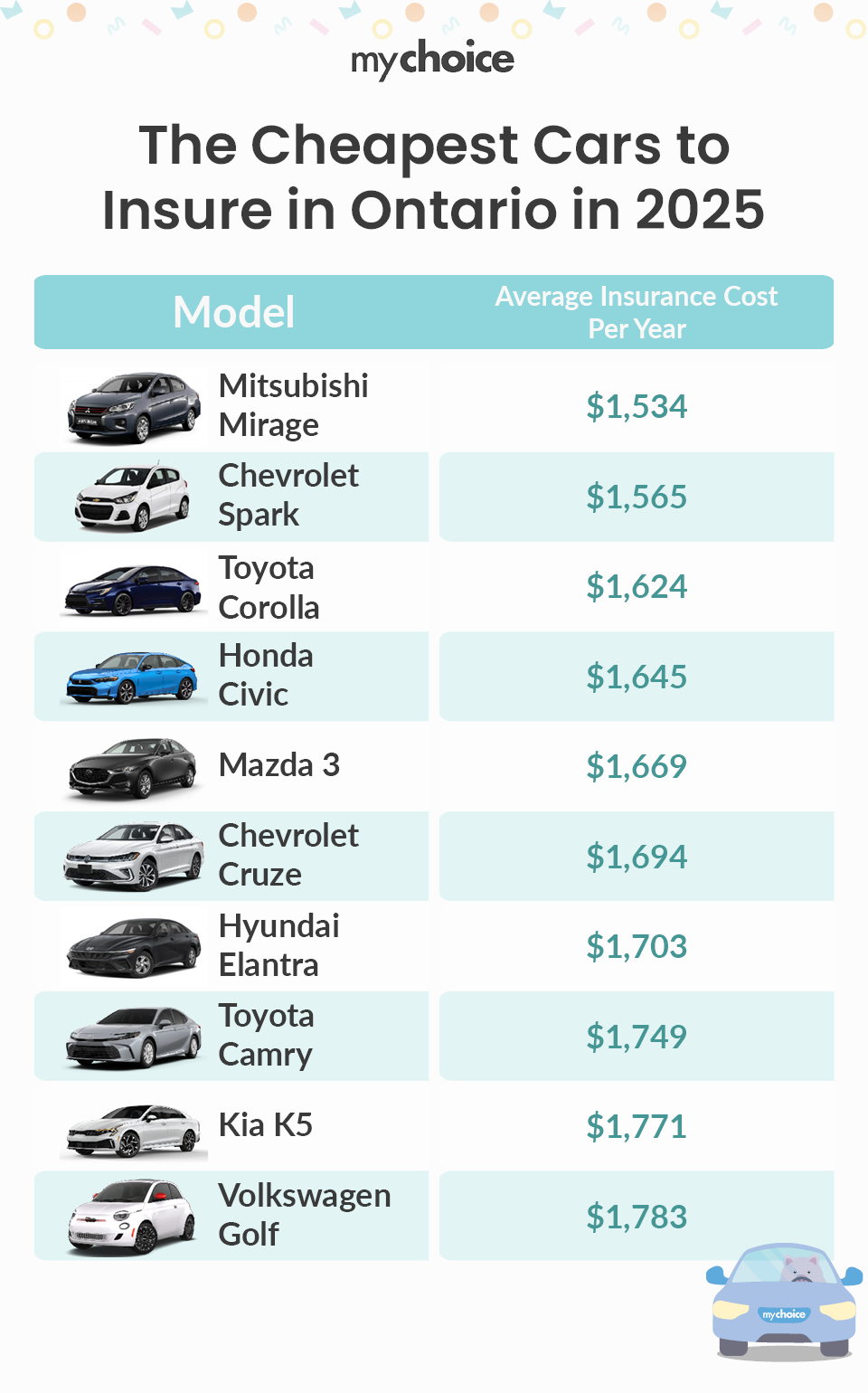
Examples: Honda Fit, Toyota Corolla, Nissan Versa, Hyundai Accent, Kia Rio.
-
Financial Rationale: These cars offer an excellent blend of low purchase price, strong fuel economy, and minimal insurance premiums, making them a financially sound choice for everyday transportation. Their parts are widely available and relatively inexpensive, reducing the cost of repairs.
Mid-size Sedans
Offering a balance of space, comfort, and safety, many mid-size sedans also maintain competitive insurance rates, especially non-luxury models. They are practical, reliable, and equipped with modern safety features without the high-performance tag.
-
Examples: Honda Civic, Toyota Camry, Subaru Legacy (often known for its standard AWD and strong safety).
-
Financial Rationale: These cars represent a “sweet spot” for many families and individuals, providing comfort and reliability without incurring the premium insurance costs associated with luxury or sportier vehicles. Their widespread popularity often translates to accessible parts and service.
Small SUVs and Crossovers

As a rapidly growing segment, many small SUVs and crossovers are designed with family safety and practicality in mind. Their rising popularity has also meant increased competition, leading to models that offer robust safety features at reasonable prices.
-
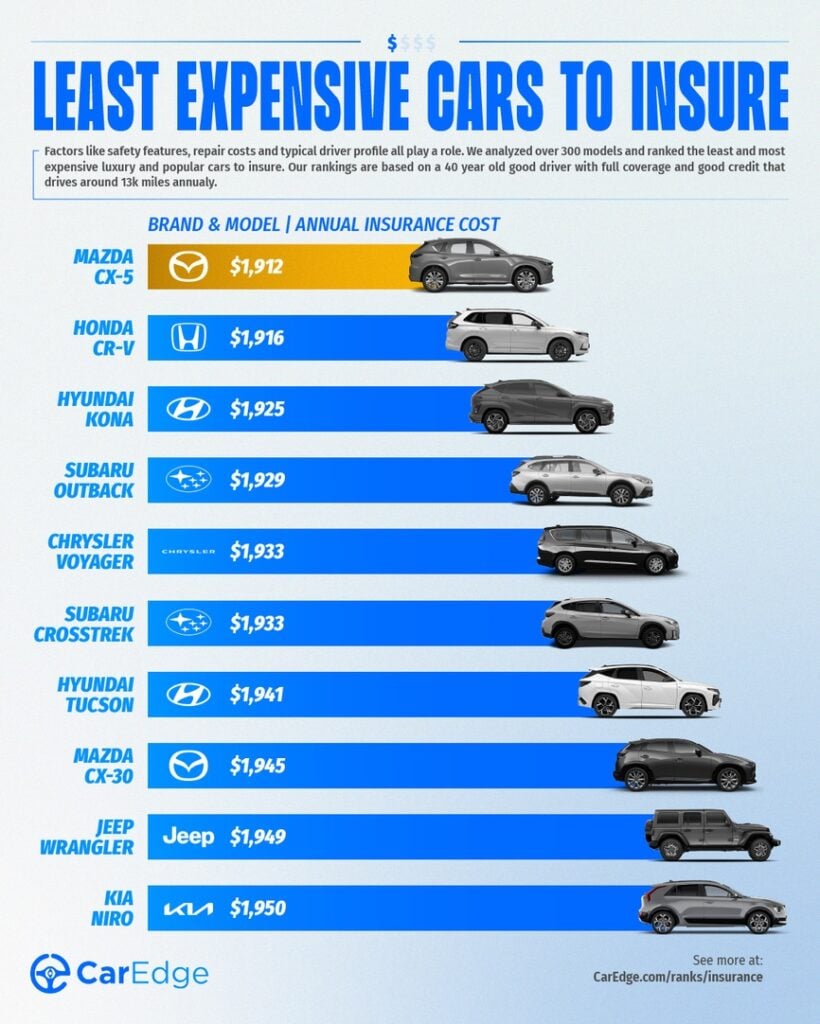
Examples: Honda HR-V, Subaru Crosstrek, Hyundai Kona, Mazda CX-30.
-
Financial Rationale: These vehicles offer the higher driving position and versatility many consumers desire, often without the higher insurance costs of larger SUVs or luxury crossovers. Their safety features are a strong selling point for insurers.
Minivans
Minivans are quintessential family vehicles, characterized by their emphasis on safety, practicality, and conservative driving. They are rarely targeted for theft and are typically driven with caution, making them a low-risk option for insurers.
-
Examples: Honda Odyssey, Toyota Sienna, Chrysler Pacifica.
-
Financial Rationale: For families, minivans offer significant cost savings on insurance compared to larger, more expensive SUVs. Their spacious interiors and focus on occupant safety also contribute to lower claim costs related to personal injury.
Electric Vehicles (with caveats)
While the repair costs for specialized EV components can sometimes be higher, many electric vehicles come equipped with advanced safety technologies as standard. Some insurers also offer eco-friendly discounts for EVs, offsetting some of the premium for their higher initial purchase price. The exact insurance cost can vary significantly by model.
Strategies to Further Reduce Your Car Insurance Costs
Choosing a car known for cheaper insurance is a great start, but savvy financial planning involves more than just vehicle selection. Implementing additional strategies can further optimize your insurance spending.
Bundle Your Policies
Many insurance providers offer significant discounts (often 5-25%) when you bundle multiple policies, such as home, auto, and life insurance, with the same company. This is a simple yet effective way to streamline your financial services and reduce overall costs.
Maintain a Clean Driving Record
This is perhaps the most impactful strategy. A history free of accidents, speeding tickets, and other traffic violations demonstrates low risk to insurers, directly translating to lower premiums. Safe driving is a financial asset.
Improve Your Credit Score
In many states, insurance companies use a credit-based insurance score as a factor in determining premiums. A higher credit score often indicates greater financial responsibility, which insurers associate with a lower likelihood of filing claims. Regularly monitoring and improving your credit score is a fundamental financial habit that extends benefits far beyond insurance.
Shop Around and Compare Quotes
Insurance rates can vary wildly between providers for the exact same coverage. It’s financially prudent to obtain quotes from at least three to five different companies every time your policy is up for renewal or if you experience a life change (like buying a new car or moving). Online comparison tools make this process efficient.
Increase Your Deductible
Opting for a higher deductible (the amount you pay out-of-pocket before insurance kicks in) will almost always lower your monthly premium. Ensure you have sufficient emergency savings to cover your deductible should you need to file a claim. This is a calculated risk that requires sound personal finance planning.
Take Advantage of Discounts
Inquire about all available discounts. Common ones include:
-
Good student discount: For young drivers maintaining a certain GPA.
-
Low mileage discount: For those who drive less than average.
-
Anti-theft device discount: For cars equipped with alarms or tracking systems.
-
Multi-car discount: For insuring more than one vehicle with the same provider.
-
Telematics/Usage-based insurance: Programs that monitor your driving habits (speed, braking, mileage) in exchange for potential discounts.
Re-evaluate Coverage Needs
As a car ages and depreciates in value, consider whether comprehensive and collision coverage are still financially worthwhile. If your car is old and its market value is low, the cost of these coverages might outweigh the potential payout after a deductible. This is a continuous financial assessment.
The Financial Prudence of Choosing Wisely
The choice of vehicle is a significant financial decision, extending far beyond the initial purchase price. The ongoing costs of ownership—fuel, maintenance, and especially insurance—can add up substantially over time. By consciously selecting a car known for lower insurance premiums, you are making a proactive financial move that can yield considerable savings throughout the vehicle’s lifespan.
Beyond Premiums: Total Cost of Ownership
When evaluating a vehicle, look at the total cost of ownership (TCO). This includes not only insurance but also fuel efficiency, estimated maintenance costs, and depreciation. A car with low insurance costs often aligns with lower overall TCO, indicating a financially sound choice.
The Investment in Safety
While financial savings are a primary goal, remember that many characteristics leading to lower insurance premiums also contribute to vehicle safety. Investing in a safe car protects not just your finances from high medical bills and claims, but most importantly, your well-being and that of your passengers. A financially smart car choice is one that balances affordability with robust protection.
aViewFromTheCave is a participant in the Amazon Services LLC Associates Program, an affiliate advertising program designed to provide a means for sites to earn advertising fees by advertising and linking to Amazon.com. Amazon, the Amazon logo, AmazonSupply, and the AmazonSupply logo are trademarks of Amazon.com, Inc. or its affiliates. As an Amazon Associate we earn affiliate commissions from qualifying purchases.