
For many Americans, Social Security represents a cornerstone of their retirement income, providing a predictable and inflation-adjusted stream of funds. While the average retiree receives a significant benefit, a select few achieve the maximum possible payout. Understanding how this maximum is determined and what steps are necessary to reach it is crucial for strategic retirement planning, especially for high-income earners. This exploration delves into the mechanics of Social Security benefit calculation, the specific criteria for earning the highest possible monthly check, and the practical implications for your financial future.
Understanding the Foundation of Social Security Benefits
The Social Security Administration (SSA) calculates individual benefits based on a complex formula that primarily considers your lifetime earnings. It’s not a simple one-to-one payout, but rather a system designed to provide a progressive benefit structure.
How Benefits Are Calculated: Average Indexed Monthly Earnings (AIME)
At the heart of your Social Security benefit calculation is your Average Indexed Monthly Earnings (AIME). The SSA takes your highest 35 years of earnings, adjusts them for historical wage inflation (indexing) to reflect their current value, and then divides that total by 420 (the number of months in 35 years) to arrive at your AIME.
These indexed earnings are then plugged into a progressive formula using “bend points” to determine your Primary Insurance Amount (PIA). The PIA is the benefit you would receive if you claim Social Security at your Full Retirement Age (FRA). The bend points ensure that lower earners receive a higher percentage of their average earnings back as benefits, while higher earners receive a smaller percentage, though still a larger absolute dollar amount. For instance, in any given year, a certain percentage (e.g., 90%) of your AIME up to the first bend point is included, then a smaller percentage (e.g., 32%) up to the second bend point, and an even smaller percentage (e.g., 15%) for earnings above the second bend point.
The Importance of Earnings History
Your earnings history is paramount. To maximize your Social Security benefit, you must have a consistent history of high earnings for at least 35 years. If you have fewer than 35 years of earnings, the SSA will input zero for each year without earnings until the 35-year requirement is met. These zero-earning years significantly drag down your AIME, thereby reducing your potential benefit. It’s not just about earning a high salary for a few years; it’s about sustained high earnings over nearly four decades.
The Full Retirement Age (FRA)
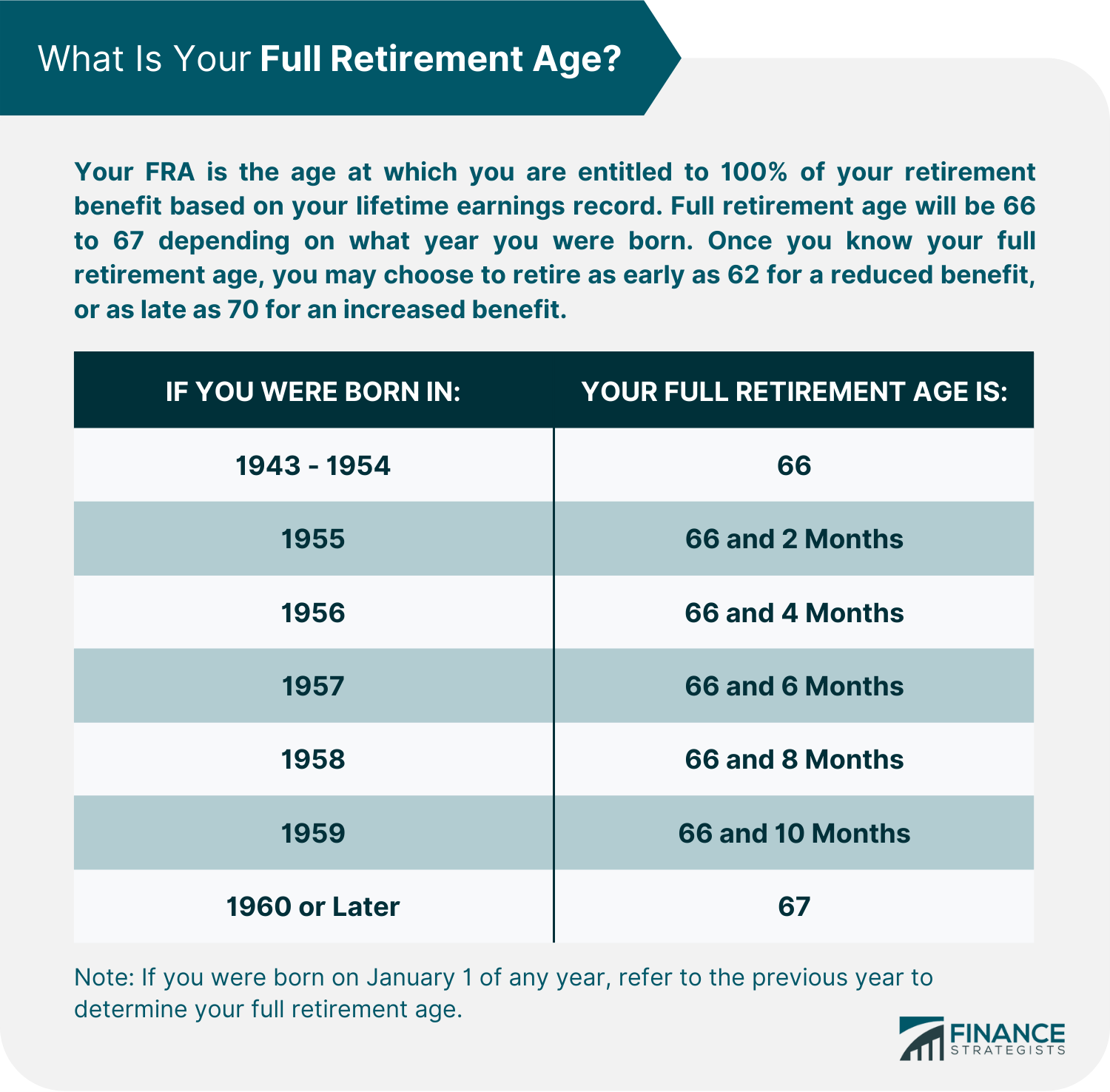
Your Full Retirement Age (FRA) is a critical component in determining your Social Security benefit. It’s the age at which you are entitled to receive 100% of your Primary Insurance Amount (PIA). The FRA depends on your birth year:
-
Born 1943-1954: FRA is 66
-
Born 1955: FRA is 66 and 2 months
-
Born 1956: FRA is 66 and 4 months
-
Born 1957: FRA is 66 and 6 months
-
Born 1958: FRA is 66 and 8 months
-
Born 1959: FRA is 66 and 10 months
-
Born 1960 or later: FRA is 67
Claiming benefits before your FRA results in a permanent reduction, while delaying benefits beyond your FRA can significantly increase your monthly payment.
The Path to Maximizing Your Social Security Benefit
Achieving the maximum Social Security benefit is not accidental; it requires deliberate financial and career planning over many years. Three primary factors converge to allow an individual to reach this upper limit.
Earning at or Above the Social Security Taxable Maximum
Each year, the Social Security Administration sets a maximum amount of earnings subject to Social Security taxes. For example, in 2023, the maximum taxable earnings were $160,200. In 2024, this figure increased to $168,600. To qualify for the maximum Social Security benefit, you must have earned at least this amount, or more, for every one of your 35 highest-earning years.
Earning above this annual maximum does not increase your future Social Security benefit, as no additional Social Security taxes are collected on income beyond that threshold. For instance, if you earn $200,000 in a year, only the first $168,600 (for 2024) is considered for your Social Security record. Therefore, consistently hitting or exceeding this taxable maximum for the required period is the first, non-negotiable step.
Working for at Least 35 Years
As mentioned, your Social Security benefit calculation uses your 35 highest-earning years. If you work for less than 35 years, every year you do not work will be counted as a zero in your earnings record. This dramatically lowers your Average Indexed Monthly Earnings (AIME) and, consequently, your Primary Insurance Amount (PIA). To achieve the maximum benefit, you must ensure you have at least 35 years where your earnings met or exceeded the Social Security taxable maximum. Even one year short of this can prevent you from reaching the absolute highest benefit. This often means working consistently from a younger age into typical retirement years, without significant career breaks.
Delaying Retirement Beyond Your Full Retirement Age
This is perhaps the most impactful strategy for maximizing your monthly payout. While your PIA is established at your FRA, you can increase your monthly benefit by delaying claiming Social Security past your FRA, up to age 70. For each year you delay past your FRA, your benefit increases by a certain percentage, known as Delayed Retirement Credits (DRCs). These credits amount to an 8% increase per year.
For someone with an FRA of 67, delaying claiming until age 70 results in a 24% increase in their monthly benefit (3 years x 8% per year). This is a permanent increase that continues for the rest of your life and impacts any future Cost-of-Living Adjustments (COLAs), as they are applied to your higher base amount. There is no additional benefit to delaying past age 70; your benefit stops increasing at that point.
Unpacking the Current Maximum Benefit Figures
The exact maximum Social Security benefit is not a static number; it changes annually due to several factors.
Maximum Benefit at Different Claiming Ages
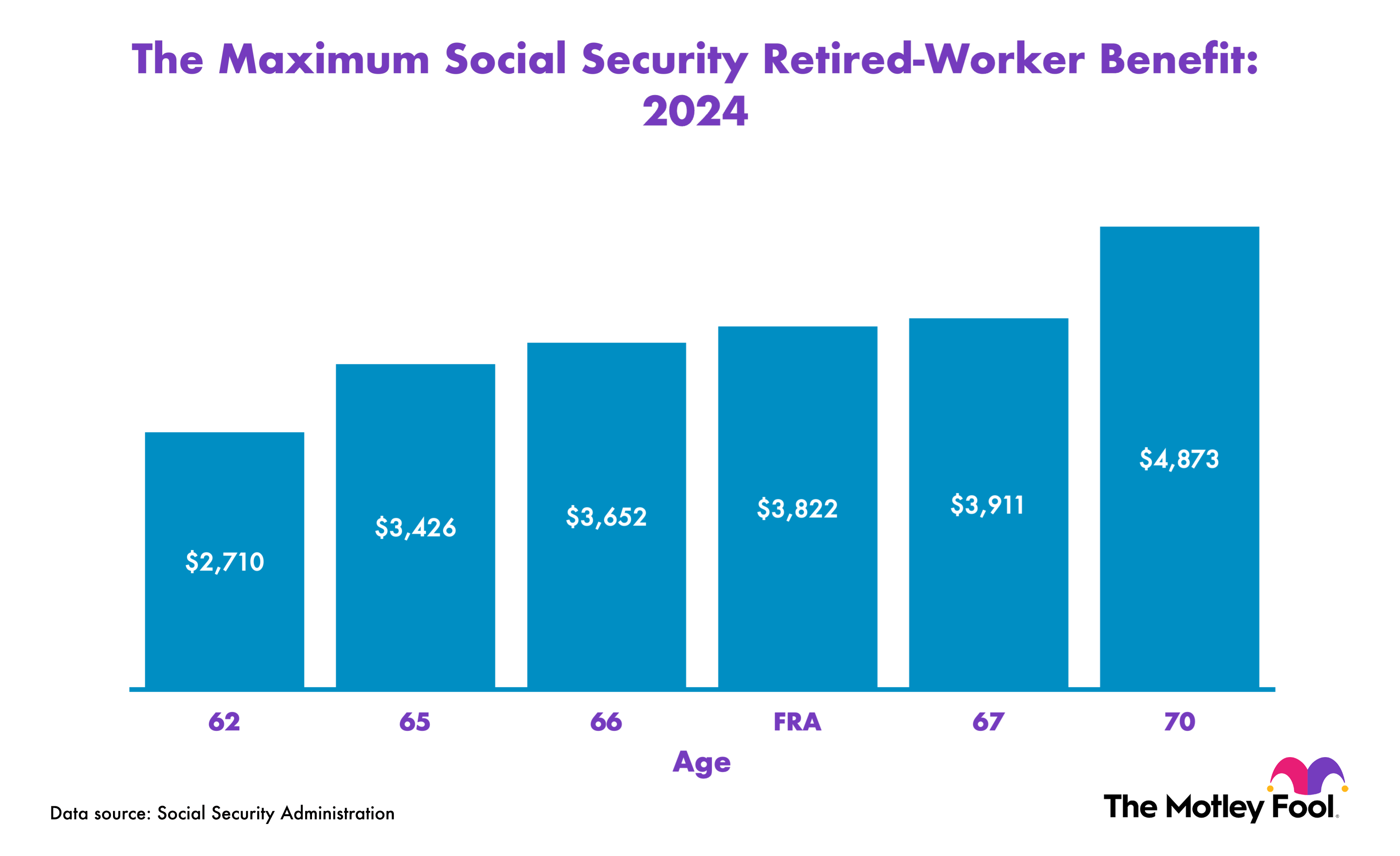
The maximum benefit varies significantly based on when you choose to claim. For example, in 2024:
-
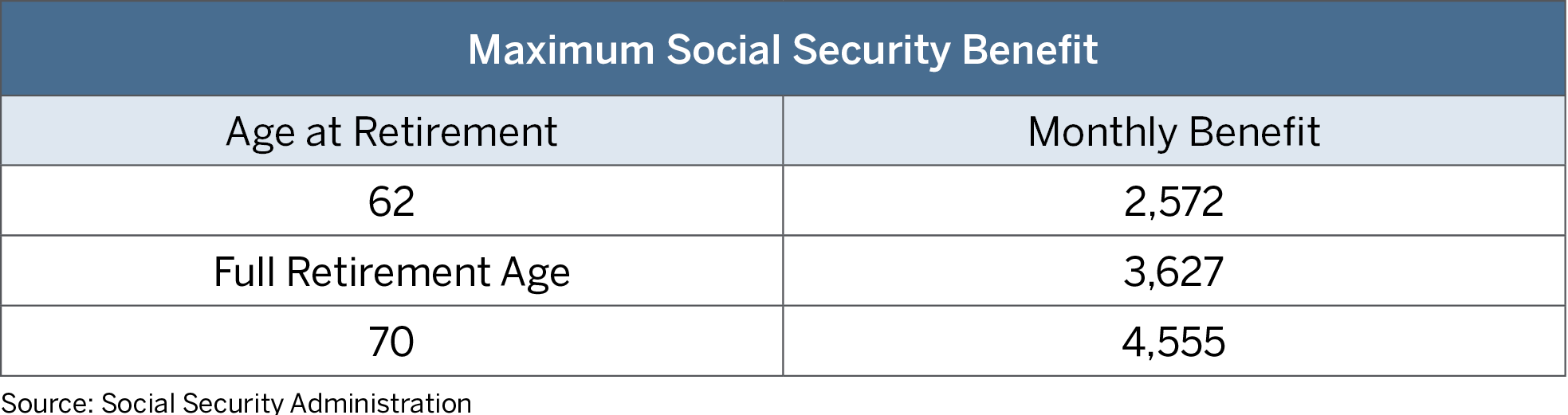
Maximum benefit at age 62 (earliest claiming age): Approximately $2,710 per month. This is for someone who started benefits as early as possible after meeting the earning requirements.
-
Maximum benefit at Full Retirement Age (FRA – e.g., age 67 for those born 1960 or later): Approximately $3,822 per month. This reflects the Primary Insurance Amount (PIA) for someone who met all earnings criteria.
-
Maximum benefit at age 70 (latest claiming age): Approximately $4,873 per month. This is the absolute highest possible individual benefit, achieved by delaying claiming and accruing maximum Delayed Retirement Credits.
These figures are illustrative and reflect the maximum for those who consistently earned at or above the taxable maximum for 35 years. It’s important to remember that these numbers are subject to change with annual Cost-of-Living Adjustments (COLAs) and updates to the bend points and taxable maximums.
Annual Adjustments: Cost-of-Living Adjustments (COLAs)
Social Security benefits are designed to maintain their purchasing power over time through Cost-of-Living Adjustments (COLAs). Each year, the SSA announces a COLA based on the Consumer Price Index for Urban Wage Earners and Clerical Workers (CPI-W). If inflation is high, the COLA will be higher, leading to an increase in monthly benefits for all recipients, including those receiving the maximum. These adjustments apply to the benefit amount you are already receiving, meaning a higher initial benefit (like the maximum at age 70) will also receive larger absolute dollar increases from COLAs over time.
Why the Maximum Isn’t Universal
It’s crucial to understand that only a small percentage of Social Security recipients ever receive the maximum benefit. This is because meeting the stringent criteria – 35 years of earnings at or above the taxable maximum AND delaying claiming until age 70 – is challenging. Many individuals experience career breaks, periods of lower income, or choose to claim benefits earlier for various personal or financial reasons. The maximum benefit is an aspirational target for those with exceptional and consistent career earnings, combined with a strategic approach to claiming.
Strategic Considerations for High Earners
For those on track to receive a significant or even maximum Social Security benefit, it’s essential to integrate this into a broader financial strategy.
Coordinating Social Security with Other Retirement Income
Social Security, even at its maximum, is rarely sufficient to cover all retirement expenses for high earners. It’s meant to be one leg of a multi-legged retirement stool, alongside 401(k)s, IRAs, pensions, and personal savings. For those expecting the maximum, their other retirement assets are likely substantial. Strategic planning involves:
-
Income Sequencing: Deciding which income streams to tap first. Some may choose to draw from taxable accounts early to allow tax-deferred accounts (like 401(k)s or IRAs) to grow longer, while using Social Security as a stable, inflation-adjusted base later in retirement.
-
Tax Efficiency: Understanding how different income sources are taxed and strategizing withdrawals to minimize your overall tax burden.
-
Longevity Planning: Social Security provides longevity insurance. The decision to delay for maximum benefit often stems from a desire to hedge against outliving other assets, as the higher benefit is guaranteed for life.
Tax Implications of High Social Security Benefits
While Social Security benefits are a source of income, they are also potentially taxable. Up to 85% of your Social Security benefits may be subject to federal income tax if your “combined income” exceeds certain thresholds. Combined income is defined as your Adjusted Gross Income (AGI) plus non-taxable interest plus one-half of your Social Security benefits.
For 2024, the thresholds are:
-
Individuals:
-
Combined income between $25,000 and $34,000: up to 50% of benefits are taxable.
-
Combined income above $34,000: up to 85% of benefits are taxable.
-
-
Married Filing Jointly:
-
Combined income between $32,000 and $44,000: up to 50% of benefits are taxable.
-
Combined income above $44,000: up to 85% of benefits are taxable.
-
High earners, especially those receiving the maximum Social Security benefit and who have substantial income from other retirement accounts, pensions, or investments, will almost certainly pay taxes on 85% of their Social Security benefits. Some states also tax Social Security benefits, adding another layer of complexity.
The Role of Financial Planning
Given the complexities of benefit calculation, claiming strategies, and tax implications, professional financial planning becomes indispensable. A skilled financial advisor can help you:
-
Project your personalized benefit: Based on your actual earnings history.
-
Model different claiming strategies: Illustrating the financial impact of claiming at various ages.
-
Integrate Social Security into your overall retirement plan: Coordinating it with other assets for optimal income and tax efficiency.
-
Understand spousal and survivor benefits: Which can be a significant component of planning for couples.
Common Misconceptions and Key Takeaways
Misinformation about Social Security is rampant, making informed decision-making challenging without accurate insights.
Myth: Social Security is “Welfare” for the Poor
This is a common misunderstanding. Social Security is an earned benefit. You (and your employer) contribute a portion of your earnings through payroll taxes throughout your working life. These contributions directly fund your future benefits and those of current retirees. The benefit formula is progressive, providing a higher replacement rate for lower earners, but everyone who contributes and meets the minimum earnings criteria earns a benefit. The maximum benefit explicitly demonstrates that high earners also contribute significantly and can receive substantial payouts.
Myth: The System Will Run Out of Money
While Social Security faces long-term funding challenges, the system is not projected to run out of money. According to the 2023 Trustees’ Report, Social Security can pay 100% of promised benefits until the mid-2030s. After that, it is projected to be able to pay about 80% of scheduled benefits if Congress takes no action. This implies potential adjustments may be needed (e.g., raising the full retirement age, increasing the taxable maximum, modest tax increases), but the system is unlikely to disappear entirely. For those planning to maximize benefits, it means their planning should still prudently consider Social Security as a major component of their retirement income, albeit one that policymakers continue to monitor and address.
Actionable Steps for Aspiring Maximizers
If your goal is to achieve the maximum Social Security benefit, consider these actionable steps:
-
Work for at least 35 years: Ensure a consistent employment history.
-
Earn above the annual taxable maximum: For all 35 of those working years. Monitor the SSA’s annual announcements for this figure.
-
Delay claiming until age 70: If financially feasible and aligns with your longevity expectations. This is the single biggest lever for increasing your monthly payout.
-
Review your Social Security statement annually: Access it online at ssa.gov to check your earnings record and estimated benefits. Correct any discrepancies promptly.
-
Consult a financial advisor: Especially as you approach retirement, to integrate your Social Security strategy with your overall financial plan.
Reaching the maximum Social Security benefit is an ambitious goal that requires decades of consistent high earnings and strategic claiming decisions. While not attainable for everyone, understanding the mechanics behind it provides invaluable insight into the Social Security system and empowers more informed retirement planning for all income levels.
aViewFromTheCave is a participant in the Amazon Services LLC Associates Program, an affiliate advertising program designed to provide a means for sites to earn advertising fees by advertising and linking to Amazon.com. Amazon, the Amazon logo, AmazonSupply, and the AmazonSupply logo are trademarks of Amazon.com, Inc. or its affiliates. As an Amazon Associate we earn affiliate commissions from qualifying purchases.