
Understanding the concept of a “living wage” is fundamental to personal financial planning and achieving economic stability in the United States. Far more nuanced than the federally mandated minimum wage, the living wage represents the income an individual or family needs to cover basic necessities without requiring public assistance or experiencing financial hardship. It’s a critical benchmark for assessing true financial self-sufficiency.
Defining the Living Wage: More Than Just Minimum
The living wage is not merely an abstract economic concept; it’s a practical measure of the income required to maintain a decent, albeit modest, standard of living. It serves as a vital tool for individuals to evaluate their financial health and for communities to gauge the economic viability of their residents.

The Core Principle and Calculation
At its heart, the living wage is designed to quantify the income necessary to afford fundamental expenditures. These typically include housing, food, childcare, healthcare, transportation, and other miscellaneous necessities like clothing and personal care products, along with applicable taxes. Unlike a flat rate, the living wage is dynamic, varying significantly based on family composition (e.g., single adult, two adults with one child, etc.) and geographic location.
Leading methodologies for calculating the living wage, such as the one developed by the Massachusetts Institute of Technology (MIT) Living Wage Calculator, meticulously itemize these costs. Researchers gather data on local prices for housing (rent/mortgage, utilities), food (based on nutritional guidelines), medical expenses (premiums, out-of-pocket costs), transportation (public transit fares, car ownership expenses like fuel, insurance, maintenance), and childcare (a significant burden for many families). These costs are then summed up, and taxes are factored in to arrive at a gross hourly wage requirement for various household sizes. The goal is to ensure that, after covering these essentials, there is no income left over for discretionary spending or savings, highlighting its nature as a bare minimum for self-sufficiency.
Distinguishing from Minimum Wage
It is crucial for individuals managing their finances to understand the clear distinction between the living wage and the minimum wage. The minimum wage, established by federal, state, and local laws, is the lowest hourly wage an employer can legally pay. While it acts as a legal floor for wages, it is often a political compromise and historically has not kept pace with the rising cost of living in many areas.
In stark contrast, the living wage is an evidence-based measure of what an individual or family actually needs to earn to meet basic needs. For example, while the federal minimum wage has been $7.25 per hour since 2009, a single adult in almost any county in the U.S. would need to earn significantly more to afford basic living expenses. For a family with children, the gap between minimum wage and living wage becomes even wider.
This disparity has profound implications for personal finance. Earning only the minimum wage often necessitates difficult financial trade-offs: choosing between paying rent or buying nutritious food, deferring medical care, or relying on high-interest debt to cover unexpected expenses. A living wage, while not luxurious, aims to remove these agonizing choices, enabling individuals and families to cover their essential bills and avoid the perpetual cycle of financial stress that often accompanies low wages. Understanding this difference empowers individuals to assess their true financial needs and advocate for their economic well-being.
The Varied Landscape Across the United States
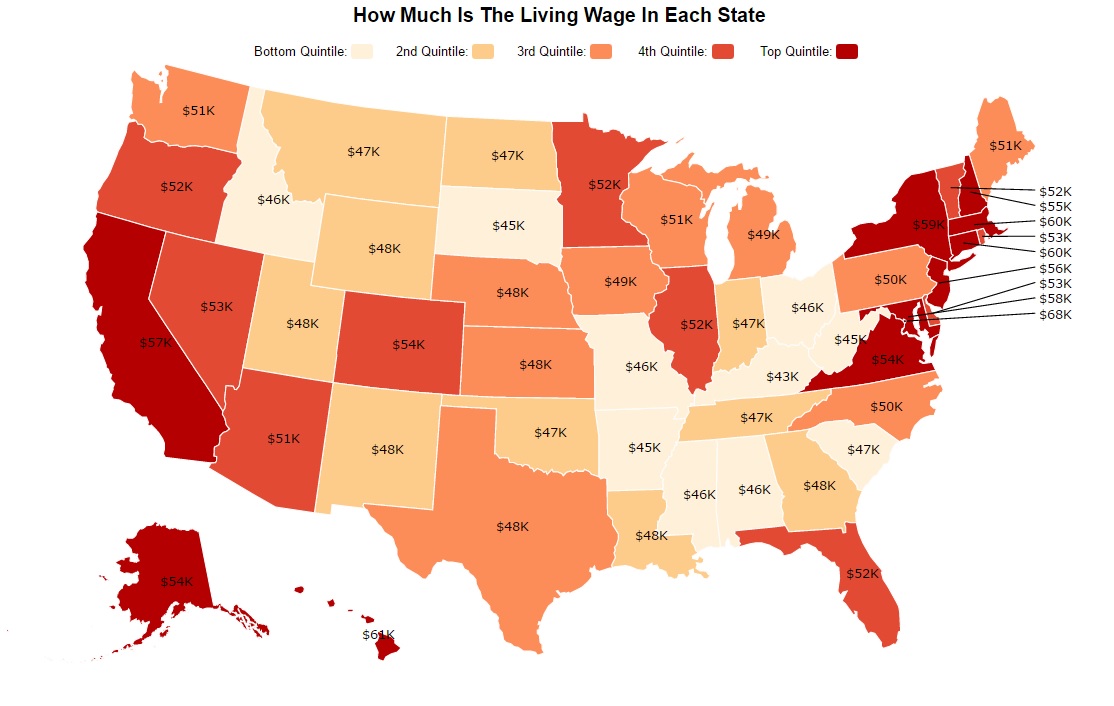
The economic reality of earning a living wage in America is not uniform; it’s a patchwork quilt of regional costs and local financial pressures. What constitutes a living wage in one part of the country can be drastically different from another, making personal financial planning a highly localized endeavor.
Regional Disparities in Cost of Living
The most significant factor driving the variation in living wage requirements across the U.S. is the immense disparity in the cost of living. Housing, in particular, is a dominant expense that can swing wildly from one metropolitan area to a rural community. For instance, the cost of renting a modest apartment in San Francisco or New York City can be several times higher than in a smaller city in the Midwest or South. This fundamental difference ripples through other aspects of the cost of living.
Groceries, while somewhat standardized due to national supply chains, can still see price variations influenced by local taxes, transportation costs, and availability. Healthcare costs, including insurance premiums and out-of-pocket expenses, also vary by state and region, impacting the overall financial burden on individuals and families. Transportation costs are another significant variable; urban areas might have higher public transit costs or parking fees, while rural areas demand higher fuel and vehicle maintenance expenses due to longer commutes. These regional disparities mean that a salary that provides a comfortable living in a low-cost area might plunge an individual into financial precarity in a high-cost urban center.
Factors Influencing Local Living Wage
Beyond broad regional differences, several specific components contribute to the calculation of a local living wage:
-
Housing: This is typically the largest expenditure. Local market rents (for various apartment sizes) or mortgage costs are a primary driver. Property taxes and utility prices (electricity, water, heating/cooling) further influence this category.
-
Food: Calculations are based on USDA food plans, adjusted for local grocery prices, aiming for a nutritious diet. Family size directly impacts this cost.
-
Childcare: For families with young children, childcare can be one of the most prohibitive expenses. Local daycare rates, preschool tuition, and after-school care costs are critical components, often surpassing housing expenses in some areas.
-
Healthcare: Includes the average cost of health insurance premiums for individuals and families not covered by an employer, along with estimated out-of-pocket medical expenses, prescriptions, and co-pays.
-
Transportation: This encompasses costs associated with vehicle ownership (car payments, insurance, fuel, maintenance) or reliance on public transportation (bus/train passes, taxi/rideshare services). The extent of public transit availability and necessity for vehicle ownership greatly affects this factor.
-
Other Necessities: This catch-all category includes essential personal care items, clothing, household supplies, telephone and internet services, and a small allowance for contingency or minor discretionary spending.
-
Taxes: Finally, all gross income figures must account for federal, state, and local income taxes, as well as payroll taxes (Social Security and Medicare), to determine the net take-home pay available for expenses.
Each of these factors is meticulously researched at the local level to provide an accurate estimate of what an individual or family truly needs to earn to live without economic distress in their specific community. For anyone budgeting or planning their finances, understanding these local cost drivers is paramount.
Impact on Personal Finances and Economic Stability
Earning a living wage fundamentally shifts the landscape of personal finance, transforming it from a constant struggle for survival into a foundation for stability and future growth. The presence or absence of a living wage significantly dictates an individual’s ability to manage debt, build savings, and achieve long-term financial goals.
Budgeting for Essential Needs
For individuals earning below a living wage, budgeting often becomes an exercise in scarcity. It’s not about allocating funds for different categories, but rather making agonizing choices between equally critical needs. Can I afford groceries this week if I pay the full electricity bill? Do I buy medicine or put gas in the car to get to work? This constant trade-off creates immense psychological stress and often leads to an inability to cover all essential needs adequately. Food insecurity, housing instability, and deferred medical care are common consequences.
Conversely, earning a living wage allows for a realistic and sustainable budget. It means that, even after accounting for housing, food, healthcare, transportation, and childcare, there’s sufficient income to cover these necessities without falling into arrears. While a living wage doesn’t typically provide for lavish spending, it offers the peace of mind that comes from knowing the essentials are covered. This stability enables individuals to create a functional budget, track expenses, and make informed financial decisions rather than being perpetually reactive to crises. It shifts the focus from merely surviving to strategically managing one’s money.
Debt, Savings, and Financial Resilience
The impact of the living wage on personal debt and savings is profound. When income doesn’t meet basic expenses, individuals are often forced to rely on high-interest debt to bridge the gap. Credit cards become a lifeline for groceries or medical bills, and payday loans might be used to cover an unexpected car repair. This type of debt is notoriously difficult to escape due to exorbitant interest rates, creating a cycle of increasing financial vulnerability. Without the ability to pay down principal, interest accrues, further eroding already stretched budgets.
A living wage, however, provides the crucial buffer needed to avoid such predatory lending. It creates the financial space to start building an emergency fund—a cornerstone of personal financial resilience. Even a small savings cushion can prevent minor setbacks from spiraling into major financial crises. With a living wage, individuals can begin to allocate funds towards savings goals, such as retirement planning, a down payment on a home, or education. This ability to save, even modestly, transforms financial outlooks, fostering a sense of security and providing opportunities for future investment and wealth building. It lays the groundwork for financial independence and breaking free from the dependency on debt.
Broader Economic Implications
While primarily focused on individual finance, the widespread attainment of a living wage across a community has broader economic benefits that indirectly circle back to personal financial well-being. When more residents earn a living wage, there is reduced reliance on public assistance programs, freeing up taxpayer dollars. Increased purchasing power among a larger segment of the population can stimulate local economies, supporting small businesses and fostering local job growth. Furthermore, employees earning a living wage often experience reduced stress, improved health outcomes, and greater job satisfaction, leading to lower turnover rates for businesses and a more stable, productive workforce. These systemic improvements contribute to a more robust economic environment that generally benefits all residents, including their financial security.
Navigating the Gap: Strategies for Financial Well-being
For many Americans, particularly those in high-cost-of-living areas, the gap between their current income and a true living wage can be substantial. Bridging this gap requires a proactive and multi-faceted approach to personal finance, focusing on both increasing income and optimizing expenditure.
Income Augmentation and Side Hustles
One of the most direct ways to close the living wage gap is by increasing income. This doesn’t always mean finding a higher-paying primary job, which can be challenging in certain markets. Instead, many individuals turn to income augmentation strategies and side hustles. The gig economy, in particular, offers numerous opportunities, from driving for rideshare services or delivering food, to freelancing in areas like writing, graphic design, or web development. Leveraging existing skills or acquiring new ones through online courses can open doors to remote work or contract positions that provide supplementary income.
For example, a person with strong organizational skills might offer virtual assistant services, while someone good at crafting could sell handmade goods online. Even small, consistent income streams from side hustles can make a significant difference in meeting monthly financial obligations, building an emergency fund, or paying down high-interest debt. The key is to identify marketable skills, research local and online opportunities, and realistically assess the time and effort required for these ventures to ensure they are financially beneficial and sustainable.
Smart Budgeting and Cost-Saving Measures
While increasing income is vital, optimizing expenses is equally crucial. Smart budgeting becomes an indispensable tool for managing money effectively, especially when income is tight.
-
Detailed Budgeting: Start by creating a comprehensive budget that tracks every dollar earned and spent. Categorize expenses (fixed vs. variable) and identify areas where cuts can be made. Tools like budgeting apps or spreadsheets can simplify this process.
-
Expense Tracking: Consistently monitoring where money goes helps identify “leakage” – small, unnecessary expenses that add up over time.
-
Reducing Discretionary Spending: While difficult, temporarily cutting back on non-essential items like dining out, entertainment subscriptions, or expensive coffees can free up significant funds.
-
Negotiating Bills: Many service providers (internet, cable, insurance) are open to negotiating lower rates or offering discounts, especially for long-term customers. Regular reviews of these expenses can yield savings.
-
Cost-Effective Necessities: Explore ways to reduce essential costs. Meal planning and cooking at home can drastically cut food expenses. Comparing prices for groceries, insurance, and utilities can ensure you’re getting the best value. Evaluating housing costs, if feasible, might involve seeking a more affordable living situation or finding roommates.
These measures, when combined, can create a substantial financial buffer, making an existing income stretch further toward living wage requirements.
Advocacy and Policy Awareness
While individual strategies are powerful, understanding broader policy discussions around wage increases, affordable housing initiatives, and enhanced social safety nets is also part of a holistic financial strategy. Staying informed about local and state-level efforts to raise the minimum wage, expand access to affordable healthcare, or improve public transportation can inform where to direct advocacy efforts and how potential policy changes might impact personal finances. While not a direct money management strategy, being aware of and supporting policies that promote economic justice can contribute to a more favorable financial landscape for oneself and the community.

Tools and Resources for Understanding Your Local Living Wage
In an era where economic realities are highly localized, having access to accurate, data-driven tools is essential for effective personal financial planning. These resources empower individuals to move beyond anecdotal understanding and grasp the precise income required to meet their specific needs.
The MIT Living Wage Calculator is perhaps the most widely recognized and respected resource. Developed by researchers at MIT, this online tool allows users to input their state, county, and family composition (e.g., single adult, two adults with two children). It then generates an estimate of the hourly wage required to cover basic expenses, broken down into categories such as housing, food, childcare, medical care, transportation, and other necessities, along with estimated taxes. For anyone trying to understand their financial baseline, this tool provides a robust, granular analysis of what constitutes a living wage in their specific geographic area. It’s an invaluable starting point for budgeting and income goal-setting.
Similarly, the Economic Policy Institute (EPI) Family Budget Calculator offers another comprehensive perspective. This tool estimates the income a family needs to afford a modest yet adequate standard of living. It also breaks down expenses by category and considers various family sizes and locations across the U.S. While the methodology may differ slightly from MIT’s, it provides a consistent and reliable alternative for comparison and deeper insight into the cost of living.
Beyond these national calculators, local government economic development offices or community organizations often publish local cost of living reports or specific “self-sufficiency standards.” These reports can sometimes offer even more localized data, including unique regional taxes or specific program costs relevant to that community. For individuals planning a move or assessing the financial viability of staying in their current location, consulting these local resources can provide critical supplementary information.
Utilizing these financial tools is more than just curiosity; it’s a strategic move in personal finance. They help individuals:
-
Assess Financial Health: Compare current income against the local living wage to understand the gap, if any.
-
Set Realistic Income Goals: Inform decisions about career advancement, skill development, or seeking additional income streams.
-
Budget Effectively: Provide a realistic baseline for essential expenses, making budgeting more informed and less prone to underestimation.
-
Inform Advocacy: Equip individuals with data to discuss wages and economic needs within their workplaces or communities.
By actively engaging with these resources, individuals can gain a clearer picture of their financial landscape, make more informed decisions, and work towards achieving true financial stability and self-sufficiency in America.
aViewFromTheCave is a participant in the Amazon Services LLC Associates Program, an affiliate advertising program designed to provide a means for sites to earn advertising fees by advertising and linking to Amazon.com. Amazon, the Amazon logo, AmazonSupply, and the AmazonSupply logo are trademarks of Amazon.com, Inc. or its affiliates. As an Amazon Associate we earn affiliate commissions from qualifying purchases.