
In the intricate world of finance, where every decimal point and fraction can represent significant value, understanding fundamental mathematical concepts is paramount. While the question “what is half of 2 1/4?” might seem like a simple arithmetic exercise, its implications extend deeply into personal finance, investing, business operations, and financial planning. This seemingly basic query serves as an excellent entry point into appreciating how fractional understanding underpins critical financial decisions, from splitting assets to allocating budgets, and from analyzing investment returns to calculating ownership stakes.
The Foundational Math Behind Financial Decisions
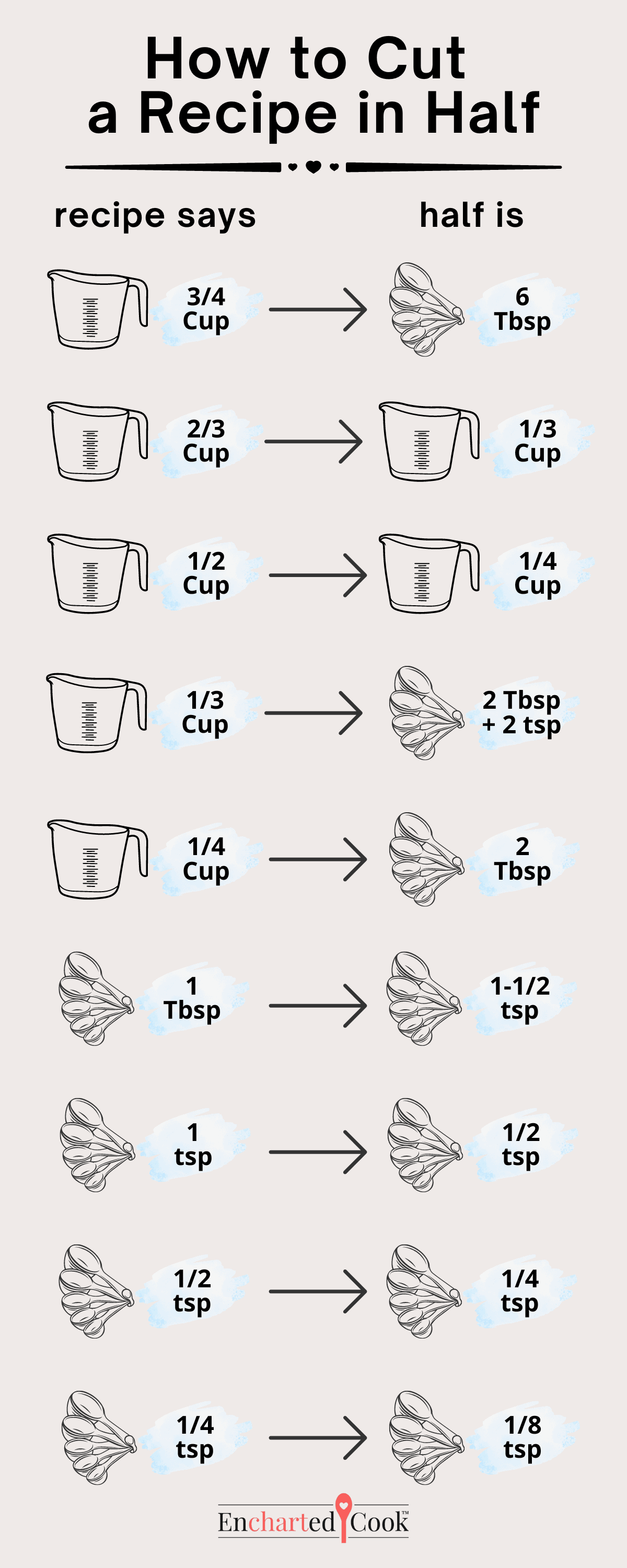
At its core, “half of 2 1/4” is a straightforward calculation. To arrive at the answer, we first convert the mixed number into an improper fraction: 2 1/4 becomes (2 * 4 + 1) / 4 = 9/4. Finding half of this value means dividing it by two, or multiplying it by 1/2. Thus, (9/4) * (1/2) = 9/8. As a mixed number, this is 1 1/8, and as a decimal, it’s 1.125. This simple result—1 1/8 or 1.125—is not just an academic exercise; it’s a building block for more complex financial literacy.
Understanding Mixed Numbers and Fractions in Finance
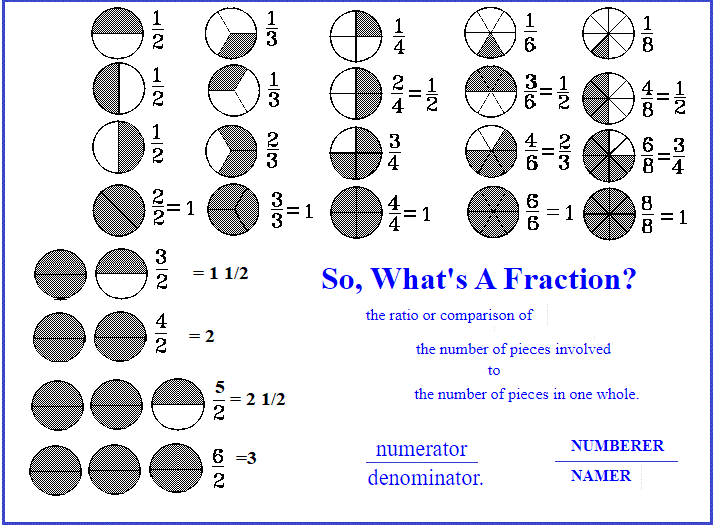
Fractions and mixed numbers are ubiquitous in financial contexts, often representing portions of a whole that isn’t easily divisible into integer units. Whether it’s stock splits, ownership percentages, interest rates, or real estate shares, understanding how to manipulate these figures is crucial. For instance, an investment portfolio might be described as “2 1/4 units” of a specific fund, and an investor might need to determine the value of “half” of that holding. Without a firm grasp of fractional arithmetic, accurate valuation and decision-making become significantly more challenging. This foundational knowledge prevents miscalculations that can lead to losses or missed opportunities.
Practical Applications: Dividing Assets and Allocating Budgets
Consider a scenario where two partners decide to split an asset valued at “2 1/4” million dollars. Knowing that half of this is 1 1/8 million dollars (or $1,125,000) provides a precise figure for distribution. Similarly, in budgeting, a household might allocate “2 1/4” hours of their daily budget to a specific discretionary category, and they want to know how much time that represents if it were halved for a particular day. These real-world applications underscore that fractions are not merely abstract mathematical concepts but vital tools for managing tangible resources and financial commitments. The ability to work with fractions ensures fairness, accuracy, and clarity in financial agreements and personal planning.
Calculating Proportions in Personal Finance
The ability to accurately calculate proportions is a cornerstone of effective personal finance management. From dividing shared expenses to understanding the true impact of discounts, fractional calculations provide the granular detail needed for informed choices. The “half of 2 1/4” principle extends beyond simple halving to encompass any proportional division or multiplication that impacts one’s financial standing.
Splitting Expenses and Group Investments
In communal living or group investment scenarios, individuals frequently encounter situations requiring precise proportional calculations. Imagine a group of friends who jointly own an asset, perhaps a vacation property, with a combined share represented as “2 1/4” units of ownership, and one person is selling half of their stake. Or consider roommates splitting a utility bill where one person contributed “2 1/4” shares towards a communal purchase, and another is responsible for half of that contribution. In these cases, 1 1/8 (or 1.125) accurately defines the portion in question, ensuring equitable distribution and avoiding disputes. This applies to family budgets where spouses might decide to share responsibility for a portion of income or expenses, where the ability to divide non-whole numbers precisely is key to financial harmony.
Analyzing Investment Returns and Portfolio Allocation
Investors constantly deal with fractions, whether it’s in stock prices that trade in decimals, interest rates expressed as percentages (which are essentially fractions of 100), or portfolio allocations. If an investor holds 2 1/4 units of an exchange-traded fund (ETF) and needs to rebalance their portfolio by selling half of that position, they must calculate that they are divesting 1 1/8 units. This precision is vital for executing trades correctly, understanding the remaining exposure, and calculating potential capital gains or losses. Moreover, when evaluating investment performance, annual growth rates, often expressed as percentages, need to be applied fractionally to principal amounts to project future values. A 2.25% return, which can be written as 2 1/4%, needs careful fractional interpretation when calculating its impact over time.
Discount Calculations and Sale Prices
Discounts are everyday occurrences that require a grasp of fractional math. While many discounts are presented as simple percentages (e.g., 50% off), understanding how they apply to prices that might include fractional components (e.g., a service costing $2.25 per unit) is important. If a store offers “half off” on an item originally priced at $2.25, the calculation of half of 2 1/4 (which is $1.125) directly gives the discount amount, leading to a final price of $1.125. Beyond simple percentages, promotions often involve “buy one get one half off,” or “additional 1/4 off the already discounted price.” These layered discounts necessitate comfort with fractions to determine the true final cost and assess the real savings, preventing consumers from overpaying or misjudging a deal.
Business Finance: Shares, Equity, and Resource Distribution
In the realm of business finance, the principles demonstrated by “half of 2 1/4” escalate in complexity and consequence. From the distribution of equity in startups to the allocation of budgets in multinational corporations, precise fractional understanding is indispensable for operational efficiency and legal compliance. Miscalculations can lead to diluted ownership, mismanaged resources, or inaccurate profit distributions.
Equity Splits and Ownership Stakes
For startups and small businesses, accurately dividing equity among founders, early employees, and investors is a critical initial step. If a founder initially owns 2 1/4 units of a company’s equity (perhaps representing a certain class of shares or a percentage translated into a unit count), and they decide to sell half of their stake to an incoming angel investor, that transfer represents 1 1/8 units of equity. This fractional precision is fundamental to establishing clear ownership structures, preventing future disputes, and accurately reflecting each party’s stake in the company’s success. Similarly, when a company issues new shares, existing shareholders’ ownership might be diluted fractionally, a concept that requires a deep understanding of proportional changes.
Resource Allocation and Project Budgeting
Businesses allocate resources—be they financial capital, human resources, or operational capacity—based on strategic priorities. If a department is allocated a budget equivalent to “2 1/4” major project cycles, and a new directive requires them to reallocate half of that capacity to an urgent initiative, they must understand they are shifting 1 1/8 project cycles. This granular understanding enables project managers to plan schedules, deploy personnel, and manage expenditures with accuracy. Without this precision, resources can be over- or under-allocated, leading to project delays, cost overruns, or inefficient utilization of valuable assets.
Understanding Profit Sharing and Dividends
Many businesses operate with profit-sharing models or distribute dividends to shareholders. If a company announces a dividend of “2 1/4” dollars per share, and an investor owns a fractional share or is evaluating the impact of holding half a share, the calculation of half of 2 1/4 becomes directly relevant. For partnership agreements, profits might be split according to complex fractional formulas, where one partner is entitled to “2 1/4” shares of the profit pool, and another partner’s compensation is based on “half” of that first partner’s share. These situations demand careful fractional arithmetic to ensure fair and accurate distribution of earnings, maintaining transparency and trust among stakeholders.
Beyond Simple Halving: Scaling Financial Concepts
While “half of 2 1/4” provides a tangible answer, its broader lesson lies in demonstrating the scalability of fractional understanding across various financial complexities. This seemingly simple operation acts as a gateway to comprehending compound growth, diversification, and future value estimation.
The Power of Compound Interest and Fractional Growth
Compound interest, often hailed as the “eighth wonder of the world,” relies heavily on fractional calculations over time. Interest rates are typically expressed as annual percentages, meaning they are fractions of the principal. If an investment grows by “2 1/4″% annually, understanding how to apply this fractional growth factor repeatedly is crucial for projecting future wealth. While a simple halving is a linear operation, the iterative application of fractional growth rates in compound interest calculations highlights the geometric power of these concepts. Each interest period, a fraction of the total amount (principal + accumulated interest) is added, demonstrating how fractions contribute to exponential financial growth.
Risk Mitigation Through Diversification
Diversification, a core principle in investing, involves spreading investments across various asset classes, industries, and geographies to mitigate risk. This often means allocating fractional portions of a total portfolio to different categories. An investor might decide to put “2 1/4” tenths of their portfolio into technology stocks, and then, upon review, decide to halve that exposure to reduce risk. The ability to precisely calculate and adjust these fractional allocations—moving from 2 1/4 tenths to 1 1/8 tenths—is fundamental to effectively managing portfolio risk and optimizing returns according to one’s risk tolerance.

Estimating Future Values with Fractional Growth Rates
Financial planning frequently involves estimating the future value of savings or investments. This requires applying projected growth rates (often fractional percentages) over specified periods. Whether it’s planning for retirement, saving for a down payment, or funding a child’s education, future value calculations depend on accurately compounding fractional growth. Understanding how a “2 1/4” percent annual growth rate, or even half of that rate, impacts an investment over decades illustrates the long-term implications of fractional changes and the importance of precise mathematical foundations in financial foresight.
In conclusion, the seemingly straightforward question “what is half of 2 1/4?” unlocks a deeper appreciation for the role of fundamental mathematics in navigating the complexities of finance. From personal budgets to corporate balance sheets, fractions and their precise manipulation are indispensable tools for accurate valuation, equitable distribution, strategic planning, and sound decision-making. Mastery of these basic concepts is not just about getting the right answer; it’s about building a robust framework for financial literacy and success.
aViewFromTheCave is a participant in the Amazon Services LLC Associates Program, an affiliate advertising program designed to provide a means for sites to earn advertising fees by advertising and linking to Amazon.com. Amazon, the Amazon logo, AmazonSupply, and the AmazonSupply logo are trademarks of Amazon.com, Inc. or its affiliates. As an Amazon Associate we earn affiliate commissions from qualifying purchases.