
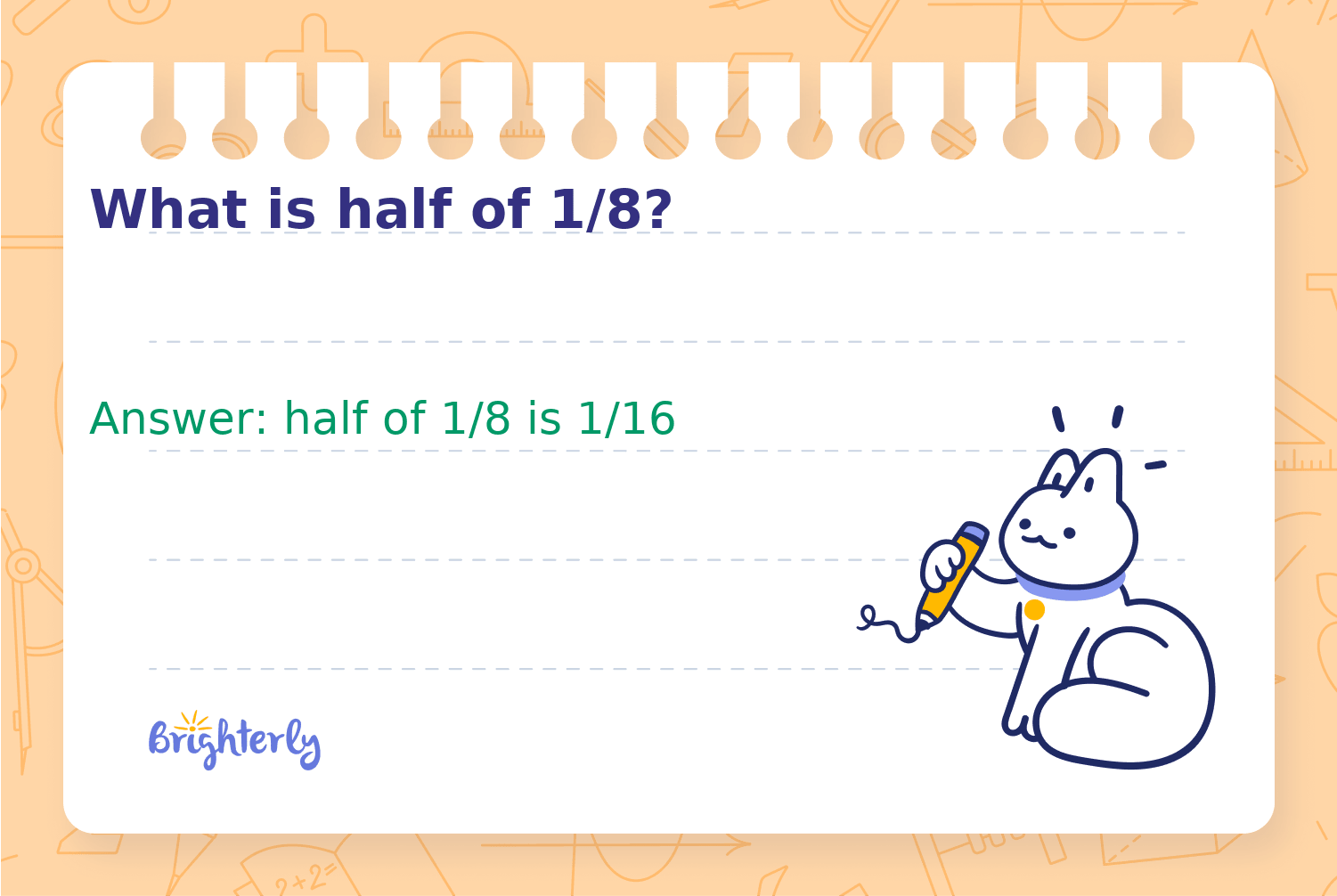
In the intricate world of finance, where every decimal and fraction can represent significant sums, understanding fundamental arithmetic is paramount. While seemingly a simple mathematical query, “what is half of 1 1/8” serves as an excellent microcosm for the larger principles of fractional calculations that underpin numerous financial scenarios. From calculating investment returns and splitting business profits to understanding proportional ownership and adjusting interest rates, fractions are an inescapable part of the financial landscape. Grasping how to accurately manipulate these values is not merely an academic exercise; it is a critical skill for informed decision-making, risk management, and wealth accumulation.
The Ubiquity of Fractions in Financial Landscapes
Financial operations rarely deal exclusively in whole numbers. Interest rates might be quoted as 3.5% or 1 1/4%. Stock prices fluctuate in fractions of a dollar, and ownership stakes in a company can be divided into percentages that, when converted, are essentially fractions. Understanding how to work with these fractional values, especially when needing to divide, multiply, or compare them, is a cornerstone of financial literacy. The concept of “half of 1 1/8” isn’t an isolated problem but rather a common operation found across various financial domains.
Beyond Whole Numbers: Why Fractions Matter
Fractions represent parts of a whole, offering a level of precision that whole numbers cannot. In finance, this precision is non-negotiable. A slight miscalculation involving a fraction could mean thousands, if not millions, of dollars in discrepancy over time or across large transactions. For instance, an interest rate of “one and an eighth percent” (1 1/8%) is distinct from “one percent” (1%) or “one and a half percent” (1 1/2%). When these rates are applied to loans, investments, or compounding interest, even small differences compounded over time yield substantially different outcomes. Furthermore, certain asset classes, like commodities or even some older stock market conventions, historically traded in fractions, making their direct interpretation crucial for historical analysis and understanding market dynamics.
Common Financial Scenarios Involving Fractional Values
Consider a few scenarios where fractions like 1 1/8 might naturally appear:
-
Investment Yields: A bond might offer a yield of 1 1/8% annually. If you need to calculate the yield for a half-year period, you’d need to find half of that fraction.
-
Partnership Stakes: Two business partners might agree that one owns 1 1/8 units of equity, and they decide to split an incoming asset proportional to their existing stakes. One partner might then inherit “half of 1 1/8” of that new asset.
-
Commodity Pricing: Some commodities are still priced in fractional units per barrel or ounce, and calculating a proportional share requires fractional arithmetic.
-
Mortgage Rates: While often quoted in decimals today, historical or niche mortgage products might still use fractions.
The recurring theme is the need for exactness. Approximations, while sometimes acceptable in everyday life, can lead to significant financial errors.
Deconstructing the “Half” Calculation for Financial Accuracy
To accurately find “half of 1 1/8,” we must first understand the fundamental mathematical steps involved in handling mixed numbers and fractions. This process ensures precision, a critical attribute in financial calculations.
Converting Mixed Numbers to Improper Fractions: The First Step
A mixed number, such as 1 1/8, combines a whole number (1) with a proper fraction (1/8). To perform operations like division or multiplication easily, it’s often best to convert the mixed number into an improper fraction. An improper fraction is one where the numerator is greater than or equal to the denominator.
Here’s how to convert 1 1/8:
-
Multiply the whole number by the denominator: 1 * 8 = 8.
-
Add the result to the numerator: 8 + 1 = 9.
-
Place this new number over the original denominator: 9/8.
So, 1 1/8 is equivalent to 9/8. This step simplifies the subsequent arithmetic, making the calculation more straightforward and reducing the likelihood of errors.
The Simple Math of Division: Executing the “Half”
Once 1 1/8 is converted to its improper fraction form, 9/8, finding “half of it” becomes a simple division problem. To find half of any number, you divide it by 2. When dividing a fraction by a whole number, you multiply the denominator of the fraction by that whole number, or equivalently, multiply the fraction by the reciprocal of the whole number (which is 1/2 in this case).
So, to find half of 9/8:
-
(9/8) ÷ 2
-
Multiply the denominator (8) by 2: 8 * 2 = 16.
-
Keep the numerator the same: 9/16.
Alternatively, multiply 9/8 by 1/2:
- (9/8) * (1/2) = (9 * 1) / (8 * 2) = 9/16.
The result is 9/16. In financial contexts, depending on the application, this might be expressed as a decimal (0.5625) or rounded to a specific precision. However, maintaining the fractional form often preserves exactness until the final required conversion.
Why Precision is Non-Negotiable in Finance
The seemingly minor difference between 1 1/8 and 9/16 can accumulate significantly over time and across large transactions. In financial modeling, investment analysis, or even everyday budgeting, slight inaccuracies in base calculations can lead to compounding errors. For example, if 1 1/8% represented an annual growth rate, and a half-year calculation incorrectly approximated “half” rather than precisely calculating 9/16%, the projected future value of an investment could be materially different. Financial institutions and individual investors alike rely on absolute precision to manage risk, report accurately, and make sound investment decisions.
Practical Applications: Where 1 1/8 Becomes 9/16 in Your Money Matters
The calculation of “half of 1 1/8” is not just a theoretical exercise. Its real-world relevance extends across diverse financial domains, illustrating the practical necessity of fractional fluency.
Investment Portfolios: Calculating Half-Period Returns or Yields
Consider an investment that promises a 1 1/8% annual dividend yield. If an investor purchases this asset midway through the year, they are entitled to a proportional share of that annual yield. To calculate the dividend for that half-year period, you would need to find half of the annual yield, which is 9/16% (or 0.5625%). This precise calculation ensures the investor receives the correct payout and allows for accurate tracking of their portfolio’s performance, which is essential for rebalancing or tax planning. Similarly, calculating half-yearly interest payments on a bond with a coupon rate of 1 1/8% would involve the same mathematical step.
Business Partnerships & Equity Distribution: Dividing Stakes
In a small business partnership, one partner might initially hold a unique equity stake represented by a fraction, perhaps 1 1/8 units of ownership in a pool of total units. If a new partner is introduced, or if an existing partner needs to transfer half of their current stake to another entity, the calculation of “half of 1 1/8” becomes directly applicable. The partner would then transfer 9/16 units of their stake. This level of precision is critical for legal documents, shareholder agreements, and accurately determining voting rights or profit distributions based on proportional ownership.
Real Estate & Asset Management: Proportional Ownership and Shares
Real estate transactions can involve complex ownership structures, particularly in syndications or family trusts. Imagine a scenario where a trust owns a property, and one beneficiary is entitled to an interest equivalent to 1 1/8 shares out of a larger total. If that beneficiary decides to sell or gift half of their interest, the exact calculation of half of 1 1/8 (which is 9/16) dictates the precise portion being transferred. This affects everything from future income distribution from the property to the eventual sale proceeds and tax implications. Such precise fractional division is common when dealing with mineral rights, water rights, or other divisible assets.
Budgeting and Expense Allocation: Fair Distribution of Costs
Even in personal finance, fractional divisions can appear. While less common to see “1 1/8” directly in a personal budget, the principle applies. For example, if a household has an unexpected bill, and it’s decided that one party is responsible for a specific fractional share of it (e.g., 1/2 of 3/4 of the bill), understanding how to handle such fractions ensures fair and accurate distribution of financial responsibilities. This could also extend to splitting costs for shared resources, where one person’s usage might be quantified as a fraction that then needs to be halved for calculation.
Leveraging Financial Tools for Fractional Calculations
While the ability to perform fractional arithmetic manually is fundamental, modern finance heavily relies on technology to manage complex calculations swiftly and accurately.
The Role of Spreadsheets and Calculators
Financial calculators, whether physical or software-based, often have functions for working with fractions, or at least for converting fractions to decimals, allowing for easy division. Spreadsheets like Microsoft Excel or Google Sheets are indispensable tools. To calculate half of 1 1/8 in a spreadsheet, you would typically convert 1 1/8 to its decimal equivalent (1.125) and then divide by two (1.125 / 2 = 0.5625). For maintaining fractional representation, custom formulas or functions might be needed, or the result converted back to a fraction (0.5625 = 9/16). These tools drastically reduce the time spent on manual calculations and minimize human error, especially when dealing with large datasets or intricate financial models.
Understanding Software Limitations and Verification
While financial software and spreadsheets are powerful, they are only as good as the input and the formulas used. Users must understand the underlying math to verify results and debug potential errors. An incorrect formula for handling fractions could propagate errors throughout an entire financial model, leading to flawed projections or decisions. Therefore, even with advanced tools, a foundational understanding of “what is half of 1 1/8” and similar fractional operations remains crucial for critical review and ensuring data integrity. It’s not enough for the machine to calculate; the human must understand what is being calculated.
Human Intuition vs. Algorithmic Accuracy
Relying solely on algorithms without developing a sense of the numbers can be perilous. While software provides accuracy, human intuition, grounded in a solid understanding of mathematical principles like fractional division, allows for a quick “sanity check” of results. If an algorithm calculates half of 1 1/8 as something dramatically different from approximately 0.5, a financially literate individual would immediately question the result. This blend of human understanding and technological efficiency is the hallmark of effective financial management.
Cultivating Fractional Fluency for Financial Empowerment
The seemingly simple question, “what is half of 1 1/8,” unlocks a broader discussion about the critical role of fractional understanding in achieving financial empowerment. It’s not just about getting the right answer (9/16 or 0.5625), but about appreciating the pathways to that answer and its myriad applications.
The Cost of Ignorance: Avoiding Costly Errors
In finance, ignorance of basic arithmetic, especially concerning fractions, can be expensive. Miscalculating interest, misunderstanding proportional ownership, or incorrectly allocating expenses due to a lack of fractional fluency can lead to financial losses, strained partnerships, or missed opportunities. For investors, even a small error in calculating compound returns or portfolio allocations can have a substantial impact on long-term wealth accumulation. For businesses, incorrect financial reporting due to calculation errors can lead to regulatory fines or investor distrust.
Building Confidence in Complex Financial Scenarios
A solid grasp of fractional calculations builds confidence. When presented with complex financial statements, investment proposals, or business agreements that feature fractions, an individual with fractional fluency can analyze and interpret these documents with greater assurance. This confidence translates into better decision-making, whether it’s choosing the right investment vehicle, negotiating a fair business deal, or managing personal finances effectively. Ultimately, understanding how to manipulate fundamental building blocks like “half of 1 1/8” is a foundational step towards mastering the broader, often more complex, mathematical challenges inherent in personal and business finance, paving the way for greater financial acumen and success.
aViewFromTheCave is a participant in the Amazon Services LLC Associates Program, an affiliate advertising program designed to provide a means for sites to earn advertising fees by advertising and linking to Amazon.com. Amazon, the Amazon logo, AmazonSupply, and the AmazonSupply logo are trademarks of Amazon.com, Inc. or its affiliates. As an Amazon Associate we earn affiliate commissions from qualifying purchases.