
In the world of finance, understanding basic mathematical concepts is not merely an academic exercise; it’s a foundational skill that empowers individuals and businesses to make informed decisions. While the question “what is equal to 2/5” might seem elementary, its implications resonate deeply across personal finance, investing, budgeting, and business operations. At its core, 2/5 represents a proportion, a share, or a percentage—a fundamental building block for interpreting financial data, assessing risk, and planning for the future. Grasping its various equivalents allows for greater clarity and precision when navigating the complexities of the monetary landscape.
The Foundational Importance of Fractions in Finance
Financial literacy begins with a solid understanding of how numbers relate to each other, and fractions are often the entry point into this understanding. While modern finance heavily relies on decimals and percentages for convenience and calculation, the underlying concept of a fraction—representing a part of a whole—is indispensable. When we discuss a “share” of a company, a “portion” of a budget, or a “slice” of a pie chart representing asset allocation, we are inherently thinking in fractional terms. The ability to convert between these forms fluently is a hallmark of financial acumen, translating abstract figures into actionable insights.
Decimals and Percentages: The Everyday Language of Money
While 2/5 might be a familiar fraction, financial statements, investment reports, and banking apps predominantly communicate using decimals and percentages. Interest rates are quoted as percentages, investment returns are often displayed as percentage gains or losses, and budgets are dissected into decimal allocations. For example, a 0.4% management fee, a 40% income tax bracket, or a 0.40 dollar-to-euro exchange rate all stem from the same proportional understanding that 2/5 embodies. The immediate conversion from fraction to decimal or percentage allows for rapid comprehension and comparison, critical for quick decision-making in fast-moving financial markets or when evaluating multiple financial products. Without this fluency, interpreting financial data becomes a laborious task rather than an intuitive process.
Bridging the Gap: From Abstract to Application
The abstract concept of 2/5 gains profound relevance when applied to real-world financial scenarios. Consider a scenario where an investor allocates two out of every five dollars of their portfolio to a specific asset class. Or a small business owner who knows that two-fifths of their revenue comes from a particular product line. These simple fractional representations, when translated into their decimal (0.40) or percentage (40%) equivalents, become powerful tools for analysis. They allow for easy comparison with benchmarks, identification of trends, and the forecasting of future outcomes. This bridge from abstract mathematical representation to tangible financial application is where theoretical knowledge translates into practical financial advantage, enabling better planning and strategic execution.
Unpacking 2/5: A Multi-Faceted Financial Value
The beauty of 2/5 in a financial context lies in its versatility. It’s not just a fraction; it’s a doorway to understanding equivalent values that are commonly used in financial discourse. Recognizing these equivalencies immediately simplifies complex financial calculations and improves the speed at which one can analyze data.
As a Percentage: Understanding “40%” in Your Finances
Perhaps the most common and immediately understandable equivalent of 2/5 in finance is 40%. To convert a fraction to a percentage, one simply divides the numerator by the denominator and multiplies by 100. So, (2 ÷ 5) × 100 = 0.4 × 100 = 40%. The “40%” figure is ubiquitous in financial discussions:
-
Income Tax Brackets: Many countries have tax brackets where individuals pay 40% of their income above a certain threshold.
-
Investment Returns: A diversified portfolio might aim for a 40% return over several years, or a specific asset might experience a 40% gain or loss.
-
Budgeting Rules: Some popular budgeting strategies, like the 50/30/20 rule, might be adapted, with 40% of income allocated to a specific category.
-
Debt-to-Income Ratios: Lenders often look for specific debt-to-income ratios, where a person’s total monthly debt payments might be 40% or less of their gross monthly income.
-
Discounts and Markups: A product could be on sale for 40% off, or a business might apply a 40% markup on its goods.
Understanding that 2/5 directly translates to 40% immediately provides context and allows for quick mental calculations when confronted with these financial figures.
As a Decimal: Precision in Calculations
The decimal equivalent of 2/5 is 0.4 (or 0.40 for clarity in financial contexts). This is derived by simply performing the division: 2 ÷ 5 = 0.4. Decimals are crucial for precise calculations, especially when dealing with financial software, spreadsheets, or calculators.
-
Portfolio Allocation: If you have a $10,000 portfolio and allocate 2/5 of it to a specific sector, you would calculate $10,000 × 0.40 = $4,000.
-
Interest Calculations: While interest rates are quoted as percentages, the actual calculations in financial models often use their decimal equivalents. For example, a 4% interest rate becomes 0.04 in calculations. If a bond yields 2/5 of a certain benchmark rate, you’d use the decimal form for accuracy.
-
Exchange Rates: Foreign exchange rates are almost always expressed as decimals, where knowing the proportional value can help in understanding currency strength or weakness. For instance, if one currency is worth 2/5 of another, its decimal equivalent directly feeds into conversion calculations.
The decimal form is essential for computational accuracy and is the preferred format for most automated financial systems.
As Other Fractions: Visualizing Proportions

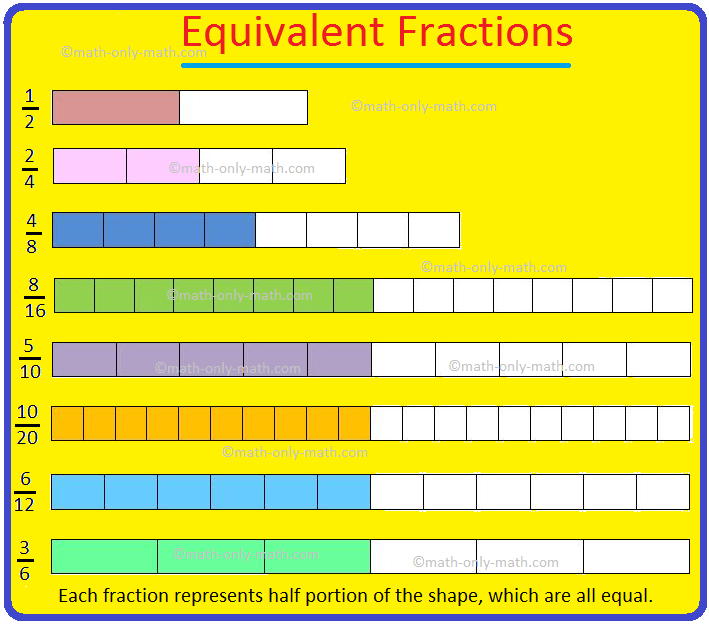
While 2/5 is specific, understanding its equivalence to other fractions can help visualize proportions, particularly when comparing different financial allocations or shares.
-
4/10: This is the most direct equivalent by simply multiplying the numerator and denominator by 2. If you divide a budget into 10 equal parts, 4 of those parts would represent the same proportion as 2/5. This is useful for thinking about smaller divisions of a larger whole.
-
More Complex Equivalents: While less common in everyday financial discussions, fractions like 8/20, 20/50, or even 40/100 (which directly links to percentage) also represent the same value. The ability to recognize these proportional relationships aids in understanding how different financial reporting structures or data visualizations, which might break down a whole into various denominators, still convey the same underlying share. For instance, if a company reports its revenue streams in twentieths, and one product line accounts for 8/20 of revenue, an astute observer immediately recognizes this as 2/5 or 40%, linking it back to broader financial analysis.
Real-World Financial Scenarios Where 2/5 (or 40%) Matters
The practical application of understanding 2/5 as 40% or 0.40 is extensive in personal and business finance. It helps individuals and organizations quantify financial situations and make strategic choices.
Budgeting and Income Allocation
A common challenge is allocating income effectively. The 50/30/20 rule for budgeting, for example, suggests 50% for needs, 30% for wants, and 20% for savings/debt repayment. However, individual circumstances might necessitate deviations. Someone with significant debt might allocate a larger portion, perhaps 2/5 (40%) of their income, to debt repayment. Conversely, an entrepreneur might allocate 2/5 of their business profit towards reinvestment or research and development, rather than drawing it as salary. Understanding this proportion helps in setting realistic financial goals and tracking adherence to a spending plan.
Investment Returns and Portfolio Diversification
When evaluating investment performance, a 2/5 or 40% return on an investment over a certain period is a significant figure. Conversely, a 40% drawdown (loss) would trigger serious concern and likely a re-evaluation of the investment strategy. In terms of diversification, an investor might decide that no single asset class should represent more than 2/5 (40%) of their total portfolio to mitigate risk. For example, if you have a $50,000 portfolio, allocating $20,000 (which is 2/5 or 40%) to a particular sector aligns with this strategy. This proportional thinking is fundamental to managing risk and optimizing returns.
Debt Management and Loan Terms
Lenders frequently assess a borrower’s ability to repay debt using ratios. The debt-to-income (DTI) ratio is a prime example. If a lender prefers a DTI ratio of 40% or less, it means that an individual’s total monthly debt payments (including the prospective loan) should not exceed 2/5 of their gross monthly income. Understanding this threshold is crucial for individuals applying for mortgages, car loans, or other forms of credit. Similarly, if a loan has an annual interest rate, and a portion of that interest is tax-deductible, knowing that 2/5 of the interest might be claimable helps in calculating the true cost of borrowing.
Discounts, Taxes, and Consumer Spending
Everyday financial transactions are rife with these proportions. A “40% off” sale immediately signifies that you’ll pay 3/5 (or 60%) of the original price, saving 2/5. When purchasing goods subject to sales tax, understanding that the tax might add a certain percentage to the price helps in calculating the final cost. In some regions, specific taxes or levies might constitute 2/5 of the total cost of certain services. Being able to quickly process these percentages, stemming from the foundational understanding of 2/5, empowers consumers to make smarter purchasing decisions and accurately budget for expenses.
Leveraging Financial Literacy for Better Decisions
Ultimately, knowing “what is equal to 2/5” transcends simple arithmetic. It cultivates a deeper sense of financial literacy, enabling more effective management of personal and business finances. This understanding transforms raw numbers into meaningful insights, informing strategy and decision-making.
The Power of Proportional Thinking
Financial decisions are rarely about absolute values alone; they are about proportions and relationships. How much of my income goes to housing? What percentage of my investments are in high-risk assets? What share of the market does my business control? All these questions require proportional thinking. Recognizing 2/5 as 40% allows for immediate proportional comparison and assessment. It helps in evaluating whether an allocation is too high or too low, whether a discount is significant, or if a financial ratio falls within acceptable limits. This intuitive grasp of proportions is a powerful asset in financial planning and analysis.
Tools and Strategies for Financial Calculation
While understanding the underlying math is crucial, modern financial management also benefits from tools that leverage these concepts. Spreadsheets (like Excel or Google Sheets) are invaluable for creating budgets, tracking investments, and calculating various financial metrics, where 0.40 is used extensively in formulas. Financial calculators, both physical and online, automatically handle conversions between fractions, decimals, and percentages, allowing users to focus on the input and interpretation rather than manual computation. By combining a solid conceptual understanding of “what is equal to 2/5” with the efficient use of financial tools, individuals and businesses can optimize their financial decision-making processes, leading to greater financial stability and growth.
aViewFromTheCave is a participant in the Amazon Services LLC Associates Program, an affiliate advertising program designed to provide a means for sites to earn advertising fees by advertising and linking to Amazon.com. Amazon, the Amazon logo, AmazonSupply, and the AmazonSupply logo are trademarks of Amazon.com, Inc. or its affiliates. As an Amazon Associate we earn affiliate commissions from qualifying purchases.