
At first glance, the question “what is 4 divided by 1/3” might seem like a simple mathematical puzzle, perhaps a relic from a grade school textbook. The answer, of course, is 12. However, dismissing this seemingly trivial operation as mere arithmetic would be a significant oversight, especially when navigating the intricate world of personal finance, investing, and business strategy. This basic division problem, involving a whole number and a fraction, serves as a powerful metaphor for understanding the underlying mechanics of countless financial calculations that dictate wealth accumulation, budgeting efficiency, investment returns, and business profitability. Grasping such foundational mathematical concepts is not merely academic; it is an indispensable skill for making informed, strategic financial decisions that impact every facet of our economic lives.
The Core Concept: Understanding Division with Fractions
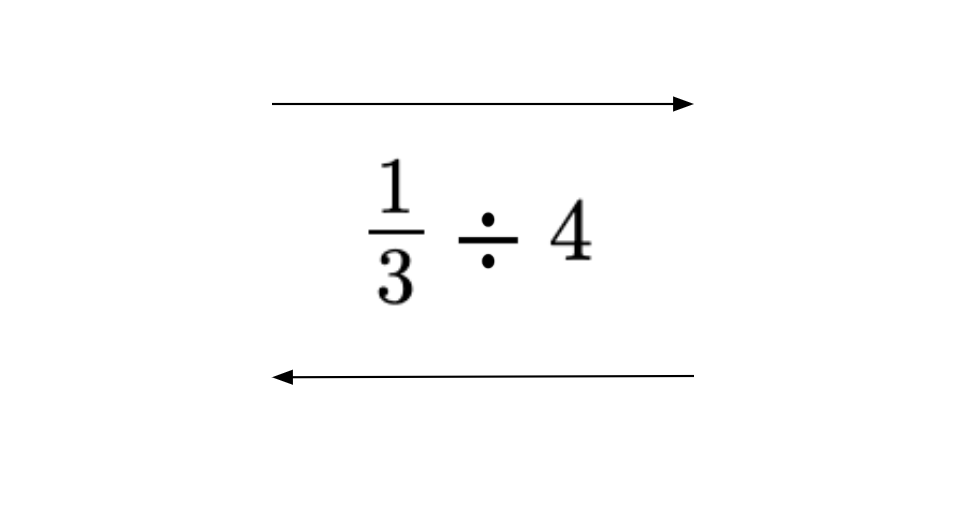
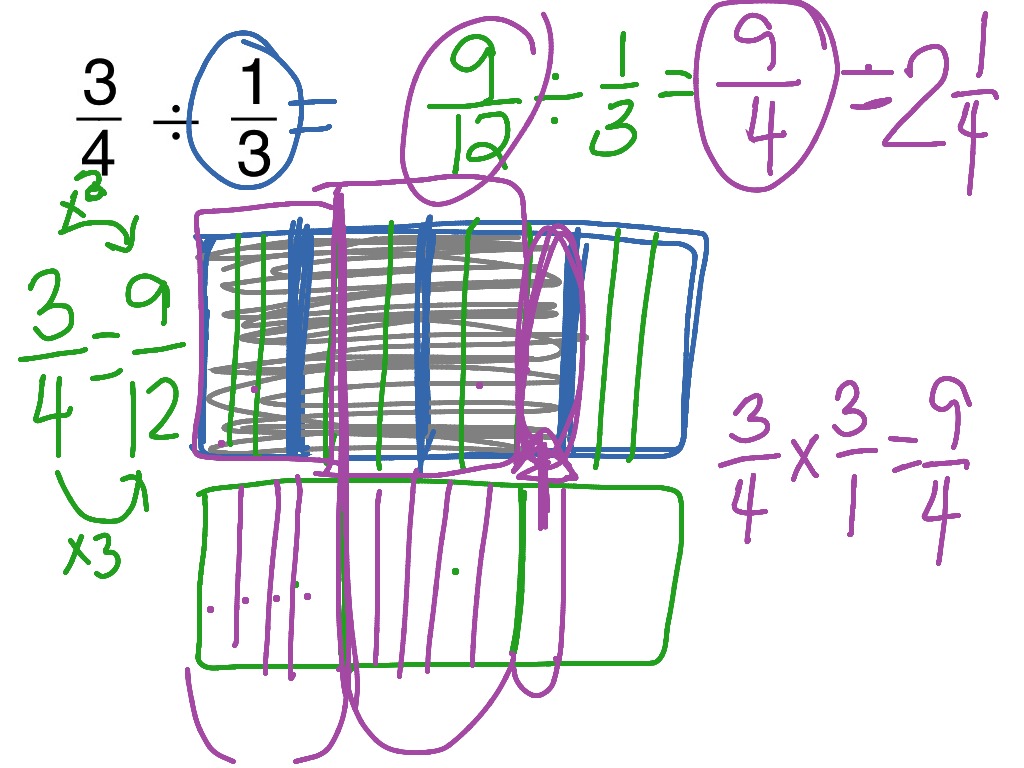
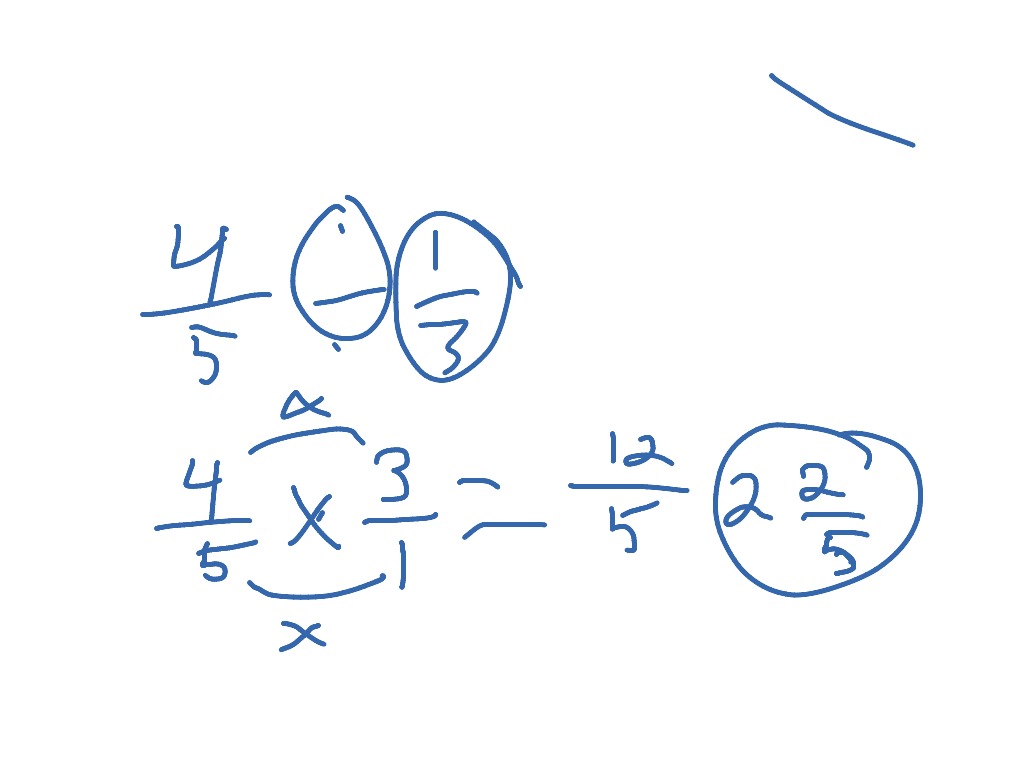
Before delving into its financial ramifications, let’s briefly revisit the mathematical principle. Dividing by a fraction is equivalent to multiplying by its reciprocal. The reciprocal of 1/3 is 3/1 (or simply 3). Therefore, 4 divided by 1/3 becomes 4 multiplied by 3, which equals 12. This concept is fundamental, yet its implications stretch far beyond the classroom, enabling us to dissect complex financial scenarios into understandable components.
Demystifying the Operation
Conceptually, when you ask “how many times does 1/3 fit into 4?”, you are essentially asking how many small segments (each 1/3 of a unit) can be extracted from a larger whole (4 units). If you have four whole pizzas, and each person wants 1/3 of a pizza, you can serve 12 people. This visualization is critical because finance often deals with allocating finite resources, breaking down larger sums, or understanding the granular impact of smaller units over time.
The Reciprocal Rule Explained
The reciprocal rule is a shortcut, but it’s built on logical foundations. It acknowledges that dividing by a small fraction means you’re expecting a larger whole number as the answer, because you’re fitting many small parts into a larger sum. This intuition is invaluable in finance when evaluating scenarios like how many smaller payments make up a larger debt, or how many fractional shares contribute to a full investment unit.
Foundational Finance: Why Basic Division is Non-Negotiable
In the realm of personal finance, the ability to perform and understand division, especially with fractions and percentages, is not a luxury but a necessity. It underpins virtually every aspect of responsible money management, from daily spending to long-term financial planning.
Everyday Financial Literacy
Consider simple scenarios: splitting a dinner bill among friends, calculating the per-item cost of bulk groceries, or understanding how much each percentage point of a discount truly saves you. These tasks, though seemingly minor, are all exercises in division. If a group of four splits a $48 bill, each pays $12. This is 48 divided by 4. If you buy a 4-pack of an item for $12, the unit cost is $3 (12 divided by 4). When you divide an amount by a percentage (which is essentially a fraction), you uncover vital information about its components.
Budgeting and Resource Allocation
Effective budgeting is a sophisticated application of division. You have a finite income, and you need to allocate it across various categories: housing, food, transportation, savings, and discretionary spending. Your income divided by the number of weeks in a month gives you a weekly spending limit. Your total income divided by various percentage targets (e.g., 50% for needs, 30% for wants, 20% for savings) tells you the exact dollar amount for each category. Failing to grasp these divisional relationships can lead to overspending, inadequate savings, and ultimately, financial stress. Understanding how to divide your financial ‘pie’ into appropriate ‘slices’ is the essence of sustainable budgeting.
Evaluating Unit Costs and Value
When shopping, discerning true value often requires dividing total costs by quantities or units. Is it cheaper to buy a large box of cereal or two smaller ones? What’s the cost per ounce of detergent? When considering a subscription service, what’s the cost per day or per use? These calculations, powered by basic division, empower consumers to make smarter purchasing decisions, stretching their dollars further and avoiding unnecessary expenditures. The “4 divided by 1/3” scenario vividly illustrates this: if you’re trying to figure out how many smaller units of value (e.g., hours of service at 1/3 of the standard hourly rate) you get for a larger sum, division provides the answer.
Strategic Financial Applications: Division in Investing and Business
Moving beyond personal spending, division becomes an even more critical tool in the sophisticated arenas of investing and business finance. It enables the calculation of profitability, efficiency, and comparative performance, forming the bedrock of strategic decision-making.
Calculating Return on Investment (ROI) and Profit Margins
At the heart of every investment and business venture lies the question of return. ROI is calculated by dividing the net profit by the cost of the investment. Similarly, profit margin divides profit by revenue. If a business generates $4 million in revenue and has costs of $3 million, its profit is $1 million. The net profit margin is $1 million divided by $4 million, or 25%. Understanding these ratios, which are inherently divisional, allows investors to compare opportunities and businesses to assess their operational efficiency. The simple act of dividing helps demystify complex financial performance indicators.
Understanding Ratios for Financial Analysis
Financial analysts constantly rely on various ratios, all of which are built on division, to assess a company’s health and potential. Debt-to-equity ratio, current ratio, price-to-earnings (P/E) ratio – each provides unique insights by comparing one financial metric to another through division. A high debt-to-equity ratio, for instance, means a company has a larger amount of debt relative to its equity, indicating higher financial risk. These ratios are the language of financial markets, and fluency in their underlying mathematical operations is essential for anyone looking to invest wisely or manage a business effectively.
Debt Management and Loan Amortization
When you take out a loan, the total amount is amortized, or spread out, over a period of time through regular payments. Understanding how your principal payment is divided from the interest payment each month, or how quickly you can pay off a loan by dividing larger extra payments into the principal, is crucial. The total loan amount divided by the number of payments determines the principal portion, highlighting how small, consistent divisions chip away at a larger sum, similar to how many “1/3 units” fit into “4 whole units.”
Business Scaling and Unit Economics
For entrepreneurs, understanding unit economics is paramount. What’s the cost to acquire one customer (CAC)? What’s the average revenue generated per user (ARPU)? What’s the lifetime value (LTV) of a customer? Each of these critical metrics involves division. LTV divided by CAC provides a direct measure of business viability and scalability. If a business needs to acquire a certain number of customers to break even, it divides its fixed costs by its profit per customer. This granular understanding, facilitated by division, allows businesses to plan growth, optimize marketing spend, and ensure sustainable operations.
The Power of Proportions: Using Division for Smart Financial Decisions
Beyond direct calculations, understanding division allows individuals and businesses to grasp proportions, which is key to making nuanced financial judgments.
Comparing Financial Products and Services
When choosing between different bank accounts, credit cards, or investment vehicles, comparison is key. Annual Percentage Yield (APY), interest rates, and fee structures are all expressed as fractions or percentages of a larger sum. Dividing the annual fee by the number of months, or the potential interest earned by the initial investment, helps standardize comparison and reveal the best value. This proportional thinking, enabled by division, cuts through marketing jargon to the true financial implications.
Decoding Interest Rates and Yields
Interest rates are essentially fractions of the principal charged as a cost for borrowing or earned as a return for lending. Understanding what 4% interest means for a $1,000 loan involves dividing the total interest by the principal. Similarly, bond yields, dividend yields, and expense ratios in mutual funds are all expressed as proportions derived through division, providing critical context for investment performance and cost.
Planning for Future Goals: Savings and Retirement
Long-term financial planning heavily relies on projection and division. If you need to save $120,000 for a down payment in 10 years, you divide that sum by 10 years and then by 12 months to determine your monthly savings target ($1,000 per month). Similarly, understanding how much of your current income you need to allocate to retirement savings (often expressed as a percentage, or a fraction of your income) is a continuous exercise in divisional planning. Without this ability, future financial security becomes a matter of guesswork rather than strategic execution.
Bridging the Gap: From Basic Math to Advanced Financial Tools
While advanced financial software, spreadsheets, and AI tools can perform complex calculations with remarkable speed and accuracy, their utility is significantly amplified when users possess a fundamental understanding of the underlying mathematics.
Enhancing Spreadsheet Proficiency
Spreadsheets like Excel or Google Sheets are ubiquitous in finance. While they automate calculations, knowing what to calculate and why requires an understanding of operations like division. Constructing a budget, calculating ROI for multiple investments, or forecasting cash flow all involve setting up formulas that frequently use division. Without a grasp of “4 divided by 1/3” type concepts, users are merely data entry clerks; with it, they become powerful financial modelers.
Making Sense of Financial Software and AI
Many financial apps and AI tools promise to manage your money, optimize investments, or analyze market trends. These tools process vast amounts of data using sophisticated algorithms often rooted in basic arithmetic and statistical principles. When an AI suggests a portfolio rebalance based on a particular ratio, or an app shows your spending broken down by category, these are manifestations of complex divisions. Understanding the foundation empowers users to critically evaluate the outputs, recognize anomalies, and ask insightful questions rather than blindly trusting the technology. It enables a human-in-the-loop approach that combines computational power with informed judgment.
Empowering Informed Decision-Making
Ultimately, the goal of financial literacy is informed decision-making. Whether it’s choosing a mortgage, evaluating a stock, setting a household budget, or launching a new business product, every significant financial choice benefits from a solid grounding in basic math. The simple question, “what is 4 divided by 1/3,” when considered through a financial lens, reveals itself not as a trivial exercise, but as a foundational element upon which sound financial understanding and success are built. It teaches us to break down larger wholes into meaningful parts, to understand the value of smaller units, and to derive critical insights from seemingly simple numbers.
aViewFromTheCave is a participant in the Amazon Services LLC Associates Program, an affiliate advertising program designed to provide a means for sites to earn advertising fees by advertising and linking to Amazon.com. Amazon, the Amazon logo, AmazonSupply, and the AmazonSupply logo are trademarks of Amazon.com, Inc. or its affiliates. As an Amazon Associate we earn affiliate commissions from qualifying purchases.