
At first glance, the question “what is 2 in fraction?” appears disarmingly simple, a query from elementary mathematics. The straightforward answer is that the whole number 2 can be expressed as a fraction in many ways, such as 2/1, 4/2, 6/3, or even 200/100. It signifies two whole units. However, to confine our understanding to just this basic arithmetic misses a profound point. In the intricate world of money—spanning personal finance, investing, and business strategy—the ability to conceptualize whole numbers as fractions is not merely academic; it is a foundational pillar of financial literacy and a critical tool for informed decision-making.
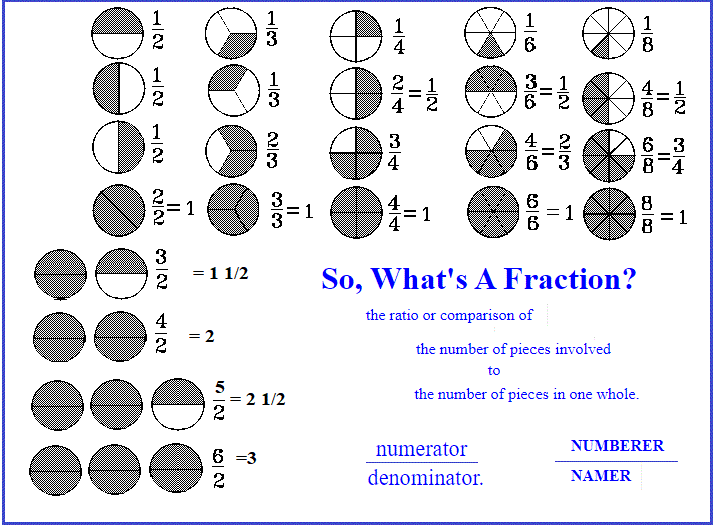
This article delves beyond the elementary definition, exploring why understanding how to represent a whole number like ‘2’ as a fraction is an indispensable skill in navigating financial landscapes. We will uncover its pervasive influence, from managing a personal budget to dissecting complex corporate financial statements, and how this simple mathematical concept underpins virtually every aspect of our financial lives.
The Fundamental Bridge: From Whole Numbers to Financial Parts
The transition from understanding ‘2’ as a solitary whole number to envisioning it as ‘2/1’ or ‘4/2’ might seem trivial, yet it represents a crucial shift in perspective. In finance, we rarely deal with isolated whole numbers; instead, we operate within a complex web of relationships, proportions, distributions, and comparisons. The fractional representation is the very bridge that connects the idea of a complete unit to its various parts, enabling us to analyze and manipulate financial data effectively.
Deconstructing the “2” in a Financial Context
Consider “2” in a financial scenario. It could represent $2.00, 2 shares of a company, 2 units of a commodity, or even a two-year investment period. While ‘2’ signifies completeness in these instances, finance often demands that we understand these wholes in relation to other wholes, or more frequently, in relation to their constituent parts. For example, if you have $2.00, and you spend $0.50, you’ve spent 1/4 of your money. Representing the initial $2.00 as 2/1 or 4/2 makes this comparison immediately intuitive, allowing for calculations involving parts of that initial whole.
This fundamental ability to see a whole number as a fraction—a numerator over a denominator—is the very first step in comprehending division, ratios, percentages, and ultimately, the intricate dynamics of money. Without this basic understanding, concepts like interest rates (a fraction of the principal), discounts (a fraction off the original price), or even market share (a fraction of the total market) would be far more abstract and difficult to grasp.
The ‘Why’ Behind Fractional Representation in Finance
The necessity of fractional representation in finance stems from its inherent nature as a system of allocation, valuation, and comparison. Every financial decision, from how much to save from your paycheck to how a corporation distributes its profits, involves breaking down a whole into meaningful parts or understanding the relationship between different financial figures.
-
Proportionality: Finance is inherently proportional. How much of your income goes to housing? What proportion of a company’s assets are liquid? These are questions of fractions and percentages.
-
Comparability: To compare two investments, you often look at their return as a fraction of the initial investment. Comparing the efficiency of two departments might involve comparing their expenses as a fraction of their respective revenues.
-
Distribution: When profits are distributed, assets are divided, or expenses are allocated, it’s all about fractions—who gets what portion of the whole.
Therefore, “what is 2 in fraction?” is not just a math problem; it’s an invitation to understand the underlying numerical structure that governs financial operations, empowering individuals and businesses to make more informed, strategic choices.
Mastering Personal Finance Through Fractional Thinking
The principles of fractional thinking are perhaps most immediately applicable and impactful in personal finance. From the simplest budgeting decisions to complex debt management, understanding how wholes relate to their parts is crucial for achieving financial stability and growth.
Budgeting, Allocation, and Your Financial Pie
At the heart of sound personal finance is budgeting—the strategic allocation of your income across various spending categories and savings goals. This entire process is fundamentally fractional. Popular budgeting rules, such as the 50/30/20 rule (50% for needs, 30% for wants, 20% for savings and debt repayment), are direct applications of fractional allocation. Each percentage represents a specific fraction of your total income. If your income is ‘the whole,’ then each budget category is a ‘part’ of that whole. Seeing your income as ‘X/1’ (or ‘100/100’ when thinking in percentages) allows you to break it down systematically, ensuring that your spending aligns with your financial objectives. This prevents overspending in one area at the expense of another, maintaining the integrity of your overall financial pie.
Unpacking Interest Rates, Discounts, and Savings
Understanding fractions is indispensable when dealing with interest rates, discounts, and savings growth. An annual percentage rate (APR) on a loan or a credit card is, by definition, a fraction: 5% interest is 5/100 of the principal amount charged over a year. Similarly, a 20% discount on a purchase means you save 20/100, or 1/5, of the original price.
For savings, grasping compound interest—where your interest earns interest—is easier when you think of each period’s interest as a fraction that gets added back to the principal, forming a new, larger whole for the next calculation. Without this foundational understanding, these common financial mechanisms can feel opaque, hindering your ability to make advantageous financial decisions, such as choosing the best savings account or negotiating a loan.
Debt Management: Seeing the Whole and the Repayment Parts
Managing debt effectively also relies heavily on fractional thinking. When you take out a loan, you receive a principal amount (the whole). Your repayments consist of two parts: principal reduction and interest. Understanding what fraction of each payment goes towards the principal versus interest, especially in the early stages of a loan, is vital. This knowledge empowers you to strategize early payments to reduce the overall interest paid (a fractional saving) and shorten the repayment period (a fractional reduction in time). Furthermore, financial health metrics like the debt-to-income ratio are direct fractional comparisons, showing what proportion of your income is consumed by debt obligations—a critical indicator for lenders and a self-assessment tool for borrowers.
Investing and Wealth Creation: Fractions as the Underlying Language
In the realm of investing, fractions move from being conceptual tools to being the very bedrock of market operations, asset allocation, and performance analysis. Whether you’re a novice investor or a seasoned professional, fractional understanding is key to building and growing wealth.
Fractional Shares and Accessible Investing

Perhaps one of the most direct links between “what is 2 in fraction” and modern investing is the concept of fractional shares. Historically, investors had to buy whole shares of stock, which could be prohibitive for high-priced companies. Today, many brokerages allow investors to buy fractions of a share. This means you can invest a specific dollar amount, say $50, into a stock, even if a single share costs $500, thereby owning 0.1 of a share. This directly applies the idea of breaking down a whole (one share) into its parts (fractions of a share), making investing more accessible and diversified portfolios easier to achieve, especially for those with limited capital. It democratizes the market by allowing investors to acquire ‘parts’ of a company, rather than being restricted by the ‘whole’ share price.
Portfolio Diversification and Asset Allocation
A cornerstone of sound investment strategy is diversification and asset allocation. Investors spread their capital across different asset classes (stocks, bonds, real estate, commodities) to mitigate risk. This allocation is almost always expressed in percentages, which are essentially fractions of your total investment portfolio. For example, a common strategy might be 60% stocks, 30% bonds, and 10% cash. Here, the entire portfolio is the ‘whole,’ and each asset class represents a specific ‘fraction’ of that whole. Understanding these fractional relationships allows investors to balance risk and return according to their individual financial goals and risk tolerance.
Understanding Returns, Dividends, and Yields
Evaluating investment performance relies heavily on fractional calculations. Investment returns are typically expressed as a percentage—the profit or loss as a fraction of the initial investment. Similarly, dividend yields represent the annual dividend payout per share as a fraction (percentage) of the share’s price. When a company pays a dividend of $2.00 per share, and the share price is $100.00, the yield is 2/100 or 2%. These fractional metrics provide standardized ways to compare the performance and income generation of different investments, enabling informed decisions on where to allocate capital for optimal growth.
Business Finance: Strategic Insights from Fractional Data
In the world of business, fractions transcend simple arithmetic to become powerful analytical tools, offering strategic insights into a company’s health, performance, and future potential. Business finance is replete with ratios and percentages—all manifestations of fractional thinking—that guide operational and strategic decisions.
Critical Financial Ratios for Business Health
Financial ratios are perhaps the most direct application of fractions in business analysis. These ratios compare different line items from a company’s financial statements (income statement, balance sheet, cash flow statement) to provide insights into its liquidity, solvency, profitability, and efficiency.
-
Profit Margin: Net profit as a fraction of revenue (e.g., a 10% profit margin means 10 cents of profit for every dollar of revenue, or 10/100).
-
Debt-to-Equity Ratio: Total debt as a fraction of shareholder equity, indicating financial leverage and risk.
-
Current Ratio: Current assets as a fraction of current liabilities, measuring short-term liquidity.
-
Return on Investment (ROI): The gain from an investment as a fraction of its cost.
These and many other ratios are fundamentally fractions. They condense vast amounts of financial data into digestible, comparative metrics, allowing stakeholders—investors, creditors, and management—to quickly assess a company’s financial health and performance against industry benchmarks or historical trends.
Equity Ownership, Profit Sharing, and Valuation
Fractions also play a crucial role in the structure of business ownership and distribution of profits. A company’s equity is divided into shares, with each share representing a fraction of ownership. If you own 2 shares out of 100 outstanding shares, you own 2/100 or 1/50 of the company. This fractional ownership dictates your voting rights, your claim on assets, and your share of profits (dividends).
In partnerships, profit-sharing agreements are often defined by fractions or percentages, ensuring fair distribution. Furthermore, business valuations often employ fractional multiples (e.g., a company valued at 2 times its annual revenue) to establish a company’s worth in relation to its financial performance, demonstrating another practical application of fractional thinking in high-stakes business decisions.
Market Analysis and Competitive Positioning
Understanding a company’s position within its industry often involves analyzing market share—the fraction of the total market that a company commands. If a company sells 2 million units in a market where 10 million units are sold annually, its market share is 2/10 or 20%. This fractional insight is critical for strategic planning, competitive analysis, and identifying growth opportunities. Companies continuously strive to increase their ‘fraction’ of the market, which translates into increased revenue and influence.
Modern Financial Tools: Automating Fractional Understanding
While the underlying principles of fractions remain constant, modern financial tools and technology have revolutionized how we interact with and analyze fractional data, making complex calculations more accessible and efficient.
Spreadsheets and Financial Calculators: Your Fractional Assistants
Spreadsheet applications like Microsoft Excel or Google Sheets are indispensable financial tools that automate myriad fractional calculations. From budgeting templates that automatically calculate percentages of income allocated to different categories, to complex financial models that project returns and ratios, spreadsheets handle the arithmetic of fractions effortlessly. Similarly, financial calculators, whether physical devices or online apps, are built to perform these calculations rapidly, allowing users to quickly assess loan payments, investment growth, and compound interest, all of which are fundamentally fractional operations. While these tools do the heavy lifting, a foundational understanding of “what is 2 in fraction” ensures that users can interpret the outputs correctly and critically evaluate the underlying assumptions.
AI and Algorithmic Trading: Leveraging Fractional Data at Scale
At the forefront of financial technology, artificial intelligence (AI) and algorithmic trading systems leverage fractional understanding at an unprecedented scale. These advanced systems process vast quantities of fractional data—stock prices expressed to multiple decimal places, minute changes in interest rates, complex financial ratios, and probabilistic outcomes—to identify patterns, execute trades, and manage portfolios with incredible speed and precision. While the human brain might struggle with instantaneous calculations involving many fractions, AI algorithms are specifically designed to analyze these numerical relationships, making real-time decisions that exploit fractional advantages in volatile markets. This showcases how the simple concept of a fraction scales up to power the most sophisticated financial operations.

Conclusion
The seemingly innocuous question, “what is 2 in fraction?”, serves as a gateway to understanding the entire edifice of financial literacy. From the most rudimentary personal budget to the complex algorithms driving global financial markets, the concept of representing whole numbers as fractions—and thereby understanding the relationship between wholes and their parts—is absolutely fundamental.
It’s not about memorizing complex formulas, but about internalizing a way of thinking that allows you to break down financial challenges, evaluate opportunities, and make informed decisions. Whether you are allocating your paycheck, investing in a fractional share, analyzing a company’s profit margin, or simply trying to understand a discount, the ability to think fractionally empowers you. In a world increasingly driven by data and numerical relationships, mastering this basic mathematical concept is not just an academic exercise; it is an essential life skill that unlocks a deeper, more profound understanding of money and wealth creation. Embracing this perspective transforms ‘2 in fraction’ from a simple math problem into a cornerstone of financial wisdom.
aViewFromTheCave is a participant in the Amazon Services LLC Associates Program, an affiliate advertising program designed to provide a means for sites to earn advertising fees by advertising and linking to Amazon.com. Amazon, the Amazon logo, AmazonSupply, and the AmazonSupply logo are trademarks of Amazon.com, Inc. or its affiliates. As an Amazon Associate we earn affiliate commissions from qualifying purchases.